
REVIEW · OSLO TOURS
Jewish Heritage Tour in Oslo
Oslo tells its Jewish story in plain sight. This private, English-language walk links major sights across central Oslo, from Jernbanetorget to the Oslo Synagogue area, and explains how Jewish life fit into Norway’s wider story. I like the pacing, because you get short photo stops and then time to connect the dots.
I especially appreciate the way the guide, including Rami Kafarov in past departures, ties political history to everyday Jewish life, including what changed during the occupation years 1940 to 1945. The one real catch is that synagogue access is not always possible, so you should be ready for an exterior focus if entry is limited.
In This Review
- Key highlights worth your time
- Jewish Heritage Tour in Oslo, in the real center
- Price and what $256.18 gets you for up to 5
- Starting at TigerJernbanetorget, and why that matters
- Stop 1, Jernbanetorget: the first Jewish family in Oslo
- Stop 2, Stortorvet: Oslo Cathedral and the Christian IV monument
- Stop 3, the Norwegian Parliament: constitution meets Jewish members
- Stop 4, Grand Hotel area: Jewish shops and Nobel Peace Prize connections
- Stop 5, Karl Johans Gate: the longest stretch for stores and monuments
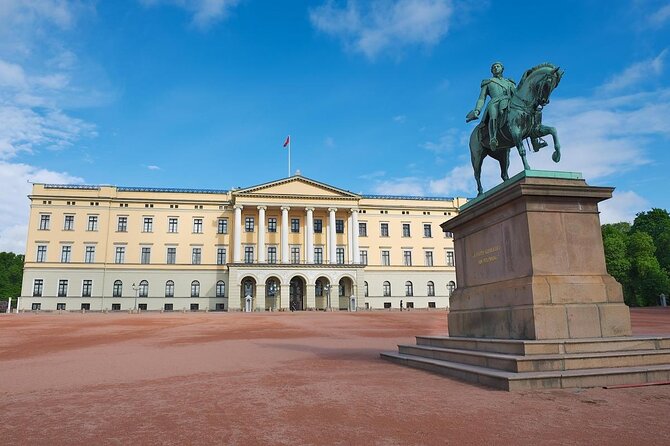
- Stop 6, the Royal Palace area: Jewish life during occupation, 1940 to 1945
- Stop 7, Oslo Synagogue: what you can do when entry is limited
- The guide experience, and why Q and A feels natural
- Best ways to plan your day around the 2 hours
- Who should book this Jewish heritage walk, and who might not
- Should you book this Jewish Heritage Tour in Oslo?
- FAQ
- How long is the Jewish Heritage Tour in Oslo?
- What is the group size for this private tour?
- What does it cost?
- Is the tour offered in English?
- Do I get a mobile ticket?
- Where do I meet the guide?
- Where does the tour end?
- What are the tour hours?
- Is the synagogue always possible to visit?
- What if the weather is bad?
- Is there free cancellation?
Key highlights worth your time
- A 2-hour route built for first-timers with quick stops at landmark squares, plus one longer stretch on Karl Johans Gate
- Jewish connections in unexpected places, from the Norwegian Parliament to monuments and major hotel-area landmarks
- WWII-era context around the Royal Palace area, centered on what happened during 1940 to 1945
- A small private group up to 5 people, which makes it easier to ask questions and adapt the pace
- Synagogue visit is the emotional high point when it’s available, and if not, you still get street-level orientation
Capital bookings past this listing, Oslo graded again
- Oslo: Scenic Fjord Cruise with Audio Guide Commentary★ 4.5 · 5,375 reviews
- Oslo Nature Walks: Island Hopping Tour★ 4.8 · 2,713 reviews
- Oslo: 100% Electric Oslofjord Sightseeing Cruise★ 4.4 · 2,041 reviews
- Oslo: Fjord Evening Cruise with Shrimp Buffet★ 4.5 · 1,956 reviews
Jewish Heritage Tour in Oslo, in the real center
A Jewish heritage walk in Oslo is not just about one building. What makes this tour work is the route itself. You move through the city the way you would if you were sightseeing on your own, then you get a clear frame for what you’re seeing, and why it matters.
The group size is small (up to 5), and the tour is private, so you can ask practical questions without feeling rushed. It also runs in English, and you get a mobile ticket, which makes life easier if you’re juggling other plans in Oslo.
One more smart point: this is the sort of activity that tends to fill up early. On average, it’s booked about 107 days in advance, so if you’re traveling in peak season, I’d plan early rather than rolling the dice.
Price and what $256.18 gets you for up to 5
The price is listed as $256.18 per group, good for up to 5 people. For a 2-hour private experience in central Oslo, that’s usually the sweet spot: you’re paying for a guide’s time and interpretation, not for separate per-person tickets that add up fast.
Here’s how I think about the value. If you’re coming as a couple or small family, private tours often end up similar to splitting multiple group tickets, and you get more control over questions and pace. If you’re solo, it can still be worth it if you prefer not to share your attention with a large group.
The tour is scheduled for about 2 hours, so you can fit it between museum time and dinner. It’s also designed for people with moderate physical fitness, which is helpful for a walking tour that stays mostly in the central core.
Starting at TigerJernbanetorget, and why that matters
You meet at TigerJernbanetorget, 0154 Oslo. That location is handy, because it keeps you near public transportation and right in the thick of downtown. You don’t waste time figuring out where to start, and you’re positioned to keep exploring after the tour ends.
Your tour also ends in a different location (so it’s not a strict back-to-back return to the same spot). Plan for that. If you like continuing your day with a long walk or a nearby café, it’s actually convenient, because you’re not forced to retrace steps immediately.
Before you set off, expect a quick orientation: how the story will move through the city, and what to look for at the first major stop. This first framing matters, because it helps you connect the later sites without turning the whole walk into a list of addresses.
Older-Norway rivals threading Oslo
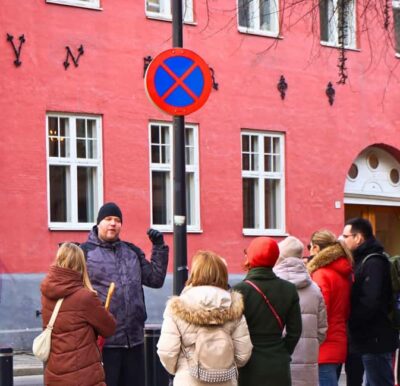
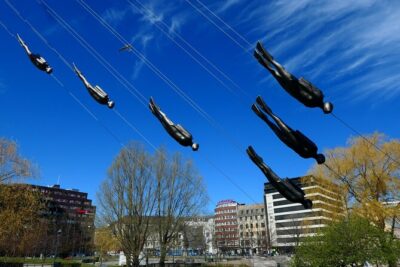

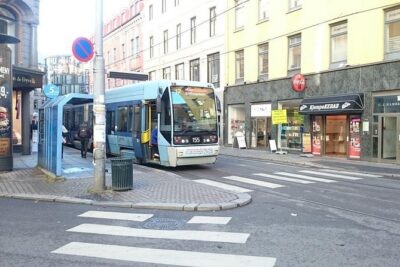
Stop 1, Jernbanetorget: the first Jewish family in Oslo
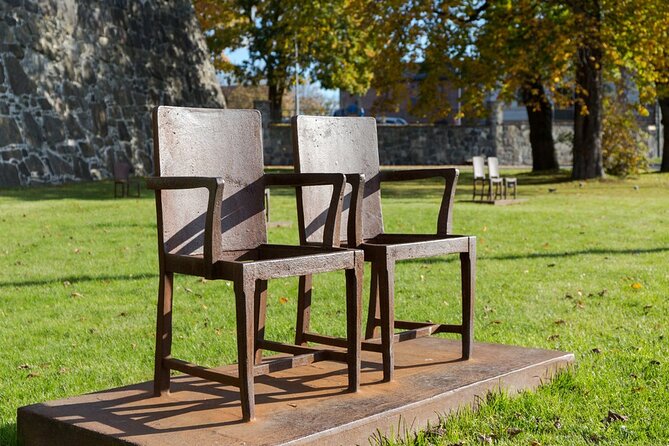
Jernbanetorget is where the tour begins in a grounded way. You’re shown the area and given an introduction to the first Jewish family settled in Oslo, with the actual location related to their property.
Why this stop works: it gives you a starting point for scale. Instead of starting with famous buildings, you start with settlement and place. You begin to understand that Jewish presence in Oslo wasn’t one dramatic event, it was a gradual lived history that left traces in the city.
Even if you’re not a big “facts and dates” person, this opening helps. It sets up the later contrasts, like what Jewish life looked like when it became woven into public institutions, and what changed under occupation.
Stop 2, Stortorvet: Oslo Cathedral and the Christian IV monument
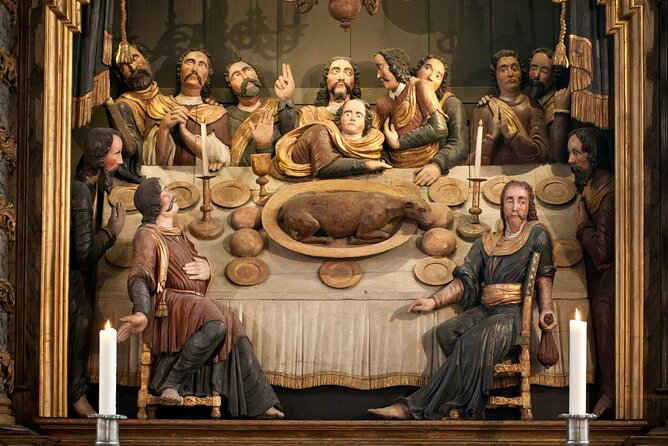
At Stortorvet, you shift from the early settlement story to the broader public Oslo you see today. The tour points out Oslo Cathedral and the Christian IV monument.
This stop is smart because Stortorvet is the kind of square where you might normally just pass through. With the Jewish heritage framing, the space becomes more than scenery. You start noticing how different layers of Oslo’s identity show up in public symbols and monuments.
The main drawback here is timing. It’s only about 10 minutes, so if you love architecture and want longer looks, you’ll probably want to circle back later on your own after the tour ends. The tour gives you the “what to notice” map, but not a full cathedral visit.
Stop 3, the Norwegian Parliament: constitution meets Jewish members
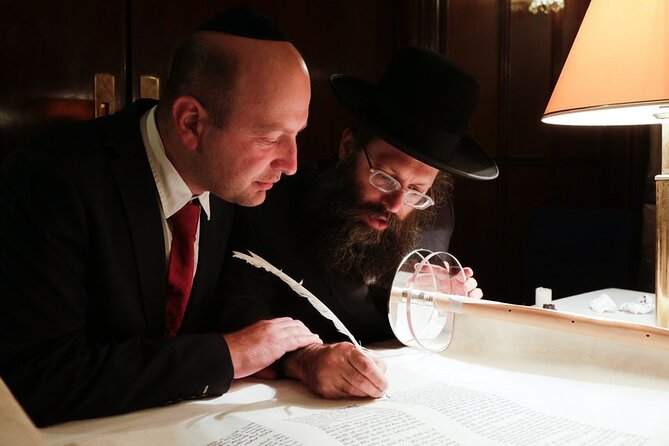
Next comes the Norwegian Parliament. You get the significance of the Norwegian constitution tied to the site, and you also hear about remarkable Jewish members connected to the parliament.
This is one of the stops that changes how people read the city. When you learn that Jewish involvement reaches into major political institutions, the story stops feeling like a footnote. It becomes part of how modern Norway formed and governed itself.
It’s also a good lesson in context. You’re not just learning “where” Jewish history happened, you’re learning “how” Jewish life interacted with the country’s national story.
Keep expectations aligned with the format: this is a street-level, short stop. You won’t be touring rooms inside the parliament, but you will leave with a clearer sense of what political life can look like for minority communities across time.
Stop 4, Grand Hotel area: Jewish shops and Nobel Peace Prize connections
At the Grand Hotel stop, the focus turns toward commerce and recognition in the city. The tour mentions Jewish shops in the area, plus connections around the Nobel Peace Prize.
Why it’s valuable: it moves beyond tragedy-only storytelling. You get a sense of everyday life, shopping, and community presence in central Oslo, plus the way Norway’s international profile intersects with local history.
This stop also helps you understand the city’s geography. Major hotels and famous addresses are not just tourist magnets. They sit next to neighborhoods and streets where specific communities did real work and built real networks.
Like the earlier stops, it’s roughly 10 minutes. If you’re a shopper or you like tracing old trade patterns, you may want to pause your own stroll afterward and look for lingering street-level clues at a slower pace.
Stop 5, Karl Johans Gate: the longest stretch for stores and monuments
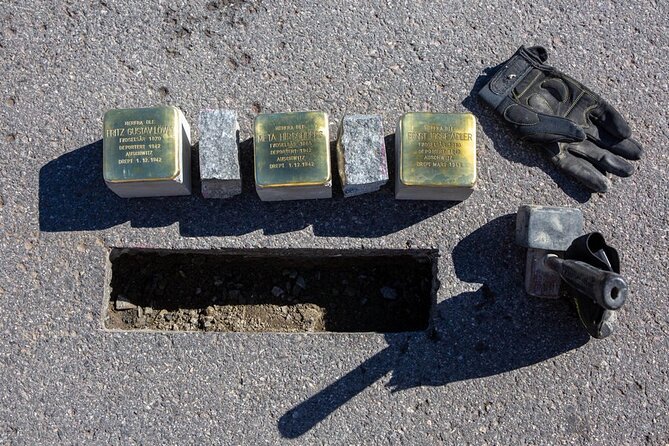
Karl Johans Gate is the tour’s longer segment, about 50 minutes. This is where you’re walking, looking, and learning in a more sustained way.
You’ll see many Jewish-owned stores mentioned along the way, plus monuments and markers tied to Jewish history in Norway and Oslo. This longer stop is ideal for absorbing details because you’re not being rushed from one corner to the next every few minutes.
If you enjoy city walking tours, this section is the one where your brain stops treating it like a drive-by slideshow and starts treating it like a story in motion. It’s also where asking questions feels natural, because you’re moving through the streets at an unhurried pace.
The tradeoff is that Karl Johans Gate can be busy. You’ll still get orientation and explanations, but if you’re sensitive to crowds, bring patience and keep your eyes up for signs the guide points out.
Stop 6, the Royal Palace area: Jewish life during occupation, 1940 to 1945
Then you head to the Royal Palace. Here, the connection is tied to the occupation years 1940 to 1945, with mentions of a few locations connected to Jewish life around the Royal garden.
This portion is important because it keeps the story honest and specific. You’re not floating in generalities. You’re anchored to places where life unfolded under pressure, and where occupation-era realities changed what people could do, where they could go, and how communities survived.
Because this is still a walking tour, it stays to the point. You get the key sites and what to look for, but not a full lecture. If you want to read more afterward, this stop will likely give you a shortlist of topics to pursue.
Emotionally, this is usually the part where people slow down a bit, even if they keep walking. It’s one of those segments where the city feels heavier because the explanations bring the past into the present street view.
Stop 7, Oslo Synagogue: what you can do when entry is limited
The final stop is Oslo Synagogue, and it’s paired with orientation around a street described as the Jewish street in Oslo. The tour also notes that it was the first synagogue building in Norway.
In an ideal scenario, you’d like to go inside. But you should know up front that it’s not always possible to visit. That matters because the emotional payoff is often the interior experience, as reflected in top ratings that call the synagogue visit a high point when it happens.
So what should you do if entry isn’t available? Use the synagogue stop as a “reset.” Take your time with the exterior, the street context, and any interpretation you’re given on site. The best guides help you see what you would have missed if you treated it like just another church or museum.
A practical tip: if you care most about the synagogue interior, ask your guide at the start of the tour what your options are for that day. Since access can vary, you’ll feel better knowing what to expect.
The guide experience, and why Q and A feels natural
This tour is built for conversations, not just silent headsets. In strong feedback, the guide experience gets singled out for being engaging and responsive to questions, and for connecting Norwegian history to Jewish history in a way that gives the whole city context.
Rami Kafarov is specifically named in multiple top ratings, and that matters because it signals consistency in interpretation style. People also praise the way the guide stays organized and presents material in a balanced way, not just one theme at a time.
There’s also an extra, low-key perk that came up in the best-rated feedback: a photo-book created by the guide that pairs current Oslo images with historical ones. If that sort of before-and-after storytelling speaks to you, it’s the kind of souvenir that stays useful long after the tour ends.
Best ways to plan your day around the 2 hours
This tour is short enough to slot into a packed Oslo itinerary, but long enough that you’ll want to protect it from distraction.
Here’s what works well:
- Give yourself buffer time at the start near TigerJernbanetorget, so you can find the meeting point calmly.
- Wear comfortable walking shoes. The stops are short, but you’ll still cover real downtown distance.
- If you’re pairing this with other sights, put museums or indoor visits after the tour, when your brain has the story frame.
Also, it requires good weather. If Oslo is doing its classic gray routine, don’t stress. If the tour is canceled due to poor weather, you should be offered a different date or a full refund, so you have options.
Who should book this Jewish heritage walk, and who might not
This is a strong choice if you want:
- A guided route through central Oslo focused on Jewish heritage, including the occupation years 1940 to 1945
- A private group experience up to 5, with room to ask questions
- English explanations with quick landmark stops you can match to maps and photos later
It’s less ideal if you:
- Want a long, sit-down museum-style visit at each site
- Expect guaranteed synagogue interior access every time
If your priority is “I want to see inside everything,” you might feel a bit disappointed by how street-level the format can be. If your priority is “I want to understand the connections across the city,” this tour is well matched.
Should you book this Jewish Heritage Tour in Oslo?
If you’re visiting Oslo for the first time and you want Jewish heritage presented in a way that actually helps you read the city, I’d book it. The route is concentrated, the explanations connect Norway’s bigger story to Jewish life in a practical way, and the small private format makes it feel personal without being fussy.
The only reason to hesitate is synagogue access. If you know you’ll be upset by limited entry, plan to treat the synagogue stop as an orientation and exterior experience when needed.
Otherwise, this is the kind of tour that gives you a stronger sense of place fast, and then keeps paying off as you wander on your own afterward.
FAQ
How long is the Jewish Heritage Tour in Oslo?
The tour runs about 2 hours.
What is the group size for this private tour?
It is a private tour/activity, and the group size can be up to 5 people.
What does it cost?
The price is $256.18 per group.
Is the tour offered in English?
Yes, it is offered in English.
Do I get a mobile ticket?
Yes, the tour includes a mobile ticket.
Where do I meet the guide?
The meeting point is TigerJernbanetorget, 0154 Oslo, Norway.
Where does the tour end?
The activity ends in a different location, so you should check the details provided after booking.
What are the tour hours?
The listed hours are 8:00 AM to 8:00 PM, with the availability window shown from 01/17/2023 to 12/08/2026.
Is the synagogue always possible to visit?
No. It is not always possible to visit the Oslo Synagogue, depending on access.
What if the weather is bad?
The experience requires good weather. If it is canceled due to poor weather, you’ll be offered a different date or a full refund.
Is there free cancellation?
Yes. You can cancel up to 24 hours in advance of the experience for a full refund.
One Shortlist, Oslo





More Tour Reviews in Oslo


The Capital, Kept Going
Newest Oslo write-ups off our Norway desk
- Fjord Houseboat Cruise in Oslo. 100 % electric. BYO
★ 5.0 · 3 reviews - Oslo Christmas walk
★ 4.0 · 3 reviews - Afternoon Tea and Classic Concert on the Fjord
★ 4.5 · 3 reviews - Lake walk and campfire
★ 4.7 · 3 reviews - Oslo: Yoga & Hiking with a dog
★ 5.0 · 3 reviews - Oslo: Skjennungstoppen Wildlife Forest Hiking Tour
★ 5.0 · 3 reviews
More in Oslo Tours.
 ★ 4.5Oslo: Scenic Fjord Cruise with Audio Guide CommentaryFrom $445,375 reviews
 ★ 4.8Oslo Nature Walks: Island Hopping TourFrom $692,713 reviews
 ★ 4.4Oslo: 100% Electric Oslofjord Sightseeing CruiseFrom $402,041 reviews
 ★ 4.5Oslo: Fjord Evening Cruise with Shrimp BuffetFrom $881,956 reviews
 ★ 4.8Oslo: 3-Hour Highlights Bike TourFrom $621,609 reviews
 ★ 4.7Oslo: Guided Sightseeing Fjord Cruise on Premium Silent BoatFrom $641,390 reviews
 ★ 5.0Oslo Highlights Bike TourFrom $62979 reviews
 ★ 4.3Oslo: Paradox Museum Entry TicketFrom $29799 reviews
Lists this one sits in