
REVIEW · OSLO TOURS
Downtown Oslo: Self-Guided Highlights and History Audio Tour
Oslo sounds like a city lesson, but this one walks. This self-guided route uses an audio app to stitch together waterfront, monarchy, and modern transit into an easy 40-minute stroll. I like that it is set up to work in English and can run with offline access for audio, maps, and geodata.
Two things I really appreciate: first, the stop choices are smart because they keep pulling you from one key idea to the next, starting at the harbor and ending at a reinvented railway hub. Second, it gives you lifetime access, so you can come back later and replay the route at your own speed. One drawback to note is that the accuracy can be hit or miss, and one piece of feedback complained about out-of-date information, which can be a letdown if you expect every fact to be current.
In This Review
- Key Highlights You Will Actually Feel While Walking
- Where This 40-Minute Oslo Audio Walk Fits
- Start at Rådhusplassen, Then Head to Aker Brygge
- Nobel Peace Center in a Former Railway Station
- Royal Palace Park: 1840s Grounds and Modern People Watching
- Karl Johan Avenue, Oslo’s Main Thread Through Time
- Østbanehallen Reopened in 2015 and What It Means for Visitors
- Price and Value: Is $9.99 Actually Worth It?
- How to Use the Audio Without Feeling Cheated by Outdated Info
- Logistics That Make This Walk Feel Effortless
- Who This Tour Is Best For (And Who Should Pass)
- Should You Book This Downtown Oslo Audio Tour?
- FAQ
- How long is the Downtown Oslo self-guided highlights tour?
- What language is the audio available in?
- What is the price?
- Where do I start and where does it end?
- Do I need to bring a smartphone?
- Is the audio tour available offline?
- Are any museum tickets or entrance fees included?
- Is there a limit on group size?
- Is it possible to bring a service animal?
Key Highlights You Will Actually Feel While Walking
- Offline maps and audio help when signal drops around the center
- Aker Brygge gives you an easy warm-up at the old shipyard waterfront
- Nobel Peace Center repurposes a former railway station for a focused peace-story stop
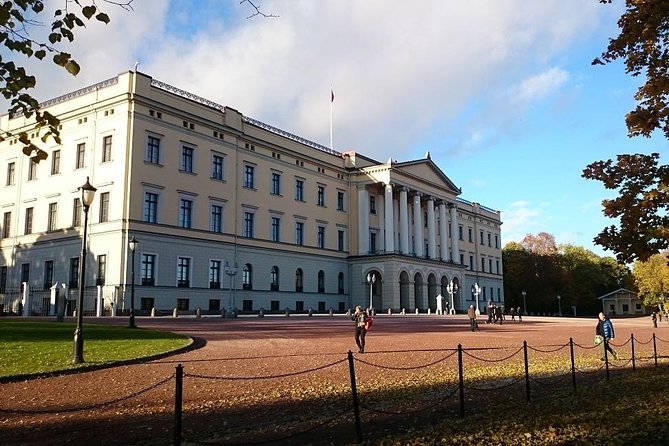
- Royal Palace park offers a calm break with ponds, lawns, and big 1840s-era trees
- Karl Johan avenue turns a simple street walk into an easy time-travel line
- Østbanehallen shows how Oslo remodeled an older rail landmark and added visitor services
Capital bookings past this listing, Oslo graded again
- Oslo: Scenic Fjord Cruise with Audio Guide Commentary★ 4.5 · 5,375 reviews
- Oslo Nature Walks: Island Hopping Tour★ 4.8 · 2,713 reviews
- Oslo: 100% Electric Oslofjord Sightseeing Cruise★ 4.4 · 2,041 reviews
- Oslo: Fjord Evening Cruise with Shrimp Buffet★ 4.5 · 1,956 reviews
Where This 40-Minute Oslo Audio Walk Fits
This is a short one, about 40 minutes in duration, designed for when you want context without adding a full museum time block. It is self-guided, so you control pacing, which matters in Oslo where daylight and crowd levels can swing fast.
You start at Rådhusplassen and finish at Havnelageret, Langkaia 1. That end point is handy because it leaves you close to the harbor area, so the walk can naturally connect to a later coffee stop or a wander along the waterfront.
Also, the price is low enough that you can treat it as a cheap way to get oriented, not as a “must-do” museum ticket. At $9.99 per person, it is really about smart narration and route structure, not paid entrances.
Start at Rådhusplassen, Then Head to Aker Brygge
Rådhusplassen is a good launchpad because it anchors you in the city core. From there, the audio route nudges you toward Aker Brygge, one of Oslo’s most familiar meeting zones.
Aker Brygge is a shopping and dining area, but the interesting angle is the layer underneath: it was built on the remains of an old shipyard. That kind of detail helps you read the area beyond storefronts. When you understand it started as industrial waterfront work, the current “hang out after work” vibe makes more sense.
Practical tip: you will likely want comfortable shoes here. The route is short, but you still want to walk it like you mean it. If you rush, you lose the payoff, especially because the whole point is to match quick stops with quick explanations.
Nobel Peace Center in a Former Railway Station
Next is the Nobel Peace Center building, and the building itself is part of the story. The audio guide explains that it used to be an old railway station, with trains coming in from western parts of Norway.
That transformation is one of the most meaningful themes on this walk: Oslo uses older infrastructure and reassigns its purpose. The museum focus is on the Nobel Peace Prize, including the story of the Peace Prize founder Alfred Nobel and the winners who followed.
Even if you do not plan to go inside, this stop can still make your city understanding sharper. Why? Because you start connecting the dots between Norway’s public identity and how the country presents that identity in major central spaces.
One consideration: the audio tour does not include any museum tickets or entrances. So you should treat Nobel Peace Center as a “see and understand the setting” stop unless you decide to pay for entry on your own.
Guide-led rivals across Oslo
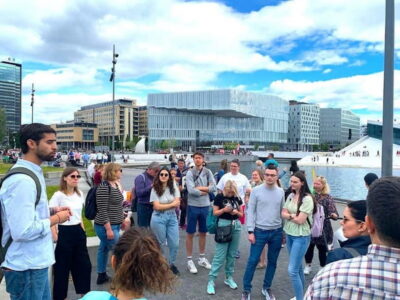


Royal Palace Park: 1840s Grounds and Modern People Watching
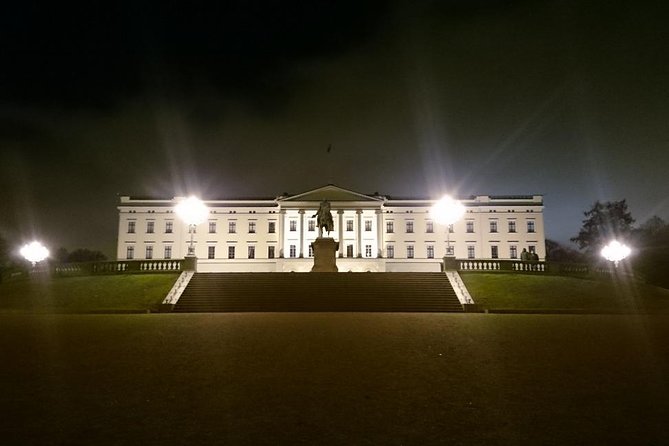
The route then slides into the park surrounding the Royal Palace. The key detail the audio highlights is that the grounds were built in the 1840s, and you can feel that long timeline in the mature trees, structured lawns, and ponds.
This is also a social space, not just a photo backdrop. The park is a recreational area for citizens of Oslo, and the audio notes it even served as a base for hippies in the mid-1960s. That little historical spark does something helpful: it shows the palace area was never purely ceremonial. People have always used the space.
Why I like this stop for a self-guided tour: it gives your brain a break. After waterfront industrial history and Nobel-related symbolism, you get calm greens and open air, which makes the next street walk more enjoyable.
If it is cold or windy, linger only as long as you stay comfortable. This is a short tour, and you want to enjoy the park rather than rush through it to “complete” the route.
Karl Johan Avenue, Oslo’s Main Thread Through Time
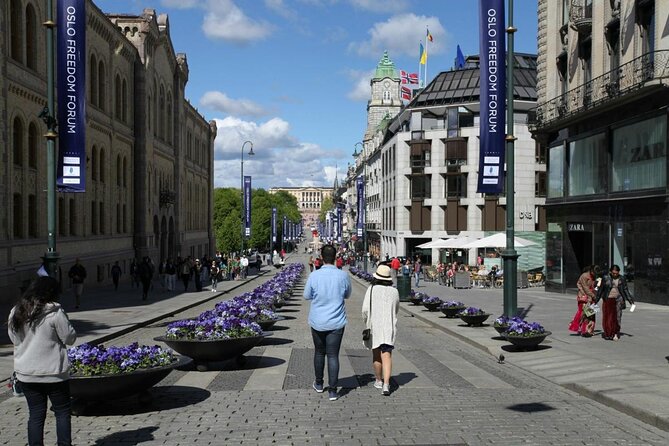
After the palace grounds, the audio shifts you to Karl Johan Avenue, Oslo’s most famous street corridor. The narration explains the street’s timeline: the route was established as early as the 1500s, and since 1852 it has been known as Karl Johan, named after the king.
That is a big idea for a small walk: one street can carry centuries of shifting roles. You will not need to read every facade to feel the effect. The audio gives you a framework, so your eyes start working in “layers,” not just “views.”
A practical way to use this part: slow down just enough to notice changes in the street feel. Karl Johan is the kind of avenue where different blocks can feel like different neighborhoods, even when they look like the same city artery.
One more thing: because this is a main street, foot traffic can be heavier than at quieter harbor corners. Plan to walk steadily and keep your phone secure, since you will be using the app along the way.
Østbanehallen Reopened in 2015 and What It Means for Visitors
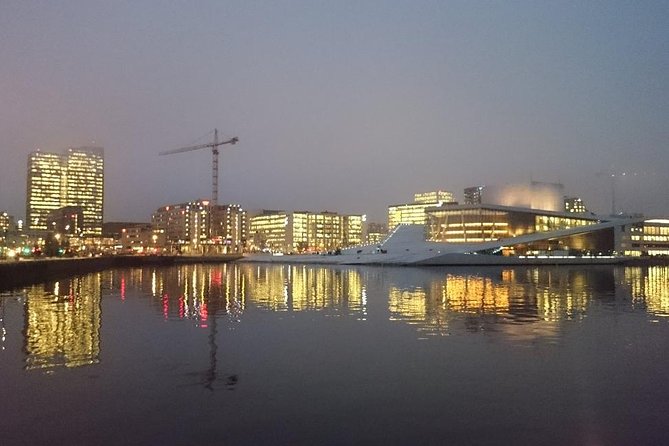
The last stop takes you to Østbanehallen, historically the central railway station for northern routes in Norway. Then the audio brings you to the present with the big turning point: after a full transformation, Østbanehallen reopened in 2015.
Today, it is not just a station. The audio describes it as a mixed-use hub with shops, restaurants, a hotel, and the Oslo Visitor Center. In other words, you end at a place designed for travelers and orientation, which is exactly what you want after a self-guided history stroll.
This ending also makes your day easier. If you finish at the visitor center area, you can pivot right into getting advice for the rest of Oslo without feeling like you are starting over.
Just remember: the tour itself does not cover tickets to attractions. If you want to enter any museums or special spaces connected to this area, you will need to handle that separately.
Price and Value: Is $9.99 Actually Worth It?
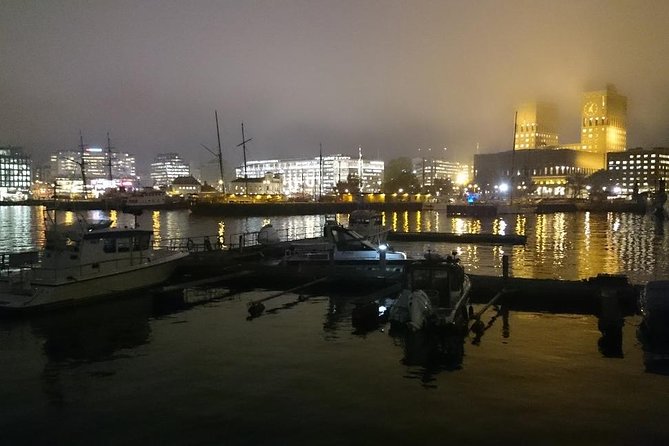
At $9.99 per person, you are paying for a structured story over a short walk, not for paid entry. That makes the math simpler than many tours. If you can follow the audio, enjoy the stops, and use the offline maps and geodata to keep moving, you are getting value.
What helps this be a good deal is the included setup:
- VoiceMap application
- Offline access to audio, maps, and geodata
- Lifetime access to the tour
Lifetime access matters more than it sounds. It means this is not one-and-done. If you later want to rewalk the route to compare what you notice on a second pass, you can.
The trade-off is that you need a smartphone, since it is not included. You also need headphones or a comfortable way to listen while walking. Without those, the “audio tour” part gets harder, and you might end up only reading street-level signage.
How to Use the Audio Without Feeling Cheated by Outdated Info
Here is the honest reality with self-guided audio: the best experience happens when you treat it like a guide, not a permanent encyclopedia. One piece of feedback highlighted a frustration where someone felt information was out of date and switched to reading signs instead.
You can protect yourself from that disappointment with a simple approach:
- Listen for the “why,” not just the “what.” If the building used to be a station and now hosts Nobel content, that idea still works even if minor details change.
- Keep your expectations flexible. Some dates and facts can shift over time, while the physical setting and the repurposing theme usually hold steady.
- If you do notice something that feels off, you can stop listening for a moment and just look around. This route is still rewarding as a walking circuit.
Also, because the tour includes offline audio and maps, you can keep going even if connectivity stutters. That reduces the most common annoyance with phone-based walking tours: stopping to troubleshoot.
Logistics That Make This Walk Feel Effortless
This is offered in English, takes about 40 minutes, and has a maximum of 10 travelers. Even though it is self-guided, the small group cap can be reassuring if you prefer a calmer start.
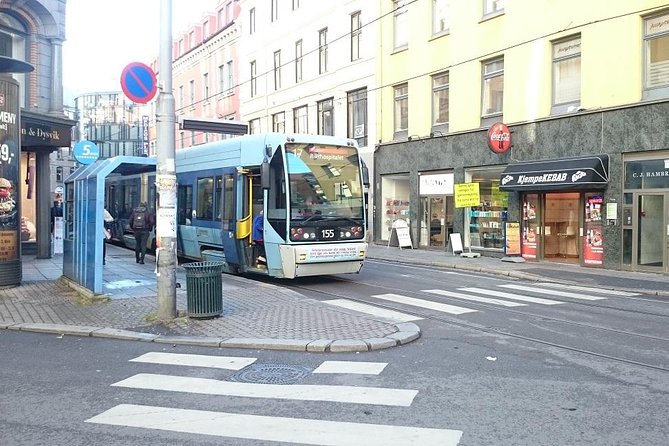
It is also described as near public transportation. That matters because Oslo is built for efficient movement. You can fit this into the middle of a transit day, then swap to bus, tram, or walk afterward.
Meeting point is Rådhusplassen. End point is Havnelageret, Langkaia 1. If you like clean transitions, you will appreciate finishing near the harbor side where you can keep exploring without backtracking.
Who This Tour Is Best For (And Who Should Pass)
This works best if you want:
- a fast way to understand downtown Oslo’s main story beats
- a guided walking route without ticket lines
- offline help so you do not feel lost
You might also like it if you enjoy architecture and urban transformation themes, since the route repeatedly focuses on repurposing: a shipyard waterfront area, a Nobel museum in a former rail station, and Østbanehallen after its 2015 transformation.
It might be less satisfying if you want deep museum-level interpretation inside each venue. The audio walk is built around outdoor and public-space stops, and it explicitly does not include museum tickets.
Finally, if you are picky about absolute factual accuracy at the level of a textbook, keep in mind that at least some users have raised concerns about out-of-date content.
Should You Book This Downtown Oslo Audio Tour?
I would book it if you want a short, low-cost way to connect Oslo’s major downtown landmarks into a coherent storyline. The value comes from the offline support, the compact 40-minute format, and the smart end at Østbanehallen, which sets you up for more exploring afterward.
I would hesitate if you are the type who expects every spoken detail to be perfectly current, or if you plan to rely on the audio as your only source for museum facts. In that case, you might still use it for pacing and context, but pair it with your own quick checks when something seems questionable.
Bottom line: at $9.99, this is a practical “get oriented fast” option. If your goal is to walk, look, and learn enough to feel confident in the city center, it earns its keep.
FAQ
How long is the Downtown Oslo self-guided highlights tour?
It runs for approximately 40 minutes.
What language is the audio available in?
The tour is offered in English.
What is the price?
The price is $9.99 per person.
Where do I start and where does it end?
You start at Rådhusplassen, Oslo, Norway and end at Havnelageret, Langkaia 1, 0150 Oslo.
Do I need to bring a smartphone?
Yes. A smartphone is not included.
Is the audio tour available offline?
Yes. It includes offline access to audio, maps, and geodata.
Are any museum tickets or entrance fees included?
No. Tickets or entrance fees to museums or attractions along the route are not included.
Is there a limit on group size?
Yes. This experience has a maximum of 10 travelers.
Is it possible to bring a service animal?
Yes. Service animals are allowed.
One Shortlist, Oslo





More Tour Reviews in Oslo



The Capital, Kept Going
Newest Oslo write-ups off our Norway desk
- Fjord Houseboat Cruise in Oslo. 100 % electric. BYO
★ 5.0 · 3 reviews - Oslo Christmas walk
★ 4.0 · 3 reviews - Afternoon Tea and Classic Concert on the Fjord
★ 4.5 · 3 reviews - Lake walk and campfire
★ 4.7 · 3 reviews - Oslo: Yoga & Hiking with a dog
★ 5.0 · 3 reviews - Oslo: Skjennungstoppen Wildlife Forest Hiking Tour
★ 5.0 · 3 reviews
More in Oslo Tours.
 ★ 4.5Oslo: Scenic Fjord Cruise with Audio Guide CommentaryFrom $445,375 reviews
 ★ 4.8Oslo Nature Walks: Island Hopping TourFrom $692,713 reviews
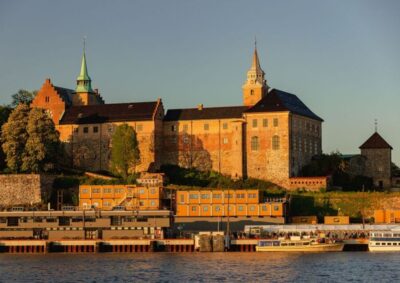 ★ 4.4Oslo: 100% Electric Oslofjord Sightseeing CruiseFrom $402,041 reviews
 ★ 4.5Oslo: Fjord Evening Cruise with Shrimp BuffetFrom $881,956 reviews
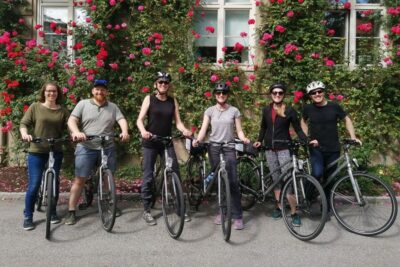 ★ 4.8Oslo: 3-Hour Highlights Bike TourFrom $621,609 reviews
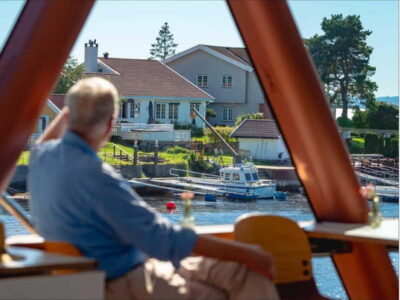 ★ 4.7Oslo: Guided Sightseeing Fjord Cruise on Premium Silent BoatFrom $641,390 reviews
 ★ 5.0Oslo Highlights Bike TourFrom $62979 reviews
 ★ 4.3Oslo: Paradox Museum Entry TicketFrom $29799 reviews
Lists this one sits in