
REVIEW · FOOD & DRINK
A Well Balanced History and Food Tour with Focus on the Scandinavian Kitchen
Oslo tastes better on foot. I like the way this tour blends city landmarks with real Norwegian food culture, and you get a guide who turns history into something you can taste, not just read. I especially liked the practical pacing and the chance to sample items like salmon in multiple styles during a focused downtown loop.
One thing to plan for: the tour price covers the guide and stops, but food and drinks are mostly paid by you, and tastings can be limited on Sundays and during weekdays after 6 PM.
In This Review
- Key highlights worth knowing
- Oslo’s Scandinavian kitchen tour in plain terms (3 hours, big sights, food as the theme)
- Price and logistics: what you pay for, what you should budget for
- Stop 1: Oslo National Opera and Ballet, where the tour sets the tone
- Stop 2: Aker Brygge, the waterfront reality check
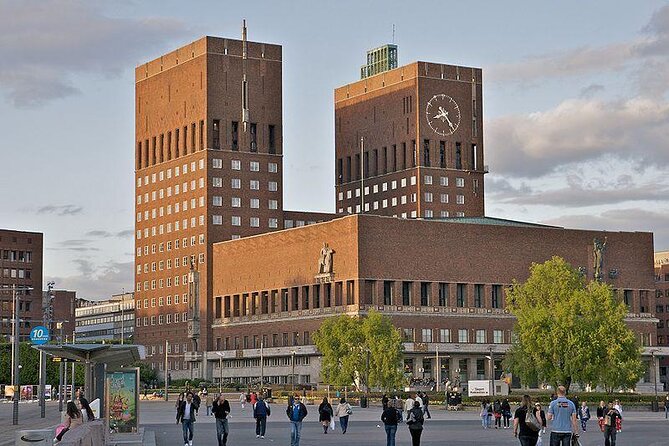
- Stop 3: Oslo City Hall, civic Norway in the middle of the walk
- Stop 4: Akershus Castle and Fortress, the medieval anchor
- Where you actually eat: Norwegian dishes and the add-on tasting reality
- The salmon trilogy option, and why it is worth considering
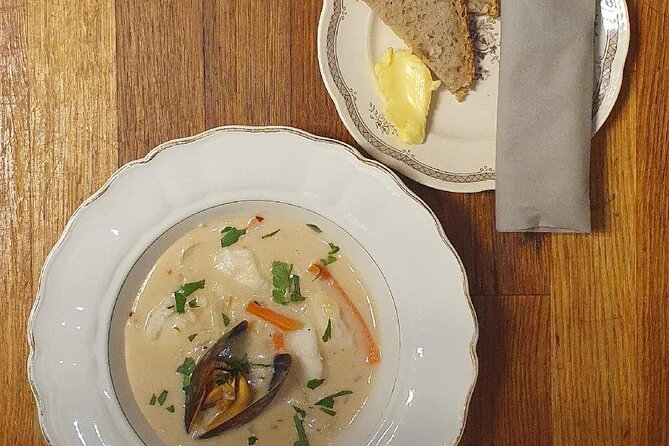
- Fish soup and the seasonal catch
- Sweet stop potential: Norwegian chocolate and other treats
- What the guide experience looks like, from Tanya-Lisa style to high attention on your feet
- When to book: planning around timing limits and how to avoid a low-food day
- How to get the most out of the walk (without turning it into a shopping trip)
- Who this tour suits best, and who might prefer a different plan
- Should you book the Scandinavian kitchen history and food tour in Oslo?
- FAQ
- How long is the tour?
- How much is the tour?
- Does the tour include food and drinks?
- What food can I expect to taste?
- Where does the tour start and end?
- Is pickup offered?
- Is the tour offered in English?
- How many people are in a group?
- Are tastings available every day and time?
- What if I need to cancel?
Key highlights worth knowing
- Professional local guide who ties Oslo landmarks to Norwegian food and history
- Downtown route that hits big sights like the National Opera and Ballet and Oslo City Hall
- Akershus Castle and Fortress adds real medieval weight to a modern city walk
- Norwegian classics to taste such as salmon and seasonal fish soup, plus meat and local beer
- Limited tastings at certain times, so timing affects how much food you get
Fork-first rivals, Oslo kitchens scored
- Oslo: Grünerløkka Food & Culture Walking Tour★ 4.5 · 161 reviews
- Oslo: Norwegian Food Tour & Hidden Gems City Walk★ 4.5 · 73 reviews
- Norwegian Food Tour & Hidden Gems of Oslo★ 4.9 · 60 reviews
- Oslo: Food Tasting and Walking Tour with a Local★ 4.5 · 50 reviews
Oslo’s Scandinavian kitchen tour in plain terms (3 hours, big sights, food as the theme)
This is the kind of Oslo experience that works even if you do not think you are a foodie. You are not hunting menus in the cold. You are walking a tight central-city route and getting food stops that make sense with what you are seeing.
The format is simple. You start near Oslo’s City center at Oslo Municipality. Then you move through iconic areas, with a guide explaining how Norway’s past shaped everyday life, including what people cook and eat. The “kitchen” angle is not just about eating. It is about raw ingredients from mountains, wilderness, and coast, and how Norwegian cuisine grew from what the country reliably has.
The tour also keeps a small-group feel. The maximum group size is listed as 12 travelers. That matters because you want time for questions, especially if you have dietary needs or you just want guidance on what is actually worth trying.
The biggest practical upside is that you hit multiple “must-see” places while still getting food moments, instead of doing a long history tour and then trying to eat on your own later.
Price and logistics: what you pay for, what you should budget for
The published price is $348.18 per group, up to 10 people, for about 3 hours. That group pricing can be good value if your group fills close to the max. If you book as a smaller party, the effective per-person cost rises, because the price stays “per group.”
Here is the key point: the tour price does not include tastings. Food and drinks are paid by the visitors unless the guide specifies value-added offers. That means you should treat this as a guided route plus food guidance, not an all-inclusive meal.
A concrete example helps. The sample recommendation lists salmon trilogy tasting at 210 per person. If you choose that, you can estimate your add-on cost fast. Add to that any drinks, seasonal items, and the other small tastings the guide directs you to.
Timing changes things too. Tastings are explicitly described as limited on Sundays and weekdays after 6 PM. In practical terms, this is where you can feel the difference between a tour that works like a food-focused walk and one that works more like a “food and history combo with smaller bites.”
Stop 1: Oslo National Opera and Ballet, where the tour sets the tone
Most food tours start with food. This one starts with a landmark. The National Opera and Ballet stop is a smart choice because it puts you in the mindset of Oslo right away. You are looking at a modern icon of city culture, and your guide can connect the idea of Norwegian identity to daily life, not only to old castles.
Why this matters for you: a good history guide does not just recite dates. You want context that makes the food stops more meaningful. Starting at the opera gives your brain a “present-day Oslo” anchor. Then, as you move toward older areas like Akershus, the contrast starts to click.
What to watch for: take a minute here to orient yourself. Even if you have already seen photos of the building, standing in the area helps you understand the direction you are walking next toward the waterfront.
Plate-led rivals across Oslo
Stop 2: Aker Brygge, the waterfront reality check
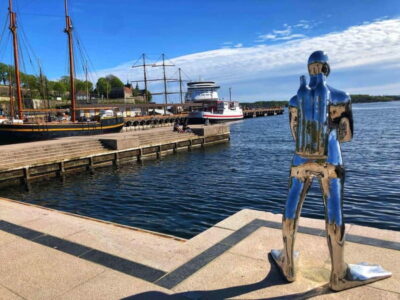
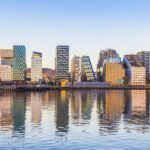
Then you shift into Aker Brygge, one of Oslo’s most recognizable waterfront areas. This is where the guide’s “history plus food” angle gets practical. Waterfront cities always shape what gets traded, prepared, and eaten. In a Norwegian setting, that coastal ingredient story matters.
Aker Brygge also works as a natural transition. You are no longer stuck in one historic pocket of the city. You are moving through the areas locals actually use, which makes the later stops feel less like a theme park and more like a real neighborhood walk.
For the best experience, keep your expectations realistic. This is not a quiet backstreet moment. It is a popular zone. That is part of the point, though. You are seeing how Norway’s identity shows up in modern public life, shopping, and dining options before you head into the medieval-feeling fortress area.
Stop 3: Oslo City Hall, civic Norway in the middle of the walk
Next up is Oslo City Hall. This stop adds something a pure food tour often misses: the political and civic “why” behind how a country organizes itself.
City Hall is also a good point in the route for questions. If you are wondering why certain foods show up at certain times, or why traditional ingredients still matter, ask your guide here. A good guide will connect the dots between institutions, culture, and everyday eating habits.
Even if you are not into architecture, you will appreciate this stop because it breaks up the walk visually. You go from waterfront open space to a more formal landmark setting. Then you build toward Akershus, where the medieval story comes into full view.
Stop 4: Akershus Castle and Fortress, the medieval anchor
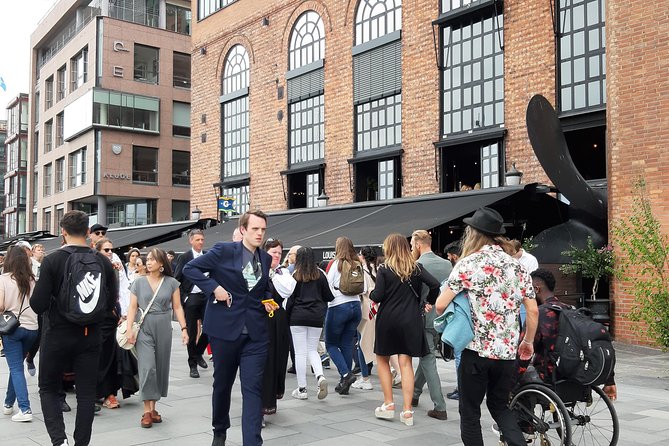
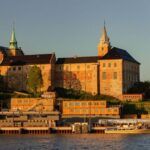
Akershus Castle and Fortress is the historical heavy hitter on this route. The listing calls it medieval, and you can feel that shift the moment you arrive. This is where Oslo history stops being an abstract timeline and becomes a place with walls.
For you, this stop is more than a photo moment. It is a contrast point. Norwegian cuisine is often described as shaped by raw materials from mountains, wilderness, and coast. Akershus helps explain how power, defense, and control of land and sea influenced settlement patterns. Those patterns affect what people could access, preserve, and serve.
Practical tip: wear shoes you can walk in comfortably. A fortress area means uneven surfaces and lots of steps or short uphill stretches depending on the route your guide takes. Plan to move at a calm pace, especially if you are not used to Nordic sidewalks in cool weather.
Also, do not rush. Spend a few minutes soaking in the walls and the layout. When the guide later connects the history to food culture, you will understand it better if you have already looked around.
Where you actually eat: Norwegian dishes and the add-on tasting reality
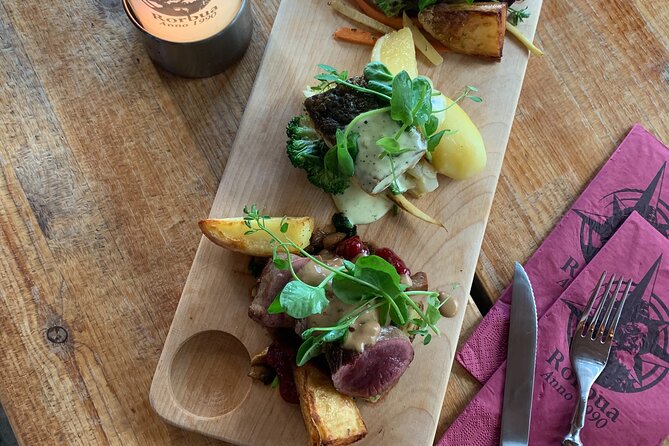
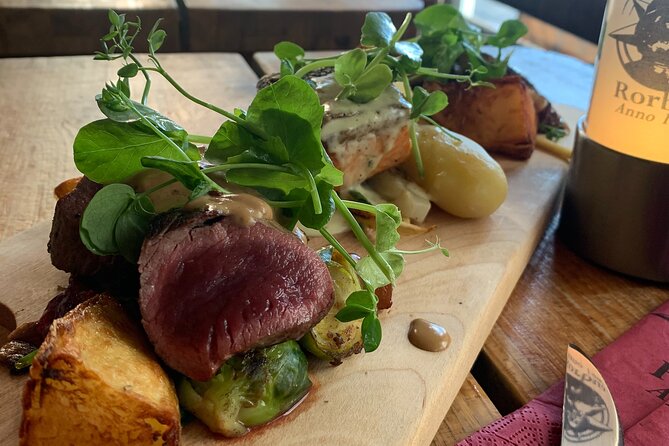
This tour is built around traditional Norwegian food based on ingredients that come from Norway’s coast and interior. The tasting list in the tour info is clear and helpful. You can expect chances to try salmon, seasonal fish soup, meat, and local beer. The stops are paired with places like historical restaurants and cafes, plus a famous chocolate shop, a gourmet supermarket, a canteen, and a traditional pub.
One practical thing: the tour description says you will have the opportunity to taste typical Norwegian dishes, but it also says tastings are limited at certain times. So you might get fewer items on Sundays, or if you are on a weekday tour that runs after 6 PM.
The salmon trilogy option, and why it is worth considering
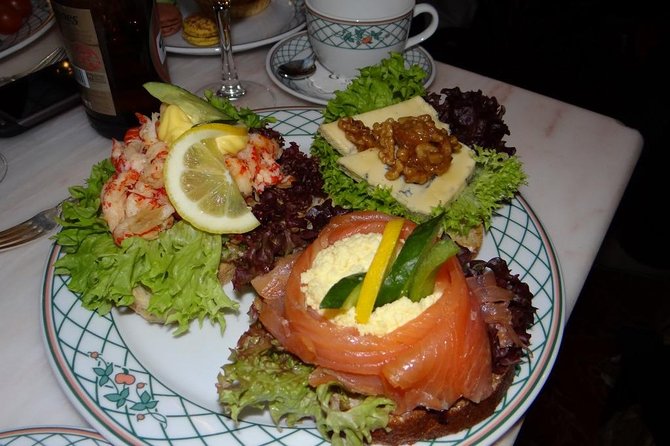
The sample recommendation highlights Salmon Trilogy, for example at 210 per person. That idea is appealing because it turns one ingredient into multiple experiences. In Norway, salmon is not just one thing. It can be cured, served prepared differently, or paired with flavors that reflect local styles.
If you are trying to decide what to spend your tasting budget on, prioritize the salmon tasting if it is offered during your specific time slot. It is also the most repeatable “Norway in one bite” choice. Even if you end up skipping other purchases, a salmon-focused tasting often gives you the clearest sense of the cuisine.
Fish soup and the seasonal catch
Fish soup is listed as seasonal. That matters because you cannot assume you will get it every day. If your guide mentions that fish soup is available, treat it as a bonus rather than a guaranteed checkbox.
If you are visiting outside prime season, you might see the tour emphasize other seafood items like smoked fish or fish-based dishes instead. That is normal for seasonal menus, but you should ask your guide what is on offer today.
Sweet stop potential: Norwegian chocolate and other treats
The route includes a famous chocolate shop. That is a nice counterweight to the savory dishes. Also, chocolate shops sometimes offer smaller bites than full restaurant tastings, which can help you manage costs if you want a taste without turning it into a full meal.
If you have limited appetite, you can treat the chocolate stop as a “treat moment” so you do not overspend at the savory places.
What the guide experience looks like, from Tanya-Lisa style to high attention on your feet
Your quality-of-life during this tour hinges on the guide. The information you provided points to professional local guiding, and the praise you included is specific.
One name that comes up strongly is Tanya-Lisa. The compliments focus on three things: attentive pacing for the group, solid Oslo history context, and patience when guests are deciding what to do next. That last bit matters more than people expect. Norwegian food choices can feel broad on paper, but the menu details, portion sizes, and preparation styles matter in person. A guide who helps you make a confident choice saves you money and regret.
There is also a clear pattern in the praise: the best tours cover a lot of ground without feeling rushed, and they connect the food stops to what you just saw. If your guide keeps pointing out landmarks while also telling you what to try and why it fits, you will feel like you “got” Oslo, not just watched it from the sidewalk.
When to book: planning around timing limits and how to avoid a low-food day
You will usually want to book this with your hunger level and your schedule in mind.
Two timing constraints are spelled out:
- Tastings are limited on Sundays
- Tastings are limited on weekdays after 6 PM
So if you care most about food quantity, target a day and time when tastings are less restricted. If you end up with a Sunday slot, go with the right mindset: you can still get the landmark walk and you will get some traditional tastes, but you should expect fewer bites than you would on a less restricted day.
Also, the tour is described as booked on average 42 days in advance. That usually means popular times can fill, especially for small groups. If you have fixed travel dates, book early and then adjust your meal plans around the tour.
How to get the most out of the walk (without turning it into a shopping trip)
Because tastings are paid by you, your goal is not to spend as much as possible. Your goal is to try smartly.
Here is how I would play it:
- Decide your tasting budget before you start. If you do not, it will grow during the walk.
- If salmon is offered as a major tasting option, consider choosing it. It is the most straightforward “Norway taste” on the menu list provided.
- Ask your guide what is worth trying right now. The best guides can steer you away from over-ordering and toward what matches the place.
- If you tend to get tired on long walks, mention that early. The tour is described as walking through central Oslo sights, and a guide who knows the route can help manage pacing.
Also, expect lots of landmark sight value, even if you do not buy multiple tastings. The National Opera and Ballet, Aker Brygge, Oslo City Hall, and Akershus Castle and Fortress make this a useful “see it with context” route.
Who this tour suits best, and who might prefer a different plan
This experience is a good fit if:
- you want a history and food combo, not separate tours
- you like tasting traditional Norwegian items like salmon and fish dishes
- you want a guided route through central Oslo sights you might not pick on your own
It might be less ideal if:
- you expect the tour price to include a full set of food tastings
- you only want to do one short bite-and-go meal, because the tour runs about 3 hours and tastings depend on timing
- you are traveling on a Sunday and your priority is maximum food quantity
If your main goal is eating everything in one go, you might instead consider a meal-based experience where tastings are bundled. If your goal is Oslo landmarks plus a focused tasting sampler, this tour fits the job.
Should you book the Scandinavian kitchen history and food tour in Oslo?
I think you should book it if you want one guided loop that covers major sights and gives you structured access to Norwegian flavors. The big win is the pairing: you do not just stand in front of landmarks, you get help understanding how Oslo’s story connects to what ends up on plates.
Book it with clear expectations about tastings. Since food and drinks are paid by you and tastings are limited on Sundays and after 6 PM, you will get the best value when your schedule lines up and you plan a tasting budget. If you do that, you can turn this from a standard walking tour into a genuinely flavorful orientation to Oslo.
If you are the type who loves salmon, wants some seasonal seafood, and likes history that shows up in everyday life, this is a very solid choice for a half-day style plan.
FAQ
How long is the tour?
The tour is about 3 hours.
How much is the tour?
The price is $348.18 per group, up to 10 people.
Does the tour include food and drinks?
No. Food and drinks are paid by visitors unless the guide specifies value-added offers. The tour price does not include tastings.
What food can I expect to taste?
You can expect the chance to try typical Norwegian dishes such as salmon, seasonal fish soup, meat, and local beer, plus other Norwegian food stops along the route.
Where does the tour start and end?
The tour starts at Oslo Municipality in Oslo, Norway, and it ends back at the meeting point.
Is pickup offered?
Yes, pickup is offered.
Is the tour offered in English?
Yes, the tour is offered in English.
How many people are in a group?
The tour has a maximum of 12 travelers.
Are tastings available every day and time?
Food tastings are limited on Sundays and on weekdays after 6 PM.
What if I need to cancel?
You can cancel for a full refund if you cancel at least 24 hours before the experience starts. If you cancel less than 24 hours before, the amount paid is not refunded.
Fork First In Oslo
One Shortlist, Oslo



More Tour Reviews in Oslo

Newest Oslo write-ups off our Norway desk
- Fjord Houseboat Cruise in Oslo. 100 % electric. BYO
★ 5.0 · 3 reviews - Oslo Christmas walk
★ 4.0 · 3 reviews - Afternoon Tea and Classic Concert on the Fjord
★ 4.5 · 3 reviews - Lake walk and campfire
★ 4.7 · 3 reviews - Oslo: Yoga & Hiking with a dog
★ 5.0 · 3 reviews - Oslo: Skjennungstoppen Wildlife Forest Hiking Tour
★ 5.0 · 3 reviews
More in Food & Drink.
 ★ 4.5Food and Culture walkFrom $123243 reviews
 ★ 4.5Oslo: Grünerløkka Food & Culture Walking TourFrom $126161 reviews
 ★ 4.9Tromsø: Fjords & Beaches Tour with Campfire and Arctic FoodFrom $304132 reviews
 ★ 4.7Tromsø: Aurora Tour with Photos, Campfire and Arctic FoodFrom $304126 reviews
 ★ 5.03 Hour Guided Food Walk Tour in Alesund, NorwayFrom $156124 reviews
 ★ 4.4Geiranger Fjord Boat Tour with Waterfall TastingFrom $6698 reviews
 ★ 4.5Oslo: Norwegian Food Tour & Hidden Gems City WalkFrom $17273 reviews
 ★ 5.0Tromso Beer Safari: Beer tasting with 10 beers and tapasFrom $12972 reviews
Lists this one sits in