
REVIEW · OSLO TOURS
Oslo: Historic Myths & Legends Evening Walking Tour
Oslo has a habit of telling stories with stone and wood. This evening walking tour connects Norse folklore to real central landmarks, using legends to help you notice what you might otherwise miss.
I especially like the way it starts at Oslo City Hall, where the wooden friezes and Viking-era beliefs give the whole walk a strong theme. Second, I like that the tour does not treat myths as a side quest, it uses them to explain people, power, fear, and justice in Oslo’s past.
The main consideration is simple: you’re walking in the evening and it can be cold, windy, or dark depending on the season. Wear comfortable shoes and dress for winter weather so the pace stays easy.
In This Review
- Key highlights worth planning for
- Where the tour starts: Oslo City Hall and the Swans Fountain
- The City Hall friezes: Vikings, beliefs, and why wood matters
- Christiania Torv: the square where Oslo’s timeline changes pace
- Akershus Fortress: medieval engineering you can actually picture
- Bankplassen and the city’s justice mindset: theft, punishment, and rules
- Oslo Cathedral and the value of pairing landmarks with stories
- What the walking feels like in real life: relaxed, short, and weather-dependent
- Who this tour suits best in your Oslo plan
- Is it a ghost tour? What you should expect instead
- Price and value: what $42 buys you in time, storytelling, and route design
- Should you book the Oslo Historic Myths & Legends Evening Walking Tour?
- FAQ
- What is the duration of the Oslo Historic Myths & Legends Evening Walking Tour?
- Where do I meet the guide?
- How much does the tour cost?
- Is the tour guided in English?
- What landmarks are included on the route?
- Are food and drinks included?
- What should I bring?
- Is this tour suitable for kids?
- Is it a ghost tour with underground exploring?
- Is the tour accessible for wheelchair users?
Key highlights worth planning for
- Oslo City Hall as a myth starter, with Viking beliefs brought to life through the building’s art
- City streets and folklore characters, including trolls, nisse, and huldra
- Akershus Fortress engineering, explained in a way that makes medieval design feel practical
- Bankplassen justice and crime stories, including audacious theft episodes and punishment culture
- Central landmarks you can actually revisit, like Christiania Torv and Oslo Cathedral
- A lively, English-speaking guide, with humor that keeps the walk flowing
Capital bookings past this listing, Oslo graded again
- Oslo: Scenic Fjord Cruise with Audio Guide Commentary★ 4.5 · 5,375 reviews
- Oslo Nature Walks: Island Hopping Tour★ 4.8 · 2,713 reviews
- Oslo: 100% Electric Oslofjord Sightseeing Cruise★ 4.4 · 2,041 reviews
- Oslo: Fjord Evening Cruise with Shrimp Buffet★ 4.5 · 1,956 reviews
Where the tour starts: Oslo City Hall and the Swans Fountain
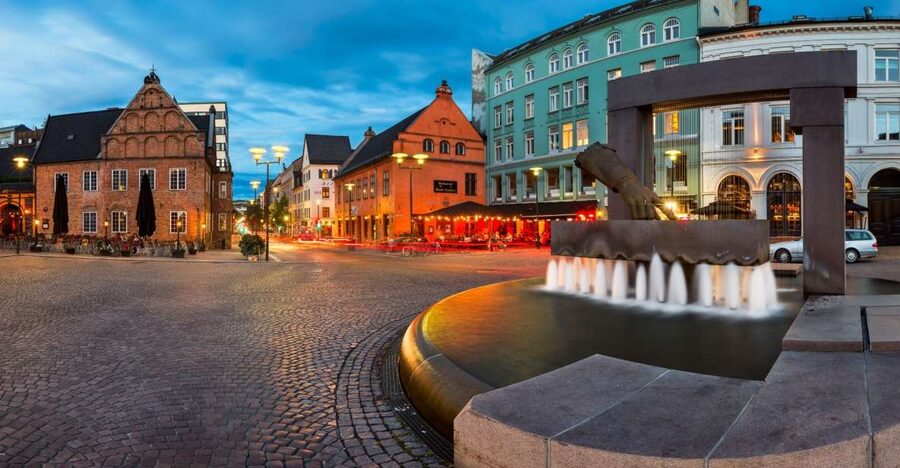
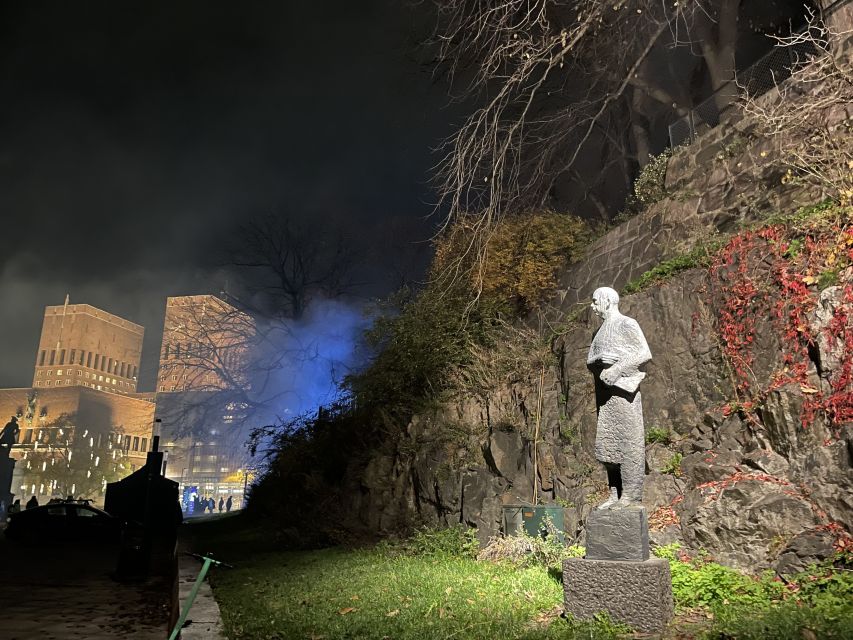
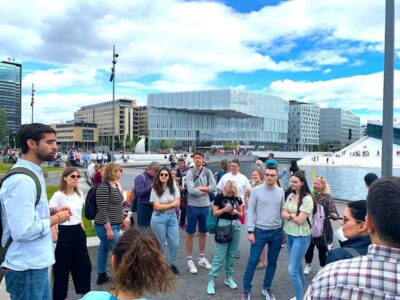
The meeting point is near the Swans fountain at the entrance of Oslo City Hall on Fridtjof Nansen’s square. From the start, you’re placed at a smart anchor for this kind of tour. City Hall is not just a pretty backdrop, it’s a statement about what Oslo remembers and what it wants you to understand.
Expect the guide to kick things off with the idea that Oslo’s legends are not random campfire tales. They’re social tools. Myths helped people make sense of the world, including nature, danger, and the rules of living together in a city that had to defend itself and govern disputes.
This is also where the tour’s tone locks in. Multiple guides named in participant feedback, including Maria and Anastasia, are praised for being both funny and easy to follow. That matters, because in a 2-hour walk, you want stories that land fast and keep moving instead of turning into a lecture.
The City Hall friezes: Vikings, beliefs, and why wood matters
One of the clearest reasons this tour works is that it uses the City Hall building itself. You’ll look at the wooden friezes and the scenes connected to Vikings beliefs. The key value here is interpretation. Instead of just saying Norse-era Vikings were myth people, the guide ties beliefs to the way communities imagined luck, protection, and risk.
If you’re the type who likes to “read” architecture, you’ll get a lot out of this stop. Even if you’re not a Viking specialist, you’ll leave with a mental map of what to look for in Oslo. People often rush past carvings and decorative details. This tour slows you down on purpose.
A small but memorable theme that shows up in tour storytelling is how myths explained everyday fears. For example, you may hear about the idea of the fear of flutes and why bells mattered as protection. That kind of detail is why this tour feels different from a standard photo walk.
Christiania Torv: the square where Oslo’s timeline changes pace
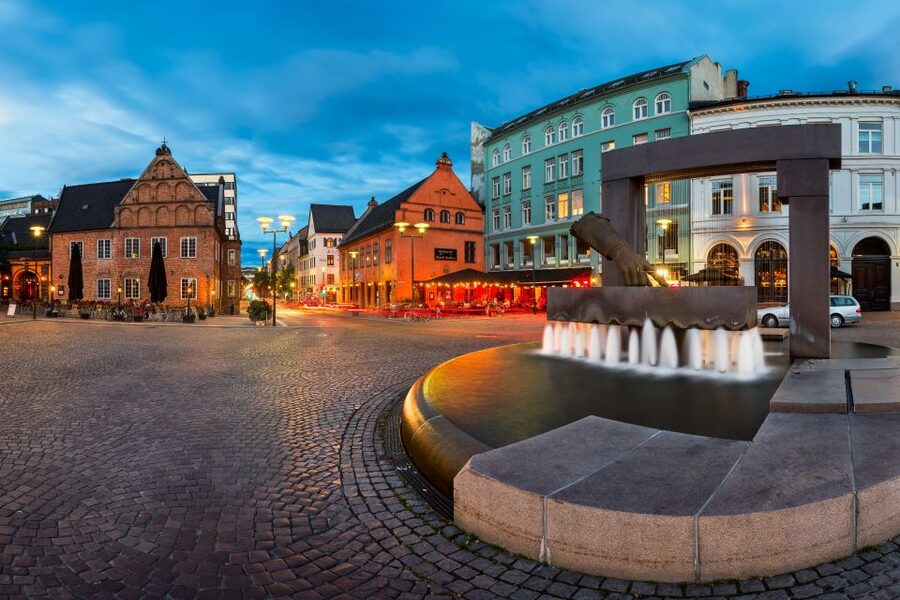
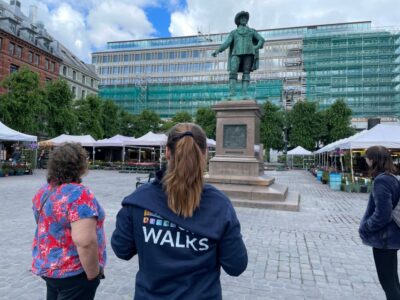
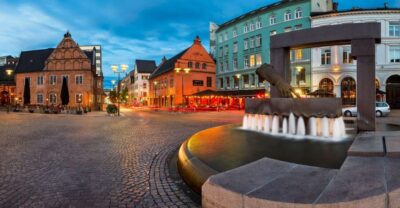
Next up is Christiania Torv, a historic square that has seen an enormous amount of daily life. The guide uses it as a contrast point after the myth-heavy start. City Hall gives you the legends layer. Christiania Torv helps you see how those legends sat inside real public space.
This stop is valuable because squares are where a city’s rules become visible. You get a sense of how people gathered, traded, argued, and watched what happened to others. In other words, this is where you start to understand that stories in Oslo were not only about invisible beings, they were also about social order.
You’ll likely also notice how the tour’s “lesser-known history” angle is practical. It nudges you toward the meaning of places instead of just reciting dates. Even if you’ve visited Oslo before, a square like this is often where you can still pick up a new way to see the city.
Pavement rivals threading Oslo


Akershus Fortress: medieval engineering you can actually picture
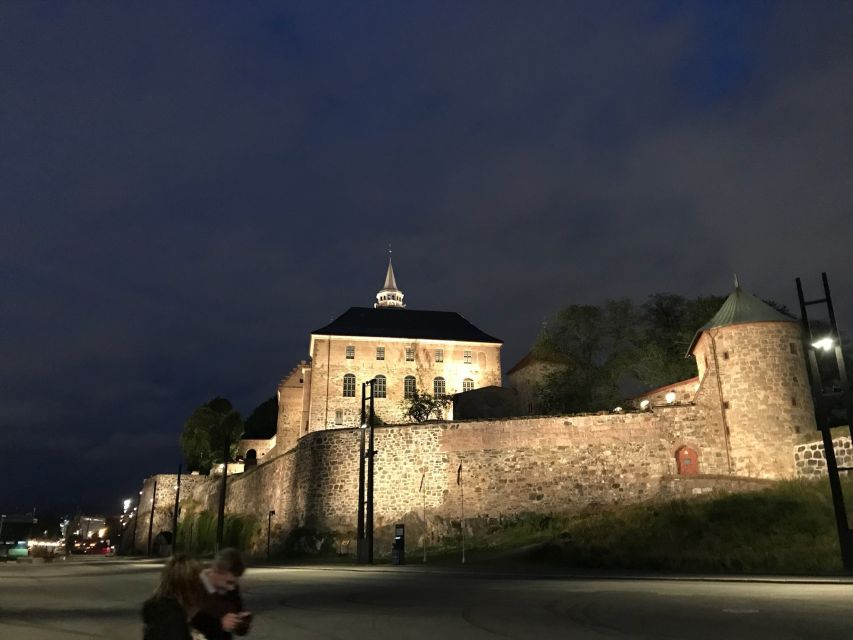
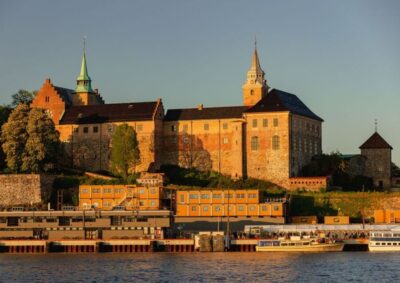
Then the walk turns to Akershus Fortress, and this is one of the stops with the strongest payoff. The fortress is described as a testament to medieval engineering and design, and you can feel why the guide emphasizes construction details.
Fortresses are not built for vibes. They’re built to handle threats, control movement, and protect key assets. When the guide explains the design logic, it helps you understand why the fortress looks the way it does and why the layout mattered. That turns “historic place” into “solvable problem,” which is easier to remember.
You’ll also hear stories tied to prisoners in the fortress walls and the fates they met. Even when you don’t love darker history, this part gives you context for why justice, punishment, and power show up so often in Oslo’s older narratives. It’s not just myth and mood. It’s real governance, just from a different era.
Bankplassen and the city’s justice mindset: theft, punishment, and rules

The tour then moves into Bankplassen, where you’ll hear riveting episodes of audacious thefts and how crime was handled. This is where the tour earns its focus. The tour does not throw in random spooky stories. It connects folklore and history to how a city protected itself and enforced rules.
If you like crime stories, you’ll appreciate that the guide frames them through the justice system of medieval Oslo. That gives you a clearer picture of what “punishment” meant back then, and why it was used to shape behavior in the community.
For your planning, this stop also helps you reframe what you see elsewhere in the city. When you’re walking later on your own, you might start noticing architectural clues tied to authority, security, and public order. That’s the best kind of memory, because it changes how you walk, not just what you learn.
Oslo Cathedral and the value of pairing landmarks with stories
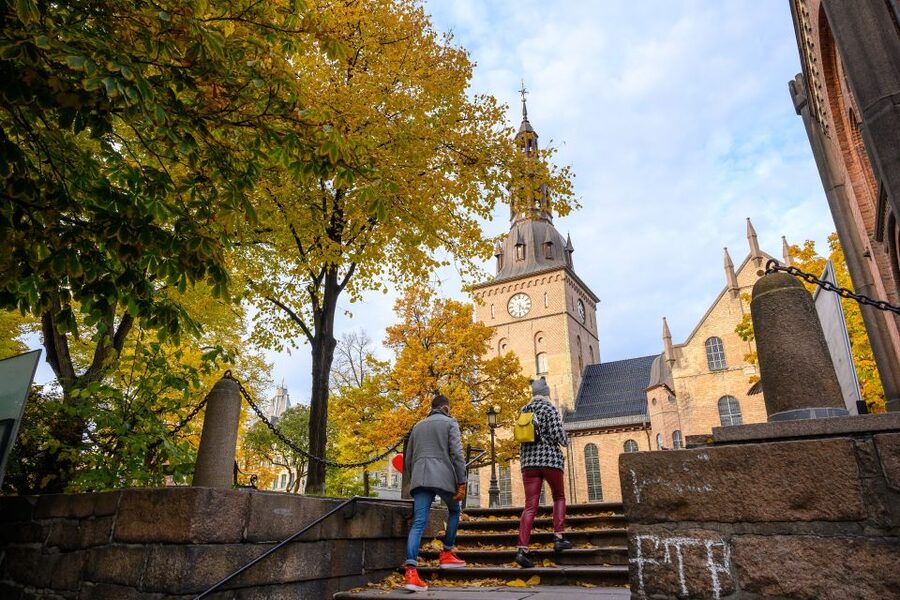
The tour includes major sights such as Oslo Cathedral, plus other relevant spots around the center. The benefit of including a landmark like this is that it gives the folklore part somewhere to “land.”
Cathedrals often get treated as pure sightseeing. Here, they become a background for the broader question the guide raises: how different belief systems shaped Oslo’s identity over time. Even when the story is myth-based, your brain also tags the real city markers around you, like you’re building a time-and-meaning overlay.
This pairing is especially useful if you’re in Oslo for only a short stay. Two hours is not long, but a good storytelling route can make the rest of your trip easier. You’ll return to your hotel with a stronger sense of what Oslo was built to do.
What the walking feels like in real life: relaxed, short, and weather-dependent
This is a relaxed evening walk with a 2-hour duration. That matters because the best myth tours are not speedruns. A relaxed pace gives you time to ask questions, take photos, and absorb the small “aha” details the guide points out.
Winter conditions are a recurring theme in participant notes. Expect wind and cold at street level, especially once the sun drops. One reason the tour keeps scoring high is that the guide stories and humor hold up even when the weather tries to steal your attention.
So, practical advice for you:
- Bring comfortable shoes for uneven sidewalks and winter surfaces.
- Dress in layers. The guide can’t control the wind, you can control your warmth.
- If you’re visiting in darker months, go anyway. The evening light makes central landmarks feel dramatic, and the guide typically keeps the route easy to follow.
Also note who it’s not ideal for: the tour is not suitable for children under 13, and it is not suitable for people with mobility impairments or wheelchair users. The route is still manageable for most able-bodied adults, but it’s a walking tour first.
Who this tour suits best in your Oslo plan
This tour is a strong fit if you:
- Want an intro to Oslo that goes beyond monuments and into meaning
- Like Norse mythology but also want it connected to real places
- Prefer an English guide who can explain concepts with humor and clear pacing
- Are visiting in winter and want a structured way to see the center while it’s lit up at night
It’s also a good choice for your first evening in Oslo. You’ll come away with a “map in your head,” not just photos. That makes it easier to plan the rest of your trip and spot how themes recur across buildings.
On the other hand, if you only want strictly factual history without any legend flavor, you might find the myth emphasis less satisfying. The tour purpose is clear: legends and history are linked, not separated.
Is it a ghost tour? What you should expect instead
The tour is often described as myth and legends, including stories that may involve ghosts or underground kingdoms. But the important thing is this: the tour is not a ghost-hunting expedition, and you will not be venturing underground.
That distinction is useful. You get the fun story elements, but the focus stays educational and cultural. Instead of chasing jump scares, you learn how these stories connect to the locations and to the way people in Norway imagined the world.
Price and value: what $42 buys you in time, storytelling, and route design
At $42 per person for about 2 hours with a live English-speaking guide, this is priced like a focused guided experience, not a casual stroll. The value comes from two things you can feel quickly.
First, the guide turns scattered landmarks into one coherent route. City Hall, Christiania Torv, Akershus Fortress, Bankplassen, and sights like Oslo Cathedral all connect through themes of belief, power, and order. That kind of “story logic” costs more than a standard city walk because someone has to build it well.
Second, it’s built to be practical. You don’t need to research a dozen sources. You get an organized, walkable narrative, and you can ask questions along the way. If you’re the type who likes to know why a building has a particular detail, this tour fits your style.
Should you book the Oslo Historic Myths & Legends Evening Walking Tour?
I’d book this tour if you want your Oslo intro to feel like a story with real city anchors. The route makes sense, the guide factor seems consistently strong, and the mix of folklore characters like trolls, nisse, and huldra, plus the darker side of justice and theft, gives you variety without chaos.
Skip it if you need fully accessible terrain or if you want no legend content at all. Also, go into it expecting cold streets. Bring the right shoes and layers, and you’ll enjoy the walk a lot more.
FAQ
What is the duration of the Oslo Historic Myths & Legends Evening Walking Tour?
It runs for 2 hours.
Where do I meet the guide?
Meet near the Swans fountain at the entrance of Oslo City Hall on Fridtjof Nansen’s square.
How much does the tour cost?
The price is $42 per person.
Is the tour guided in English?
Yes, it includes a live English-speaking guide.
What landmarks are included on the route?
The tour includes stops such as Oslo City Hall, Christiania Torv, Akershus Fortress, and Oslo Cathedral, plus additional relevant nearby locations.
Are food and drinks included?
No. Food and drinks are not included.
What should I bring?
You should bring comfortable shoes, especially for an evening walking route.
Is this tour suitable for kids?
No. It is not suitable for children under 13.
Is it a ghost tour with underground exploring?
No. It is not a ghost-hunting expedition, and you will not be going underground. Ghost-related stories are handled as cultural and historical context.
Is the tour accessible for wheelchair users?
No. It is not suitable for wheelchair users or people with mobility impairments.
One Shortlist, Oslo





More Tour Reviews in Oslo



The Capital, Kept Going
Newest Oslo write-ups off our Norway desk
- Fjord Houseboat Cruise in Oslo. 100 % electric. BYO
★ 5.0 · 3 reviews - Oslo Christmas walk
★ 4.0 · 3 reviews - Afternoon Tea and Classic Concert on the Fjord
★ 4.5 · 3 reviews - Lake walk and campfire
★ 4.7 · 3 reviews - Oslo: Yoga & Hiking with a dog
★ 5.0 · 3 reviews - Oslo: Skjennungstoppen Wildlife Forest Hiking Tour
★ 5.0 · 3 reviews
More in Oslo Tours.
 ★ 4.5Oslo: Scenic Fjord Cruise with Audio Guide CommentaryFrom $445,375 reviews
 ★ 4.8Oslo Nature Walks: Island Hopping TourFrom $692,713 reviews
 ★ 4.4Oslo: 100% Electric Oslofjord Sightseeing CruiseFrom $402,041 reviews
 ★ 4.5Oslo: Fjord Evening Cruise with Shrimp BuffetFrom $881,956 reviews
 ★ 4.8Oslo: 3-Hour Highlights Bike TourFrom $621,609 reviews
 ★ 4.7Oslo: Guided Sightseeing Fjord Cruise on Premium Silent BoatFrom $641,390 reviews
 ★ 5.0Oslo Highlights Bike TourFrom $62979 reviews
 ★ 4.3Oslo: Paradox Museum Entry TicketFrom $29799 reviews
Lists this one sits in