
REVIEW · OSLO TOURS
Oslo City Walks – Historic River Walk
Oslo’s river walk tells a whole city story. This Historic River Walk follows the Akerselva River, Oslo’s east and west divider, and shows how a working industrial corridor became today’s outdoor ribbon of cafés and art spaces. You’ll start at Akerselva Miljopark, get the key history from your guide, and finish near the waterfall at Beierbrua.
I especially like that the tour is short but focused. You get a guided one-hour stretch on the river, then a natural reset stop at Mathallen, where you can taste Norwegian specialties and refuel without losing the flow of the walk.
One consideration: you should be comfortable with a moderate walking pace for about 2 hours. It runs in all weather, so plan for rain, wind, and slick paths.
In This Review
- Quick hits on this Akerselva river experience
- Entering Oslo’s Green Lung at Akerselva Miljopark
- How the river story connects to cafes and art spaces
- Mathallen Oslo: your short food hall break and toilet stop
- Finishing at Beierbrua, where the waterfall takes center stage
- What you are really paying for at $53.28
- Timing, meeting point, and how the route fits your day
- Weather readiness: Oslo does not do excuses
- Who this walk is best for
- Should you book Oslo City Walks Historic River Walk?
- FAQ
- How much does the Oslo City Walks Historic River Walk cost?
- How long is the tour?
- What time does it start, and where do I meet?
- Is the tour offered in English?
- What is the maximum group size?
- Where does the tour end?
- What is included, and what is not included?
- Does the tour run in bad weather, and is it physically demanding?
- Can children join the tour?
- Can I cancel and get a full refund?
Quick hits on this Akerselva river experience
- Akerselva Miljopark start: learn why the river matters for both geography and industry
- The industrial-to-outdoors transformation is the main theme, not just scenery
- Mathallen Oslo stop: the food hall sits in an old industrial setting, plus it’s your toilet break
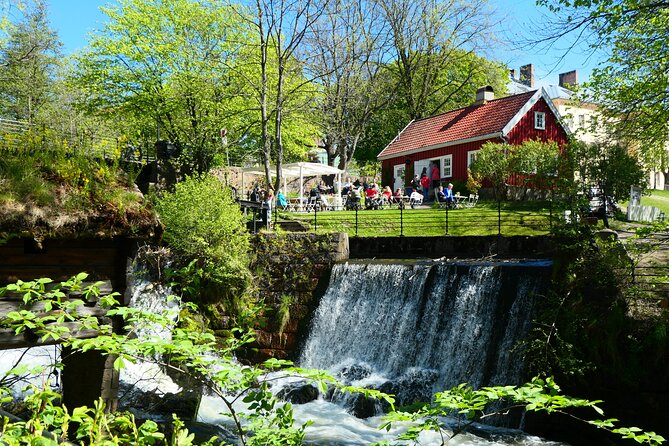
- Beierbrua waterfall endpoint: the walk is designed to end at a dramatic view
- Small groups with a maximum of 20 travelers, guided at a human pace
- English guided tour with a mobile ticket, easy to manage on the day
Capital bookings past this listing, Oslo graded again
- Oslo: Scenic Fjord Cruise with Audio Guide Commentary★ 4.5 · 5,375 reviews
- Oslo Nature Walks: Island Hopping Tour★ 4.8 · 2,713 reviews
- Oslo: 100% Electric Oslofjord Sightseeing Cruise★ 4.4 · 2,041 reviews
- Oslo: Fjord Evening Cruise with Shrimp Buffet★ 4.5 · 1,956 reviews
Entering Oslo’s Green Lung at Akerselva Miljopark
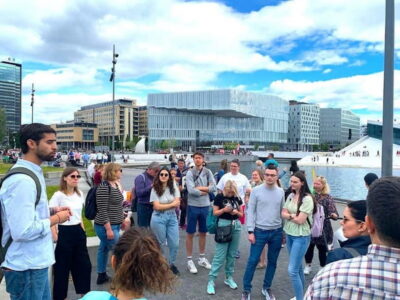
The tour kicks off near Jernbanetorget at the Oslo Visitor Center, then moves you into the real character of Oslo: the river corridor. Akerselva is the line that divides the city between east and west, and it shaped how Oslo grew and worked. When I think of a city that feels both modern and readable, this is the kind of place that helps it click.
At Akerselva Miljopark, your guide sets the context. Expect a clear, practical explanation of how this river became a hub for industrialization. That story matters because it changes how you see the buildings and the spaces next to the water. Instead of treating the river as just a pleasant walkway, you understand why it was built up in the first place and what Oslo chose to do with that heritage.
The first stop also gives you something many tours skip: time to look slowly. You get about one hour here, so you can pause, compare views along the water, and connect the history to what’s visible now.
Tip for you: bring your eyes, not just your phone. If you can, take a moment to look across the water and line up what you see with the east west idea the guide emphasizes. It’s an easy mental map for the rest of the day.
How the river story connects to cafes and art spaces
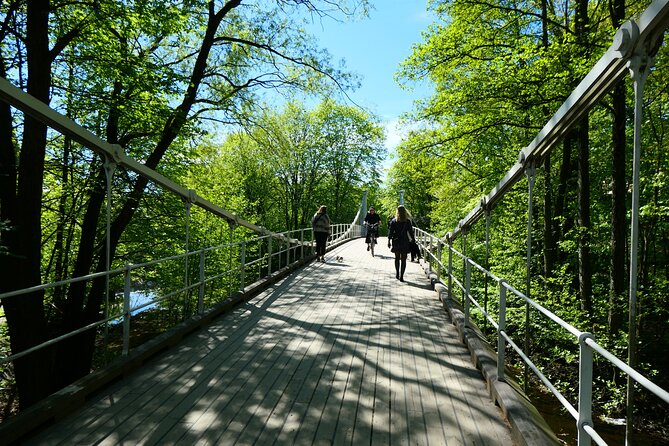
The big theme running through this walk is transformation. Oslo’s riverside used to function as the industrial engine of the city. Now it’s a popular outdoor space, lined with places to eat and drink, and also with art and creative energy.
That shift is more than a feel-good makeover. It’s also a clue about Oslo’s planning mindset. You’ll see how the city kept the bones of the industrial river corridor, then repurposed it into something social and everyday. The result is a route that’s interesting even if you don’t consider yourself a history person.
I also like that this is not an overwhelming list of facts. It’s guided in a way that helps you notice details. When the guide points out the industrial past, you start looking at the shape of the area, the way people move through it, and how the spaces now serve daily life.
This is one of those walks where you finish with a better sense of city logic. You stop thinking in isolated attractions and start thinking in systems, like how a river can shape work, neighborhoods, and public space.
Mathallen Oslo: your short food hall break and toilet stop
After the river stretch, the itinerary includes a quick but genuinely useful break at Mathallen Oslo. It’s a food court in an old industrial building, and it’s also listed as the toilet stop along the way. That combination is a big part of why this tour feels practical.
This is your chance to taste Norwegian specialties without committing to a full sit-down meal. You can browse a range of options in one place, then grab something you like and get back to your walk feeling human again. Since the stop is part of the experience flow, it does not feel like an interruption.
Mathallen also reinforces the day’s theme. The building is an example of that industrial-to-modern reuse, just at a smaller and more food-focused scale. You’re literally standing where old structures became everyday gathering spots.
What to do here (so you get value):
- Pick one Norwegian item you’ve been curious about, not five.
- If you’re travel-hydrating challenged, this is a good moment to refill water and use the facilities before the final stretch.
- Keep your snack simple so you can enjoy the endpoint view without rushing.
The tour only allocates about 15 minutes here. That’s not enough for a long meal, but it’s perfect for tasting and resetting.
Pavement rivals threading Oslo


Finishing at Beierbrua, where the waterfall takes center stage
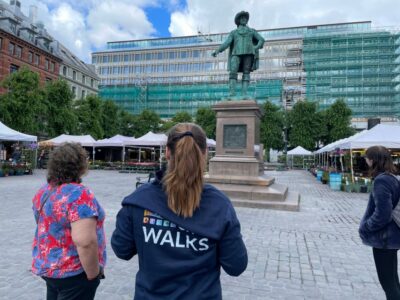
The end point is the bridge over the spectacular waterfall at Beierbrua. This matters because it shapes the pacing. You know where the tour is heading, so you walk with a purpose instead of wandering.
A good guided walk often does two things: it gives you meaning along the way and it gives you a payoff at the end. Beierbrua is the payoff. You spend the final part of the route approaching the waterfall area, then stop at the bridge for the view.
If you’re the type who likes to take photos, plan for a few minutes of stopping and framing shots. If you’re not, plan for simply standing and absorbing the sound and scale. Either way, it makes the whole experience feel complete.
Quick practical note: you end at Beierbrua, so check your onward plans ahead of time. The walk ends near the waterfall rather than back at the starting point.
What you are really paying for at $53.28
At $53.28 per person, it’s fair to ask what you get for the money. The answer is the guide. The tour includes a guide, and the two main stops are listed with free admission tickets, so your cost is primarily paying for guided time, local storytelling, and keeping the route logical.
Also, the group size is capped at 20 travelers. That helps because it keeps the walk personal enough that you can ask a question without feeling like you’re in a moving school bus.
Duration is about 2 hours. In a city like Oslo, that’s a sweet spot. Long enough to learn the key story of Akerselva and how Oslo changed it, short enough that you can still do other things the same day.
If you like experiences where the guide helps you interpret what you see, this is good value. If you only want scenery with zero context, you might decide it’s too guided and payoffs may feel limited. But if you enjoy connecting the dots, you’ll likely feel like your time was well spent.
Timing, meeting point, and how the route fits your day
The tour starts at 2:00 pm. You meet at the Oslo Visitor Center, Jernbanetorget 1, 0154 Oslo. Your end point is near Beierbrua, 0459 Oslo.
Why the timing matters: a 2 pm start gives you a late afternoon option. It also fits well with a day that includes indoor exploring or museums earlier, then a breath of fresh air along the river.
It also helps that the meeting point is near public transportation. That makes this kind of walk easier to plug into a travel plan without complicated routing.
The tour uses a mobile ticket, so you can keep everything simple on your phone. Confirmation is sent at booking time, which reduces the usual guesswork.
One more planning detail: this experience is commonly booked about 39 days in advance. If your travel dates are tight, booking earlier tends to keep choices open.
Weather readiness: Oslo does not do excuses
This walk operates in all weather conditions, and you’re advised to dress appropriately. That’s not a threat, it’s a promise that you won’t get the whole experience cancelled because of a light drizzle or gray skies.
You should assume the river corridor can be slick. Wear shoes with decent grip and bring a layer you can adjust. Even if it’s not raining hard, Norway weather can change fast, and the river area can feel cooler than nearby streets.
If your idea of a good day is staying dry, you’ll want to be proactive. A waterproof jacket or shell, plus shoes that can handle wet pavement, will make the experience feel comfortable instead of stressful.
Who this walk is best for
This is a strong fit if you want:
- A guided orientation to Oslo beyond the big museum stops
- A walk that explains how the city repurposed industrial space into outdoor social life
- An easy half-day segment where a food hall stop is built in
It’s also a good option if you like structure. The itinerary is short, with clear waypoints: start at Akerselva Miljopark, quick break at Mathallen, then end at Beierbrua.
It may not suit you as well if:
- You dislike guided commentary and want silent wandering
- You struggle with walking for about 2 hours at a moderate level
- You want a lot of time in restaurants, because Mathallen is intentionally brief
If you’re visiting with kids, note the requirement that children must be accompanied by an adult. If you’re traveling solo or as a couple, the small group size makes it feel friendly and not chaotic.
Should you book Oslo City Walks Historic River Walk?
I think you should book this if you want a guided, interpretable Oslo experience that mixes city planning, industrial history, and real everyday life. The focus on Akerselva Miljopark as the story starter, the practical reset at Mathallen, and the payoff view at Beierbrua makes it feel like a complete arc rather than a random stroll.
Skip it only if you plan to do most of your sightseeing from inside buildings and you prefer attractions with longer time on-site. For the price, you’re mainly paying for the guide and the meaning you get along the way, not for paid museum entries.
If you’re trying to learn Oslo fast, this is one of those tours that helps everything else make more sense. You walk away with a clearer map in your head, and you understand why the river is one of the city’s best public spaces.
FAQ
How much does the Oslo City Walks Historic River Walk cost?
The tour price is $53.28 per person.
How long is the tour?
The walk lasts about 2 hours.
What time does it start, and where do I meet?
It starts at 2:00 pm, and the meeting point is Oslo Visitor Center, Jernbanetorget 1, 0154 Oslo.
Is the tour offered in English?
Yes, the tour is offered in English.
What is the maximum group size?
The tour has a maximum of 20 travelers.
Where does the tour end?
The tour ends near the waterfall at Beierbrua, 0459 Oslo.
What is included, and what is not included?
The guide is included. Hotel pickup and drop-off are not included.
Does the tour run in bad weather, and is it physically demanding?
The tour operates in all weather conditions, so dress appropriately. Travelers should have a moderate physical fitness level.
Can children join the tour?
Yes, children can join, but they must be accompanied by an adult.
Can I cancel and get a full refund?
Yes. You can cancel for a full refund if you cancel at least 24 hours before the experience starts.
Pavement Threading Oslo


More Tour Reviews in Oslo




The Capital, Kept Going
Newest Oslo write-ups off our Norway desk
- Fjord Houseboat Cruise in Oslo. 100 % electric. BYO
★ 5.0 · 3 reviews - Oslo Christmas walk
★ 4.0 · 3 reviews - Afternoon Tea and Classic Concert on the Fjord
★ 4.5 · 3 reviews - Lake walk and campfire
★ 4.7 · 3 reviews - Oslo: Yoga & Hiking with a dog
★ 5.0 · 3 reviews - Oslo: Skjennungstoppen Wildlife Forest Hiking Tour
★ 5.0 · 3 reviews
More in Oslo Tours.
 ★ 4.5Oslo: Scenic Fjord Cruise with Audio Guide CommentaryFrom $445,375 reviews
 ★ 4.8Oslo Nature Walks: Island Hopping TourFrom $692,713 reviews
 ★ 4.4Oslo: 100% Electric Oslofjord Sightseeing CruiseFrom $402,041 reviews
 ★ 4.5Oslo: Fjord Evening Cruise with Shrimp BuffetFrom $881,956 reviews
 ★ 4.8Oslo: 3-Hour Highlights Bike TourFrom $621,609 reviews
 ★ 4.7Oslo: Guided Sightseeing Fjord Cruise on Premium Silent BoatFrom $641,390 reviews
 ★ 5.0Oslo Highlights Bike TourFrom $62979 reviews
 ★ 4.3Oslo: Paradox Museum Entry TicketFrom $29799 reviews
Lists this one sits in