
REVIEW · WALKING TOURS
Hipstoric Grünerløkka Private Walking Tour
Oslo has a second life once you leave the main drag. This private walking tour focuses on Grünerløkka and the artsy, lived-in side of the city, with stops that connect politics, culture, and everyday neighborhoods. You cover a tight route over about 3 hours, with a professional English-speaking guide and plenty of time for questions.
I especially like two things: the chance to see places most visitors skip, and how guides turn street corners into stories about local life. The tour has a strong track record with guides like Inger (called out for knowledge and passion) and Björn (praised for being informative). One small consideration is that it is a walking tour on uneven, real-city streets, so you’ll want moderate fitness and good shoes.
The route is also weather-dependent in the normal sense, since it runs in all conditions. In heavy rain or cold wind, you’ll be glad you dressed for comfort, because you’ll still be out there moving.
In This Review
- Key highlights you will actually feel on your walk
- Where this tour really starts to make sense: Youngstorget
- Torggata and Kulturkirken Jakob: city streets with cultural meaning
- Akerselva to Grünerløkka: the river route that changes your mood
- Olaf Ryes plass to Blå: Edvard Munch energy and street art that’s close up
- Brenneriveien and Damstredet: industrial leftovers turned into art
- Our Saviour’s Memorial Cemetery and Old Aker Church: where Oslo’s past anchors the route
- Telthusbakken to Mathallen OsloVulkan: color on a street, then a real meal
- Price and pacing: does $237.12 feel like value for your time?
- Logistics you should plan for before you step out
- Who should book this private Grünerløkka walk
- Should you book Hipstoric Grünerløkka Private Walking Tour?
- FAQ
- Where does the tour start and end?
- How long is the Hipstoric Grünerløkka Private Walking Tour?
- Is the tour private, or will I join a larger group?
- What language is the tour offered in?
- Are the admissions at the stops free?
- What happens after the tour ends at Mathallen?
- Is Mathallen open every day?
Key highlights you will actually feel on your walk
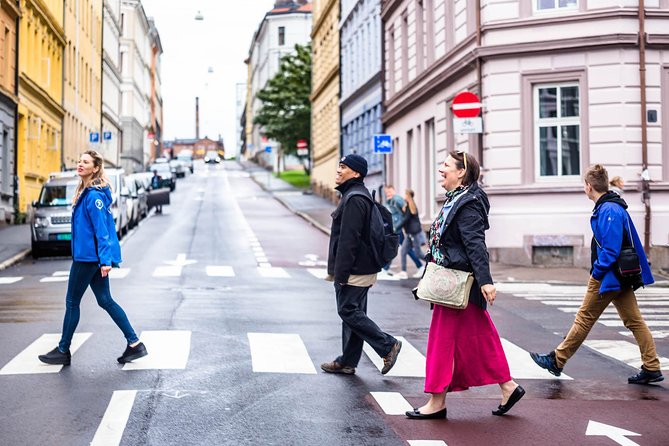
- A private format that lets you ask questions instead of listening from the back row
- Local culture stops like Kulturkirken Jakob, where performances and events happen in a church setting
- Akerselva, Oslo’s green lung vibe, with parks and river trails shaping the pace
- Street art across multiple streets, not just one quick photo wall
- An ending that makes sense, at Mathallen OsloVulkan, where you can eat right after
Pavement rivals threading Oslo
- Oslo: Best of Oslo Walking Tour★ 4.5 · 458 reviews
- Oslo: Guided Walking Tour of Central Oslo★ 4.7 · 438 reviews
- Oslo: Historic Myths & Legends Evening Walking Tour★ 4.8 · 408 reviews
- Taste of Oslo Walking Tour★ 4.5 · 282 reviews
Where this tour really starts to make sense: Youngstorget
Youngstorget is a smart first stop because it sets the tone for modern Oslo. This square has become a symbol of political power, with speeches and rallies held there close to the Government quarter. When your guide frames it this way, you start seeing the city as more than monuments.
From there, you get a quick sense of how Oslo organizes public life. The area around Youngstorget includes many headquarters of political organizations, which makes the place feel like a working machine, not a postcard.
If you like understanding the “why” behind a neighborhood, this opening delivers fast. It’s also easy to reach, so you can get your bearings without stress.
Torggata and Kulturkirken Jakob: city streets with cultural meaning
Next comes Torggata, a street with a simple name that carries a funny pop-culture detail. Torggata literally means Square Street, and the street is even represented in the Norwegian edition of Monopoly. That detail is exactly the kind of bridge a good guide uses to get locals to talk, even if you do not read Norwegian.
Then you shift into culture mode at Kulturkirken Jakob. This Culture Church is rented long-term by Kirkelig Kulturverksted, and it is one of the few churches of culture in Norway where guests can watch theatre and concerts, dance, or take part in other cultural expressions. That is a big deal because it shows how Oslo reuses older spaces for new community energy.
Practical tip: when your guide points out how events fit inside church space, pay attention to what is still “church-like” versus what has changed. It helps you read the building instead of just passing it.
Akerselva to Grünerløkka: the river route that changes your mood

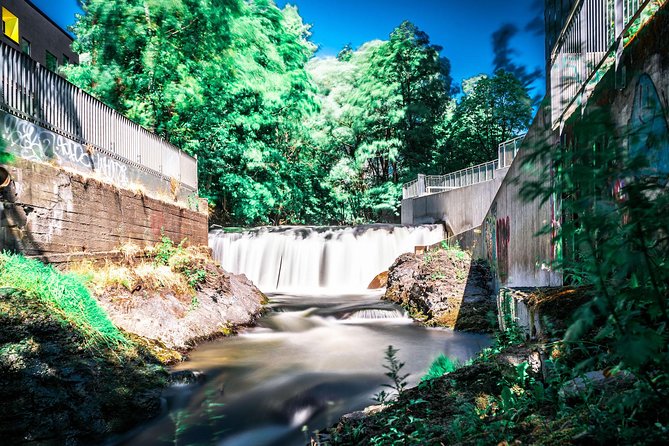
Then the walk turns scenic in a very Oslo way. You head to Akerselva River, known as Oslo’s green lung, with parks and nature trails along its sides. Even on a short stop, the river corridor does something helpful: it resets your pace and gives you breathing room between denser city scenes.
After you cross Akerselva and the Fairytale Bridge, you officially enter Grünerløkka. This is where the tour earns its Hipstoric label. Grünerløkka was traditionally working-class, but gentrification began taking hold in the late 1900s, and you can feel that change in the mix of older structures, newer energy, and creative spaces.
I like that the guide keeps this section grounded. Instead of just saying “cool neighborhood,” you learn what the neighborhood used to be and what it became, which makes the street art and venues feel connected to the place, not random decoration.
Closed-party rivals in Oslo



Olaf Ryes plass to Blå: Edvard Munch energy and street art that’s close up
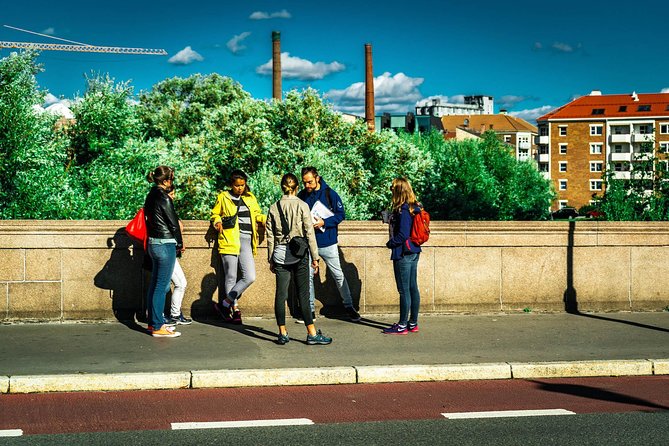
At Olaf Ryes plass, the park sits inside a pocket of three- and four-story buildings built mainly in the late 1800s. One name your guide is likely to connect to this area is a young Edvard Munch. That kind of local tie-in helps you understand why Oslo feels so strongly artistic, even in everyday housing blocks.
You’ll also notice Parkteatret nearby, one of Oslo’s famous concert venues. It’s the sort of landmark that makes the walk feel like a route through living culture, not a scavenger hunt.
Then comes one of the most fun stops for photos: Blå. The area around alternative music venue Blå is a highlight for Oslo street art, so bring your camera and look up as much as you look forward. A good guide will point out details you might miss, like how street art fits the neighborhood rhythm and building surfaces.
Brenneriveien and Damstredet: industrial leftovers turned into art
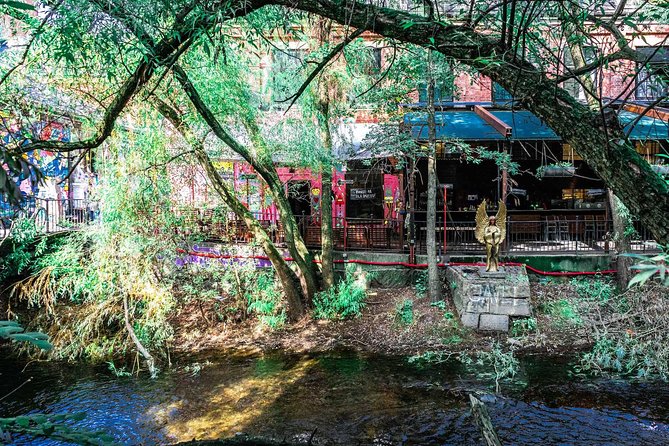
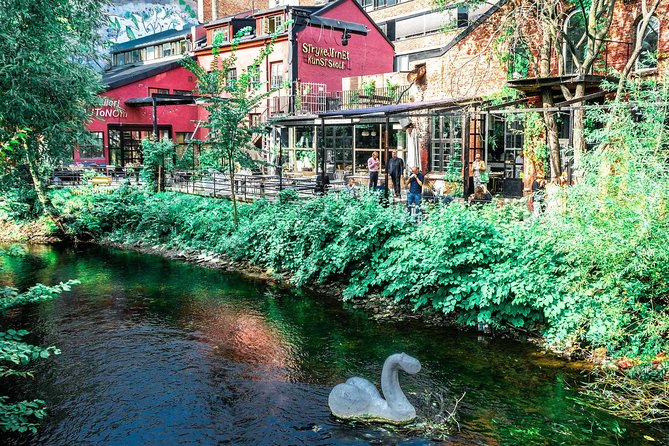
Brenneriveien is where the tour leans into transformation. This area has old, unused industrial buildings, and local art students turned them into a street art paradise. It’s a strong contrast with the political and church-related stops earlier, because here the story is about reuse and creativity in the physical environment.
If you care about how cities evolve, this stop is worth slowing down for. You can see how abandoned space can turn into something social and visual, without needing a big official redevelopment narrative.
Next is Damstredet, known for well-preserved wooden hillside houses where people still live. The slope makes it naturally photogenic, and your guide can help you spot what makes these houses distinctive. It’s also a reminder that Grünerløkka is not only about murals and venues, it is also about normal daily life happening behind nice façades.
Our Saviour’s Memorial Cemetery and Old Aker Church: where Oslo’s past anchors the route
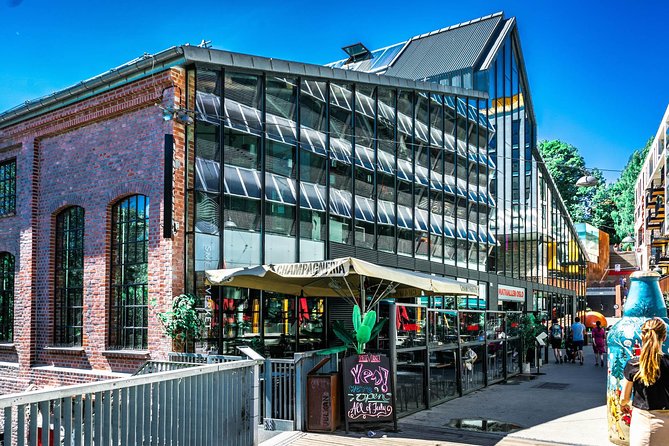
Then you get two stops that add depth quickly: Our Saviour’s Memorial Cemetery and Old Aker Church.
At Our Saviour’s Memorial Cemetery, Oslo’s stories connect to famous Norwegians, including playwright Henrik Ibsen and painter Edvard Munch. Even if you are not there to do a deep genealogy, the names help explain why the city’s cultural identity feels so personal.
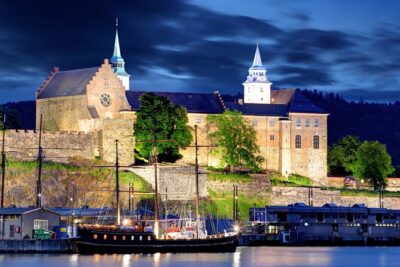
Old Aker Church follows, and it is genuinely one of those “stop, look, absorb” moments. Old Aker Church, or Gamle Aker Kirke, is Oslo’s oldest remaining building and the only remaining church from the Middle Ages. When you stand in front of something that old, the earlier stops make more sense too, because it shows how change and continuity sit side by side in Oslo.
Practical note: cemeteries and old churches can be quiet places. Dress respectfully, keep your voice low, and give yourself a few extra seconds per stop to actually look.
Telthusbakken to Mathallen OsloVulkan: color on a street, then a real meal
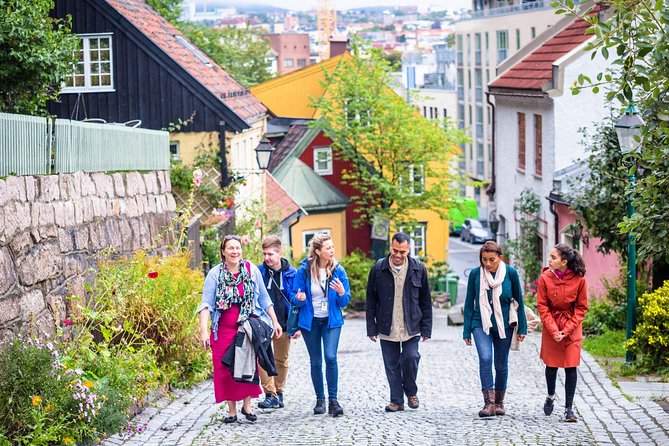
Telthusbakken is one of the most visually memorable moments of the walk. It has colourful wooden houses, and the street is the motif of one of Edward Munch’s paintings. That connection makes your photos feel more intentional, because you are not only capturing a pretty street, you are capturing a scene linked to a famous artist.
The street also has a present-day rhythm: about 50 people live on one side, while on the other side there are allotment gardens. That mix is small, but it helps you picture local life beyond cafés and concerts.
Then the tour ends at Mathallen OsloVulkan, at Vulkan in the Grünerløkka district. This is a major practical bonus. Mathallen is a food hall in Oslo, and it offers options for all tastes, so it is a natural place to eat after a walking tour.
One catch to plan around: Mathallen is closed on Mondays. If your trip lands on Monday, you can still use the end point as a neighborhood orientation moment, but you’ll want to decide your food plan ahead of time.
Price and pacing: does $237.12 feel like value for your time?
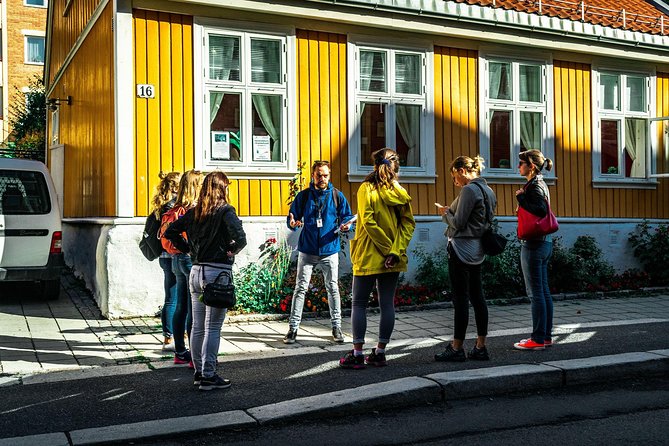
At $237.12 per person for an approximately 3-hour private tour, the value comes from two things: time efficiency and personalization.
First, you are not paying for a slow, stop-and-go bus ride. You are paying for an expert guide to connect political history, arts venues, river nature, street art, architecture, and older churches within one compact route. That is ideal if you want a coherent story without spending your entire day researching.
Second, the private format matters. If you have questions about why certain areas changed, how culture is hosted in old spaces, or what to look for in street art and architecture, you will get direct answers instead of fitting your curiosity around a group schedule.
Group discounts are listed, which can help if you are traveling with friends or family. This also works well for couples who want an easy pace without the awkward timing of shared group logistics.
If you prefer a leisurely self-guided stroll with zero structure, this might feel too guided. But if you like your walking to come with context, the price is easier to justify.
Logistics you should plan for before you step out
The tour is offered in English and is a private activity, meaning only your group participates. You get a mobile ticket, and it runs in all weather conditions, so dress comfortably and appropriately for what Oslo throws at you.
You should expect a walking day across city streets and parks, with a moderate physical fitness level recommended. Service animals are allowed, and the meeting point is Youngstorget in Oslo, with the walk ending at Mathallen OsloVulkan.
After the tour, you make your own way back. The data gives a simple option: a walk of about 15 minutes (around 1 km) back to the starting area, or public transport on your own. Public transport tickets are not included.
Who should book this private Grünerløkka walk
This tour fits best if you want Oslo through neighborhoods, not through a checklist. I would book it if you care about street art that has context, church spaces used for culture, and the way the city’s political and creative sides overlap.
It is also a strong match for people who want a manageable duration. Three hours is long enough to see a meaningful slice of the district, but short enough that you can still have energy for dinner.
If you only want big museum hits or you dislike walking, you might feel better choosing a different format. But for anyone who likes local texture, this is a great way to get it in one go.
Should you book Hipstoric Grünerløkka Private Walking Tour?
Yes, if you want off the beaten path sights with clear explanations, and you like art, architecture, and neighborhood stories. The strongest reason to book is the mix, politics and public life early, culture spaces and river nature in the middle, then old churches and artist-linked streets before ending at a food hall that lets you keep the day going.
I’d skip it only if you are chasing purely famous landmarks or you want minimal walking. Otherwise, this is an efficient, thoughtful way to experience Grünerløkka as more than a trendy name.
FAQ
Where does the tour start and end?
The tour starts at Youngstorget, Oslo, Norway, and it ends at Mathallen OsloVulkan 5, 0178 Oslo, Norway.
How long is the Hipstoric Grünerløkka Private Walking Tour?
It runs for about 3 hours.
Is the tour private, or will I join a larger group?
It is a private tour/activity, so only your group participates.
What language is the tour offered in?
The tour is offered in English.
Are the admissions at the stops free?
Yes, the listed admission ticket information for the stops indicates free entry.
What happens after the tour ends at Mathallen?
The tour ends at Mathallen OsloVulkan, where you can continue exploring the area. You will make your own way back, either by a walk of about 15 minutes (around 1 km) or by public transport. Public transport tickets are not included.
Is Mathallen open every day?
Mathallen is closed on Mondays.
Pavement Threading Oslo


One Shortlist, Oslo




More Tour Reviews in Oslo


Newest Oslo write-ups off our Norway desk
- Fjord Houseboat Cruise in Oslo. 100 % electric. BYO
★ 5.0 · 3 reviews - Oslo Christmas walk
★ 4.0 · 3 reviews - Afternoon Tea and Classic Concert on the Fjord
★ 4.5 · 3 reviews - Lake walk and campfire
★ 4.7 · 3 reviews - Oslo: Yoga & Hiking with a dog
★ 5.0 · 3 reviews - Oslo: Skjennungstoppen Wildlife Forest Hiking Tour
★ 5.0 · 3 reviews
More in Walking Tours.
 ★ 4.9Bergen: Past & Present Small Group Guided Walking TourFrom $261,609 reviews
 ★ 5.0Walking Tour in Bergen of the Past and PresentFrom $331,575 reviews
 ★ 4.5Oslo: Best of Oslo Walking TourFrom $38458 reviews
 ★ 4.7Oslo: Guided Walking Tour of Central OsloFrom $15438 reviews
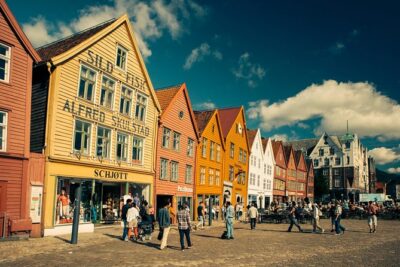 ★ 5.0City Walking Tour – Bergen On FootFrom $31436 reviews
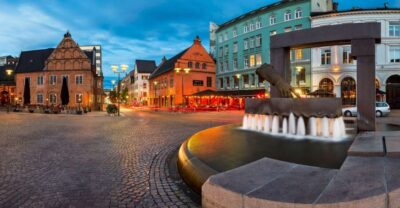 ★ 4.8Oslo: Historic Myths & Legends Evening Walking TourFrom $42408 reviews
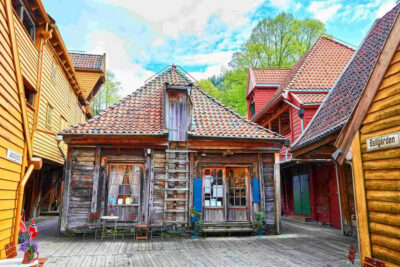 ★ 4.9Bergen: Sightseeing Walking Tour with Ferry RideFrom $47296 reviews
 ★ 4.5Taste of Oslo Walking TourFrom $145282 reviews
Lists this one sits in