
REVIEW · BERGEN TOURS
Walking Tour in Bergen of the Past and Present
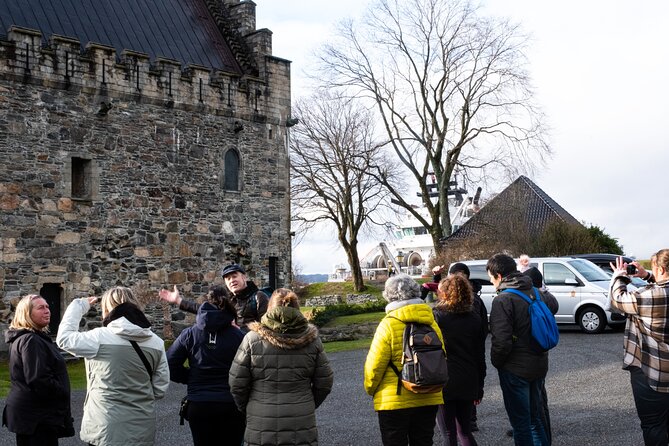
Bergen changes when you walk it instead of bus it. This 2-hour loop strings together medieval power, UNESCO waterfront trade, and everyday Bergen life, from Bergenhus Fortress up toward the Fjellsiden neighborhood. It is a great way to get your bearings fast, especially if you only have a short stay.
I particularly like the small group size (up to 16) and the way the guides connect old stones to what Bergen feels like today. The other big plus is the English narration, which stays practical and story-driven, even when you are moving. One consideration: it is an outdoors-only tour, so you see key buildings from the outside and you do not enter museums or paid interiors like Håkon’s Hall or St. Mary’s Church.
In This Review
- Key things I’d circle before you go
- Why this 2-hour loop is a smart first move in Bergen
- Bergenhus Fortress, the royal start, and Håkon’s Hall from the outside
- UNESCO Bryggen Hanseatic Wharf, where you learn trade without museum tickets
- St. Mary’s Church, oldest in the city, still active today
- Fjellsiden and Steinkjellerbakken, learning daily life the easy way
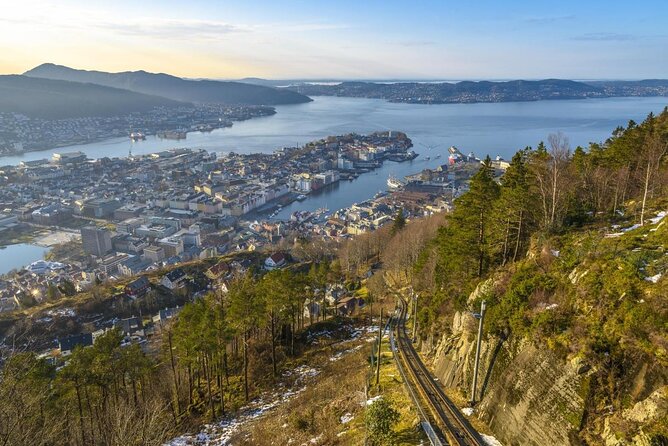
- Skipping the funicular, and still understanding why people hike here
- Skostredet and the Fish Market finish, modern Bergen in 20 minutes
- Price and value: what $33.47 buys you in real terms
- The guides matter, and you can feel the difference
- Who should book this Bergen Past and Present tour
- When to plan around weather and uneven streets
- Should you book it? My take
- FAQ
- How long is the walking tour?
- Is the tour offered in English?
- Do you enter Bryggen buildings or go inside museums?
- Will we go inside Håkon’s Hall or St. Mary’s Church?
- Do you ride the funicular during the tour?
- What kind of fitness level do I need?
- Where does the tour start and end?
- What happens if the weather is bad?
Key things I’d circle before you go
- A tight 2-hour overview built for newcomers, with both royal-era and modern city life
- Small groups up to 16 so you actually get answers, not just a lecture from the back
- UNESCO Bryggen without museum stops (you learn the Hanseatic trade story in the real trading streets)
- Fjellsiden everyday-life segment on food, work rhythms, housing costs, and taxes
- No funicular ride included (you save time and money, and you can choose a sunset or hiking option later)
- Finish near the Bergen tourist area so you can easily keep exploring right after
Bergen leftovers, wharf and mountain both
- From Bergen: The Original Fjord Cruise to Mostraumen★ 4.7 · 8,440 reviews
- Bergen: Mostraumen Fjord & Waterfall Cruise★ 4.6 · 2,990 reviews
- Bergen: Past & Present Small Group Guided Walking Tour★ 4.9 · 1,609 reviews
- Walking Tour in Bergen of the Past and Present★ 5.0 · 1,575 reviews
Why this 2-hour loop is a smart first move in Bergen
If you are new to Bergen, you want two things quickly: context and confidence. This tour is built as a clear storyline, starting with Bergen’s old power center and moving toward the waterfront that made the city famous. Then it climbs into the residential hills to explain how life works here now.
You’ll also appreciate how easy it is to show up and start. The meeting point is Bradbenken 1, and it is close to public transportation, so you are not fighting your way across town just to begin. You’ll get a mobile ticket, and the tour runs in English with a local guide.
The vibe is “walk and learn,” not “stand and stare.” The pacing stays friendly for a moderate fitness level, and it keeps returning to the question, what does this place mean in Bergen?
Bergenhus Fortress, the royal start, and Håkon’s Hall from the outside
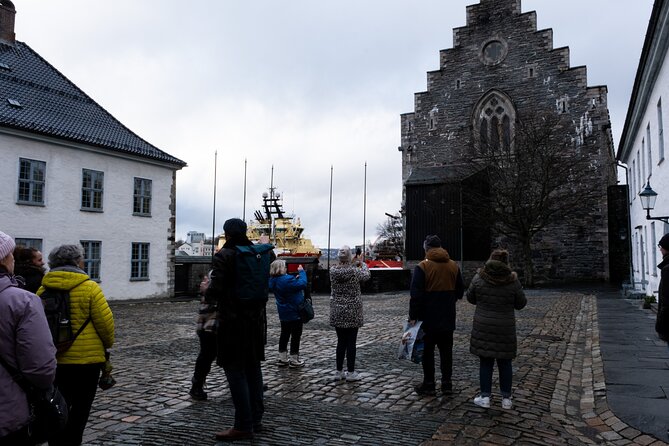
Your walk begins at Bergenhus Fortress, the place you want first if you are trying to understand Bergen’s royal past. When Bergen was the capital, this area held the palace, and it sets the tone for the city’s medieval clout. Even if you do not know much history, the guide frames what you are seeing in plain terms.
Next comes Håkon’s Hall. This is the main surviving medieval section of the palace, so it is one of those landmarks that anchors the whole story. You’ll learn about Bergen’s time as an independent country and how Norway’s unions with Denmark and Sweden shaped power and identity.
Important practical point: you do not enter Håkon’s Hall. It is a museum that costs money, so this tour keeps things outside and focused on the free public spaces around it. The only wrinkle mentioned is that, on rare occasions, the fortress can be closed due to a private event. If that happens on your day, the guide will still try to keep your tour moving.
UNESCO Bryggen Hanseatic Wharf, where you learn trade without museum tickets
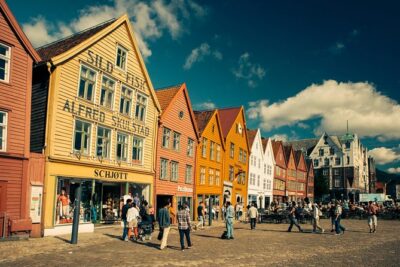
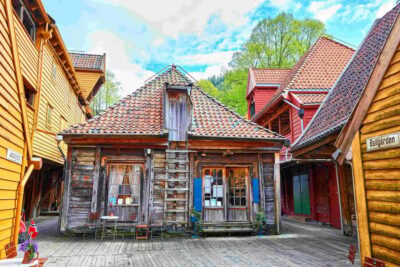
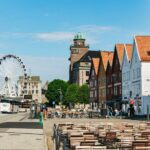
After the royal-era setup, you shift to the waterfront world of Bryggen Hanseatic Wharf, and it feels like a totally different Bergen. Bryggen is UNESCO World Heritage, and the big idea is simple: merchants traded here for about 1,000 years. The guide connects that long timeline to the Hanseatic League, a group of German merchants who helped make the wharf a powerhouse.
This is where you start thinking like a trader instead of like a tourist. You’ll hear about trading methods and the systems that kept commerce running. It is not just a pretty walk through old buildings. The guide helps you understand how the wharf worked day to day.
One key clarification helps set expectations: you do not enter the buildings at Bryggen. Today they are shops and small businesses, not museums. That is actually a good thing. You get the atmosphere of a working trading street while you learn what used to happen here.
The time here is about 40 minutes, and admission is free for the walking portion.
Pavement rivals threading Bergen

St. Mary’s Church, oldest in the city, still active today
Your next historical anchor is St. Mary’s Church, the oldest still standing building in Bergen. It dates to the 12th century, and it still functions as a church today. That living-use detail matters. You are not just looking at a ruin or a staged attraction, you are seeing a real religious space.
Just like Håkon’s Hall, the tour does not include paid entry. You stay outside, because entrance is separate and costs extra if you want to go in. If church interiors matter to you, you might plan to return later on your own time.
The stop itself is short, but the payoff is in the mental map it creates. You now have the fortress, the trade waterfront, and the city’s early religious core, all in one continuous walk.
Fjellsiden and Steinkjellerbakken, learning daily life the easy way
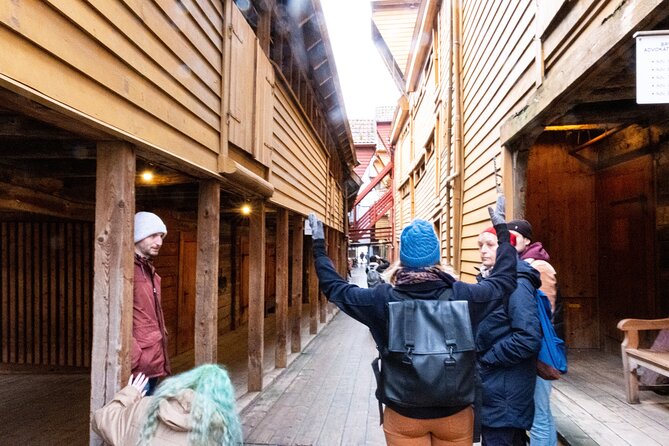
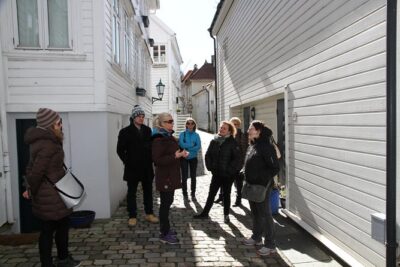
Once the history layer is in place, you head uphill into Fjellsiden, through a preserved area known for its wooden houses. Steinkjellerbakken is part of that climb, and it helps you see how Bergen expands from the waterfront into residential hills.
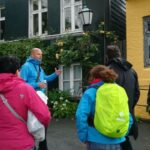
Here’s what I like about this segment: it is not just architecture talk. The guide shifts to how people actually live in Norway, including what they eat, when they work, and how housing costs and taxes work. That kind of practical explanation is what makes a walking tour feel like a local conversation instead of a slideshow.
The route in this neighborhood can vary depending on the guide and their interests. That flexibility helps keep the tour from feeling robotic, but it also means your exact streets may differ from someone else’s day.
You should also know what to expect underfoot. You are walking older streets and lanes, so uneven cobblestones can show up. That is normal in historic Bergen, but it’s worth wearing supportive shoes, especially if you are prone to slippery soles.
Skipping the funicular, and still understanding why people hike here
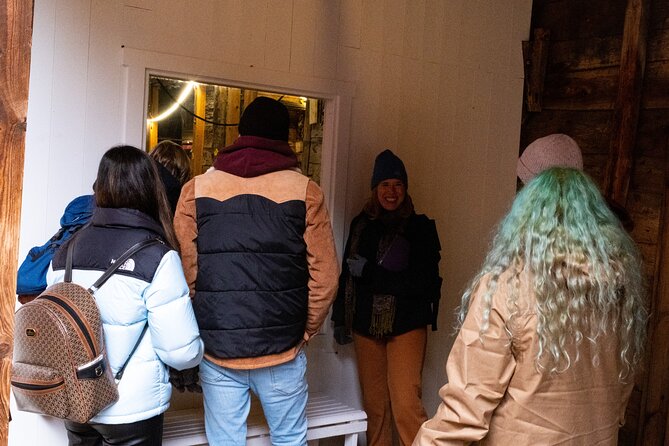
You will pass the funicular station so you know exactly where it is. But you do not ride it. That matters for two reasons.
First, it saves time. The tour keeps to its two-hour structure instead of adding an extra hour. Second, it avoids added cost, because taking the funicular would add 150 NOK. Instead, you get the explanation about Norway’s outdoor culture and why hiking matters here.
The fun part is what you can do after the tour. If you want a sunset viewpoint, or you want a hike that feels like you earned it, you can plan that on your own schedule. This tour keeps you on foot long enough to understand the neighborhood layout, then gives you direction for what to do next.
Skostredet and the Fish Market finish, modern Bergen in 20 minutes
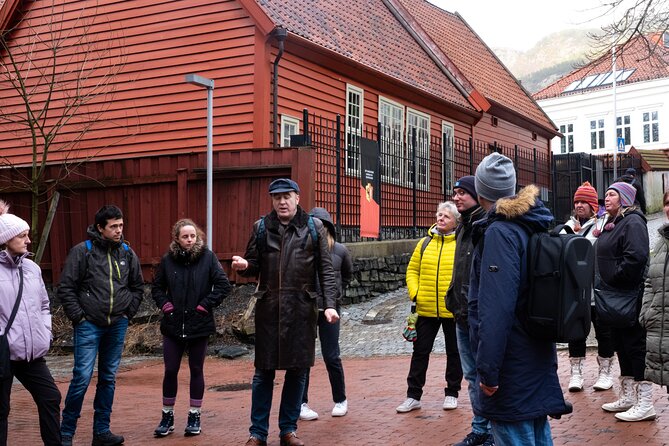
After the uphill residential segment, you return toward the old town center. The final stretch leans into modern Bergen, with special attention to food culture. Bergen is a UNESCO City of Gastronomy, and you can feel that status in how the city organizes dining and local specialties.
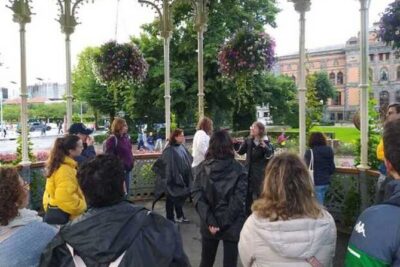
You walk along Skostredet, a popular restaurant street. The guide uses this time to connect what you saw earlier to what Bergen does today: how the city eats, what it celebrates, and how locals build daily life around food.
You then finish outside the Fish Market and the Bergen tourist office area. That is a smart landing zone. You can grab a snack, ask for directions, or just keep roaming without having to figure out where you end up.
If you like to tour with a plan, this ending helps. It puts you close to the area where you can naturally branch off to other sights or food stops.
Price and value: what $33.47 buys you in real terms
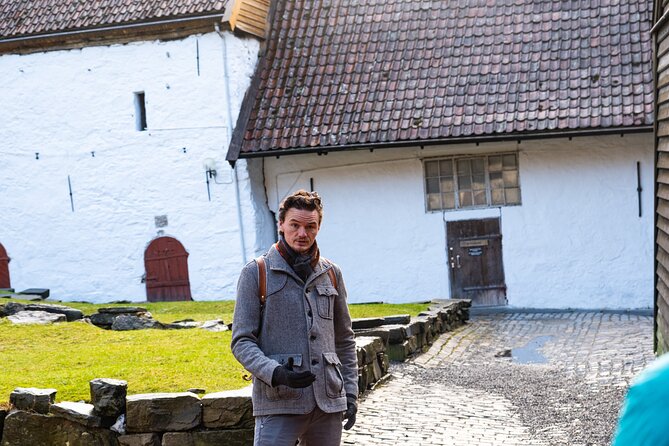
At $33.47 per person for about two hours, you are paying mainly for three things: a local guide, a logical walking storyline, and expert context for the spots you are seeing. The tour is outdoors only, and it explicitly does not include entry to paid interiors. So if you expect museum ticket coverage, you will be disappointed, but that is also where the value is focused.
Because you do not pay separate admissions during the tour, your money goes toward interpreting the city. For Bryggen in particular, learning how the Hanseatic League worked adds a lot of meaning to what could otherwise be only a pretty waterfront photo stop.
There is also the “small-group” factor. Up to 16 people is a real quality lever. It makes it easier for guides to handle questions, and it keeps the flow from turning into a rigid, one-way march.
One more practical value signal: this is booked fairly ahead on average, about 38 days in advance. That suggests it fits into real travel plans, not just last-minute wandering.
The guides matter, and you can feel the difference
A walking tour lives or dies by the guide’s tone, timing, and ability to answer questions. This experience gets strong marks for guides who balance history with present-day character.
Names that come up often include Jeff, Dane, Magda, Janine, Emma, Anaïs, Erik, and Neil. The common thread is how they explain the meaning of places, not just dates and facts. Dane, for example, is described as blending history with humor and showing significance, while Jeff is noted for pacing that keeps you engaged and for offering practical food and coffee suggestions.
You should take that as a hint for your own tour style. If you enjoy asking questions and want a guide who tailors suggestions to your interests, this is the kind of group size and format that tends to work well.
Who should book this Bergen Past and Present tour
This is a strong fit if:
- You are visiting Bergen for the first time and want a focused introduction without burning a whole day
- You like walking routes that mix major sights with side lanes, not only the front-of-the-postcard stops
- You want history plus modern context, including everyday life and food culture
- You prefer English interpretation and a guide-led experience over self-guided guesswork
It also works well for people on a cruise schedule. The tour ends in a central area near the tourist office, so you can extend your afternoon easily.
You might think twice if:
- You want to pay to go inside museums or paid church interiors during this exact time window
- You hate any uphill walking at all. There is a climb into Fjellsiden, and the tour is designed for moderate fitness, not for zero-effort days
- Weather is a deal breaker. This one depends on good weather.
When to plan around weather and uneven streets
The tour requires good weather. Since it stays outdoors the whole time, rain or heavy wind can change the feel, and it can even lead to cancellation. If the weather does not cooperate, you should expect the operator to offer an alternative date or a full refund.
Even on good days, remember that Bergen’s historic streets can be uneven, and you do walk cobblestones at points. Wear shoes you trust on textured pavement, and dress in layers. Bergen’s weather can shift quickly, and layers let you adapt without stopping every five minutes.
Should you book it? My take
Yes, you should book this walking tour if you want the best “first chapter” of Bergen in about two hours. It is built for orientation: fortress and royal power, then Bryggen’s trading story, then the neighborhoods that explain how life actually works here now. The ending near the Fish Market helps you continue the day with less logistical stress.
Skip or reconsider if your top priority is museum entrances and indoor exhibits during the tour window. This experience is about context you can use immediately while you explore the city on your own.
If you are the type who likes questions, enjoys food talk, and wants a guide who connects old places to modern life, this is a good match.
FAQ
How long is the walking tour?
It lasts about 2 hours.
Is the tour offered in English?
Yes, it is offered in English.
Do you enter Bryggen buildings or go inside museums?
No. The tour is outdoors only. You do not go inside buildings at Bryggen or paid museums during the walk.
Will we go inside Håkon’s Hall or St. Mary’s Church?
No. The tour explains them from the outside. Håkon’s Hall and St. Mary’s Church have separate admission fees if you want to enter.
Do you ride the funicular during the tour?
No. You pass by the funicular station so you know where it is, but you do not take it. Riding would add extra time and cost.
What kind of fitness level do I need?
You should have a moderate physical fitness level, since the route includes uphill walking.
Where does the tour start and end?
It starts at Bradbenken 1, 5003 Bergen, and ends at Vågsallmenningen 2, close to the Bergen tourist office.
What happens if the weather is bad?
The experience requires good weather. If it is canceled due to poor weather, you will be offered a different date or a full refund.
One Shortlist, Bergen

More Tour Reviews in Bergen

Bergen After Bryggen
Newest Bergen write-ups off our Norway desk
- Three-summit hike in Bergen
★ 5.0 · 3 reviews - PRIVATE GUIDED TOUR: King of the Fjords – round trip to the Sognefjord, 11 hours
★ 5.0 · 3 reviews - PRIVATE GUIDED TOUR: Norway’s Highlights – Viking Special, 11-12 hours – WINTER
★ 5.0 · 3 reviews - PRIVATE GUIDED TOUR: Secrets of the Fjords – the Osterfjord and Mo, 6-7 hours
★ 5.0 · 3 reviews - PRIVATE GUIDED TOUR: Folgefonna Glacier & Bondhus Valley from Bergen, 10 hours
★ 5.0 · 3 reviews - Bergen to Hardangerfjord VIP car + private yacht Fjord cruise
★ 5.0 · 3 reviews
More in Bergen Tours.
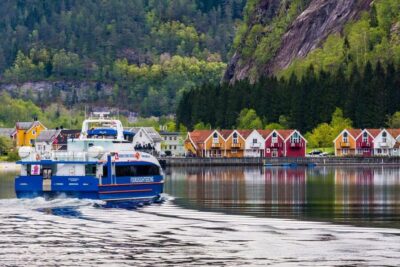 ★ 4.7From Bergen: The Original Fjord Cruise to MostraumenFrom $938,440 reviews
 ★ 4.6Bergen: Mostraumen Fjord & Waterfall CruiseFrom $812,990 reviews
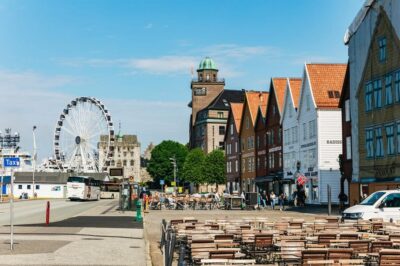 ★ 4.9Bergen: Past & Present Small Group Guided Walking TourFrom $261,609 reviews
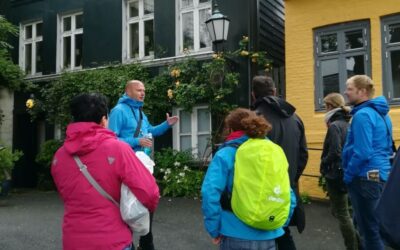 ★ 4.9Bergen: City Tour on FootFrom $301,327 reviews
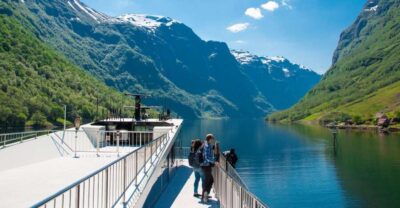 ★ 4.8Bergen: Viking Village, Nærøyfjord Cruise & Flåm RailwayFrom $4181,047 reviews
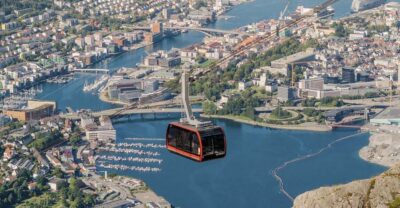 ★ 4.6Bergen: Round-Trip Ulriken Cable Car TicketFrom $51925 reviews
 ★ 4.5Mostraumen Fjord Cruise – the local operatorFrom $80742 reviews
 ★ 4.9From Bergen: Folgefonna National Park & Glacier Lake TourFrom $222589 reviews
Lists this one sits in