
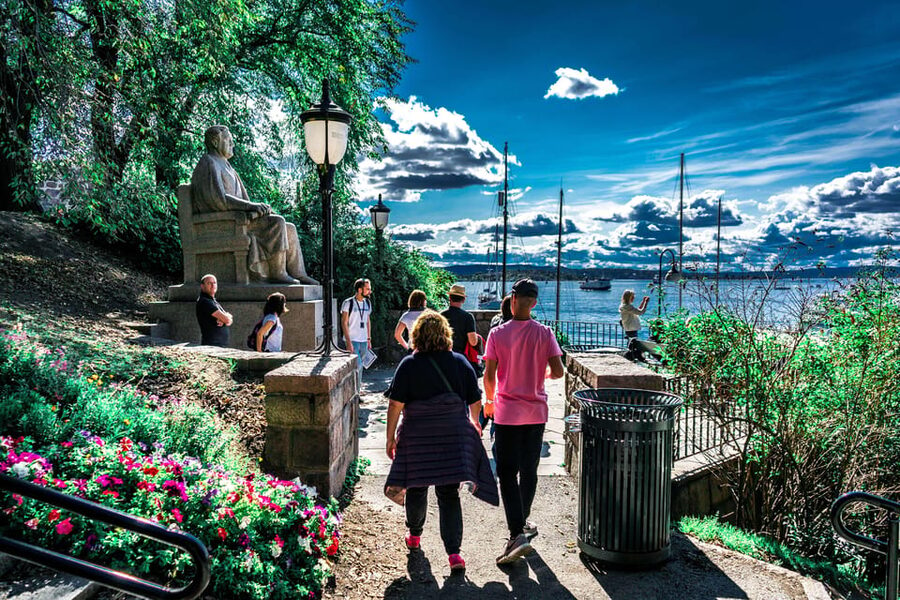
REVIEW · OSLO TOURS
Oslo: Private Walking Tour
Oslo feels like it was designed for walking. This private walking tour is interesting because it strings together major landmarks with clear context, and I like the way guides such as Tine, Amanda, and Inger keep the pace friendly and the facts practical. The main thing to consider is the traffic noise in the city center, plus you are paying for a private guide in a short time window.
You start at the Nobel Peace Center (right by the harbour), then work your way through the historic core, the modern waterfront, and end near Langkaia. It is only two hours, but the route covers enough variety that you can get your bearings fast, even if it is your first visit.
In This Review
- Key Highlights You Will Actually Feel
- Oslo in Two Hours, Starting at the Nobel Peace Center
- City Hall and the Nobel Peace Prize Setting
- Royal Palace, Parliament, and the Civic Machinery of Oslo
- What to keep an eye on
- National Theatre and University Square: Culture and City Identity
- Christiania Torv and Bank Square: Where the Center Tightens
- Oslo Opera House and the Urban Farming Surprise
- A tip for the Opera House area
- Akershus Fortress Overlooking the Oslo Fjord
- Price and Value for a Private 2-Hour Walk
- Who This Tour Fits Best
- Small Considerations Before You Go
- Should You Book This Oslo Private Walking Tour?
Key Highlights You Will Actually Feel
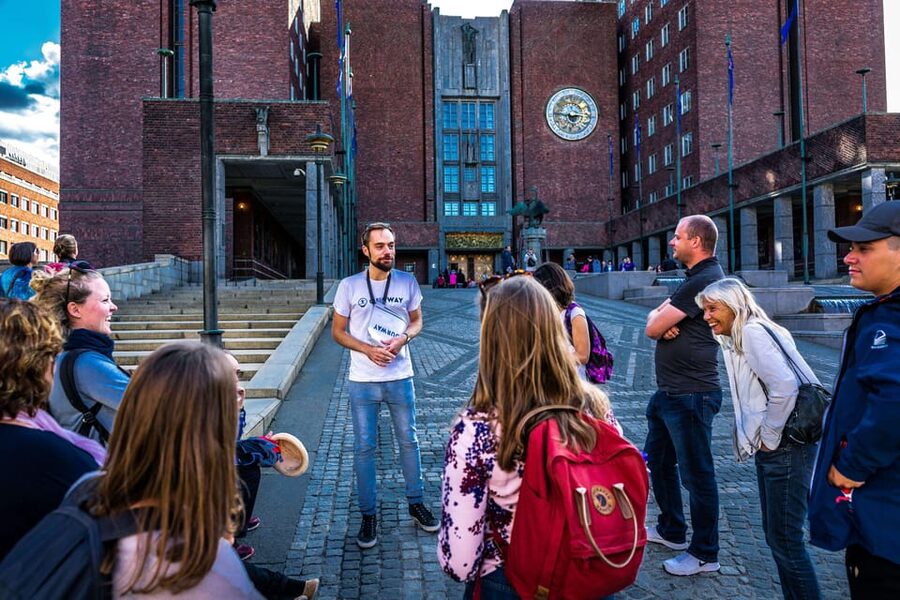
- Nobel Peace Center to Aker Brygge views: harbour and fjord scenery right at the start
- City Hall with Nobel Peace Prize context: why the building matters beyond the photos
- Karl Johans gate through the civic core: the classic Oslo spine for shopping and strolling
- Opera House architecture and the urban farming angle: modern city planning you can spot from the sidewalk
- Akershus Fortress over the fjord: fortress drama without a long trek
- Guides who match the group: from big question-banks to families, including kids (Inger was noted for this)
Capital bookings past this listing, Oslo graded again
- Oslo: Scenic Fjord Cruise with Audio Guide Commentary★ 4.5 · 5,375 reviews
- Oslo Nature Walks: Island Hopping Tour★ 4.8 · 2,713 reviews
- Oslo: 100% Electric Oslofjord Sightseeing Cruise★ 4.4 · 2,041 reviews
- Oslo: Fjord Evening Cruise with Shrimp Buffet★ 4.5 · 1,956 reviews
Oslo in Two Hours, Starting at the Nobel Peace Center
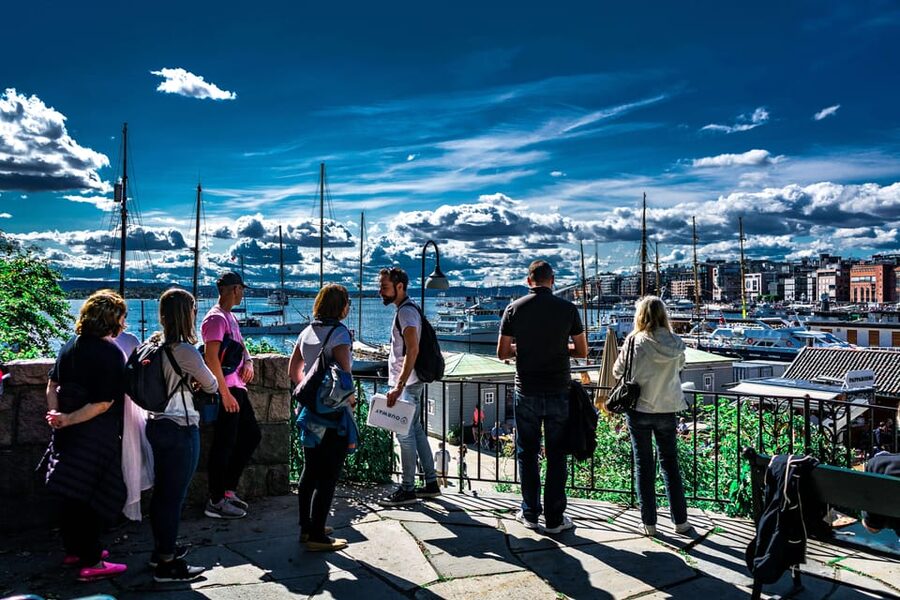
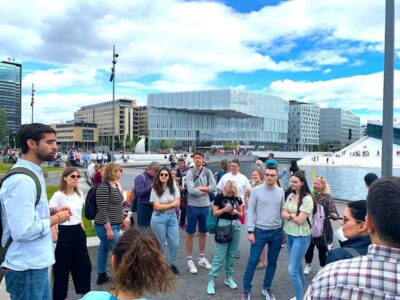
If you want the fastest path to understanding Oslo, start where the city makes international headlines. This tour begins at the Nobel Peace Center at Brynjulf Bulls plass 1, outside the main entrance. From there, you shift from visitor mode into local rhythm, with the harbour and Aker Brygge setting the tone: ships in the background, fjord air in the foreground.
Before you even hit the main streets, the guide frames Oslo with a story you can remember. You hear how the city’s path changed in the 1600s under King Christian IV, who reconstructed fortresses and made a bold decision after a devastating fire. Instead of rebuilding in the same place, the city moved, and that relocation is part of why Oslo today feels where it does.
This start works because it is not just a photo stop. It helps you connect buildings to why people built them there, which makes everything later on feel more intentional.
City Hall and the Nobel Peace Prize Setting
One of my favorite parts of this walk is the way it treats Oslo City Hall as more than an impressive exterior. You pass through the area tied to the Nobel Peace Prize ceremony, so the building reads differently once you know the role it plays each year. Even if you do not follow the Nobel details closely, you can still appreciate how Oslo brands itself through civic space and global attention.
The practical win here is timing. City Hall is the kind of stop where, on a self-guided walk, you might take a quick picture and move on. With a guide, you get enough context to make the architecture feel purposeful, not just decorative.
Royal Palace, Parliament, and the Civic Machinery of Oslo
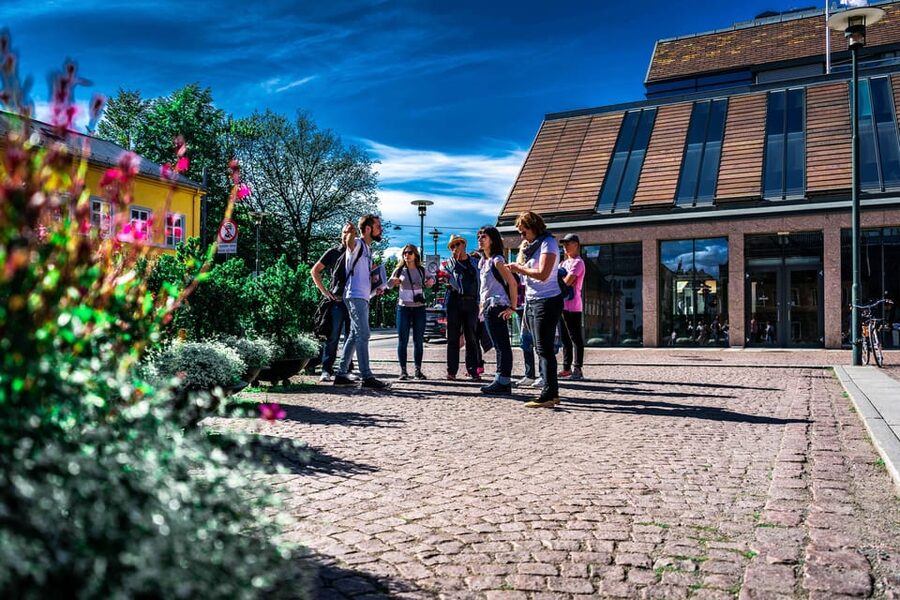
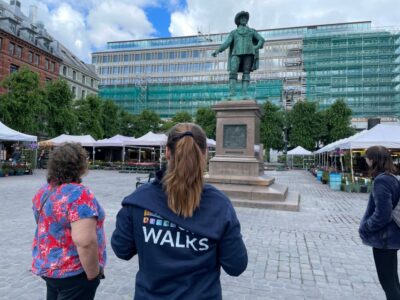
After you move into Sentrum, the tour focuses on Oslo’s power and governance landmarks. You see the Royal Palace, the Norwegian Parliament, and the nearby civic spaces that make the city center feel like a working stage for national life.
Akershus Fortress gets the dramatic reputation, but this section of the walk shows the everyday version of that drama. Parliament is where decisions happen. The Royal Palace is where continuity is on display. Putting these together in one loop helps you understand Oslo as a place that balances tradition with the modern world rolling in from the harbour.
If you are the kind of visitor who likes to connect the dots, this is your segment. You will walk Karl Johans gate, the main shopping street, and the route naturally pulls you from formal government space into a pedestrian-friendly city core.
Pavement rivals threading Oslo


What to keep an eye on
- How the buildings frame the street views as you walk through Karl Johans gate
- The way Oslo’s center feels planned around access and visibility, not hidden corners
- The shift from ceremonial sites to everyday street life
National Theatre and University Square: Culture and City Identity
On the way through the center, you pass the Norwegian National Theatre and go by University Square. These are the kinds of landmarks that can feel like background scenery if you are rushing. Here, they become markers for how Oslo organizes culture and education in the same area where politics and commerce meet.
This matters because Oslo’s identity is not only about fjords and modern design. It also has a clear cultural agenda, and the theatre and university zones help you spot that quickly.
If you have limited time and you want a tour that makes the center feel understandable, this is a strong use of your two hours. You are not just checking boxes. You are learning the city’s logic.
Christiania Torv and Bank Square: Where the Center Tightens
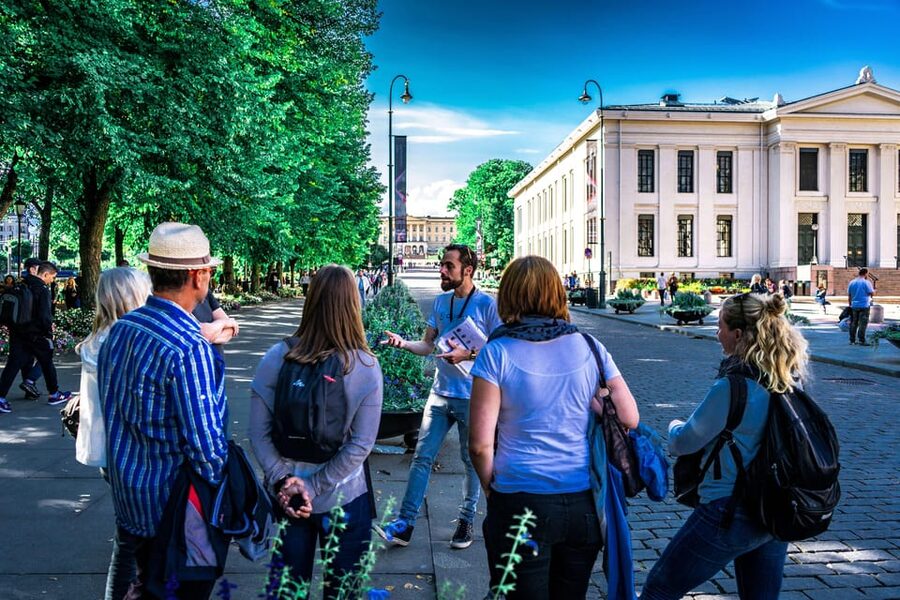
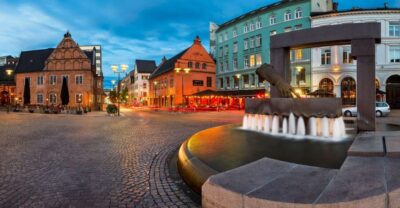
As the route continues, you hit Christiania Torv, then move through areas tied to finance and city institutions like the Bank Square area and the Oslo Stock Exchange. These stops are not just about buildings. They show how Oslo’s core layers different functions side by side.
For me, the best value of these “in-between” points is that they fill the gaps. A self-guided walk often goes from one major landmark to the next with long stretches of guesswork. This tour keeps the story moving so you know what you are looking at and why it is there.
Also, the timing works. You do not reach the modern waterfront feeling exhausted from constant stopping. The walk balances major sights with shorter explainers, which helps if you are sensitive to pace.
Oslo Opera House and the Urban Farming Surprise
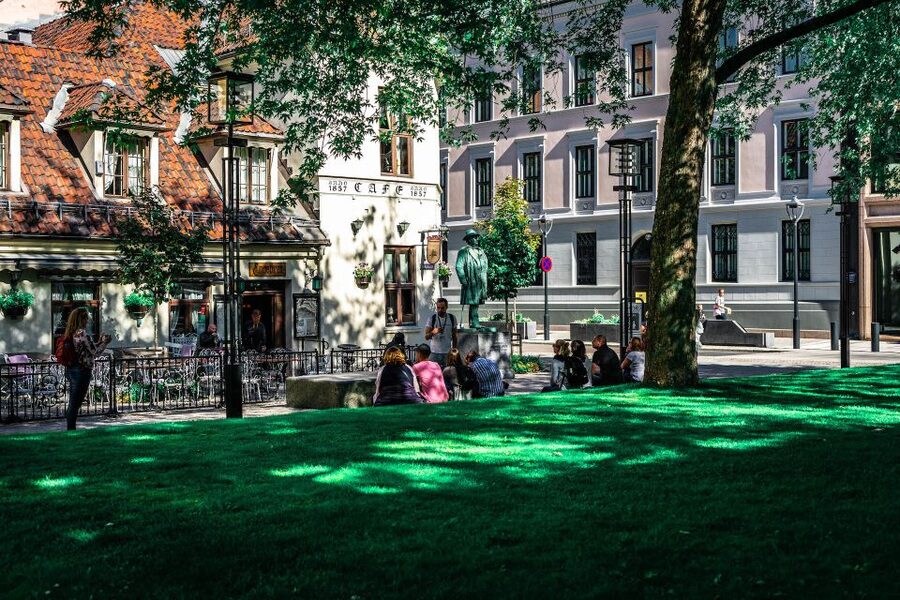
Then comes the part many people remember first: the Oslo Opera House. It is impossible to miss, with its bold modern architecture and that signature way it connects to the harbour landscape. The tour also ties the Opera House into a broader idea of Oslo as a city that keeps experimenting.
One of the more memorable surprises on this route is the urban farming element. Behind the Opera House area, you get a hint that Oslo treats even small spaces like places for living systems, not only views and concrete. It is the kind of detail that makes the architecture feel like it has a social purpose.
You also get a useful tip for your own timing. If you still have energy after the tour, plan to climb to the top of the Opera House. You are not locked into the guide’s schedule for this part, but it is a smart add-on because it gives you that Oslo buzz from above.
A tip for the Opera House area
Wear comfortable shoes and be ready for open harbour wind. Even in a short walk, you can feel it here.
Akershus Fortress Overlooking the Oslo Fjord
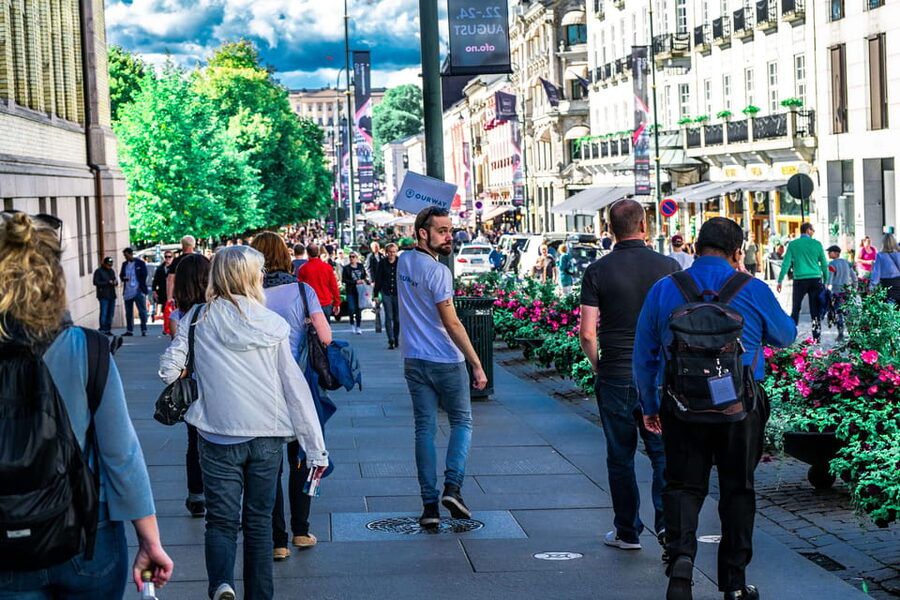
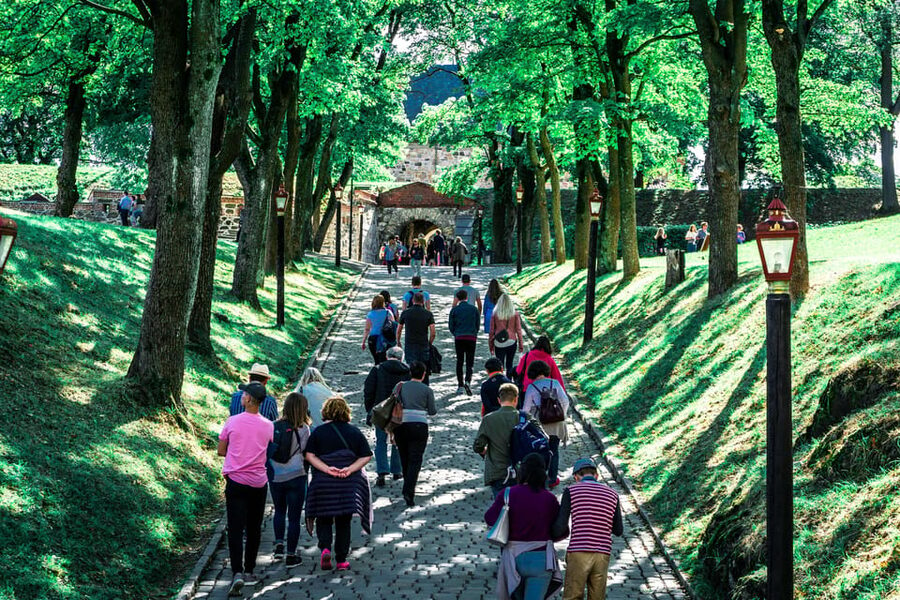
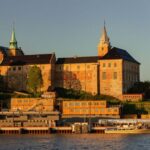
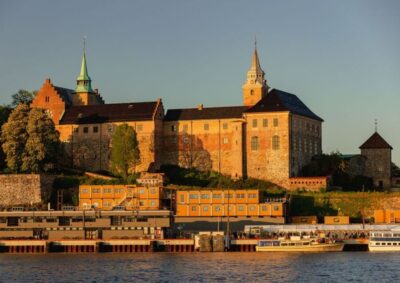
The tour ends with one of Oslo’s most dramatic backdrops, Akershus Fortress. It sits above the Oslo Fjord, and that high vantage is part of why the fortress still feels like it belongs to the city’s story. It is the kind of location where you can look out and understand why fortifications mattered in a northern climate.
Akershus also serves as a “final chapter” for the earlier city-building story you hear at the start. You go from the idea of Kings shaping and relocating the city, to a real structure built for protection and control. Even if you only know Oslo as a modern destination, the fortress reminds you the city grew up with the geography in mind.
After the fortress, the walk continues briefly through Christiania Torv area points and reaches the finish near Langkaia 1, 0150 Oslo. That ending spot is helpful because it puts you close to the harbour zone again, so you can keep strolling, grab a bite, or simply absorb the water views on your own.
Price and Value for a Private 2-Hour Walk
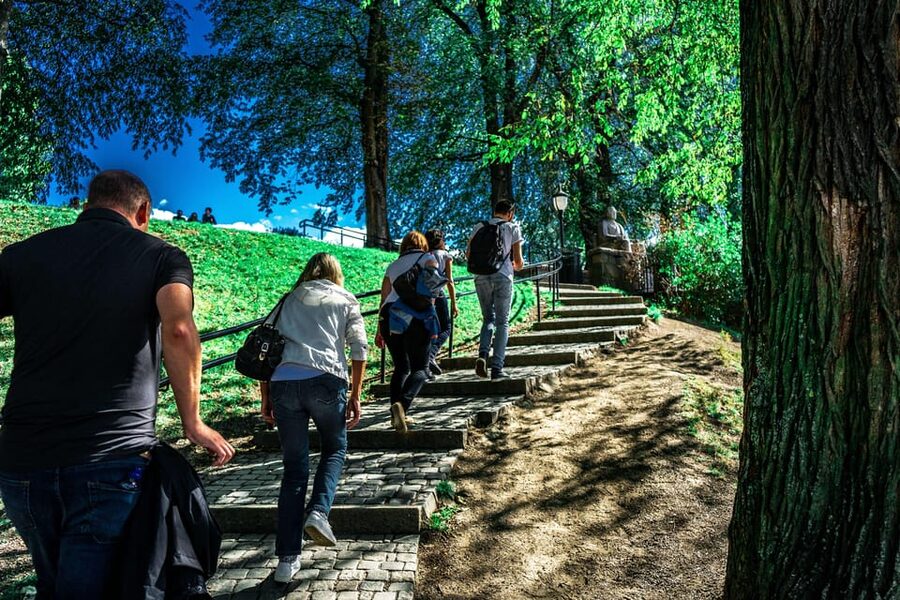
Let’s talk money, because this is where expectations matter. The price is listed as $461 per group up to 1, which is not “cheap Oslo.” This is paying for the convenience of a private guide, a tightly planned route, and someone to translate the city into something you can actually use.
Is it worth it? For many visitors, yes, because two hours is short, and Oslo is spread in a way where self-guided wandering can waste time. A private guide gives you efficiency. You get direction, context, and the kind of pacing that helps when you are only in town for a brief window.
If you are on a strict budget or you love wandering with no structure, you might feel the cost strongly. One earlier experience noted the price felt very high for a simple walking tour. That is fair. Just know the trade-off: you are not paying for access you cannot get, you are paying for interpretation and time saved.
Who This Tour Fits Best
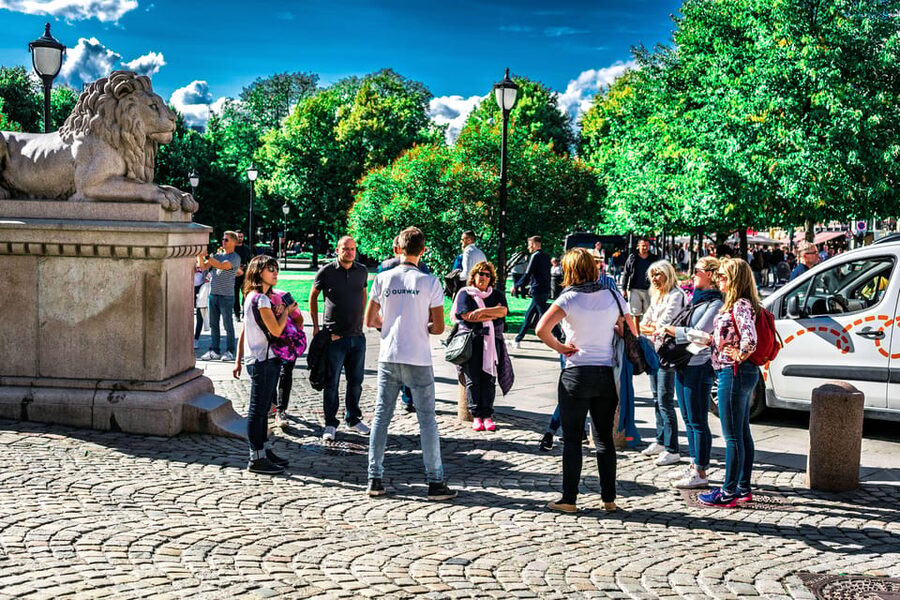
This tour is a strong fit if:
- You have limited time and want a fast orientation through the best-known Oslo landmarks
- You like asking questions and getting direct answers from a person, not a brochure
- You want a route that mixes historic civic buildings with modern architecture and harbour views
- You are traveling as a private group and want flexibility in how long you pause at each stop
It also seems to work for families. One guide, Inger, was specifically praised for paying attention to children’s needs, including a mixed group with adults and kids. If you want the city story but with a guide who can keep everyone engaged, that is a good sign.
Small Considerations Before You Go
This route is mostly in the city centre, where traffic noise is unavoidable. It is not a quiet museum-style experience, so bring the mindset of a city stroll with commentary.
And do not underestimate the basics. You will be walking enough that comfortable shoes matter, and Oslo weather can shift, so weather-appropriate clothing is smart. If you are sensitive to wind, the harbour and Opera House area can feel chilly even when the streets are manageable.
Should You Book This Oslo Private Walking Tour?
Book it if you want to understand Oslo quickly, see the major landmarks in a logical sequence, and get guidance from a host who can explain what you are looking at. It is especially good for a first visit because it connects Nobel Peace Center, the political and cultural core, the modern Opera House, and the fortress view into one clear flow.
Skip it if you want a low-cost walk, you already know exactly what you want to photograph, or you would rather spend two hours on your own pace with no structured context.
If you do book, I suggest you plan one extra hour of freedom after the tour for the Opera House climb and those harbour views. Two hours can put you on the map, but Oslo rewards a little time to linger once you know where everything sits.
One Shortlist, Oslo





More Tour Reviews in Oslo


The Capital, Kept Going
Newest Oslo write-ups off our Norway desk
- Fjord Houseboat Cruise in Oslo. 100 % electric. BYO
★ 5.0 · 3 reviews - Oslo Christmas walk
★ 4.0 · 3 reviews - Afternoon Tea and Classic Concert on the Fjord
★ 4.5 · 3 reviews - Lake walk and campfire
★ 4.7 · 3 reviews - Oslo: Yoga & Hiking with a dog
★ 5.0 · 3 reviews - Oslo: Skjennungstoppen Wildlife Forest Hiking Tour
★ 5.0 · 3 reviews
More in Oslo Tours.
 ★ 4.5Oslo: Scenic Fjord Cruise with Audio Guide CommentaryFrom $445,375 reviews
 ★ 4.8Oslo Nature Walks: Island Hopping TourFrom $692,713 reviews
 ★ 4.4Oslo: 100% Electric Oslofjord Sightseeing CruiseFrom $402,041 reviews
 ★ 4.5Oslo: Fjord Evening Cruise with Shrimp BuffetFrom $881,956 reviews
 ★ 4.8Oslo: 3-Hour Highlights Bike TourFrom $621,609 reviews
 ★ 4.7Oslo: Guided Sightseeing Fjord Cruise on Premium Silent BoatFrom $641,390 reviews
 ★ 5.0Oslo Highlights Bike TourFrom $62979 reviews
 ★ 4.3Oslo: Paradox Museum Entry TicketFrom $29799 reviews
Lists this one sits in