
REVIEW · OSLO TOURS
Oslo Walking Tour with Passionate Founder, Shared or Private
One walk can teach you Oslo fast. I like how this founder-led tour feels personal and tightly scripted, not a generic loop with whoever is free. I also love the mix of Bjørvika architecture and major city-center landmarks, with real fjord views built into the route. The main thing to consider is that you are walking for about 3.5 hours and the Vigeland option can be slippery in bad weather.
This is an Oslo By Heart experience built by an independent guide who used to design routes and scripts for other companies, then decided to offer her own. The promise is simple: small groups, local context, and practical tips you can actually use the rest of your trip.
The tour also aims itself at your questions. With English and German guidance, you can ask about what you are seeing, and the story behind it, without feeling rushed.
In This Review
- Key Takeaways Before You Set Off
- A Founder-Run Tour That Feels Like Oslo, Not a Checklist
- Where the Tour Starts: Skapning fra Iddefjord by Deichman Bjørvika
- Bjørvika Waterfront and the Opera House Stop That Frames the Day
- Langkaia: The Short Harbor Segment That Adds Texture
- Kvadraturen and Christiania: Understanding How Oslo Grew Up
- Akershus Fortress: Panoramic Views and the Holmenkollen Clue
- Karl Johans Street: Where Government, Education, and Culture Sit Next to Each Other
- Parliament and the Royal Area: Quick Passes With Big Meaning
- Aker Brygge: Turning a Walk Into a Real Oslo Plan
- The Vigeland Park Add-On: Tram Ride and 50 Minutes of Sculpture Story
- Price and Time: Is $60 Actually Good Value Here?
- Who This Tour Suits Best (And Who Might Skip It)
- Should You Book Oslo By Heart?
- FAQ
- Where is the meeting point?
- How long is the tour?
- Is this tour shared or private?
- What is the maximum group size?
- Which languages are offered?
- Does the price include public transport?
- Are food and drinks included?
- Is the tour suitable for wheelchair users or mobility impairments?
- Is the Vigeland Park add-on affected by weather?
- What are the drop-off locations with the Vigeland add-on?
- Is there free cancellation?
Key Takeaways Before You Set Off

- Founder-led, small-group feel with routes designed to sound like a smart local friend.
- Bjørvika to the royal core in one compact walk, so you get orientation quickly.
- Akershus Fortress viewpoints that can include Holmenkollen on clear days.
- Karl Johan Street in context, connecting education, government, and everyday culture.
- Aker Brygge stop with concrete next-step advice for museums, Nobel Peace Centre, and fjord tours.
- Optional tram to Vigeland Park, with a guided visit planned for about 50 minutes.
Capital bookings past this listing, Oslo graded again
- Oslo: Scenic Fjord Cruise with Audio Guide Commentary★ 4.5 · 5,375 reviews
- Oslo Nature Walks: Island Hopping Tour★ 4.8 · 2,713 reviews
- Oslo: 100% Electric Oslofjord Sightseeing Cruise★ 4.4 · 2,041 reviews
- Oslo: Fjord Evening Cruise with Shrimp Buffet★ 4.5 · 1,956 reviews
A Founder-Run Tour That Feels Like Oslo, Not a Checklist
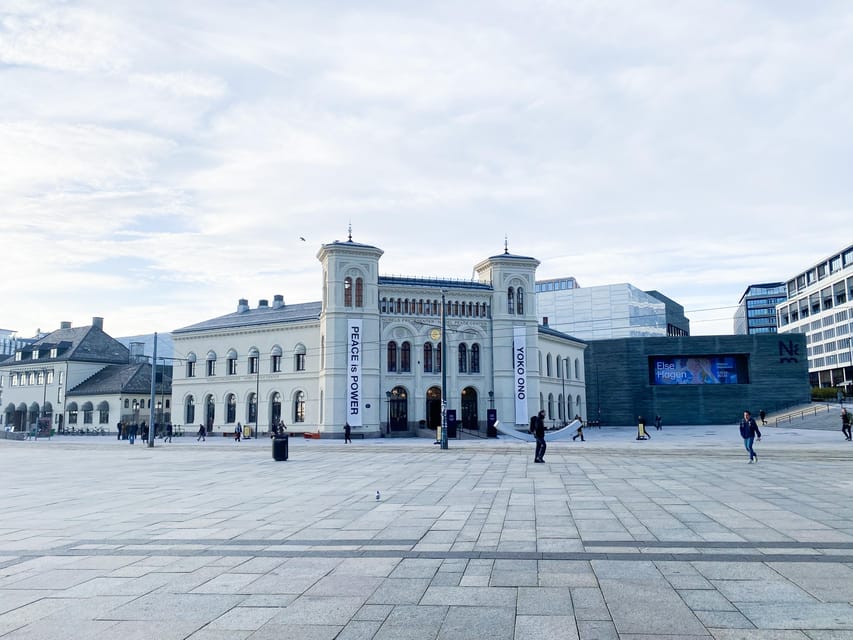
There are two kinds of sightseeing tours. One recites names. The other explains why those names matter, and what to do with that info later.
Oslo By Heart is the second kind. The founder builds the tour herself, and that matters because the route is written to guide you through meaning, not just stops. Reviews also highlight how the guides, including Romy and Tony, bring strong storytelling and patience for questions.
At $60 per person for about 135 minutes, you are paying for more than walking. You are buying interpretation, pacing, and insider directions for what comes next in your trip.
One note on expectations: this is not a slow gallery tour. It moves, so wear comfortable shoes and plan for a solid walking rhythm.
Where the Tour Starts: Skapning fra Iddefjord by Deichman Bjørvika
Your meeting point is outside Deichman Bjørvika Library, at the sculpture Skapning fra Iddefjord (the Creature from Iddefjord). It is a quiet spot, so it is generally easy to find the group.
If you are arriving by taxi, it helps to request Deichman Bjørvika Library, or the Opera main entrance. The sculpture name may not be in the driver’s usual database, and this avoids stress.
This starting location is not random. It puts you right at the edge of Bjørvika, where Oslo’s newer waterfront story begins. You start with the city you can see right now, then you work backward into how it became this way.
Bjørvika Waterfront and the Opera House Stop That Frames the Day
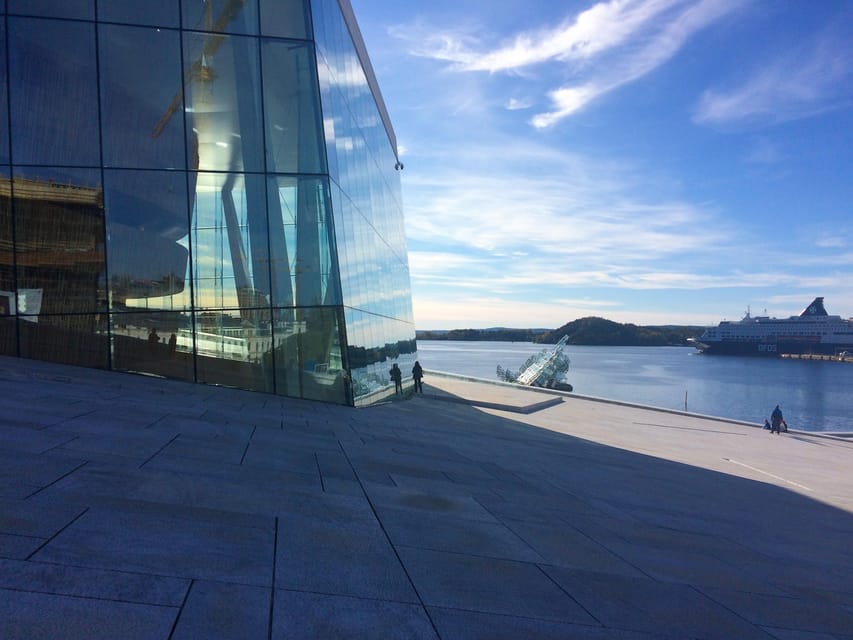
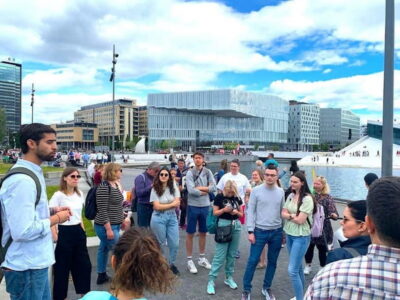
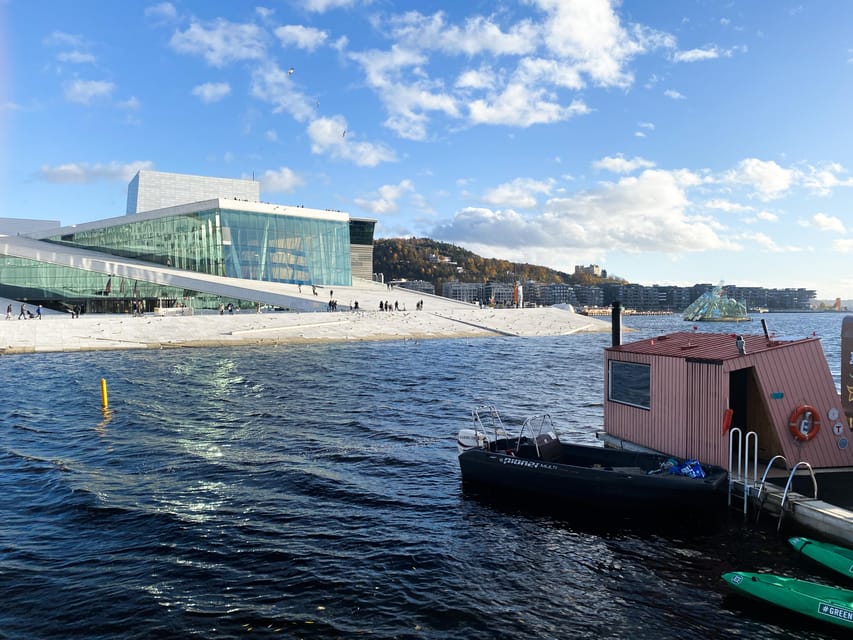
The walk begins near the Norwegian National Opera House, one of Oslo’s defining modern landmarks. You get about 15 minutes there, enough time to read the building from multiple angles and soak in the setting.
I like this first stop because it sets the tone. If you only see Oslo from one viewpoint, it can feel flat. Starting with the Opera and the waterfront gets you thinking about Oslo as a city that hugs water and uses design to make that relationship visible.
As you move along the harbor, you get practical context about the urban development of the Bjørvika district. The tour also points out buildings and features you might otherwise miss, including references tied to the Munch Museum and the expanding floating sauna landscape mentioned in the description.
If you like photos, this stretch is your warm-up. You get water views early, when the light often helps buildings look their best.
Pavement rivals threading Oslo


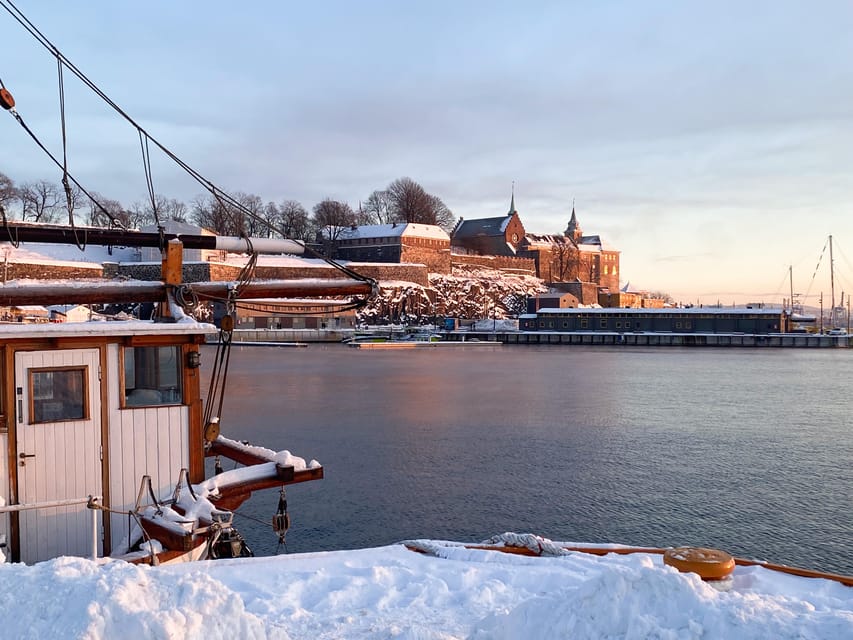
Langkaia: The Short Harbor Segment That Adds Texture
After the Opera, there is a 10-minute stop at Langkaia. This is not the “big monument” moment. It is the working-port, waterfront texture part of the walk.
Why it matters: it helps you connect what you see later with how the area functions today. Oslo’s waterfront is not just scenery. It is also movement, transport, industry history, and everyday city life.
At this point, the tour also keeps you moving toward the older core. So Langkaia acts like a transition, from modern Bjørvika to the older districts where names like Christiania still echo.
Kvadraturen and Christiania: Understanding How Oslo Grew Up
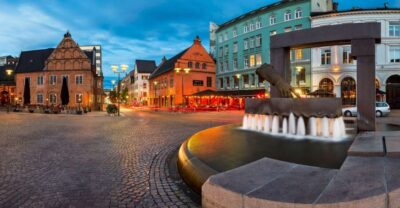
Next comes Kvadraturen, where you spend about 15 minutes. This is the district where Oslo’s story becomes easier to follow because you are moving through the part of town closely tied to older urban planning.
The guide focuses on how Oslo came to be known as Christiania for roughly over 300 years. Even if you know this fact already, this kind of stop helps you connect the name to the street-level reality of the city.
I like that the tour uses Kvadraturen to “translate” the city. Instead of only pointing at buildings, it gives you a framework for understanding why the center looks the way it does.
Also, this is a good time to ask questions. The group size stays small, and the guide has time to answer without turning into a lecture.
Akershus Fortress: Panoramic Views and the Holmenkollen Clue
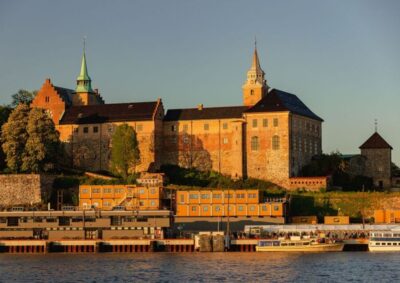
The route climbs to Akershus Fortress for about 15 minutes, taking you to one of the best “city-to-water” view points in the area.
You are at the higher ground, looking out over the Oslofjord, and on a sunny day you can even spot Holmenkollen Ski Jump. That detail is useful because it gives you a mental map. Once you can see that landmark in the distance, the rest of Oslo starts to line up visually.
A small drawback: if weather is low or foggy, the view can be less dramatic than you hoped. Still, the fortress stop is worth it for orientation because you learn how the city sits within the bay.
Karl Johans Street: Where Government, Education, and Culture Sit Next to Each Other
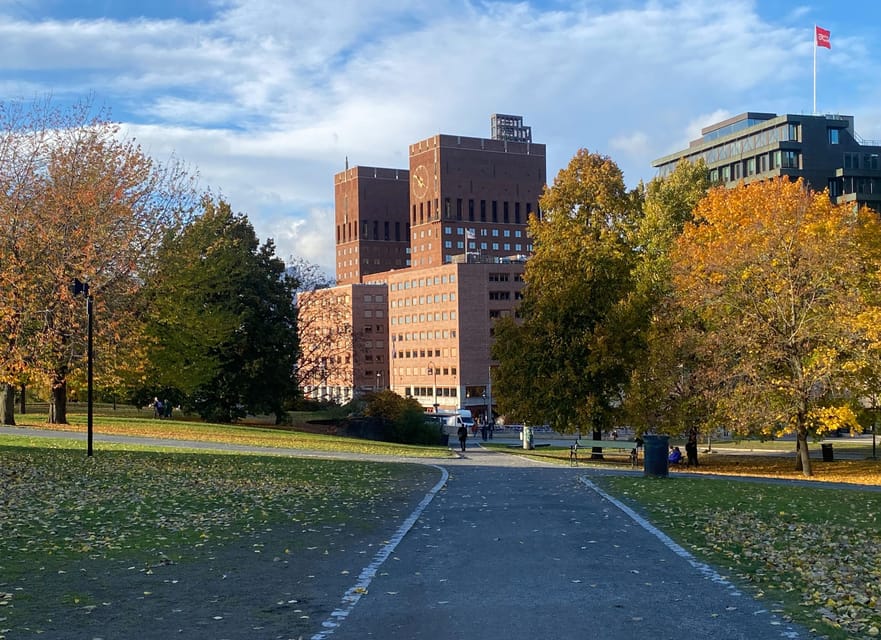
From Akershus, you head toward Karl Johans Street, spending about 15 minutes here. This is one of Oslo’s main “spine” streets, and the guide uses it to connect governance and daily life.
The tour highlights how you can see the country’s leadership and institutions along this corridor, including the Royal Palace and the Norwegian Parliament. It also points out the National Theatre along the way.
In plain terms, this is the stop that helps first-timers understand the city’s vibe. Oslo is organized, and Karl Johan shows it. You get a sense of how power and culture are built into the urban plan.
If you like shopping, keep the idea in mind that Karl Johan is also where you can wander later. The tour gives context first, and you can switch to casual strolling afterward.
Parliament and the Royal Area: Quick Passes With Big Meaning
This stretch is shorter, mostly pass-by time, but it is still part of the story. You pass the Norwegian Parliament and also the Royal Palace, with those moments placed to help the guide explain the governing and ceremonial role of these buildings.
There is value even in a quick pass. When someone narrates what you are seeing, you read the architecture differently. You start noticing symmetry, scale, and how the street design directs your attention.
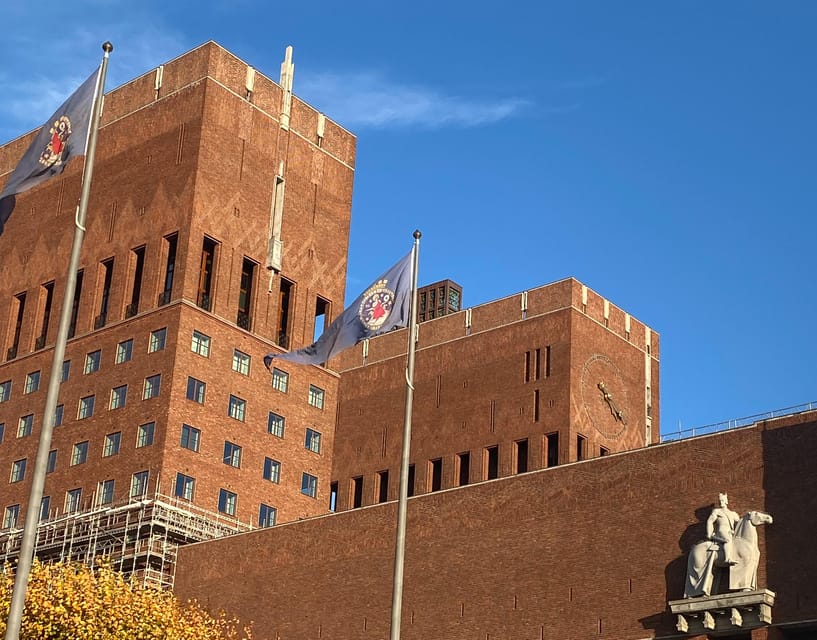
Then you continue toward Oslo City Hall. Here the tour tends to slow its storytelling a bit in the description style, and reviews specifically call out enjoying the artwork at City Hall. Even if the stop is not a full museum-like immersion, it is still a memorable visual checkpoint.
Aker Brygge: Turning a Walk Into a Real Oslo Plan
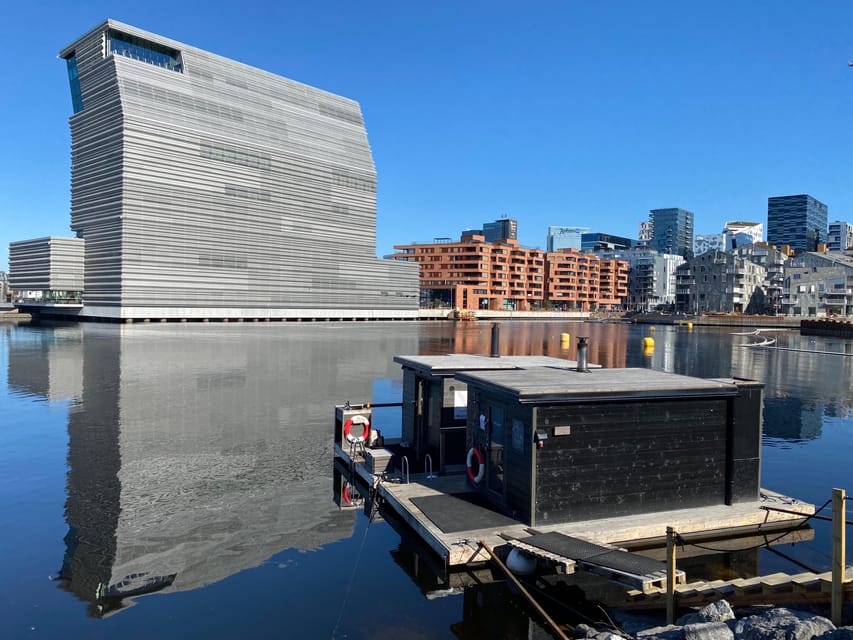
After City Hall, you move toward Aker Brygge. The tour uses this as a practical pivot point. You get help for what to do next, including tips about the National Museum, the Nobel Peace Centre, restaurants, and Oslofjord tours.
This is exactly where a good guide earns their fee. Many walking tours end with photos. This one tries to make your remaining time easier.
Aker Brygge is also a smart place for this kind of advice because it is central and lively. Once you finish the guided portion, you can keep exploring nearby without needing to figure out transportation right away.
If you are doing fjord activities, ask your guide about which options best match your day. The tour framework makes it easier to choose between a quick outing and something longer.
The Vigeland Park Add-On: Tram Ride and 50 Minutes of Sculpture Story
If you opt for the Vigeland Park add-on, you board the tram at Aker Brygge. The add-on includes a guided visit of about 50 minutes, and the group gets time to take in the park’s scale and themes.
The tour emphasizes that Vigeland Park is the world’s largest sculpture park envisioned and created by a single artist. That framing matters, because the sculptures start to feel connected rather than random.
Practical note: the tour warns that the park can be muddy after rain, and in winter it can be too icy for a comfortable visit. If you are unsure about conditions, you can contact the guide, and she may be able to provide spikes.
If you hate slips, this is the part to plan for. Bring footwear that grips. Even a great guide can only do so much on ice.
At the end of the extended option, you have drop-off locations at Kronprinsesse Märthas plass or Vigelandspark main entrance, depending on the route setup.
Price and Time: Is $60 Actually Good Value Here?
For a 3.5-hour city walk with a trained founder running the route, $60 can feel fair, sometimes even smart, if your goal is orientation.
You are paying for:
- tight routing that hits Opera, Kvadraturen, Akershus, Karl Johan, and the City Hall area
- guided context that turns landmarks into meaning
- and, if you add it, the tram and guided Vigeland Park time
You are not paying for food, so budget for a drink or snack on your own. That is standard for walks like this, but it means you should plan timing. If you start mid-day, you may want to eat after the tour.
Is it worth it versus a self-guided walk? If you love facts, street-level storytelling, and planning tips, yes. If you only want photos and don’t care about the “why,” you might prefer a cheaper DIY approach. The real value sits in how the guide reads the city for you.
Who This Tour Suits Best (And Who Might Skip It)
This tour fits well if you are:
- a solo traveler who wants an efficient introduction without feeling lost
- a couple looking for shared conversation time during a walk
- a small group of friends who like architecture and city stories
- a photo taker who wants fjord views and major landmarks in one session
- someone who wants a culture and architecture focus over a random hits list
It is not a great fit if you have mobility limitations or use a wheelchair, because the format is a walking tour.
Weather matters too. You can still enjoy it in rain, and guides like Romy have a track record of turning stormy afternoons into a fun, story-driven walk. Still, bring the right clothing and shoes, and keep your expectations realistic on icy days.
If you are visiting in winter, treat the itinerary like a “plan for cold feet” day. The tour’s own notes about ice and spikes are there for a reason.
Should You Book Oslo By Heart?
I’d book it if you want a first-time Oslo feel fast, with a guide who knows how to make the city coherent. The blend of modern Bjørvika and the historic center is strong, and the optional Vigeland Park add-on turns your day from sightseeing into something more memorable.
Skip or adjust your expectations if you need an ultra-accessible, low-walking experience, or if you are traveling in winter and hate the idea of slippery ground. In those cases, you might still do portions of the route on your own, but the guidance on timing and conditions is what makes this work.
If you do book, do one smart thing: come with one question ready. Ask about what you should see next after Karl Johan, or which fjord tour makes sense for your time. That is when this tour stops being “landmarks” and starts being a personalized plan for Oslo.
FAQ
Where is the meeting point?
You meet outside Deichman Bjørvika Library at the sculpture Skapning fra Iddefjord (Creature from Iddefjord).
How long is the tour?
The standard tour lasts about 135 minutes, or 3.5 hours.
Is this tour shared or private?
It is available in private or small-group formats.
What is the maximum group size?
The tour lists a maximum of 10 guests per tour.
Which languages are offered?
The live guide is available in English and German.
Does the price include public transport?
Tram tickets are included if you choose the Vigeland Park add-on.
Are food and drinks included?
No. Food and drinks are not included.
Is the tour suitable for wheelchair users or mobility impairments?
No, it is not suitable for people with mobility impairments or wheelchair users.
Is the Vigeland Park add-on affected by weather?
Yes. The tour notes it can be muddy if it has rained, and in winter it can be too icy for comfort. You may be able to arrange spikes by contacting the guide in advance.
What are the drop-off locations with the Vigeland add-on?
Drop-off locations are Kronprinsesse Märthas plass (Oslo) and Vigelandspark main entrance.
Is there free cancellation?
Yes, free cancellation is offered up to 24 hours in advance for a full refund.
One Shortlist, Oslo





More Tour Reviews in Oslo

The Capital, Kept Going
Newest Oslo write-ups off our Norway desk
- Fjord Houseboat Cruise in Oslo. 100 % electric. BYO
★ 5.0 · 3 reviews - Oslo Christmas walk
★ 4.0 · 3 reviews - Afternoon Tea and Classic Concert on the Fjord
★ 4.5 · 3 reviews - Lake walk and campfire
★ 4.7 · 3 reviews - Oslo: Yoga & Hiking with a dog
★ 5.0 · 3 reviews - Oslo: Skjennungstoppen Wildlife Forest Hiking Tour
★ 5.0 · 3 reviews
More in Oslo Tours.
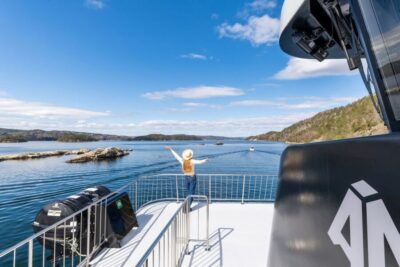 ★ 4.5Oslo: Scenic Fjord Cruise with Audio Guide CommentaryFrom $445,375 reviews
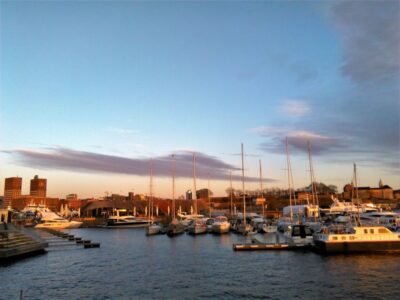 ★ 4.8Oslo Nature Walks: Island Hopping TourFrom $692,713 reviews
 ★ 4.4Oslo: 100% Electric Oslofjord Sightseeing CruiseFrom $402,041 reviews
 ★ 4.5Oslo: Fjord Evening Cruise with Shrimp BuffetFrom $881,956 reviews
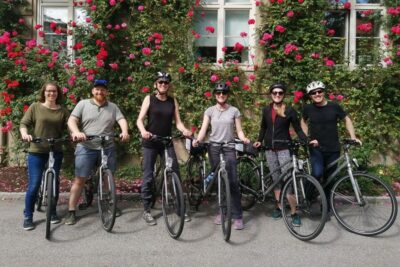 ★ 4.8Oslo: 3-Hour Highlights Bike TourFrom $621,609 reviews
 ★ 4.7Oslo: Guided Sightseeing Fjord Cruise on Premium Silent BoatFrom $641,390 reviews
 ★ 5.0Oslo Highlights Bike TourFrom $62979 reviews
 ★ 4.3Oslo: Paradox Museum Entry TicketFrom $29799 reviews
Lists this one sits in