
REVIEW · OSLO TOURS
Oslo City Private Walking Tour
Oslo in two hours, on foot. This private walking tour is built for a focused first look, with an easy start at the Nobel Peace Center and a route that strings together Oslo’s major landmarks, from old fortresses to modern skyline moments, plus stories tied to Edward Munch and Henrik Ibsen. I love the pace and format, because it feels personal, not rushed, and you stay in the thick of the city center without needing to plan every turn.
The other big win for me is how each stop connects to a larger idea about Oslo, like peace prize politics, royal ceremony, and everyday life in the quarters around Kvadraturen. One possible drawback to consider is that this is a tight, weather-dependent stroll through traffic-heavy streets, so you will get only short looks at each highlight and you may feel the cold if you are underprepared for a rainy day.
In This Review
- Key things to know before you go
- A private two-hour Oslo walk that actually fits your day
- Starting at the Nobel Peace Center, where the story has a spine
- Oslo City Hall and Nationaltheatret: power, art, and public life
- The Royal Palace and Karl Johans Gate: a walk through ceremony and shopping streets
- Stortinget, Christian IV’s Glove, and Kvadraturen street geometry
- Akershus Fortress by the fjord, then quick hits around Bankplassen
- Oslo Stock Exchange and the harbor promenade finish at Opera House views
- How the guide shapes the value of the whole route
- Timing, traffic noise, and what to do when the streets feel fast
- Price and value: is $239.46 per person worth it?
- Who this Oslo walk suits best
- Should you book this Oslo City Private Walking Tour?
- FAQ
- How long is the Oslo City Private Walking Tour?
- How much does the tour cost per person?
- Where do I meet the guide?
- Where does the tour end?
- What is included in the tour?
- Is the tour private?
- Does the tour run in bad weather?
Key things to know before you go
- A smooth meetup at the Nobel Peace Center makes the whole experience easier to start
- A truly private format means only your group walks the route with the guide
- Short, efficient stops with free entry keep the tour moving without extra ticket hassle
- A route designed for first-time orientation covers government, culture, monarchy, and fortresses
- A natural ending viewpoint near the Opera House gives you a memorable closer moment
- All-weather operation helps when Oslo weather does its usual thing
Capital bookings past this listing, Oslo graded again
- Oslo: Scenic Fjord Cruise with Audio Guide Commentary★ 4.5 · 5,375 reviews
- Oslo Nature Walks: Island Hopping Tour★ 4.8 · 2,713 reviews
- Oslo: 100% Electric Oslofjord Sightseeing Cruise★ 4.4 · 2,041 reviews
- Oslo: Fjord Evening Cruise with Shrimp Buffet★ 4.5 · 1,956 reviews
A private two-hour Oslo walk that actually fits your day
This tour is short on purpose. In about two hours, you cover a concentrated stretch of downtown and waterfront areas, which is exactly what you need if Oslo is a stop on a cruise, or if you want a quick hit before branching out on your own.
Because it is private, you do not have to match your pace to a big group. You can ask questions, take a breather when the weather bites, and generally keep the tour aligned with what you care about most: architecture, political Oslo, or the arts side of the city.
Starting at the Nobel Peace Center, where the story has a spine
You meet at the Nobel Peace Center at Brynjulf Bulls plass 1. The setting matters, because the building sits in a former train station, so you get a sense of history before you even begin walking.
This first stop is tied to the Nobel Peace Prize, awarded every year on December 10. That theme is useful for your whole day, because it gives context to why Oslo has so many places connected to diplomacy, government, and public ceremony.
You only get around 10 minutes here, so think of it as orientation time. Go in ready to catch the main points, then enjoy the walk as the guide connects the dots.
Oslo City Hall and Nationaltheatret: power, art, and public life
Next is Oslo City Hall, also about 10 minutes. It is the local government hub and hosts the Nobel Peace Prize award ceremony, which makes the building feel more than just administrative.
What makes this stop especially worth your attention is the way the artwork reflects Norwegian history, culture, and working life. Even in a quick visit, it helps you understand how Oslo tells its own story in public spaces.
Then you move to the National Theatre area, Nationaltheatret, with about 5 minutes on the clock. This theater has been a major stage for Norwegian productions for over 100 years, so even a short pause here can set you up to notice how Oslo treats performance and national identity as everyday anchors.
If you care about architecture and civic culture, these two stops together create a nice balance: decisions get made here, and stories get performed there.
Pavement rivals threading Oslo


The Royal Palace and Karl Johans Gate: a walk through ceremony and shopping streets
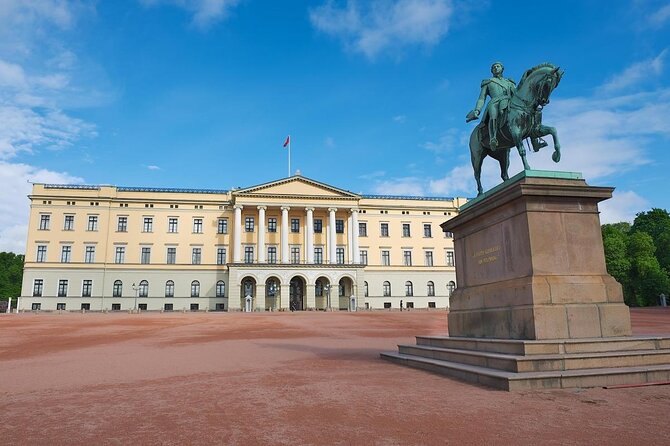
The Royal Palace is next, with about 10 minutes. It is the official residence of the current Norwegian monarch, and many members of the Royal Court work here, so it is a living part of the city rather than a dead monument.
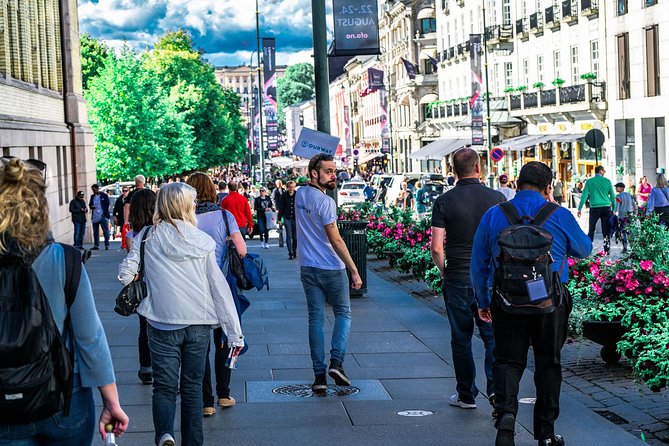
From there, you head onto Karl Johans Gate, the main pedestrian street in Oslo, about 1,020 meters long. You get roughly 10 minutes here, long enough for the guide to point out why this street matters, short enough that you still feel like you are moving with purpose.
This is where the tour becomes visually fun. You see impressive buildings and you are in the zone where boutiques and everyday street life happen, so it is a natural place to decide how you want to spend extra time after the tour ends.
Stortinget, Christian IV’s Glove, and Kvadraturen street geometry
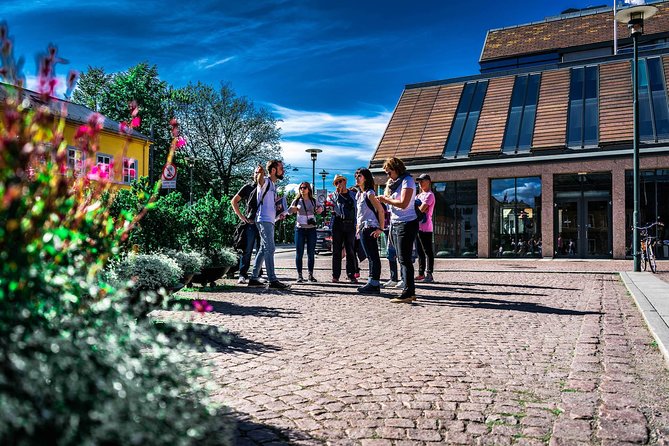
You continue along Karl Johans Gate to the Norwegian Parliament, Stortinget, with about 5 minutes. Since Stortinget sits right along the main pedestrian route, it is easy to get a feel for how politics and public flow coexist here.
The quick stop works best if you are listening for the guide’s key idea: Parliament is not hidden away. It is part of the same walk you are already taking, which is a good reminder that governance is public business in Oslo.
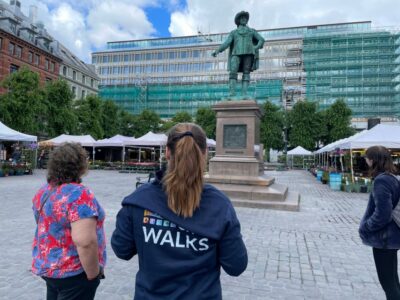
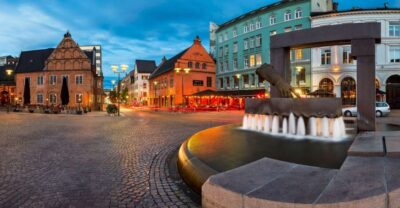
Then you reach Christian IV’s Glove. The name comes from the area Kvadraturen, named for the rectangular Renaissance street pattern laid out under Christian IV. You get about 5 minutes there, which might sound brief, but street planning details are the kind of thing you start noticing only after someone points them out.
This is one of those stops where you get value even if you do not have time to read every plaque. Once the street grid makes sense, the rest of Oslo feels easier to navigate.
Akershus Fortress by the fjord, then quick hits around Bankplassen
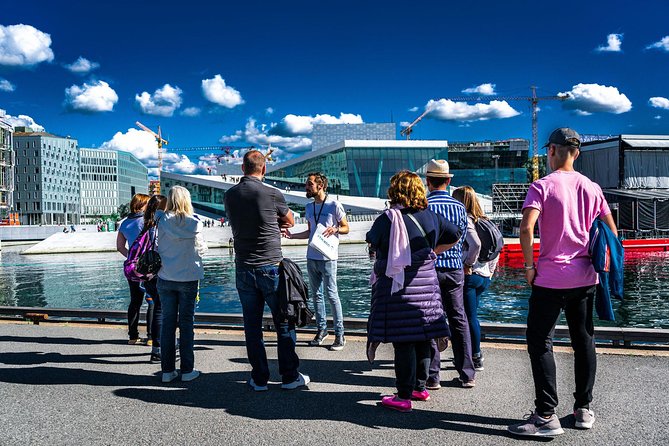
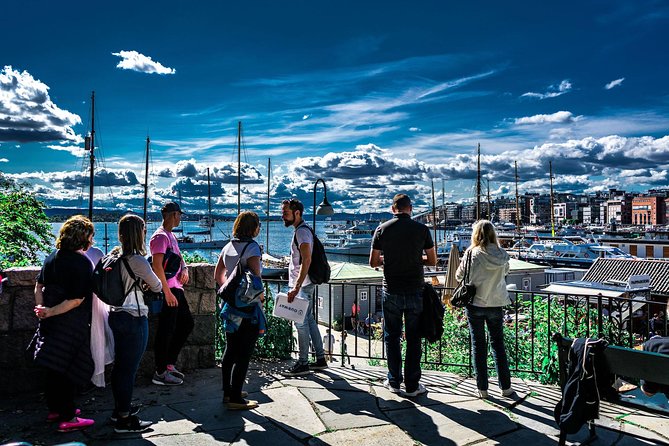
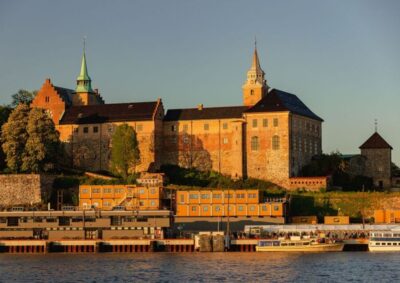
Now you shift to the waterfront with Akershus Castle and Fortress (Akershus Slott og Festning). Expect around 15 minutes, which is the longest block after the Nobel-area start, and that extra time is justified because the fortress sits along the water and overlooks the Oslo Fjord.
Even if you stay mostly in viewing mode, you get the sense of a city that grew with maritime importance. Fortresses like this are not just pretty, they explain why Oslo’s story took the shapes it did.
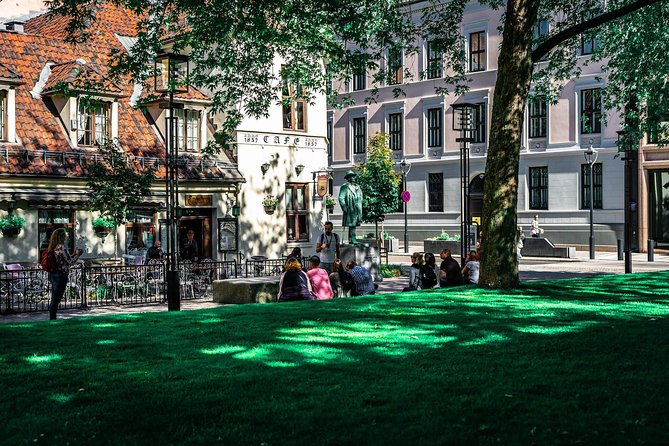
After that, you move to Bankplassen, the Bank Square area, about 10 minutes. The guide connects it to where the Bank of Norway used to be, and you also get the name Engebret Café, a spot frequented by famous Norwegians like Ibsen and Munch.
Even though your visit is short, the Ibsen and Munch connection gives you a human thread through all the formal buildings you have been seeing. It is an easy way to shift from institutions to people.
Oslo Stock Exchange and the harbor promenade finish at Opera House views
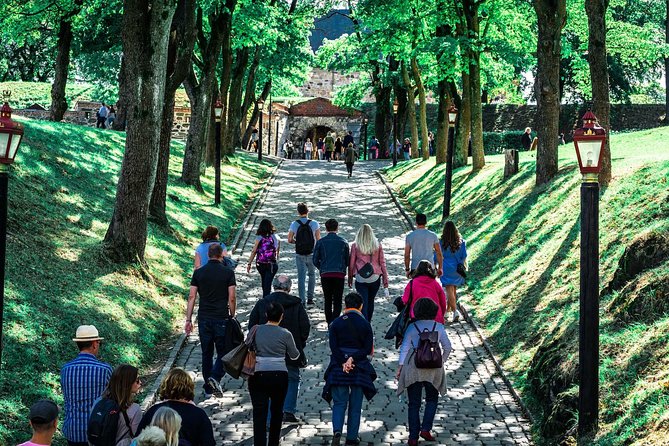
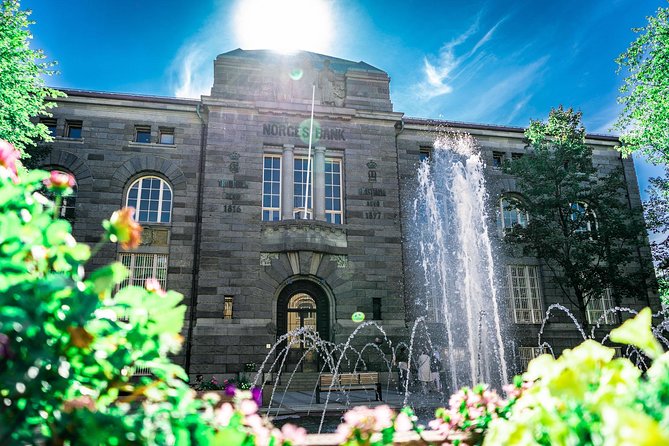
Next is the Oslo Stock Exchange with about 5 minutes. The time box is tight, but the point is clear: Oslo’s business elite pushed for years to get approval and funding, and the exchange building has been around for about 180 years.
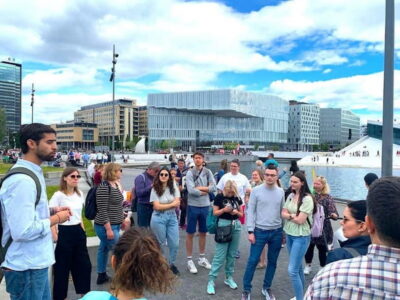
Then you head to the Oslo’s Harbour Promenade area for about 10 minutes. This is where the city’s present identity comes into view, with the Oslo Opera House nearby as the main landmark.
The Opera House is famous enough that you likely recognize it already, and the tour ends with your best payoff: a view toward it from Havnepromenaden (Langkaia 1 area). If you ever catch outdoor performances on select dates, you will understand why this waterfront setting is so iconic.
Even without going inside, this finale helps you end with something photogenic and current, after all the governance, culture, and fortress stops before it.
How the guide shapes the value of the whole route
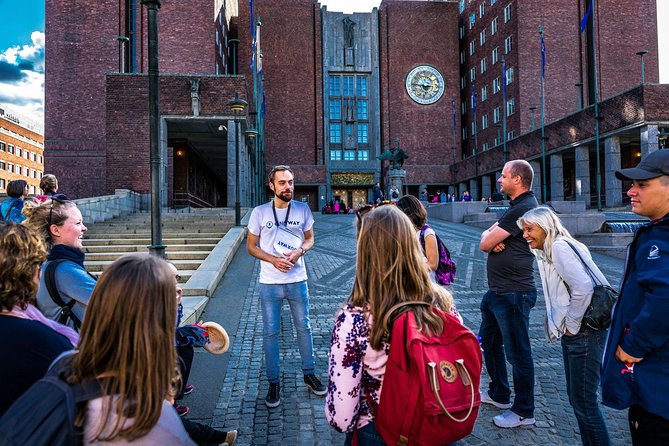
This tour is built around a professional guide, and the guide is not just a narrator. In practice, you can feel the difference between a guide who recites facts and one who links them to the street in front of you.
The names Inger, Diana, Anja, and Tine come up in strong guide feedback, and the common theme is attention to comfort and pace. If it is cold or rainy, I like that the tour is designed for you to go indoors when possible, instead of treating weather like it is your problem.
A good guide also helps you prioritize. If you are interested in the creative side of Oslo, you get strong context for Munch and Ibsen as the route moves from formal buildings to everyday-life landmarks like Bankplassen.
Timing, traffic noise, and what to do when the streets feel fast
Because this is mostly a walk through downtown, you should assume traffic noise at times. That does not ruin the tour, but it does mean you will want to keep your expectations realistic, especially in areas like Karl Johans Gate where pedestrian flow and cars share the same urban space.
The other timing reality is that each stop is short, usually 5 to 10 minutes. That is great for coverage, but it means you will not get a museum-level experience at every location, so bring a mindset of orientation and story.
If you are pairing this with other activities the same day, I recommend leaving extra room after the walk. You will often want to return on your own to the place you liked most once you have your bearings.
Price and value: is $239.46 per person worth it?
At $239.46 per person for a two-hour private walk, this is not a budget add-on. The value comes from the format: you are paying for a guide, private routing for only your group, and efficient coverage of major highlights without you having to map everything yourself.
It also helps that many listed stops have free admission tickets. When the visit fees are low or zero at the stops you are hitting, more of your money goes toward the actual experience and guidance, not entry costs.
The clearest way to make the price feel fair is to think in terms of usefulness. If you are new to Oslo and want to understand what to see next, this kind of route can save you time and reduce the risk of wandering in circles.
Who this Oslo walk suits best
This tour fits best if you want a structured intro to Oslo without getting stuck on planning details. It is especially good if you like a mix of the big public landmarks, like the Parliament and royal spaces, and the cultural storyline connected to Munch and Ibsen.
It is also a smart choice for people who do not want a long day. You get a lot of geography and identity in a short window, then you can keep exploring on your own right after.
On the other hand, if you prefer slow museum time, deep interior visits, or long stops in each building, you might find the pacing too brisk. The route is designed to cover, not to linger.
Should you book this Oslo City Private Walking Tour?
Book it if you want maximum Oslo orientation in a short, guided package, and you like the idea of ending with a clear waterfront payoff near the Opera House. It is a good match for first-time visitors who want a guided “map in your head,” not just photos on your phone.
Skip it if you already know Oslo well and you mainly want long, ticketed time inside major sites. Also, if weather and street noise are deal-breakers for you, consider bringing layered clothing and accepting that you will be outside through some of the route.
If you do book, arrive with one goal in mind, like learning what ties Nobel, the arts, and civic Oslo together. That way, the short stop times feel purposeful, and you will leave with a sense of where to go next.
FAQ
How long is the Oslo City Private Walking Tour?
The tour runs for about 2 hours.
How much does the tour cost per person?
The price is $239.46 per person.
Where do I meet the guide?
The meeting point is the Nobel Peace Center at Brynjulf Bulls plass 1, 0250 Oslo.
Where does the tour end?
The tour ends at Havnepromenade, Langkaia 1, 0150 Oslo, with a view of the Oslo Opera House.
What is included in the tour?
You get a professional guide, plus you receive a mobile ticket.
Is the tour private?
Yes, it is private, and only your group will participate.
Does the tour run in bad weather?
The tour operates in all weather conditions, and you should dress comfortably and appropriately.
One Shortlist, Oslo





More Tour Reviews in Oslo


The Capital, Kept Going
Newest Oslo write-ups off our Norway desk
- Fjord Houseboat Cruise in Oslo. 100 % electric. BYO
★ 5.0 · 3 reviews - Oslo Christmas walk
★ 4.0 · 3 reviews - Afternoon Tea and Classic Concert on the Fjord
★ 4.5 · 3 reviews - Lake walk and campfire
★ 4.7 · 3 reviews - Oslo: Yoga & Hiking with a dog
★ 5.0 · 3 reviews - Oslo: Skjennungstoppen Wildlife Forest Hiking Tour
★ 5.0 · 3 reviews
More in Oslo Tours.
 ★ 4.5Oslo: Scenic Fjord Cruise with Audio Guide CommentaryFrom $445,375 reviews
 ★ 4.8Oslo Nature Walks: Island Hopping TourFrom $692,713 reviews
 ★ 4.4Oslo: 100% Electric Oslofjord Sightseeing CruiseFrom $402,041 reviews
 ★ 4.5Oslo: Fjord Evening Cruise with Shrimp BuffetFrom $881,956 reviews
 ★ 4.8Oslo: 3-Hour Highlights Bike TourFrom $621,609 reviews
 ★ 4.7Oslo: Guided Sightseeing Fjord Cruise on Premium Silent BoatFrom $641,390 reviews
 ★ 5.0Oslo Highlights Bike TourFrom $62979 reviews
 ★ 4.3Oslo: Paradox Museum Entry TicketFrom $29799 reviews
Lists this one sits in