

REVIEW · OSLO TOURS
Myths and Legends: An Oslo Walking Discovery
Vikings, ghosts, and Oslo landmarks in two hours. This walking tour turns Norwegian folklore into real street corners, from City Hall to the cathedral.
I liked the storytelling style, especially the warm humor and clear links between belief and the buildings around you. I also appreciated the practical value: free admission at every listed stop means you pay mostly for the guide and the walk, not extra tickets.
One watch-out: the legends are more eerie folklore and local superstition than a full-on scary show, so if you want darkness turned up to 11, you may find it gentler than expected.
In This Review
- Key Highlights at a Glance
- Why This Oslo Myths Walk Works So Well After Dark
- Meeting at Fridtjof Nansens plass and How the Walk Flows
- Oslo City Hall: Vikings, Belief, and the World They Thought They Lived In
- Christiania Torv: Ghostly Apparitions and the Logic of Bad Luck
- Akershus Fortress: Ghost Lore Meets Architecture That Won’t Move
- Kvadraturen Neighborhood: Medieval Meets Classic in One Easy Walk
- Oslo Cathedral on Stortorget: Baroque Spires, Outdoor Awe
- The Guides: Why Marija and Ihor Make the Myths Stick
- Value: What You Get for $42.98 in Two Hours
- Who Should Take This Walk (and Who Might Want a Different Style)
- Should You Book Myths and Legends: An Oslo Walking Discovery?
- FAQ
- How long is the Oslo myths walking experience?
- What is the price per person?
- What language is the tour offered in?
- Where do you start and where do you end?
- What time does the tour start?
- Are there any admission fees at the stops?
- How large is the group?
- Is the tour mostly outdoors?
- Can I get a full refund if I cancel?
Key Highlights at a Glance
- Six pm start, two-hour pace that fits an evening in central Oslo
- Small group (max 16), so questions and side stories actually land
- Five myth-focused stops across City Hall, Christiania Torv, Akershus Fortress, Kvadraturen, and Oslo Cathedral
- Most stops are outside, including City Hall and the cathedral, so you keep moving
- Free entry at all listed sights so your $42.98 goes to the experience, not ticket costs
Capital bookings past this listing, Oslo graded again
- Oslo: Scenic Fjord Cruise with Audio Guide Commentary★ 4.5 · 5,375 reviews
- Oslo Nature Walks: Island Hopping Tour★ 4.8 · 2,713 reviews
- Oslo: 100% Electric Oslofjord Sightseeing Cruise★ 4.4 · 2,041 reviews
- Oslo: Fjord Evening Cruise with Shrimp Buffet★ 4.5 · 1,956 reviews
Why This Oslo Myths Walk Works So Well After Dark
Oslo at evening hours has a different feel. Even if the weather is plain, the city’s stone buildings and quiet plazas make myths feel less like campfire tales and more like how people actually lived. This walk takes that idea seriously, hopping between places tied to Vikings’ worldviews, urban legend style ghosts, and old beliefs that shaped daily behavior.
What makes it fun is the way superstition shows up in practical things. Instead of treating folklore as pure fantasy, the guide connects it to habits, warnings, and ideas about luck. You end up seeing the same street you walked past in daytime, but with a new set of meanings attached.
I also like the timing. A 6:00 pm start gives you a chance to do it after your main daytime sightseeing. You do not have to rush your schedule, and you still get a focused, guided experience without turning the whole night into one long outing.
Meeting at Fridtjof Nansens plass and How the Walk Flows
The tour starts at Fridtjof Nansens plass 8 and finishes near Stortorvet, close to Karl Johans gate by Oslo Cathedral. That end point is convenient because it drops you in the center of things, where it is easy to keep going on foot or grab public transportation.
The group size is capped at 16, which matters more than you might think. In a small group, the guide can keep the story line connected while still adjusting for questions. I noticed how that supports the main goal of the experience, which is not just facts, but the feeling of a guided walk with clear, step-by-step storytelling.
You should plan for moderate physical fitness. This is not a strenuous hike, but it is still a two-hour walking loop in the central parts of Oslo. Bring comfortable shoes, and if you are sensitive to cold, bring a light layer even in mild weather.
One more practical note: it runs in English, and you get a mobile ticket after booking. If you like to travel light on paperwork, that part is easy.
Oslo City Hall: Vikings, Belief, and the World They Thought They Lived In
Your first stop is Oslo City Hall, with learning happening from outside the building. You spend about 15 minutes there, and the focus is on Vikings’ beliefs and how they imagined the world around them. This is a strong opener because it sets the tone: the myths here are not only about monsters. They are about how people interpreted nature, fate, and daily uncertainty.
City Hall may not be the first place you picture when thinking Vikings, but the payoff is in the connection. You start the walk with an idea of how a culture explains the unknown, then you keep that lens as the route gets older, stranger, and more layered.
If you want photos, this is a good moment to pause before the walk picks up. Look up at the architecture, take a quick wide shot, and then focus on the guide’s story points. The guide’s angle makes it easier to remember details later, especially when you reach the later stops that deal with superstition and fear.
Since admission is free for this stop, you are not pressured by time inside any museum space. The emphasis stays on the outdoor landmarks and what they symbolize.
Pavement rivals threading Oslo




Christiania Torv: Ghostly Apparitions and the Logic of Bad Luck
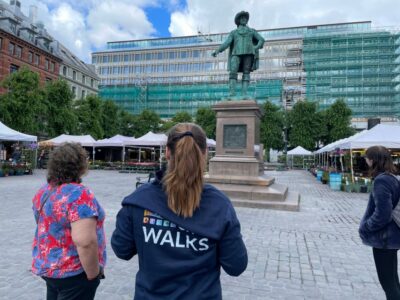
At Christiania Torv, you shift from Vikings to legend in a more urban setting. The stop lasts about 20 minutes and centers on ghostly apparitions said to haunt the area. The story does not stop at spooky imagery, though. It also explains how locals used superstition as a kind of protective signal, a way to interpret signs and avoid bad luck.
This is one of the best stops for people who like folklore that feels human. Ghost stories often get dismissed as pure fantasy, but here you get the sense of how fear and caution can function like a neighborhood rule. Even if you do not believe the story itself, it helps you understand why communities repeat certain warnings.
Pay attention to how the guide frames the myths. The most memorable moments usually come when the guide ties a legend to behavior, like what people might do to feel safer or to explain something unexpected. That turns the stop into something you can carry into the rest of Oslo sightseeing.
Also, since admission is free and this is a short walk segment, it stays light. You get eerie atmosphere without spending your whole evening standing in one place.
Akershus Fortress: Ghost Lore Meets Architecture That Won’t Move
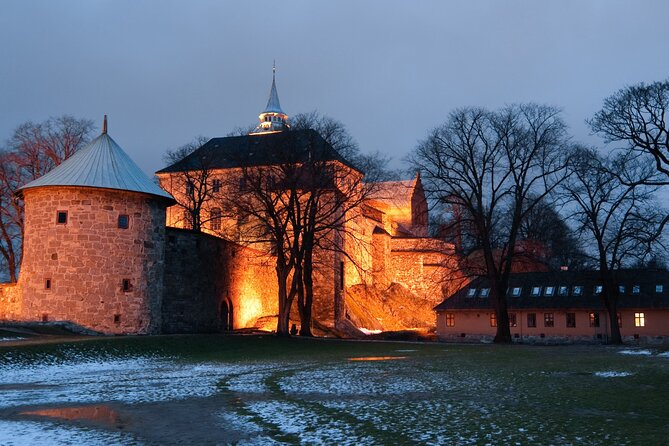
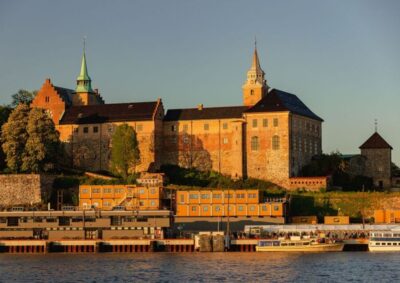
Next comes Akershus Castle and Fortress, known locally as Akershus Slott og Festning. This is the longest part of the route at about 50 minutes, and it is where the walk earns its weight. The stories include ghosts tied to the fortress, but the real star is the imposing architecture.
You also get a grounding detail: the fortress architecture has remained unchanged since its construction in the late 13th century. That fact changes how you listen. When a building has lasted that long, the myths around it start to feel less like random fantasy and more like a layer that kept getting added over centuries.
From a practical standpoint, this stop is ideal if you like your stories tied to a sense of place. You can look at the fortress and feel the time scale without needing to enter any interior space. Even if you are not a big museum person, outdoor landmark history can still be deeply satisfying.
The guide’s job here is not only to describe spooky tales. It is to show how those tales grew around power, conflict, and the long memory of stone walls. If you enjoy walking tours that teach you to read a city like a document, this is one to savor.
Admission is listed as free for this stop as well, so again, the cost stays focused on the guided experience.
Kvadraturen Neighborhood: Medieval Meets Classic in One Easy Walk
After the fortress, you get a calmer tempo at Kvadraturen Neighbourhood. This stop is about 20 minutes and focuses on secrets of Oslo’s oldest neighborhoods, with attention on the mix of medieval and classic architecture.
Kvadraturen is the kind of area where you can easily get lost visually, in a good way. The guide helps you slow down and see patterns. That matters because architecture can look similar at first glance if you are just walking and scanning for big sights.
Here is what I find valuable: the stop is designed to help you notice the details you usually miss when you are moving fast. When a guide points out what to look for, you start recognizing styles and time periods in real life, not just on postcards.
You also get the myth angle again, but in a gentler way. The ideas about secrets and local meaning fit this neighborhood best. It is less about one dramatic ghost scene and more about how a place can carry stories in its structure and street layout.
Oslo Cathedral on Stortorget: Baroque Spires, Outdoor Awe
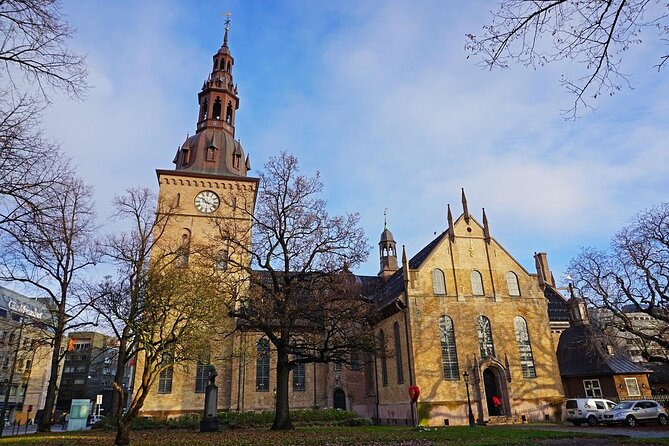
Your final named stop is Oslo Cathedral, dated to 1697. This one is outside only, about 15 minutes, and the focus is on its intricate Baroque decorations plus the towering spires you can spot above the surrounding buildings on Stortorget Square in central Oslo.
This is a great ending point because it gives you a strong visual payoff. When a tour ends with something tall and unmistakable, you leave with a clear mental image. You can also take it from there, since the tour ends near Karl Johans gate by the cathedral area.
Outdoor-only means you will not spend time lining up or moving through interior spaces. That keeps the timing tight and helps the tour stay on schedule. It is also a reminder that this is built as a walk, not a museum sprint.
If you like architecture, spend a few extra seconds looking up while the guide finishes. Baroque details can be easier to miss when you only glance at a façade at street level. A quick upward look turns this stop from background scenery into part of the story.
The Guides: Why Marija and Ihor Make the Myths Stick
The guides are a big part of why this tour scores so high. Names that come up include Marija, Maria, and Ihor, and the common thread is clear: they tell the stories like they genuinely enjoy them. In particular, the guide’s humor and warmth show up in the way they make the myths relatable, not just recited.
The goal is not only to inform you. It is to help you remember. When a guide links a building to an idea, and then links that idea to how people acted, it sticks better than a straight lecture. That is the magic trick here.
That said, there is one pacing consideration you should keep in mind. On some runs, the guide may start a story while the group is still catching up. If you like to follow every word word-for-word from start to finish, this can be slightly annoying. The fix is simple: stay close when the group moves, and do not let yourself lag behind when the guide transitions between stops.
As for tone, the legends lean fun and eerie rather than relentlessly dark. If you expect nonstop horror vibes, adjust your mindset. Think old superstition, not modern horror film.
Value: What You Get for $42.98 in Two Hours
At $42.98 per person for about two hours, the value comes from three things: time, access, and structure. You get a focused route through central Oslo, and each stop includes free entry for the listed sites. In other words, your money supports the guide’s ability to connect multiple landmarks into a single theme.
You also get a small group setting. For most walking tours, a larger group means less interaction and more waiting. Here, the max of 16 supports a smoother flow and makes it easier to ask quick questions.
The tour is also mobile-ticket friendly. If you hate hunting for paper confirmations, this is a small but real convenience.
Finally, the fact that this is booked on average about 38 days in advance tells you something. Demand is steady enough that choosing a time slot early can help you avoid last-minute disappointment. If your Oslo dates are firm, lock it in sooner rather than later.
Who Should Take This Walk (and Who Might Want a Different Style)
This walk fits best if you like folklore tied to real places. If you enjoy hearing how people explained the world, how they feared the unknown, and how superstition shaped behavior, you will likely enjoy the theme from start to finish.
It is also a good match for travelers who want a night-friendly city experience without a late start. A 6:00 pm kickoff means you can do daylight sightseeing first, then switch to stories after.
You might want to choose something else if you want major museum-style interiors. Two stops are clearly outside only, and the whole pace is designed as a walking loop with quick landmark stops, not long exhibit time.
If you travel with a service animal, it is allowed. And since it is near public transportation, you can connect it with other plans without making your day overly complicated.
Should You Book Myths and Legends: An Oslo Walking Discovery?
If your ideal Oslo day includes stories with a real-world setting, I think this is worth booking. You get a tight route, clear themes, and landmarks that make the legends feel grounded. The guide style is a standout: warm, funny, and easy to follow in English.
The biggest reasons to say yes are:
- the story-driven format that helps you see the city with new meaning
- the small group size
- the free entry at all listed stops, which keeps the cost sensible
I would only hesitate if you crave a darker, scarier vibe or you dislike walking tours where timing can move quickly between points. If that sounds like you, you can still enjoy it, but you may want to go in expecting folklore with chills, not full horror.
FAQ
How long is the Oslo myths walking experience?
The experience lasts about 2 hours.
What is the price per person?
The price is $42.98 per person.
What language is the tour offered in?
The tour is offered in English.
Where do you start and where do you end?
You start at Fridtjof Nansens plass 8, 0160 Oslo, Norway and you end on Stortorvet, Oslo, near Karl Johans gate by Oslo Cathedral.
What time does the tour start?
The start time is 6:00 pm.
Are there any admission fees at the stops?
The listed stops show admission as ticket free.
How large is the group?
The tour has a maximum of 16 travelers.
Is the tour mostly outdoors?
Some stops are explicitly outside only, including Oslo City Hall and Oslo Cathedral.
Can I get a full refund if I cancel?
Yes. You can cancel for free up to 24 hours in advance for a full refund.
Pavement Threading Oslo


More Tour Reviews in Oslo





The Capital, Kept Going
Newest Oslo write-ups off our Norway desk
- Fjord Houseboat Cruise in Oslo. 100 % electric. BYO
★ 5.0 · 3 reviews - Oslo Christmas walk
★ 4.0 · 3 reviews - Afternoon Tea and Classic Concert on the Fjord
★ 4.5 · 3 reviews - Lake walk and campfire
★ 4.7 · 3 reviews - Oslo: Yoga & Hiking with a dog
★ 5.0 · 3 reviews - Oslo: Skjennungstoppen Wildlife Forest Hiking Tour
★ 5.0 · 3 reviews
More in Oslo Tours.
 ★ 4.5Oslo: Scenic Fjord Cruise with Audio Guide CommentaryFrom $445,375 reviews
 ★ 4.8Oslo Nature Walks: Island Hopping TourFrom $692,713 reviews
 ★ 4.4Oslo: 100% Electric Oslofjord Sightseeing CruiseFrom $402,041 reviews
 ★ 4.5Oslo: Fjord Evening Cruise with Shrimp BuffetFrom $881,956 reviews
 ★ 4.8Oslo: 3-Hour Highlights Bike TourFrom $621,609 reviews
 ★ 4.7Oslo: Guided Sightseeing Fjord Cruise on Premium Silent BoatFrom $641,390 reviews
 ★ 5.0Oslo Highlights Bike TourFrom $62979 reviews
 ★ 4.3Oslo: Paradox Museum Entry TicketFrom $29799 reviews
Lists this one sits in