
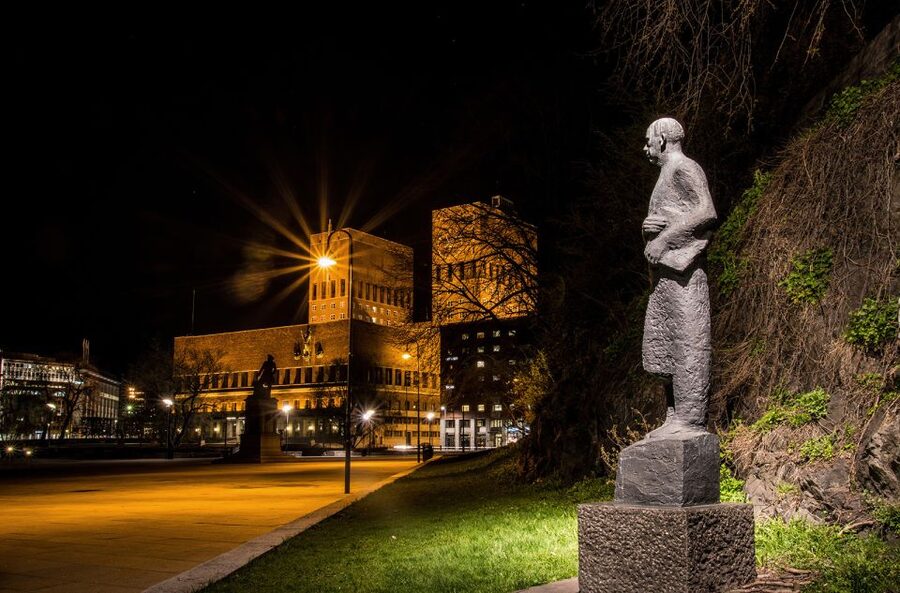
REVIEW · OSLO TOURS
Myth and Legends Oslo Walking Tour
Myths add teeth to Oslo’s landmarks. This 2-hour walk turns the city center into a story you can actually follow, with Akershus fortress and Karl Johans Gate as the backbone. I especially like how the route strings together top sights fast, and how Norse legends connect to the way buildings and squares feel today. The main thing to consider is that it is not built for very young kids, and it does require comfortable walking shoes.
If you want history with mood, this tour leans into the dark side of famous places without turning into a gimmick. You get an English speaking expert guide, plus pickup from downtown hotels, so you can show up ready to walk. Just know the pace is active for a short time, and the “spooky” part is more atmosphere than a ghost chase.
In This Review
- Key highlights worth showing up for
- Where the tour starts, and why the route works
- Oslo’s City Hall to Akershus, a fortress seen through myths
- Kvadraturen: walking into Oslo’s 17th-century bones
- Karl Johans Gate: the main street finale with Oslo’s signature landmarks
- The Norse legends thread, and what to do with it while you walk
- Price, group size, and whether this is good value for you
- The practical stuff that can make or break your experience
- Should you book Myth and Legends Oslo?
- FAQ
- How long is the Oslo Myth and Legends walking tour?
- What is the price and how big is the group?
- Where do we meet?
- Is pickup from hotels included?
- What’s included in the tour price?
- Is the tour suitable for children?
Key highlights worth showing up for
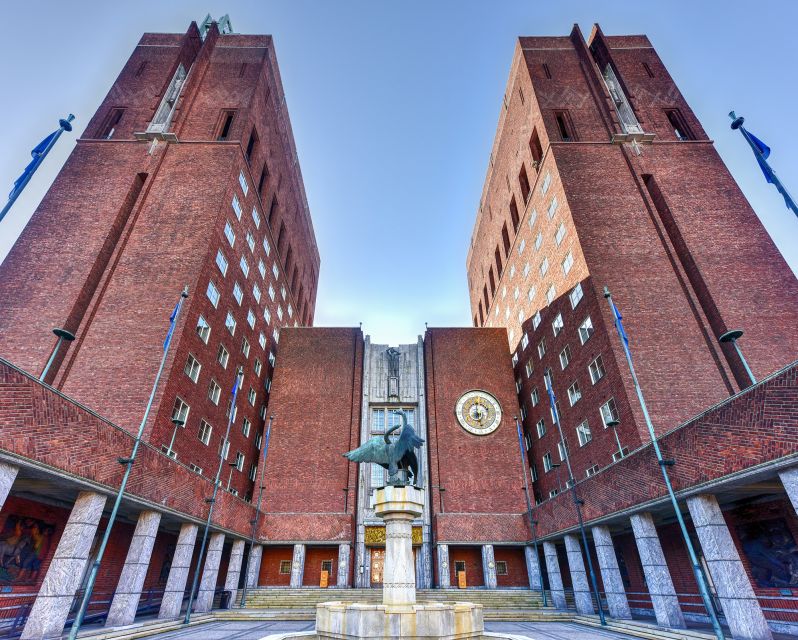
- Hidden part of Akershus fortress: You get more than the postcard view, you see the fortress in a different light.
- Kvadraturen, Oslo’s oldest 17th-century core: This is where the old city texture starts to make sense.
- Norse gods tied to city design: You’ll hear how myth shaped how people imagined the built environment.
- A tight center route in 2 hours: City Hall, fortress, Kvadraturen, then Karl Johans Gate.
- Ends on Karl Johan’s major landmarks: Parliament, National Theater, University, Royal Palace, plus Grand Café nearby.
- A story-first guide style: Reviews mention a lively guide named Marija, with myths ranging from trolls to ghost horses.
Capital bookings past this listing, Oslo graded again
- Oslo: Scenic Fjord Cruise with Audio Guide Commentary★ 4.5 · 5,375 reviews
- Oslo Nature Walks: Island Hopping Tour★ 4.8 · 2,713 reviews
- Oslo: 100% Electric Oslofjord Sightseeing Cruise★ 4.4 · 2,041 reviews
- Oslo: Fjord Evening Cruise with Shrimp Buffet★ 4.5 · 1,956 reviews
Where the tour starts, and why the route works
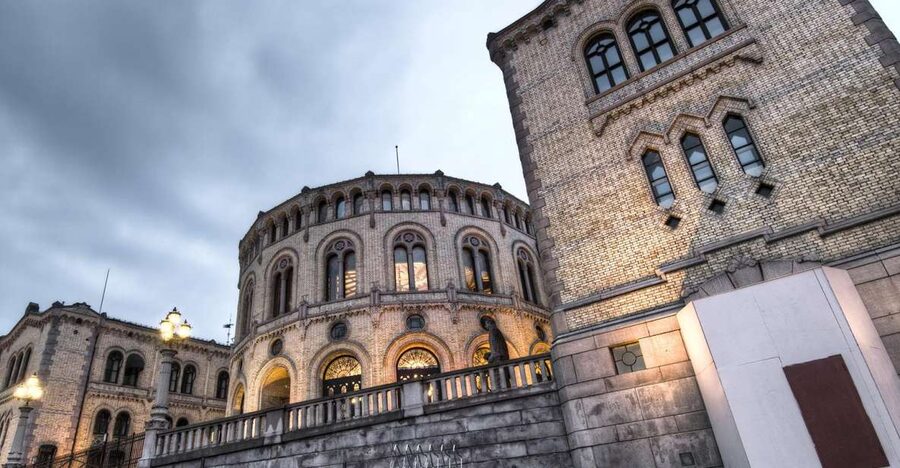
You meet at the Swan fountain at the entrance of Oslo City Hall. It’s a simple, obvious place to orient yourself, and it puts you in the heart of the city right away. From that starting point, the walk makes sense like a good map should: you build from the civic center, to the fortress, to the oldest inner streets, and then out onto the city’s main promenade.
The format is private group and wheelchair accessible, which matters because it changes the feel. In a private set up, a guide can slow down when someone wants extra context, or speed up when the group is eager to keep moving. That is a big deal for a 2-hour tour, because you do not have time for wandering. You want every stop to earn its place, and this route is designed to do that.
One more practical note I appreciate: the tour includes pickup from any downtown hotel. Oslo is not huge in the way some capitals are, but “downtown” coverage still saves time and stress. You can focus on the walk instead of figuring out transit between landmarks.
Oslo’s City Hall to Akershus, a fortress seen through myths
The middle act is Akershus fortress, and the pitch is not just scenic walls. The tour’s big draw is seeing a hidden part of Akershus fortress, plus hearing the “dark side” stories tied to the buildings and squares around it. That combination is smart. Fortresses are already intense in real life, but when a guide explains how people used the space over time, the stones stop being scenery and start being evidence.
Akershus also works well for myth storytelling because forts, gates, and courtyards feel like thresholds. When the guide weaves Norse legends into the discussion, you start noticing how Oslo’s architecture can feel like it has a personality. The tour highlights that link directly, with the idea that Norse gods and goddesses influenced city architects. Even if you take that as symbolic rather than literal, it helps explain why some parts of Oslo can feel dramatic or guarded.
What I’d watch for during this stretch is pacing. Fortress areas can have uneven surfaces and stairs, depending on where you’re guided. Since the tour is described as wheelchair accessible, you should be in good shape with the route options they use, but it still pays to wear supportive shoes and keep an eye on the ground. Akershus is worth it, but you want your footing to feel boring and secure.
Kvadraturen: walking into Oslo’s 17th-century bones
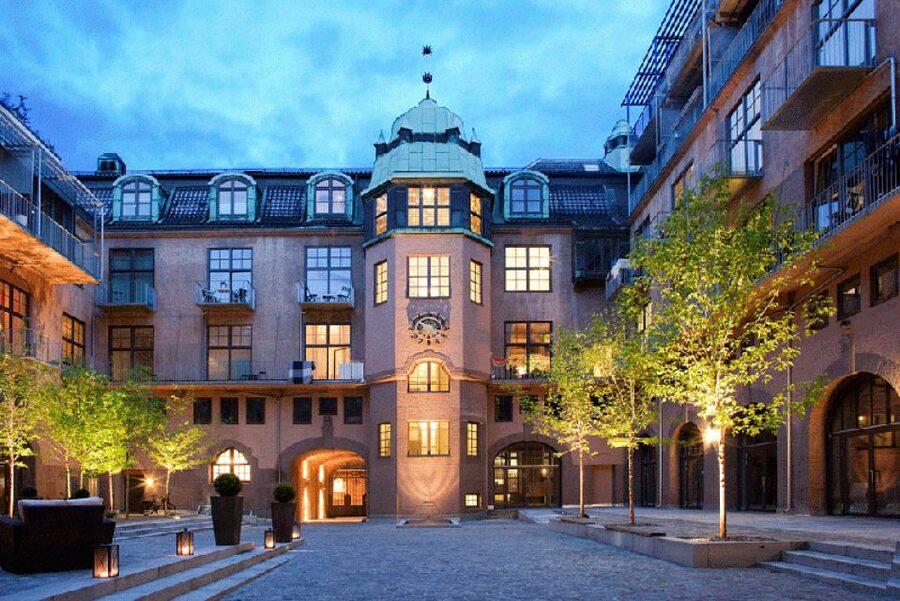
Next you move into Kvadraturen, described as the oldest part of the 17th-century city. This is the part I like most when I want to understand how a capital got its core layout. City center streets are often where you feel time. Kvadraturen is the feeling part.
In practical terms, Kvadraturen is where “myths” become “why it looks like this.” Instead of treating legends as standalone stories, the tour uses the streets as a stage. You get to connect what you see in front of you with the kind of worldview that shaped choices made centuries ago. That’s where the tour becomes more than entertainment.
Also, this is where the route gives you breathing room. You’re no longer only dealing with the fortress, which is about strength and defense. You’re moving through an urban fabric that’s about living and planning. When a guide points out small contrasts in building feel, street spacing, and the logic of the grid, the city starts to explain itself.
If you like walking tours that leave you with a clearer mental map of the center, this is the section to pay attention to. If you mostly want iconic photo stops, you might feel Kvadraturen is less flashy than Karl Johan. But it is the section that helps the rest click.
Pavement rivals threading Oslo
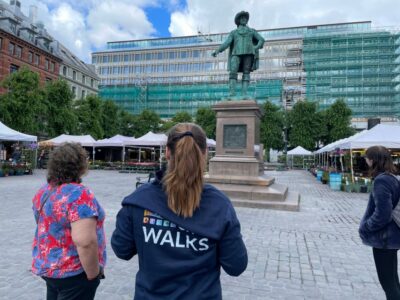
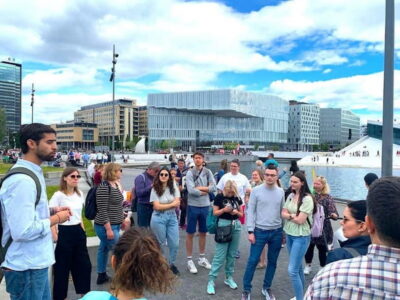
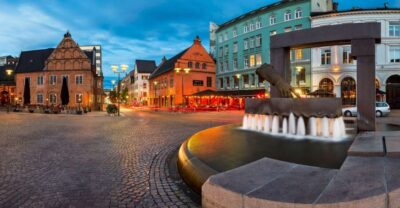


Karl Johans Gate: the main street finale with Oslo’s signature landmarks
The tour finishes on Karl Johan, Oslo’s main street, where you’re set up to see major institutions and symbols close together. This is a very efficient way to end, because you get a sense of Oslo’s identity all at once.
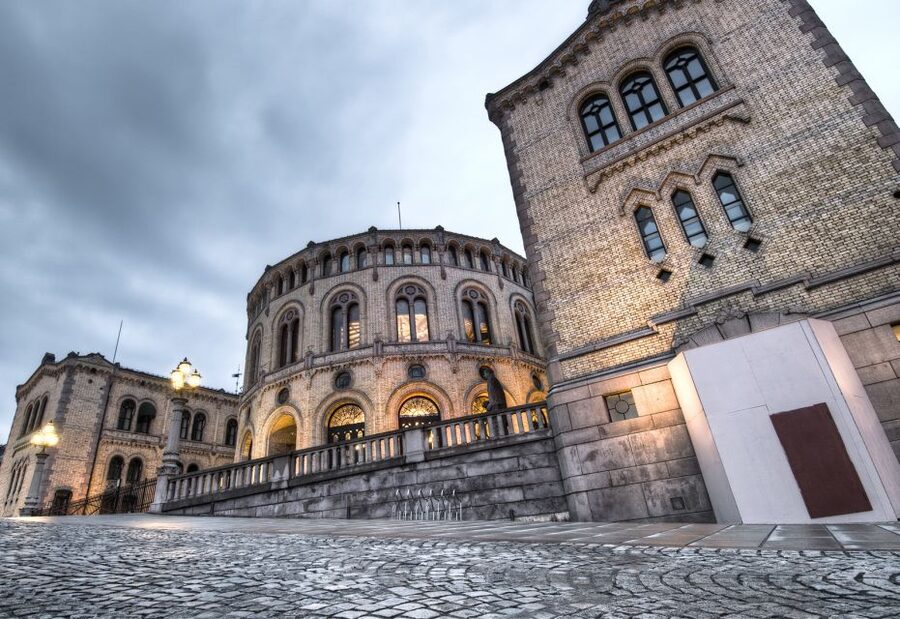
The landmarks included in the tour’s end sequence are: Parliament, the National Theater, the University, the Royal Palace, and the Grand Café nearby. That list matters because it sketches the city in three layers. Government and law. Arts and learning. Then the monarchy and the public-facing “everyday Oslo” feel of a grand café culture.
The Royal Palace is noted as an old Royal palace that became a recognizable symbol of the city. That detail is not just trivia. When a guide connects the palace to how Oslo represents itself, you understand why it sits where it does, and why people keep returning to it. In other words, the place stops being a single building and becomes a piece of messaging.
Karl Johan is also a good reality check for the myth theme. Legends belong in the imagination, but architecture belongs in daily life. Watching how the guide transitions from Norse story and fortress mood to modern civic landmarks helps you see that myths are not only for museums. They can act like a cultural lens, even when you’re standing next to very real institutions.
The Norse legends thread, and what to do with it while you walk
This tour’s signature ingredient is the way it ties storytelling to the places you’re walking through. You hear Norse gods and goddesses linked to city architects, but you also hear myth material with range. Reviews mention things like trolls and ghost horses, and that helps you understand the guide’s style: they aim for vivid, memorable stories, not just a lecture.
Here’s the key: myths work best when they’re used to interpret. If you treat each legend as a disconnected anecdote, you’ll forget it by the next street. If you treat it as a clue, it sticks. So as you walk, I’d do a simple mental exercise. Pick one moment, like a gate, a square, or a prominent building. Ask yourself what the space is trying to communicate. Defensive? Ceremonial? Civic? Then listen for how the guide frames that feeling through myth.
That approach also helps with the tour’s tone. You’re told they’re not chasing ghosts, and they can’t promise you won’t get a spooky feeling. That line is basically a heads up: the “dark side” is atmosphere plus stories, not a haunted attraction. You’ll get a spooky mood if that’s what you like, but you should also expect historical anchoring rather than pure scare tactics.
If you enjoy folklore, architecture, and narrative history mixed together, you’ll probably find this tour a strong fit. If you prefer straightforward dates and documents, you might want to treat the legends as the hook, then focus on the built environment lessons the guide points out.
Price, group size, and whether this is good value for you
Pricing is $304 per group up to 16 for a 2-hour private walk. That is the big value equation here, and it can swing a lot depending on your group size.
- If you fill the group to 16 people, it works out to about $19 per person.
- If you’re only a couple of people, it can feel more like a $150 per person type of outing.
So the smarter way to judge value is not the headline price. It’s the group math plus what you get: an English speaking guide, pickup from downtown hotels, taxes included, and a compact route through the center’s standout sites. Also, the private format means you are not stuck with a one-size-fits-all pace.
For families over 12 who want a guided overview without committing to a full day, it can be a nice option because the duration is short and concentrated. For couples and small groups, it can still be worth it if you care about story quality and guided interpretation. If you’re traveling solo, you may find better value in a larger shared group tour, unless you specifically want the private experience.
The one consideration: it is not suitable for children under 12. That doesn’t mean it’s too intense, but it does mean the tour is targeted to adults and older teens who can enjoy myth and city storytelling without needing a more kid-focused format.
The practical stuff that can make or break your experience
A few details help you enjoy it smoothly.
Bring comfortable shoes. Two hours is not long, but you are walking between central landmarks and through fortress and older city areas. Oslo’s center is walkable, but you do not want to do it in boots that pinch.
Transport is not included, but pickup from any downtown hotel is included. That combination is great if you’re staying central. It’s less great if your hotel is outside the downtown zone, since the pickup promise only clearly covers downtown hotels.
Language is English and the tour is private group, so you’ll get real conversation rather than passive listening. If you have questions about legends or the city layout, this is the kind of tour where a guide can answer in context, because you’re not competing with a crowd.
Should you book Myth and Legends Oslo?
Book it if you want a guided walk that makes Oslo’s center feel alive, using myths as the lens and architecture as the proof. You’ll likely enjoy it most if you like storytelling that connects to real places, and if you want a concentrated route that hits City Hall, Akershus fortress, Kvadraturen, and the big-name finish along Karl Johan.
Skip it if you mainly want quiet museum time or you prefer tours with only straight chronological history. This one is built to be atmospheric. It also requires mobility and comfort walking for about two hours, and it is not designed for kids under 12.
If you’re assembling a tight itinerary and you want one guided experience that gives you both landmarks and meaning, this is a strong choice. The fortress plus old city streets plus Karl Johan finish is the kind of mix that leaves you with a better mental map than you started with.
FAQ
How long is the Oslo Myth and Legends walking tour?
The tour lasts 2 hours.
What is the price and how big is the group?
It costs $304 per group, up to 16 people.
Where do we meet?
You meet at the Swan fountain at the entrance of Oslo City Hall.
Is pickup from hotels included?
Yes. Pickup from any downtown hotel is included.
What’s included in the tour price?
An English speaking expert guide, hotel pickup from downtown, and all taxes are included.
Is the tour suitable for children?
It is not suitable for children under 12.
One Shortlist, Oslo





More Tour Reviews in Oslo



The Capital, Kept Going
Newest Oslo write-ups off our Norway desk
- Fjord Houseboat Cruise in Oslo. 100 % electric. BYO
★ 5.0 · 3 reviews - Oslo Christmas walk
★ 4.0 · 3 reviews - Afternoon Tea and Classic Concert on the Fjord
★ 4.5 · 3 reviews - Lake walk and campfire
★ 4.7 · 3 reviews - Oslo: Yoga & Hiking with a dog
★ 5.0 · 3 reviews - Oslo: Skjennungstoppen Wildlife Forest Hiking Tour
★ 5.0 · 3 reviews
More in Oslo Tours.
 ★ 4.5Oslo: Scenic Fjord Cruise with Audio Guide CommentaryFrom $445,375 reviews
 ★ 4.8Oslo Nature Walks: Island Hopping TourFrom $692,713 reviews
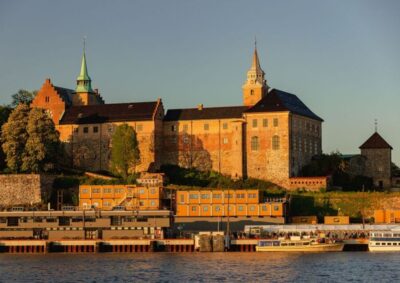 ★ 4.4Oslo: 100% Electric Oslofjord Sightseeing CruiseFrom $402,041 reviews
 ★ 4.5Oslo: Fjord Evening Cruise with Shrimp BuffetFrom $881,956 reviews
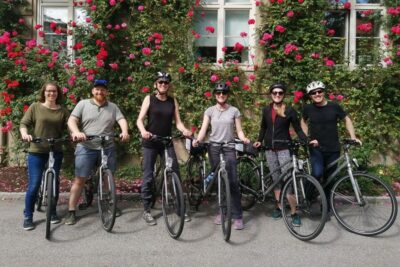 ★ 4.8Oslo: 3-Hour Highlights Bike TourFrom $621,609 reviews
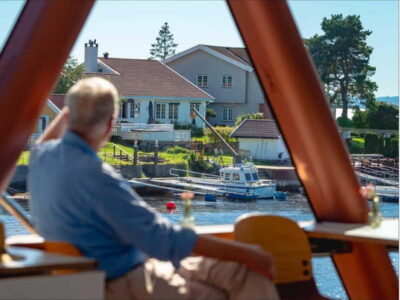 ★ 4.7Oslo: Guided Sightseeing Fjord Cruise on Premium Silent BoatFrom $641,390 reviews
 ★ 5.0Oslo Highlights Bike TourFrom $62979 reviews
 ★ 4.3Oslo: Paradox Museum Entry TicketFrom $29799 reviews
Lists this one sits in