
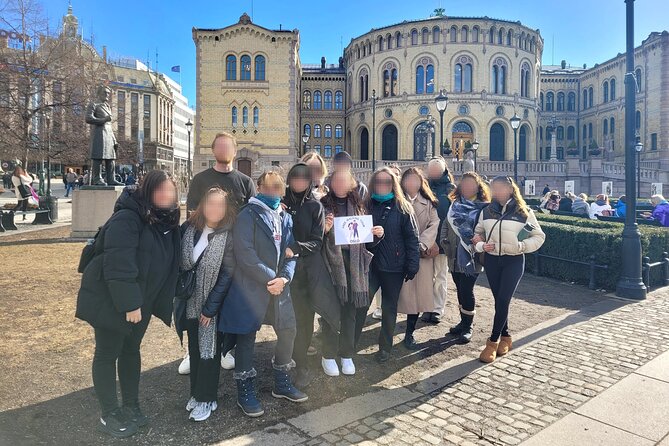
REVIEW · OSLO TOURS
Free City Walking Tour in Oslo
Oslo in 90 minutes, minus the guesswork. This walking tour pairs major city-center landmarks with human stories about how Osloites live, work, and remember. It’s guided, easy to follow, and built to help you connect the dots fast.
I especially like the mix of stops, from the Oslo Opera House area to the Norwegian Parliament, so you leave with a mental map. I also like the storytelling style, and names like Nicholas, Nikola, Yellena, Mia, and Zoe show up in guide feedback as people who keep the tone friendly and questions welcome.
One thing to consider: this is a walking-first format, so if you want lots of long, slow chats at each photo spot, you may wish you had a little extra time to linger after the tour ends.
In This Review
- Key highlights at a glance
- Getting Oriented Fast, Without Missing the Big Names
- Price and Value: Paying a Small Fee in a Tip-Based Spirit
- The Walk Starts at TigerJernbanetorget: The Easiest Place to Begin
- Opera House Stop and the Surrounding Neighborhood Web
- The Small Stock Exchange Moment You’ll Probably Remember
- Kvadraturen and Christiania Square: Old City Energy in a Short Span
- Akershus Castle and Fortress: Alfred Nobel Meets a View
- Aker Brygge to City Hall: Nobel Peace Center and the “Public Face” of Oslo
- Nationaltheatret and the Creative Thread: Ibsen and Munch
- The Royal Palace and Parliament Finish: Power and Identity in One Line
- Pace, Questions, and How to Get More From Every Stop
- Who This Tour Fits Best (and Who Might Want Something Else)
- Should You Book This Free City Walking Tour in Oslo?
- FAQ
- How long is the Free City Walking Tour in Oslo?
- Where does the tour start?
- Where does the tour end?
- What sights are included on the walk?
- Is there a mobile ticket?
- Is the tour free, or is there a price?
- How many people are in a group?
- Are service animals allowed?
- Can I get a refund if I cancel?
Key highlights at a glance
- Tiger Sculpture start: an easy meet-up point at TigerJernbanetorget
- Opera House area plus Bjørvika and Sørenga stories: you’ll hear how multiple neighborhoods fit together
- Akershus Castle and Fortress stop with Alfred Nobel context: one moment that adds history with a view
- Aker Brygge to Nobel Peace Center area: a natural transition from everyday streets to world-stage ideas
- Edvard Munch link at the University Aula: art comes into the route, not as a separate detour
- Royal Palace to Parliament finish: you end right in the city’s political heart
Capital bookings past this listing, Oslo graded again
- Oslo: Scenic Fjord Cruise with Audio Guide Commentary★ 4.5 · 5,375 reviews
- Oslo Nature Walks: Island Hopping Tour★ 4.8 · 2,713 reviews
- Oslo: 100% Electric Oslofjord Sightseeing Cruise★ 4.4 · 2,041 reviews
- Oslo: Fjord Evening Cruise with Shrimp Buffet★ 4.5 · 1,956 reviews
Getting Oriented Fast, Without Missing the Big Names
Oslo can feel tidy and orderly, which is great, until you realize you’re staring at great buildings and wondering what you’re actually looking at. This tour solves that problem by threading together the most recognizable pieces of central Oslo into one walk that lasts about 1 hour 30 minutes.
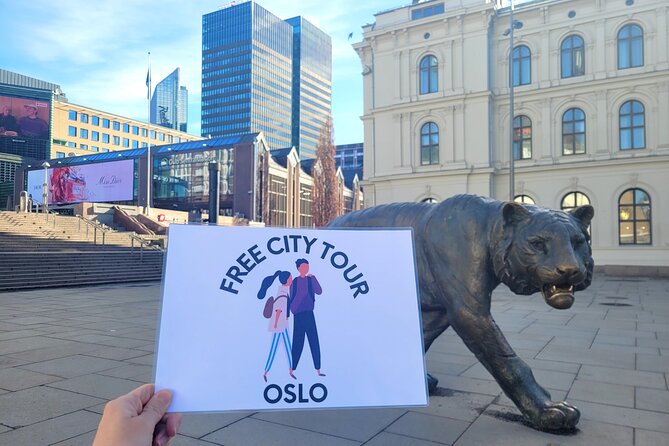
You start at the TigerJernbanetorget area, where the tiger sculpture is your visual anchor. Then the route steadily moves across the city center toward the Norwegian Parliament area, ending at Karl Johans gt. 22. The practical win here is not just seeing landmarks. It’s learning how they connect, so later, when you wander on your own, you’re not constantly checking directions.
The group cap is 30 people, which keeps it manageable. And because it’s near public transportation, you can usually plug it into your first morning or first full day without planning a complicated logistics puzzle. You’ll also get a mobile ticket, so you’re not digging around for paper.
Price and Value: Paying a Small Fee in a Tip-Based Spirit
The listed price is $3.45 per person, and it’s marketed as a free city walking tour. In practical terms, you should think of this as a pay-what-you-book plus tips culture. One recurring note in the provided feedback is that tips are expected, with a suggested amount around $10 USD per person.
For value, here’s the math I’d use when deciding:
- You’re getting a guided walk that covers a lot of central sights in about 90 minutes
- Most stops are outside or do not require an entry ticket
- Your guide’s storytelling helps you turn sightseeing into something you can remember
So even if you’re on a tight budget, this can be cheaper than most museums or attraction tickets, especially when you want to understand the city’s “why” before you pick your paid activities.
One more point: tours like this are often popular early in trips. Booking averages are around 22 days in advance, so if you have fixed dates, it’s smart to lock it in sooner rather than later.
The Walk Starts at TigerJernbanetorget: The Easiest Place to Begin
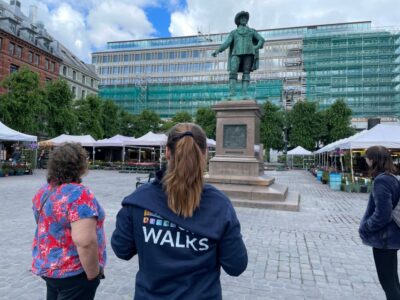
The meeting point is TigerJernbanetorget, 0154 Oslo. That matters more than it sounds. A smooth start prevents the two biggest walking-tour problems: showing up rushed, and losing momentum before you’ve even heard the first story.
From there, the tour moves into the heart of Oslo. Expect the first segment to be short, about 8 minutes, with the guide setting the tone and pointing out what you’ll be seeing and why it matters.
If you tend to miss details when you’re cold or jet-lagged, this is the part where the guide can help you get your bearings fast. You’re not just standing around. You’re being taught what to look for and what to ask about next.
Pavement rivals threading Oslo


Opera House Stop and the Surrounding Neighborhood Web
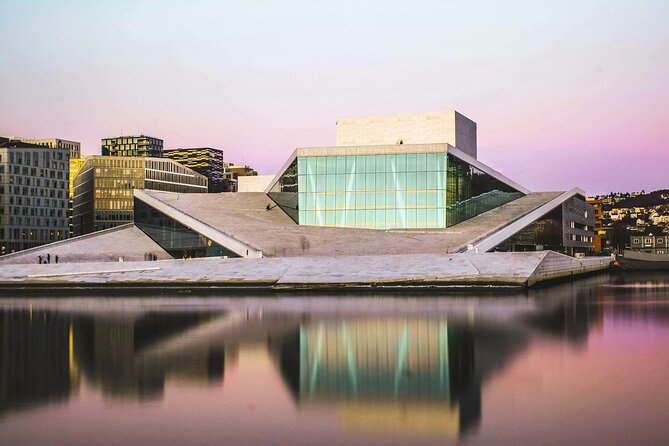
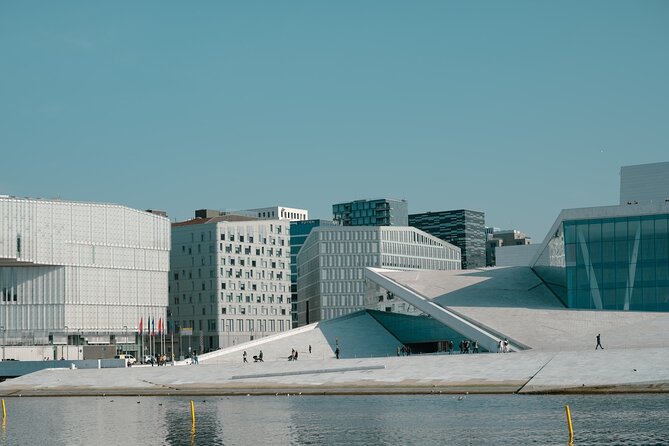
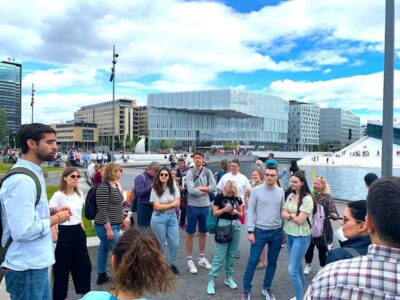
The Oslo Opera House is one of the first big-ticket visual moments, even from street level. The tour also uses this area as a storytelling hub, with the guide sharing context tied to the Public Library and Munch Museum, plus neighborhood references including Bjørvika and Sørenga.
That approach is useful. Instead of treating each landmark like a standalone postcard, you start learning the way Oslo layers culture, architecture, and public spaces in one compact city center. The stop window is about 10 minutes, so you’ll get enough time for photos and the main storyline, but not so much that the tour drags.
Possible drawback: if you’re the type who needs a long moment to study architecture, you may find 10 minutes feels short. The fix is simple, after the tour, walk back for 20 minutes on your own, or bring a phone camera and take your photos quickly during the guided stop, then enjoy slow looking later.
The Small Stock Exchange Moment You’ll Probably Remember
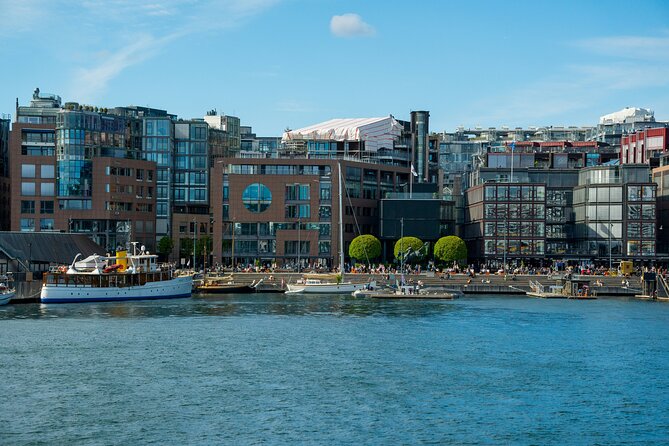
After the Opera House area, there’s a brief stop that highlights something quirky: the smallest stock exchange in the world. It’s the kind of detail that turns a normal city street into a story you can retell.
This is the fun role of a good walking guide. They don’t only point out what’s famous. They also point out what makes a place feel specific.
Because the time here is tight, focus on listening rather than trying to capture everything in one photo. If you’re curious, ask one question during the pause. This is a good moment to test whether your guide likes questions and how they balance facts with humor.
Kvadraturen and Christiania Square: Old City Energy in a Short Span
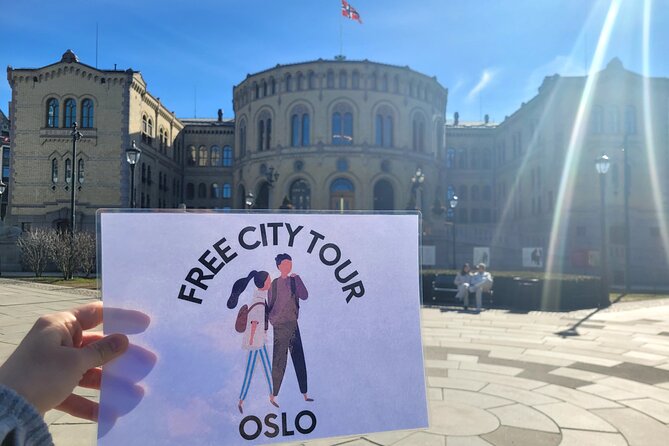
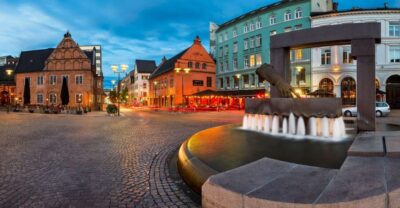
Next comes Kvadraturen, with Christiania square in the mix. This part gives you an older, more traditional feel compared to the sleek modern vibe you might associate with the waterfront.
The stop is about 7 minutes, so again, it’s not a long sit-down lesson. It’s more like a guided orientation through the places people would recognize as “central Oslo” for everyday life, not just major monuments.
If you like walking tours that feel like you’re moving through real neighborhoods, this section helps. You’re not only checking boxes. You’re getting a sense of how the city’s layers overlap as you move from one landmark cluster to another.
Akershus Castle and Fortress: Alfred Nobel Meets a View
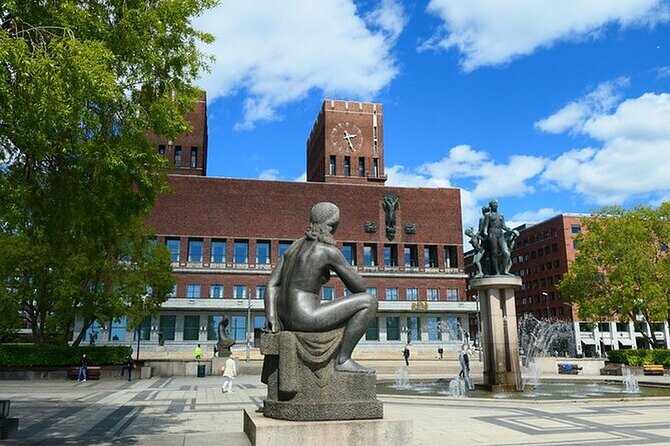
At Akershus Castle and Fortress (Akershus Slott og Festning), the tour includes the admission ticket. That’s a big clue that this stop adds something beyond a photo opportunity. It’s about access and a story tied to a person: Alfred Nobel.
This is also the part of the route where the walk becomes more “place-based.” A fortress setting naturally changes the mood. Even if you’re not a history person, the physical space makes stories easier to hold onto. And if you enjoy the practical side of travel, included admission is also value, because it prevents you from paying extra at the last minute for what is likely the most interactive stop on the walk.
Time here is about 8 minutes, so you’ll get the key points but still need a separate plan if you want to linger longer inside. If you love museums and historical sites, consider pairing this stop with additional time later that day.
Aker Brygge to City Hall: Nobel Peace Center and the “Public Face” of Oslo
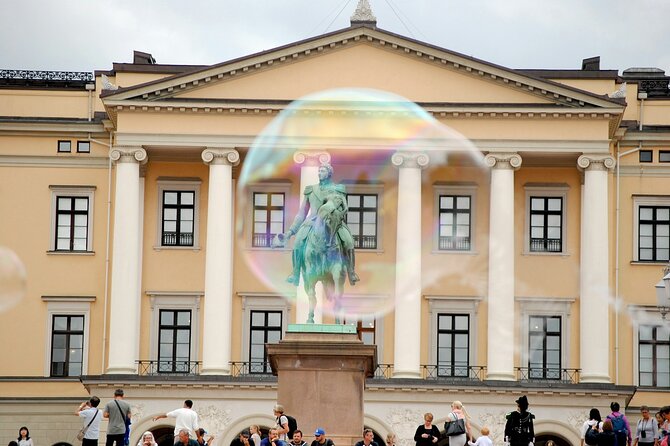
The tour swings toward Aker Brygge. This stop bundles a few major anchors: National Museum and the Nobel Peace Center are referenced here, along with the Aker Brygge area itself. The stop time is about 7 minutes, and it’s another listening-focused moment.
Why it works: Nobel Peace Center relates to international ideas, but Aker Brygge is also a very everyday part of Oslo. So you get a contrast. You move from streets and public space into stories that connect Norway to global attention.
Then comes Oslo City Hall (Rådhuset). The stop is about 10 minutes, and this is where the tour shifts from “world” back to “civic life.” City Hall can feel ceremonial from the outside, but your guide’s job is to bring it down to how governance and public institutions fit into daily city life.
One consideration: if you’re bundled up for cold weather, this is the stretch where you’ll probably want to keep your hands free for photos and listen without constantly pulling on sleeves. A small tip for comfort is to wear gloves you can still use on your phone screen.
Nationaltheatret and the Creative Thread: Ibsen and Munch
At Nationaltheatret, the highlight is Henrik Ibsen. The stop time is about 6 minutes. It’s short, but theater legends are the kind of topic that can make a city feel more alive. Even if you’ve never read Ibsen, you can still appreciate why Oslo would build its cultural story around him.
Right after that, the tour goes to the University Aula, where you’ll hear that Edvard Munch painted there. The stop is about 4 minutes, which is very quick, but it’s a strong reminder that artists shape a city’s identity, not just its museums.
If you like art history, this is where the tour gives you a useful spark. You might decide to spend more time at the Munch Museum later, since the route already pointed you toward it earlier near the Opera House.
If art isn’t your priority, don’t stress. These stops function like quick bookmarks. You’ll still get a full city-center orientation.
The Royal Palace and Parliament Finish: Power and Identity in One Line
The final arc is the most satisfying for many people because it ties the story together. First, you reach the Royal Palace, with guidance on the Norwegian Royal family stories. This stop is about 8 minutes, and it’s your transition from culture and institutions into national identity symbols.
Then the walk ends at the Norwegian Parliament, with a final stop time of about 8 minutes. The tour finishes near that area, ending at Karl Johans gt. 22.
In 90 minutes, ending at the Parliament works because it gives you a clear mental endpoint. After that, you’re free to explore nearby streets without feeling like you’re wandering blindly. And if you’re planning a day with a lot of self-guided wandering, this kind of structured ending helps you choose where to go next, based on what actually interested you on the walk.
Pace, Questions, and How to Get More From Every Stop
A tour like this succeeds or fails on pacing. Here’s what you can expect from the structure: multiple quick stops, each around 4 to 10 minutes, adds up to the 1 hour 30 minutes total. That’s enough time to hear the main stories, but not enough time for slow debate at every building.
Some provided feedback includes notes that the walking pace can feel brisk and that certain stops may not feel “picturesque” in the way some people prefer. So here’s my practical advice:
- If you want more talking time, ask your question early at the first stop, not right at the end
- If you like photo-heavy sightseeing, take one or two fast photos per stop during the guided portion, then plan a longer look after you’ve finished
- Bring a jacket. Even when the route is central, Oslo weather can make you focus on comfort instead of details
Also, because guide names like Nicholas, Nikola, Yellena, Mia, and Zoe are mentioned in the feedback, it’s clear the storytelling varies by person. If you meet a guide who reads the room well, the experience feels effortless. If you don’t connect with the pace, you can still gain value by using the walk to identify where you want to return later.
Who This Tour Fits Best (and Who Might Want Something Else)
This tour is a strong fit if:
- You want a quick orientation to Oslo’s city center
- You like learning how landmarks connect through stories
- You’re traveling on a schedule and want multiple major sights without paying for a pile of separate tickets
It might be less ideal if:
- You prefer slow travel with long stops and deep discussion at each site
- You want a tour that prioritizes scenic photo spots over story-driven stops
In practice, the best approach is to use this as your first-day guide. Then follow up with self-guided time where your guide’s stories piqued your interest, especially around art and culture links like the Munch connection at the University Aula and the Munch Museum mention earlier.
Should You Book This Free City Walking Tour in Oslo?
If you’re deciding whether this is worth your time, my answer is yes, with one condition: treat it as a fast, story-led orientation, not a slow deep-dive.
You’re paying a small booking amount, you get a guided walk through the key central landmarks you’d probably want to see anyway, and you end right near the Norwegian Parliament. With a maximum group size of 30 and a route designed to cover major anchors like the Opera House, City Hall, Nationaltheatret, Royal Palace, and Parliament, it’s a smart value move for first-time Oslo visitors.
Book it if you want your bearings fast and you enjoy hearing why a place matters. Skip it if you only want long museum-style explanations or you dislike walking. Either way, it’s an efficient way to start your Oslo trip without overplanning.
FAQ
How long is the Free City Walking Tour in Oslo?
It lasts about 1 hour 30 minutes.
Where does the tour start?
The meeting point is TigerJernbanetorget, 0154 Oslo.
Where does the tour end?
The tour ends at Karl Johans gt. 22, 0026 Oslo, near the Norwegian Parliament.
What sights are included on the walk?
Key stops include the Oslo Opera House, Kvadraturen and Christiania square, Akershus Castle and Fortress (Akershus Slott og Festning), Aker Brygge, Oslo City Hall (Rådhuset), Nationaltheatret (Henrik Ibsen), the University Aula (Edvard Munch), the Royal Palace, and the Norwegian Parliament.
Is there a mobile ticket?
Yes, the tour uses a mobile ticket.
Is the tour free, or is there a price?
The experience is listed at $3.45 per person and is described as a free city walking tour.
How many people are in a group?
The tour has a maximum of 30 travelers.
Are service animals allowed?
Yes, service animals are allowed.
Can I get a refund if I cancel?
Free cancellation is offered. You can cancel up to 24 hours in advance for a full refund. If you cancel less than 24 hours before the start time, the amount you paid is not refunded.
One Shortlist, Oslo





More Tour Reviews in Oslo


The Capital, Kept Going
Newest Oslo write-ups off our Norway desk
- Fjord Houseboat Cruise in Oslo. 100 % electric. BYO
★ 5.0 · 3 reviews - Oslo Christmas walk
★ 4.0 · 3 reviews - Afternoon Tea and Classic Concert on the Fjord
★ 4.5 · 3 reviews - Lake walk and campfire
★ 4.7 · 3 reviews - Oslo: Yoga & Hiking with a dog
★ 5.0 · 3 reviews - Oslo: Skjennungstoppen Wildlife Forest Hiking Tour
★ 5.0 · 3 reviews
More in Oslo Tours.
 ★ 4.5Oslo: Scenic Fjord Cruise with Audio Guide CommentaryFrom $445,375 reviews
 ★ 4.8Oslo Nature Walks: Island Hopping TourFrom $692,713 reviews
 ★ 4.4Oslo: 100% Electric Oslofjord Sightseeing CruiseFrom $402,041 reviews
 ★ 4.5Oslo: Fjord Evening Cruise with Shrimp BuffetFrom $881,956 reviews
 ★ 4.8Oslo: 3-Hour Highlights Bike TourFrom $621,609 reviews
 ★ 4.7Oslo: Guided Sightseeing Fjord Cruise on Premium Silent BoatFrom $641,390 reviews
 ★ 5.0Oslo Highlights Bike TourFrom $62979 reviews
 ★ 4.3Oslo: Paradox Museum Entry TicketFrom $29799 reviews
Lists this one sits in