
REVIEW · OSLO TOURS
Oslo: 3-hour Highlights & Vigeland Park Private Walking Tour
Oslo looks different when someone narrates it as you walk. This private 3-hour route ties together the Nobel Peace Center and Oslo’s most famous sculpture park, so landmarks feel like stories instead of stop-and-go photos.
I love the way the tour explains the key meanings behind what you see, especially the Alfred Nobel angle and the city’s public symbolism. I also love reaching Frogner Park at the end, with time to linger in Vigeland Park on your own. The one thing to consider is the pace, you will be on your feet a lot, including gravel or unpaved walkways in parts.
In This Review
- Key Highlights Worth Your Time
- Oslo in Three Hours: Nobel to Vigeland Without the Guesswork
- Price and What You Get for $518
- Meeting Point at Brynjulf Bulls plass 1, Nobel Peace Center First
- Sentrum Oslo Walking Portion: City Hall, National Theatre, and Royal Sights
- Oslo City Hall, built 1931 to 1950
- Norwegian National Theatre
- Royal Palace and Karl Johans gate
- Parliament, Bank Square, and Christiania Torv: Seeing Governance Up Close
- Oslo Opera House and the Harbor Story: Why This Part Changes Your View
- Akershus Fortress: The Overlook That Makes Oslo Feel Like a Real Place
- Tram Time: Why the Public Transport Segment Helps
- Vigeland Sculpture Park in Frogner Park: The Big Finish
- Monolith Plateau and the circle of life
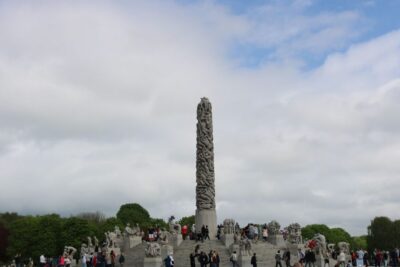
- The Monolith totem carved from a single block
- Finish strong, then keep going on your own
- Walking Surfaces and Weather: Practical Tips So You Enjoy It
- English-Friendly, Question-Friendly Guide Experience
- Who This Tour Is Best For
- Should You Book This Oslo Highlights Tour?
- FAQ
- Where does the tour start?
- How long is the tour?
- Is this tour private or shared?
- Which languages are available?
- Does the tour include public transportation?
- Is there an entrance fee for Vigeland Sculpture Park?
- Where does the tour end?
- What should I bring for this tour?
- Can I cancel or pay later?
Key Highlights Worth Your Time
- Nobel Peace Center starts the story with Alfred Nobel and why his legacy matters in Oslo
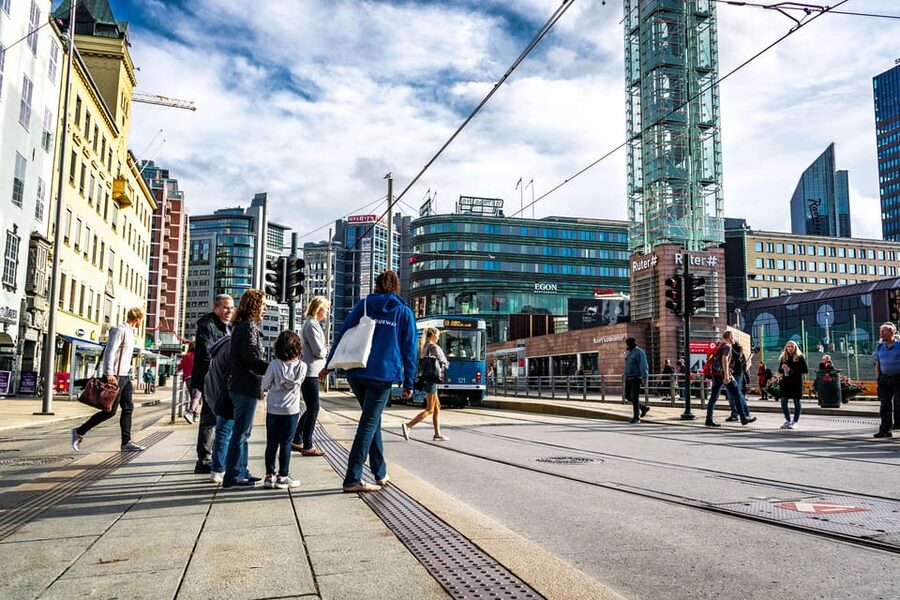
- City center landmarks on foot from Oslo City Hall to the Royal Palace and Parliament
- Akershus Fortress views over the harbor give you perspective beyond the street-level sights
- Tram transfer included so you are not trying to figure out the network mid-tour
- Frogner Park grand finale with Vigeland’s granite works, including Monolith Plateau
- Monolith totem details and the circle-of-life symbolism make Vigeland Park easy to appreciate
Capital bookings past this listing, Oslo graded again
- Oslo: Scenic Fjord Cruise with Audio Guide Commentary★ 4.5 · 5,375 reviews
- Oslo Nature Walks: Island Hopping Tour★ 4.8 · 2,713 reviews
- Oslo: 100% Electric Oslofjord Sightseeing Cruise★ 4.4 · 2,041 reviews
- Oslo: Fjord Evening Cruise with Shrimp Buffet★ 4.5 · 1,956 reviews
Oslo in Three Hours: Nobel to Vigeland Without the Guesswork

This is a tight, well-structured highlights tour that uses your limited time well. You start at the Nobel Peace Center, then work your way through Oslo’s central government and royal zone before finishing in Frogner Park.
It matters that the tour is private. You can ask questions as you go, and the guide can adjust if your interests lean more toward art, politics, or architecture. A lot of walking tours march forward no matter what you care about. This one is built to feel more like a guided conversation with a map in hand.
You will also get a real payoff at the end. Vigeland Park can be overwhelming if you show up cold. Here, the guide puts the meaning in place first, so your eyes land on the details that make the sculptures stick.
Price and What You Get for $518
This tour is priced at $518 per group, listed up to one person. That makes it a premium option, so you should think of it as paying for time, route planning, and a private guide who can cover a lot in three hours.
Is it good value? It can be, if you want your day to stay simple. You get a professional guide, a return ticket for public transportation, and entrance to Vigeland Park is listed as free. Even if you are the only person in your private group, you are not paying for extra entry fees on top.
If you are traveling with friends or family, the decision depends on how you plan to share the private cost. With the pricing shown as up to one person, assume this is best for solo travelers or for whoever your booking is set to cover.
Meeting Point at Brynjulf Bulls plass 1, Nobel Peace Center First
The tour begins at the Nobel Peace Center, outside the entrance at Brynjulf Bulls plass 1. The guide is on-site about 10 minutes before departure and holds a sign with the local partner name, so you should be able to spot them quickly.
Starting here is smart. Nobel isn’t just a name on a building, it is a theme you will carry through the rest of the walk. When the guide connects Nobel Peace context to Oslo’s identity, the city feels less random and more intentional.
If you arrive early, take a quick moment to get your bearings around the area. You do not need a long stop, just enough to feel oriented before you start moving through the center.
Capital exhibition halls, further Oslo tickets scored


Sentrum Oslo Walking Portion: City Hall, National Theatre, and Royal Sights
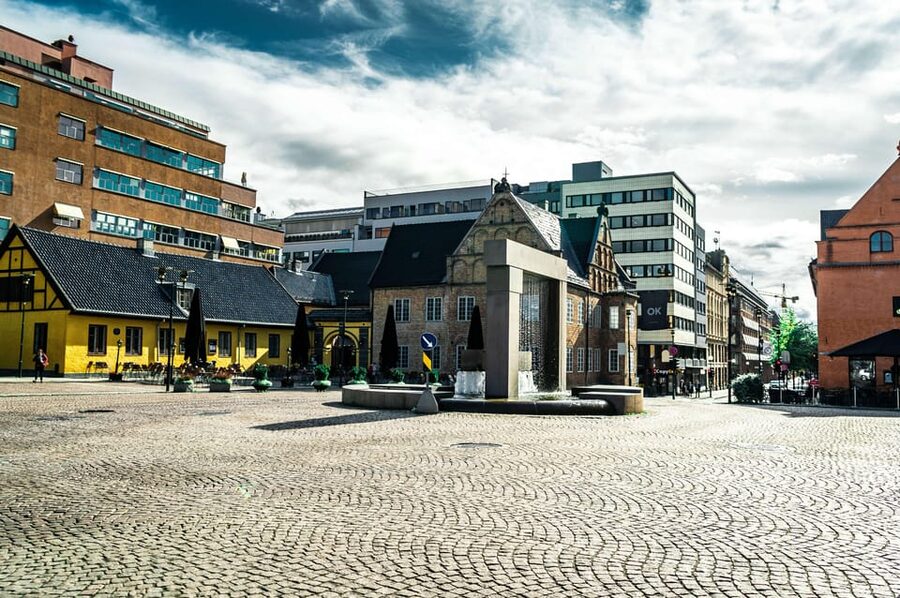
After the meet-up, you spend about 1.5 hours in Sentrum, Oslo with guided sightseeing. This is where the tour does most of its explanatory work, because you can see key civic buildings and understand how Oslo arranges power, culture, and public life in a compact area.
Here is the core set of sights you should expect during this inner-city stretch:
Oslo City Hall, built 1931 to 1950
You will see Oslo City Hall and learn that it was built between 1931 and 1950. That date range is useful context. Architecture dates often get skipped on tours, but knowing the time period helps you see the style as part of a specific era, not just a pretty façade.
Norwegian National Theatre
Next comes the National Theatre, described as home to some of the greatest Norwegian playwrights. Even if you do not catch a show, the building frames how Norwegian culture is supported in the public sphere, not just in private galleries.
Royal Palace and Karl Johans gate
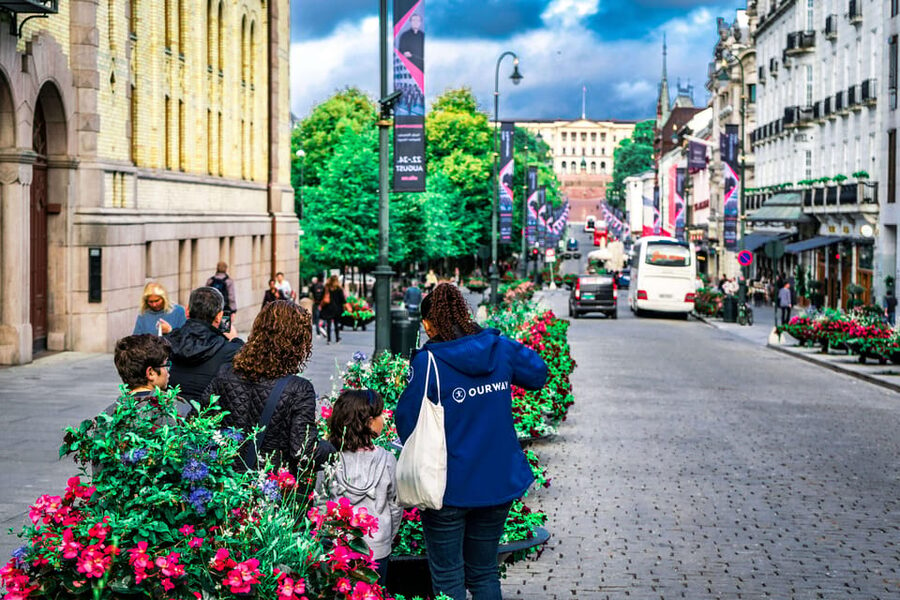
You will then visit the Royal Palace, perched on a hilltop overlooking Karl Johans gate, plus the broader area around where Oslo is governed. The tour’s approach makes sense. You get to look down the shopping street axis, then the guide can explain why leaders chose this kind of visual prominence.
Karl Johans gate also helps you connect the walking route. You will feel how the city’s major zones align, and it makes the later fortress stop easier to understand.
Parliament, Bank Square, and Christiania Torv: Seeing Governance Up Close
As the city walk continues, you will see the Norwegian Parliament building and pass other central landmarks like the Bank Square and Christiania Torv.
These stops matter because they show you Oslo’s balance of old and formal. You might come in thinking of Oslo as a modern Scandinavian city with clean lines and good design. Then the tour nudges you to notice how ceremony, administration, and public spaces are laid out with purpose.
A small practical note, this section is visually dense. If you want photos, do it quickly and keep moving. The guide is giving you the meaning behind what you are looking at, so give them your attention first, then snap pictures second.
Oslo Opera House and the Harbor Story: Why This Part Changes Your View
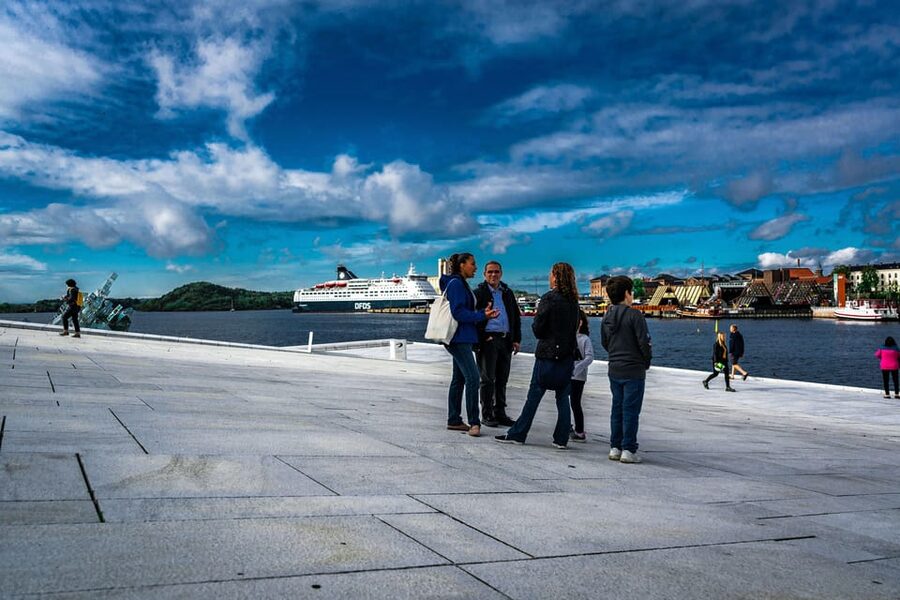
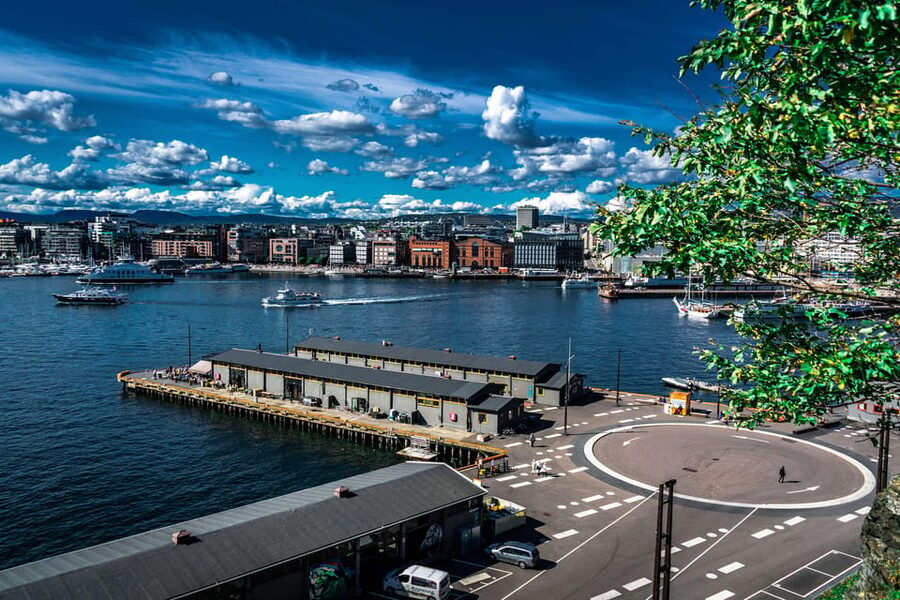
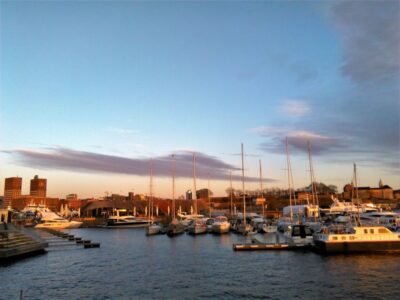
The tour highlights include the Oslo Opera House, and that fits the theme of Oslo’s relationship to the harbor. Even if you only see it from a vantage along the route, the key takeaway is how waterfront identity shapes the city.
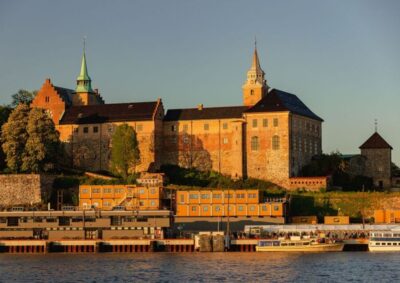
Then you transition toward Akershus Fortress, which sits above the Oslo harbor. That elevation is not just scenic. It is strategic. You will feel why fortresses were built where they could watch shipping and movement, and why today the views still tell you where the city’s lifeblood runs.
Akershus Fortress: The Overlook That Makes Oslo Feel Like a Real Place
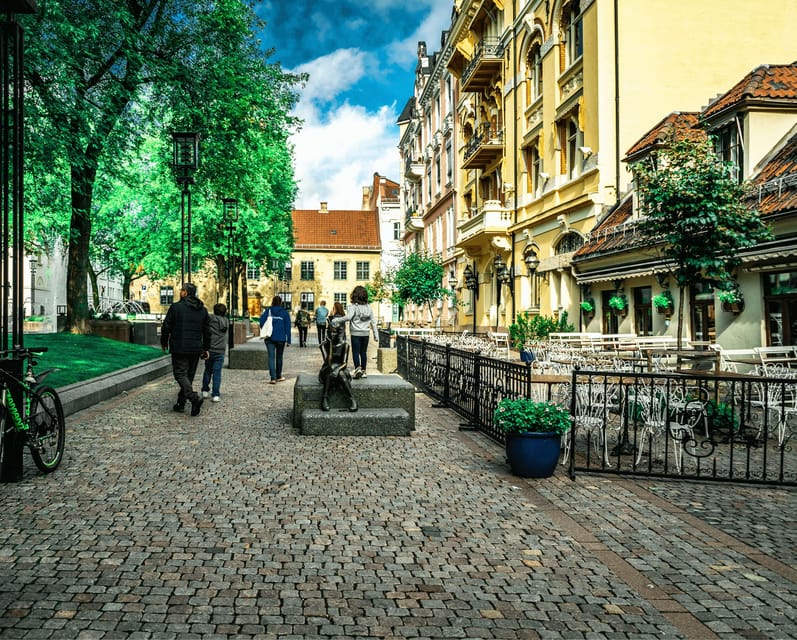
Akershus Fortress is one of those sights that is easy to appreciate without being an expert in military architecture. The fortress overlooks the harbor, so your eyes naturally connect water, city, and control.
This is a good place in a highlights tour to slow down for a minute. Take in the harbor view, then let the guide’s story sink in. When you understand what you are looking at, a fortress stops being just stone and becomes a timeline you can read.
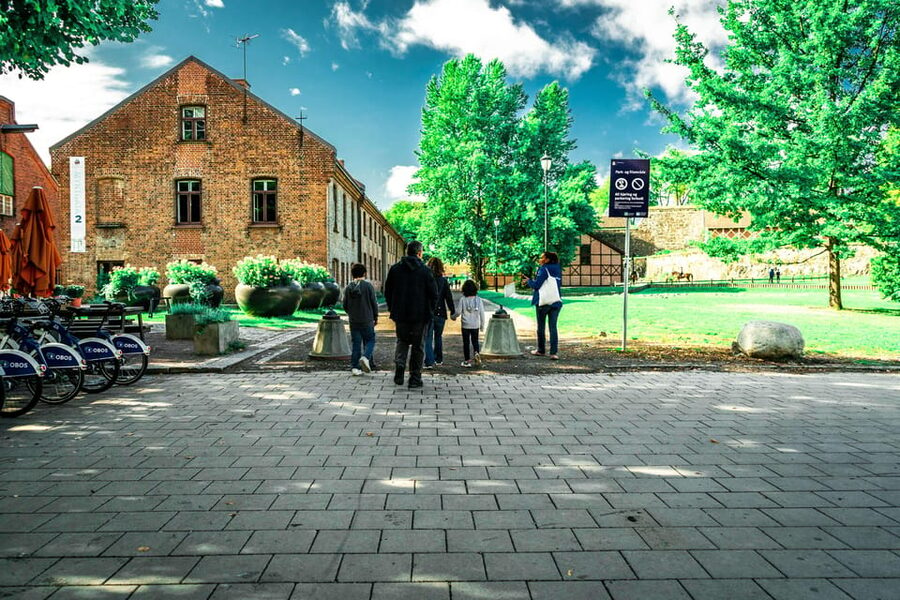
If you are sensitive to stairs or uneven ground, keep an eye on your footing here. The tour already warns you about gravel or unpaved walkways in parts of the route, and fortress areas can be more uneven than the smooth city-center streets.
Tram Time: Why the Public Transport Segment Helps

There is a public transport segment listed as 30 minutes, and you also get a return ticket for public transportation included, provided by your guide.
This is a quiet value-add. Without the transport, a three-hour tour can turn into a juggling act of stops, tickets, and route decisions. With the tram covered, you spend more time learning and less time figuring out how to get from one viewpoint to the next.
Tip for you: keep your focus during the ride. The best guided tours use travel time as narrative time, and you will get the context that makes the next stop easier to appreciate.
Vigeland Sculpture Park in Frogner Park: The Big Finish
You finish at Frognerparken, with the tour’s last guided portion being 1 hour in Vigeland Sculpture Park. Vigeland Park is described as the world’s largest sculpture park, and that claim sets your expectation. You are going to see a lot, but the tour is designed so you do not just walk in and feel lost.
The guide tells you the story of how one man built the park, and you will learn that many of the sculptures are crafted from local Iddefjord granite. That material detail is more than trivia. When you understand the stone origin, you start noticing the uniformity of texture and how the figures feel connected to the landscape.
If you like art that has both symbolism and scale, you will get a lot here. If you prefer modern art with clear labels, give yourself time. Vigeland’s power is in how the forms communicate emotion and life cycles without needing modern explanations.
Monolith Plateau and the circle of life
You will see the Monolith Plateau, where 36 figures symbolize the circle of life. This is a key moment. Most people rush through it because there are many figures, but the tour gives you the meaning so you can look longer and understand the overall concept.
The Monolith totem carved from a single block
You will also see the Monolith totem, carved from a single block of stone. That fact changes how you look at it. A single-block sculpture feels less like a collection and more like one complete statement, which is exactly what you get when you stand back and take it in.
Finish strong, then keep going on your own
Once the guided part ends, you can continue enjoying the park. The tour ends in Vigeland Park, and you make your own way back by walking or public transport with tickets included and provided by the guide.
This is how you get the best of both worlds. The guide sets the story, then you get to move at your own speed for the final hour.
Walking Surfaces and Weather: Practical Tips So You Enjoy It
The tour notes that part of the experience takes place on areas with gravel or unpaved walkways. So yes, dress for uneven ground, not just for Oslo weather headlines.
Wear comfortable shoes you trust on mixed surfaces. If you are tempted to wear dressy footwear for photos, resist that temptation. You will thank yourself after a couple hours of walking.
Also bring weather-appropriate clothing. Norway weather can switch mood fast, and you will be outside most of the time.
English-Friendly, Question-Friendly Guide Experience
One of the strongest signals from the tour experience is guide quality. The tour description lists live guiding in English, Spanish, French, Italian, Norwegian, and German.
The vibe you want on a city highlights tour is someone who can explain without turning it into a lecture. Here, the guidance is interactive and personable, with room for questions. If you are the type who asks why a building looks the way it does, or you want context on Nobel Peace, you will likely enjoy how the guide handles curiosity in real time.
Who This Tour Is Best For
This tour is a great match if you want a high-return day in Oslo. It works well for:
- First-time visitors who want the main landmarks tied to context
- People who like symbolism in art, especially when it is explained before you arrive at the sculptures
- Solo travelers who prefer a private group format and direct conversation
- Anyone who wants the Nobel theme to connect to Oslo’s civic and cultural identity
It might not be ideal if you want a slow, cafe-heavy day. This is an efficient route, built to pack a lot in three hours, with a tram transfer and a full Vigeland finale.
Should You Book This Oslo Highlights Tour?
If your goal is to see Oslo’s top sights with a guide who can connect the dots, I think it is an excellent choice. You get Nobel Peace Center storytelling, inner-city civic landmarks, the harbor viewpoint at Akershus Fortress, and a structured visit to Vigeland Park with Monolith Plateau and the Monolith totem.
Book it if you value meaning over just checking boxes. The private format also makes sense if you want questions answered in real time, in one of the listed languages.
Skip it only if you know you hate walking on gravel or you want a relaxed pace with long indoor stops. This tour is built for motion and quick learning bursts, and you will enjoy it most if you are ready for that style.
If that sounds like your kind of day, you are set. Start at Nobel, end at Vigeland, and let Oslo make sense as you go.
FAQ
Where does the tour start?
The tour starts at the Nobel Peace Center, outside the entrance, at Brynjulf Bulls plass 1.
How long is the tour?
The tour lasts 3 hours total, including the guided portions and the public transport segment.
Is this tour private or shared?
It is a private group walking tour.
Which languages are available?
The live tour guide is available in English, Spanish, French, Italian, Norwegian, and German.
Does the tour include public transportation?
Yes. You will take public transportation for about 30 minutes, and a return public transportation ticket is included and provided by the guide.
Is there an entrance fee for Vigeland Sculpture Park?
The tour includes entrance to Vigeland Park, and it is listed as free.
Where does the tour end?
The tour ends in Frognerparken (Vigeland Park area). You return on your own using walking or public transport.
What should I bring for this tour?
Bring comfortable shoes and weather-appropriate clothing. Some parts of the route can include gravel or unpaved walkways.
Can I cancel or pay later?
Free cancellation is available up to 24 hours in advance for a full refund. The booking also offers a reserve now & pay later option.
More Tour Reviews in Oslo




Capital Exhibition Halls



The Capital, Kept Going
Newest Oslo write-ups off our Norway desk
- Fjord Houseboat Cruise in Oslo. 100 % electric. BYO
★ 5.0 · 3 reviews - Oslo Christmas walk
★ 4.0 · 3 reviews - Afternoon Tea and Classic Concert on the Fjord
★ 4.5 · 3 reviews - Lake walk and campfire
★ 4.7 · 3 reviews - Oslo: Yoga & Hiking with a dog
★ 5.0 · 3 reviews - Oslo: Skjennungstoppen Wildlife Forest Hiking Tour
★ 5.0 · 3 reviews
More in Oslo Tours.
 ★ 4.5Oslo: Scenic Fjord Cruise with Audio Guide CommentaryFrom $445,375 reviews
 ★ 4.8Oslo Nature Walks: Island Hopping TourFrom $692,713 reviews
 ★ 4.4Oslo: 100% Electric Oslofjord Sightseeing CruiseFrom $402,041 reviews
 ★ 4.5Oslo: Fjord Evening Cruise with Shrimp BuffetFrom $881,956 reviews
 ★ 4.8Oslo: 3-Hour Highlights Bike TourFrom $621,609 reviews
 ★ 4.7Oslo: Guided Sightseeing Fjord Cruise on Premium Silent BoatFrom $641,390 reviews
 ★ 5.0Oslo Highlights Bike TourFrom $62979 reviews
 ★ 4.3Oslo: Paradox Museum Entry TicketFrom $29799 reviews
Lists this one sits in