
REVIEW · OSLO MUSEUMS AND ATTRACTIONS
Kon-Tiki Museum Entrance Ticket
There’s something oddly comforting about following a 1947 adventure in person. With the Kon-Tiki raft on display and a museum built around Thor Heyerdahl’s expeditions, you get a clear story you can walk through at your own pace. I love how practical and concrete the exhibits feel, especially the real vessels and artifacts, and I also like the family-friendly flow. The main catch is that if you want nonstop, personal details about Heyerdahl’s whole life, some parts may feel more focused on the expeditions than the man.
I suggest you plan this as a smart add-on day stop, because the museum sits right by the Fram Museum and is easy to reach with public transport. You’ll spend around an hour if you keep moving, but it can stretch to closer to two if you watch the film and take your time with the displays. Book ahead if you want smoother entry on the day, since this ticket is commonly purchased in advance.
In This Review
- Key highlights worth your time
- Entering the Kon-Tiki Museum world: why this ticket works in Oslo
- Location by the Fram Museum, transit-friendly and easy to pair
- Stop at the heart of it: Heyerdahl’s original Kon-Tiki raft
- More than one boat: Ra, Tigris, and the way the exhibits connect
- Easter Island and the Galapagos displays: why these themes matter
- The daily Kon-Tiki film at noon, plus how to time your visit
- Cave tour and the whale shark model, plus other standout exhibit choices
- Family-friendly pacing: how to make this museum work with kids
- Practical visit details that affect your day
- Price and value: is $19.42 a smart buy?
- Should you pair it with other nearby museums?
- Should you book the Kon-Tiki Museum entrance ticket?
- FAQ
- What is the approximate duration of the Kon-Tiki Museum entrance ticket?
- Where is the Kon-Tiki Museum located in Oslo?
- How much does the Kon-Tiki Museum ticket cost?
- What are the opening hours?
- Is the Kon-Tiki film included, and when is it shown?
- What is included with the entrance ticket?
- What is not included in the ticket price?
- Are animals allowed in the museum?
- What is the cancellation policy?
Key highlights worth your time
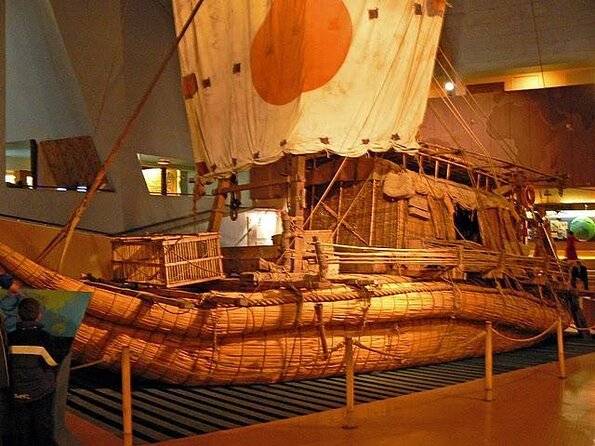
- See Heyerdahl’s original Kon-Tiki raft, the centerpiece tied directly to his 1947 Pacific crossing
- Oscar-winning Kon-Tiki documentary film screened daily at 12:00, a strong way to set the context
- Compare expeditions through original vessels and updated exhibits, including Ra and Tigris
- Artifacts and themes linked to Easter Island and the Galapagos
- Unique add-ons inside the museum, including a 30-metre cave tour and an underwater exhibit with a 10-metre whale shark model
- A kid-proof story structure, where the adventure keeps moving without needing expert knowledge
Capital exhibition halls, further Oslo tickets scored
- Kon-Tiki Museum Entrance Ticket★ 4.5 · 1,096 reviews
- Oslo: Paradox Museum Entry Ticket★ 4.3 · 799 reviews
- Oslo: Viking Planet Entry Ticket★ 4.4 · 603 reviews
- Oslo: Sightseeing with Holmenkollen Ski Jump & Vigeland Park★ 4.5 · 451 reviews
Entering the Kon-Tiki Museum world: why this ticket works in Oslo

Oslo has a special talent for packing museums close together, and the Kon-Tiki Museum is one of those no-regret stops. The entire place is built around a single thread: Thor Heyerdahl and the expeditions that made him famous. That means you are not wandering randomly through rooms of unrelated themes. You’re following a narrative.
I like that the exhibits treat the story like evidence, not just legend. You can look at the boats themselves, then connect the dots through artifacts and expedition-focused displays. It also helps that the museum format moves cleanly from one theme to the next, so even if your group includes kids, the pacing usually holds.
The other good thing is flexibility. The ticket is a straightforward entrance ticket, so you can move through in the order you want. If you like films, you can anchor your visit around the daily screening. If you prefer hands-on visuals and big models, you can spend your time there instead.
Location by the Fram Museum, transit-friendly and easy to pair
One reason I think this ticket fits well into an Oslo day is the museum’s location. The Kon-Tiki Museum is right next to the Fram Museum, so you can do both without burning time on transfers. If you are on a sightseeing route that stops at major attractions, you’re likely to find public transport options that drop you near the entrance.
That matters because museum days go smoother when you are not stressed about getting across town. You can also use the nearby marina area for a quick break before or after. Reviews also point out that it is a practical stop for day itineraries, including when you are combining it with other major sites.
Stop at the heart of it: Heyerdahl’s original Kon-Tiki raft
This is the moment most people come for, and it earns the hype. The original Kon-Tiki raft Heyerdahl used for his 1947 expedition is the centerpiece. Seeing it in the flesh changes the way you understand the story. On paper, it can read like a daring stunt. In person, it feels like a real piece of engineering, something built to survive the Pacific long enough for science and observation to happen.
What I find especially compelling is the contrast between the simplicity of the raft and the scale of the journey behind it. The museum keeps bringing you back to that relationship: a small platform of wood and know-how, taking on one of the largest oceans on Earth. It’s an easy story to grasp, even for kids, because it is visual before it is technical.
If you are a detail person, don’t rush this part. Look closely at how the raft is presented and take in the surrounding context displays, because the museum is designed to help you connect what you see to what Heyerdahl was trying to prove.
Turnstile rivals, Oslo admissions scored


More than one boat: Ra, Tigris, and the way the exhibits connect

While Kon-Tiki is the headline, the museum expands beyond it. You can explore other original vessels and expedition exhibits tied to Heyerdahl’s work, including Ra and Tigris. The point is not just to show more boats. It is to show a pattern, his follow-up expeditions and his continued approach to crossing oceans and studying what he found along the way.
The museum also covers themed locations that often pop up in pop culture and classroom discussions, including Easter Island and the Galapagos. There are unique artifacts connected to these areas, and the signage helps you understand the connection between the expedition locations and what Heyerdahl and his team were looking for.
One practical tip: when you move through rooms about different expeditions, pause briefly to link each one back to the big idea. For example, ask yourself what the museum is emphasizing in that section: the journey, the equipment, the observations, or the people involved. That turns a “walk-through museum” into a story you actually remember.
Easter Island and the Galapagos displays: why these themes matter
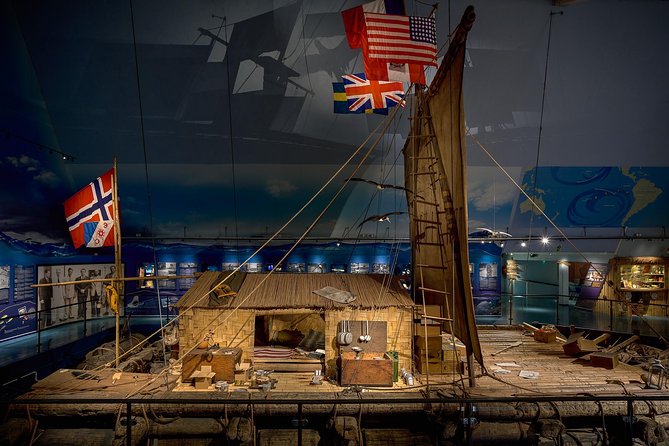
Not every museum can make far-away places feel specific, but the Kon-Tiki Museum tries. The displays that reference Easter Island and the Galapagos do more than use familiar names. They support the main narrative of exploration and collecting observations through artifacts and exhibit context.
For your visit, this is where the museum becomes more than a boat gallery. You start seeing how the expeditions connect to broader curiosity about remote island environments and ocean-linked travel routes. The museum uses these themes as bridges between the physical vessels and the wider world they encountered.
If you are traveling with kids, this is often where the questions come in. A boat is a boat, but add islands and animals and mysterious artifacts, and suddenly they have opinions. Adults usually appreciate it too, because it turns the story into something you can discuss, not just admire.
The daily Kon-Tiki film at noon, plus how to time your visit

A big part of the experience is the museum cinema screening of the original Kon-Tiki documentary film, shown every day at 12:00. The film is a useful anchor because it sets the scene quickly. It helps you see the journey from inside the expedition context, with footage that connects to what you will view around the museum.
If you want a smoother visit, plan around the film. Arrive with enough time to see at least part of the museum before noon, then treat the cinema screening as your reset. After the film, you can come back and look at the exhibits with fresh context.
If your group includes kids or anyone who gets museum fatigue, the film also helps break things up. You get a change of pace without losing the plot.
One small note: since the screening happens at a set time, your visit length can change. An hour is realistic if you keep moving, but if the film is in the middle of your visit, you’ll likely spend longer.
Cave tour and the whale shark model, plus other standout exhibit choices
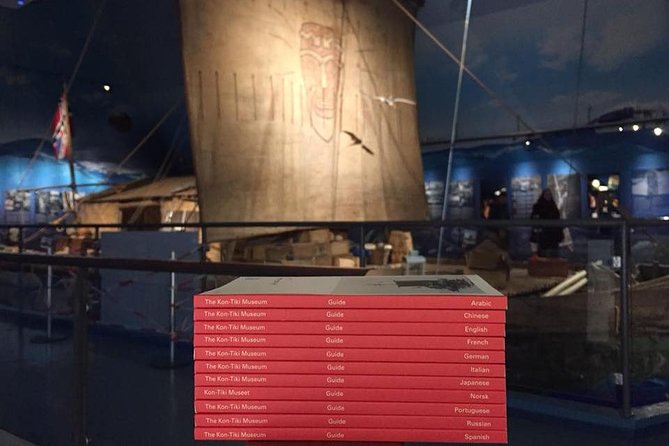
Some museums rely on rooms and text. This one adds big, visual moments that are easier to understand than a wall of information.
Two that deserve attention are the 30-metre cave tour and the underwater exhibit with a 10-metre model of a whale shark. These are the kinds of features that convert the story into something you feel in your body. They also work well for families, because they create “stop and look” moments that are not dependent on reading.
There’s also an underwater display modeled around the idea of marine life surrounding the expeditions. Even if you already know the basic Kon-Tiki story, these sections keep the museum from turning into a single-theme lecture.
And if you like variety, the museum includes a section tied to Tiki pop culture, plus exhibits like Thor Heyerdahl in person and Thor Heyerdahl’s library. That mix matters because it shows how the voyages lived on after the expeditions ended, including how the story took on a life beyond textbooks.
Family-friendly pacing: how to make this museum work with kids

This is one of those rare attractions where the “kids will like it” claim makes sense for practical reasons. The museum centers on a dramatic story that is naturally visual: boats, tools, locations, and a film. That makes it easier for children to stay engaged without needing you to translate every exhibit.
To maximize family enjoyment, aim for a simple strategy:
- Get the raft moment early.
- Watch the film at noon if you can.
- Then let the big visual features like the whale shark and cave tour do the rest.
Also, if you have mixed ages, you can naturally split attention. Adults can focus on the expedition connections, while kids often gravitate to the big models and dramatic visuals.
Practical visit details that affect your day
The museum runs daily 10:00 AM to 5:00 PM during the listed operating seasons, and the cinema screening is at noon. That schedule is friendly for a half-day plan.
The ticket includes local taxes, and it is sold as a standard entrance ticket for museum access. You will still want to budget for your own food and drinks since they are not included in the ticket price. On the ground, you should also expect to spend some time in the shop area, but souvenirs are optional.
Two more practical notes: animals are not allowed, and the museum is described as suitable for most travelers. If you are traveling with mobility needs, you can probably make the visit work, but the data here does not list specific accessibility features, so it’s worth checking on the day if that’s a key concern.
Price and value: is $19.42 a smart buy?
At $19.42 per person, the Kon-Tiki Museum ticket is priced like a serious museum attraction, not a quick roadside stop. For value, the key question is what you personally want from the visit.
Here’s why I think it can feel worth it:
- You see the original Kon-Tiki raft, not a replica.
- You get additional original vessels and expedition-related displays, including Ra and Tigris.
- The cinema screening at noon adds a strong context layer, especially if you want the story in a single sitting.
- The standout exhibits like the cave tour and the whale shark model make it more than static displays.
Where the value might feel weaker is if you already know the story extremely well and only care about Heyerdahl himself rather than the expeditions, artifacts, and themes. There is also a hint from general feedback that some parts may not satisfy everyone, with one person mentioning the experience can feel a bit limited for the price. That doesn’t mean it’s not good, just that your expectations should match what the museum actually focuses on.
For most first-time visitors, though, it is one of those tickets where the “wow” moments and context come together in a compact time window.
Should you pair it with other nearby museums?
Yes, and it’s easy here. Since the Kon-Tiki Museum sits next to the Fram Museum, you can combine exploration of Arctic polar history and ocean exploration without doing long hops across the city. The area also supports a smooth sightseeing rhythm, because you can swap between museums and then take a breather outside.
If you only have time for one museum and you love adventure stories, choose Kon-Tiki. If you have time for two, you’ll likely enjoy both because the themes complement each other without being repetitive.
Should you book the Kon-Tiki Museum entrance ticket?
Book this ticket if you want an Oslo museum day with a clear storyline and real-world visuals. It is especially strong if you like exploration history presented through objects you can actually see, plus a film that gives the bigger picture at 12:00. I also think it’s a smart pick for families, since kids tend to stay engaged with the boats, the marine themes, and the big exhibits.
Skip it or reconsider if you only want ultra-deep detail about Heyerdahl’s personal life, or if you’re the type who expects a lot of updated “interactivity” in every room. The museum is first and foremost about the expeditions, the vessels, and the connected themes.
FAQ
What is the approximate duration of the Kon-Tiki Museum entrance ticket?
The duration is listed as about 1 hour.
Where is the Kon-Tiki Museum located in Oslo?
The experience is in Oslo, Norway, and the museum is near the Fram Museum and public transportation.
How much does the Kon-Tiki Museum ticket cost?
The price is $19.42 per person.
What are the opening hours?
During the listed seasons, the museum is open Monday through Sunday from 10:00 AM to 5:00 PM.
Is the Kon-Tiki film included, and when is it shown?
The original Kon-Tiki documentary film is screened every day at 12:00.
What is included with the entrance ticket?
Local taxes are included.
What is not included in the ticket price?
Transportation to and from attractions, food and drinks, souvenirs, and a guide are not included.
Are animals allowed in the museum?
No, animals are not allowed.
What is the cancellation policy?
Free cancellation is available. You can cancel up to 24 hours in advance for a full refund, based on the experience’s local time.
Turnstiles Around Oslo




More Tour Reviews in Oslo




Capital Exhibition Halls
Newest Oslo write-ups off our Norway desk
- Fjord Houseboat Cruise in Oslo. 100 % electric. BYO
★ 5.0 · 3 reviews - Oslo Christmas walk
★ 4.0 · 3 reviews - Afternoon Tea and Classic Concert on the Fjord
★ 4.5 · 3 reviews - Lake walk and campfire
★ 4.7 · 3 reviews - Oslo: Yoga & Hiking with a dog
★ 5.0 · 3 reviews - Oslo: Skjennungstoppen Wildlife Forest Hiking Tour
★ 5.0 · 3 reviews
More in Oslo Museums and Attractions.
 ★ 4.3Oslo: Paradox Museum Entry TicketFrom $29799 reviews
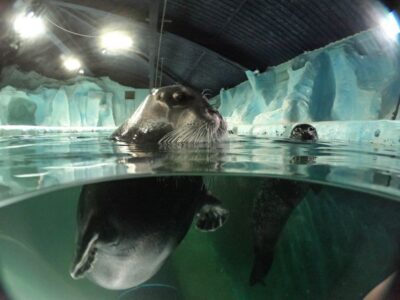 ★ 4.4Tromsø: Entrance Ticket to PolariaFrom $41676 reviews
 ★ 4.4Oslo: Viking Planet Entry TicketFrom $30603 reviews
 ★ 4.5The Fram Museum Admission TicketFrom $19490 reviews
 ★ 4.5Oslo: Sightseeing with Holmenkollen Ski Jump & Vigeland ParkFrom $57451 reviews
 ★ 4.2Tromsø: Troll Museum Entry Ticket with AR Media ExperienceFrom $21359 reviews
 ★ 4.0The Viking Planet Museum TicketFrom $30197 reviews
 ★ 4.5Oslo: Munch Museum Admission TicketFrom $39193 reviews
Lists this one sits in