
REVIEW · OSLO MUSEUMS AND ATTRACTIONS
The Fram Museum Admission Ticket
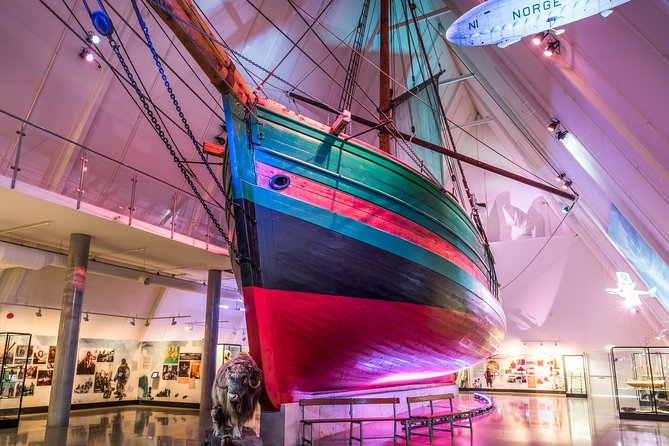
A polar museum you can walk into. The Fram Museum is interesting because you board the real ships and connect that hardware to High North science and survival. I love that you can wander through cramped spaces and see how the explorers actually lived, not just read labels. I also love the way the exhibits mix big expedition stories with practical details, including aviation and airship history. One possible drawback: it can feel busy, and some areas are a bit dark, so bring a phone flashlight if you like to read small text.
Plan about 1 to 3 hours, and expect an English-friendly visit in a small group (max 14). The ticket is simple to use as a mobile admission. You’ll also appreciate that it’s near public transport, though you should still give yourself time to reach this part of the city.
In This Review
- Key Points Before You Go
- Ticket Value: What $19.38 Really Covers
- Entering the Fram Building: Expedition Stories You Can Read In Ten Languages
- The Gjøa Building and the Tunnel Walk: Northwest Passage History in Physical Space
- Walking Inside Historic Ships: The Part That Feels Like Time Travel
- The Polar Introduction Movie and High North Education
- N25 Flight 4D Cinema: The Included Experience That Adds Motion
- How Long to Plan: Getting It Done in 1 to 3 Hours
- Practicalities in Oslo: Where It Fits in Your Day
- Who Should Book This Ticket (and Who Might Feel Disappointed)
- Should You Book the Fram Museum Admission Ticket?
- FAQ
- How long does the Fram Museum admission ticket take?
- Is the admission ticket available in English and is it a mobile ticket?
- What is included with the ticket?
- What does the museum include besides ships?
- What are the opening hours?
- Is food or drinks included?
Key Points Before You Go

- Walk the ships yourself: you can climb on and move through the Fram and other original vessels.
- Gjøa is the star: the museum spotlights the first ship to complete the Northwest Passage.
- Underground tunnel connection: the Gjøa building links to the Fram building, including a memorable cold-feeling walk.
- Film rhythm keeps you moving: a polar introduction movie runs every fifteen minutes in a 116-seat cinema.
- Ticket includes major add-ons: your admission covers Gjøa and the N25 Flight 4D cinema.
- Short visit, big payoff: most people can fit a great experience into a couple of hours.
Capital exhibition halls, further Oslo tickets scored
- Kon-Tiki Museum Entrance Ticket★ 4.5 · 1,096 reviews
- Oslo: Paradox Museum Entry Ticket★ 4.3 · 799 reviews
- Oslo: Viking Planet Entry Ticket★ 4.4 · 603 reviews
- Oslo: Sightseeing with Holmenkollen Ski Jump & Vigeland Park★ 4.5 · 451 reviews
Ticket Value: What $19.38 Really Covers
At $19.38 per person, this ticket is priced like a “real museum entry,” not a bargain gimmick. The value comes from what’s actually included inside: Gjøa and the N25 Flight 4D cinema experience. Those two pieces alone tend to turn a quick stop into a full visit.
You should also expect a visit that’s flexible. The stated time is about 1 to 3 hours, so you can do a focused circuit or slow down and read. In the museum, the displays use explanatory text in ten languages, which matters if you want to actually understand the expeditions, not just look at photos. If you like to take your time, the ship areas plus the exhibits often stretch you into the two-hour range.
One more practical point: your ticket is mobile, and confirmation comes at booking. That’s useful if you’re juggling a travel schedule in Oslo and want to avoid friction at the door.
Entering the Fram Building: Expedition Stories You Can Read In Ten Languages
Your visit starts in the Fram building, where the main exhibition focuses on the three great Fram expeditions. What I like here is the museum’s pacing for your eyes. The place is built for reading, with wall text and maps, and it’s not one of those exhibits where you sprint and hope to catch meaning.
The experience is helped by the fact that the explanatory texts are available in ten languages. If you’re traveling with different language comfort levels, that’s a real advantage. Even if you’re only using English, the layout makes it easier to track who went where and how the thinking evolved over time.
How to get the most out of this first room phase: don’t overdo it at the start. Instead, skim to get the timeline and themes. Then, when you’re on the ship later, the details start to connect. One common mistake is trying to read every panel in order, before you’ve seen the spaces those panels describe.
A consideration: if you visit at a peak time, some visitors will be standing around blocking your view of smaller labels. It’s manageable, but if you’re the type who needs quiet to read, arriving earlier in the day can help.
The Gjøa Building and the Tunnel Walk: Northwest Passage History in Physical Space
In June 2013, the museum inaugurated the Gjøa building, and the big practical payoff is the underground tunnel connecting it to the Fram building. The museum doesn’t just tell you about cold and isolation. It gives you a built-in transition, so the move between buildings feels like a different phase of the journey.
The centerpiece is Gjøa, famous for being the first ship to navigate the whole of the Northwest Passage. When you’re inside the museum, you can treat that fact like more than a trivia line. It becomes a lens for understanding the rest of what you’ll see, including how exploration planning gets shaped by route reality.
This building also carries new historical exhibitions on several major threads:
- Expeditions of Gjøa and Maud
- Airplanes N24 and N25
- The airship Norge
- John Franklin legendary expedition
- Ventures associated with Henry Larsen and Eivind Astrup
If you’re the kind of traveler who loves seeing how exploration tech changes, this is where the museum gives you that story arc. You start with ships, then you see how later exploration used aircraft and airships for a new kind of reach.
Don’t skip the tunnel area. People notice it because it feels like an added layer of atmosphere, not just a corridor. It’s one of those small moments that makes the whole visit feel more “lived in.”
Turnstile rivals, Oslo admissions scored


Walking Inside Historic Ships: The Part That Feels Like Time Travel
The star moment is the fact that this museum lets you walk inside the ships, not just stand behind barriers. Reviews consistently call out the emotional impact of being able to move through the real spaces, and I get why. When you’re inside, you can see how narrow, staged, and constrained life would have been.
You’ll be able to explore areas on the ships, including portions that visitors often highlight as especially memorable. That includes places like the cockpit area below deck and even parts of the ship that feel like they belong in the engine world. If you like details, you’ll likely spend extra time looking at the layout and imagining daily routines.
What makes this work well for your understanding is simple: the museum gives you context first, then you apply it with your feet. After you read about expeditions, walking through the ship makes the hardships feel concrete. You start thinking about what it means to move around in bad conditions, how you’d handle work tasks, and why certain spaces would matter more than others.
A small reality check: ship interiors can be crowded. It helps to plan for patience. If you’re traveling with kids, this is also one of the easier museums to keep them engaged because they can physically explore. Just keep an eye on small steps and railings.
The Polar Introduction Movie and High North Education
This museum doesn’t rely only on ships. It also teaches you what the High North is now, not just what it was during earlier exploration eras.
In a 116-seat cinema, there’s a polar introduction movie that runs every fifteen minutes. The benefit for you is timing flexibility. Even if you arrive mid-cycle, you’re not stuck waiting long to plug into that “big picture” story.
The museum’s current-issues side focuses on topics like:
- Polar bears
- Ice melting
- Gas and oil
That mix matters. It keeps the museum from turning into a history-only stop. You leave thinking about why these exploration routes and polar environments still matter. It also makes the museum feel relevant if you’re traveling in Norway and want a modern link to what you see.
Tip if you hate waiting: since the movie runs often, treat it like a reset button. Watch it, then go back to the exhibits with clearer context.
N25 Flight 4D Cinema: The Included Experience That Adds Motion
Your ticket includes N25 Flight 4D cinema, which is where the museum shifts from stationary history to a more sensory storytelling style. I can’t describe effects that aren’t provided in the information here, but the key practical point is that it’s part of your included admission, so you should try to schedule it during your visit.
Because it’s included, it’s a smart choice for you if you want extra value without paying for an add-on later. It also helps keep the visit from turning into “just reading plus ship walking.” The mix of media styles is part of the museum’s strength.
If you’re doing this as a family activity, the cinema format tends to grab attention quickly. Even if you’re not a film person, the 4D element tends to make the story feel more immediate than text panels alone.
One thing to keep in mind: cinema slots may not line up perfectly with your arrival time. Since you’re visiting for about 1 to 3 hours, you can usually work around it, but don’t schedule another timed stop right after your museum visit unless you have a buffer.
How Long to Plan: Getting It Done in 1 to 3 Hours
This ticket is designed for a tight but satisfying visit. I’d plan about 2 hours if you want a strong circuit with reading. If you’re fast-moving and mostly focus on ship access, you might finish closer to an hour. If you’re a slow reader with maps and photos, you’ll likely land near the full 3 hours.
Here’s a simple flow that works well:
- Start with the main expedition displays so the ship makes sense
- Move into the tunnel-connected Gjøa building to broaden the tech and expedition timeline
- Save the ship-walking for when you’re ready to look at everything with fresh context
- Add the polar introduction movie when it fits, since it runs every fifteen minutes
- Use the N25 Flight 4D cinema slot as your energy break before you finish up
Crowds can change how your time feels. If the museum is busy, your “reading time” might shrink because you need to share space. If you can, aim to arrive earlier in the day so you can take photos and read at your own pace.
Also, wear comfortable shoes. Walking through ship spaces means uneven surfaces, narrow paths, and stairs. You do not need special gear, but you do need normal travel comfort.
Practicalities in Oslo: Where It Fits in Your Day
Fram Museum is in Oslo and is near public transportation. That matters because you won’t need a complicated ride plan to reach it. Still, one caution: it can feel a little out of the way, so don’t stack it as the final stop right at the end of a tight itinerary.
A smart strategy is to treat it like your “anchor experience.” It’s one of those places that you can build around. Pair it with other nearby sights so you don’t rush. When you’re done, you’ll have something to talk about beyond the ships, because the museum connects past exploration to ongoing High North issues.
Language is another practical win. This activity is offered in English, so you’re not relying on translation apps to understand the big ideas. Explanatory texts across the exhibitions are also available in multiple languages, which helps if you’re traveling with people who read better than they listen.
Who Should Book This Ticket (and Who Might Feel Disappointed)
This is a great choice if you like:
- Polar exploration and the Arctic story
- Museums where you can walk inside original ships
- Learning that mixes history with current science
It also works well for families. The ship-walking creates an activity that isn’t only passive watching. Kids often enjoy the chance to move through spaces and see objects up close, not just view them from a distance.
You might hesitate if you:
- Strongly prefer quiet, low-crowd museum time
- Hate reading long wall text panels
- Are sensitive to dark or dimly lit areas inside ship spaces
Also, if you’re visiting for a single timed highlight only, note that the museum is more rewarding as a flow. The ship access works best when you’ve seen the context first.
Should You Book the Fram Museum Admission Ticket?
Yes, if you want a museum that feels physical and real. This is not a “watch from the outside” kind of experience. The ticket gives you Gjøa, the included N25 Flight 4D cinema, and a visit built around ship exploration and High North education.
I’d book it if:
- You’ll be in Oslo for more than a single day
- You enjoy history that connects to today’s Arctic concerns
- You want a solid 2-hour plan that’s hard to mess up
I might skip or adjust expectations if:
- You’re only looking for a quick photo stop
- You have limited tolerance for crowds inside tight spaces
- You dislike cinema or prefer purely text-based museums
If your travel style is hands-on, curious, and slightly obsessed with how people survive extreme places, this ticket is a strong bet. Just plan for walking, give yourself time to read, and don’t rush the tunnel, because it sets the mood for everything that comes after.
FAQ
How long does the Fram Museum admission ticket take?
Plan for about 1 to 3 hours for the visit.
Is the admission ticket available in English and is it a mobile ticket?
Yes. The admission is offered in English, and you receive a mobile ticket.
What is included with the ticket?
The included parts listed are Gjøa and the N25 Flight 4D cinema.
What does the museum include besides ships?
You can also see the main exhibition in the Fram building, an educational film shown in a 116-seat cinema every fifteen minutes, and an area covering current issues facing the High North such as polar bears, ice melting, gas, and oil.
What are the opening hours?
Opening hours are listed as 10:00 AM to 5:00 PM, Monday through Sunday, for the date range shown (09/01/2021 to 02/04/2027).
Is food or drinks included?
No, food and drinks are not included.
Turnstiles Around Oslo



More Tour Reviews in Oslo





Capital Exhibition Halls

Newest Oslo write-ups off our Norway desk
- Fjord Houseboat Cruise in Oslo. 100 % electric. BYO
★ 5.0 · 3 reviews - Oslo Christmas walk
★ 4.0 · 3 reviews - Afternoon Tea and Classic Concert on the Fjord
★ 4.5 · 3 reviews - Lake walk and campfire
★ 4.7 · 3 reviews - Oslo: Yoga & Hiking with a dog
★ 5.0 · 3 reviews - Oslo: Skjennungstoppen Wildlife Forest Hiking Tour
★ 5.0 · 3 reviews
More in Oslo Museums and Attractions.
 ★ 4.5Kon-Tiki Museum Entrance TicketFrom $191,096 reviews
 ★ 4.3Oslo: Paradox Museum Entry TicketFrom $29799 reviews
 ★ 4.4Tromsø: Entrance Ticket to PolariaFrom $41676 reviews
 ★ 4.4Oslo: Viking Planet Entry TicketFrom $30603 reviews
 ★ 4.5Oslo: Sightseeing with Holmenkollen Ski Jump & Vigeland ParkFrom $57451 reviews
 ★ 4.2Tromsø: Troll Museum Entry Ticket with AR Media ExperienceFrom $21359 reviews
 ★ 4.0The Viking Planet Museum TicketFrom $30197 reviews
 ★ 4.5Oslo: Munch Museum Admission TicketFrom $39193 reviews
Lists this one sits in