

REVIEW · OSLO TOURS
Unknown war. Oslo and Norway during 1940-45
Oslo has wartime marks in plain sight. This private walk through the historical center turns 1940 to 1945 into something you can see, using period photos matched to real locations. I love the way the guide connects big political events to day-to-day life, and I also love the photo approach, because you notice details faster when you see then and now side by side. The main drawback to plan for is weather, since it’s an outdoor walking tour and some major sights may require extra admission tickets.
You’ll meet in the Sentrum area by the Karl Johan Monument and finish near Akershus Fortress, close to Norway’s Resistance Museum. The guide, Rami, is repeatedly praised for being clear, engaging, and balanced, with plenty of time for questions. It’s also limited to your group (up to 5), which makes a difference if you want questions answered or your pace adjusted.
Key points I’d bank on
- Photo comparisons that match the exact spots you’re standing on today
- A balanced WWII story that covers occupation and resistance without spinning
- A tight 2.5-hour format that still hits major Oslo landmarks
- Private group up to 5 for comfort, pace control, and flexibility
- City-center route from royal buildings to fortress area
- Free stops mixed with optional admissions so you can choose what to pay for
In This Review
- A WWII Walking Tour That Reads Like a City Walk, Not a Lecture
- Where You Start at Karl Johan and Why It Sets the Tone
- Royal Palace: Power and Symbols You Can Still Read
- Karl Johans Gate WWII Sites: Street-Level History Is the Whole Game
- Norwegian Parliament: Why Institutions Matter in Occupation Stories
- Stortorvet Kebab and University Square: The Everyday Side of WWII
- Nationaltheatret and the Gunnar Sønsteby Monument
- Akershus Castle and Fortress: The Closing Point for the Whole Story
- Price, Group Size, and Why $307.50 Can Make Sense
- What the 2.5 Hours Feels Like on the Ground
- How to Prepare So You Get More Out of It
- Who This Tour Is For (and Who Might Prefer Something Else)
- Book It or Skip It: My Practical Recommendation
- FAQ
- How long is the Oslo WWII walking tour?
- Is this tour private, and how many people are in a group?
- Is the tour offered in English?
- Where do we start and where does the tour end?
- Are admission tickets included for the stops?
- Does the tour use a mobile ticket?
- Is good weather required?
- What is the cancellation window?
A WWII Walking Tour That Reads Like a City Walk, Not a Lecture
The best part of this kind of experience is that Oslo doesn’t need permission to teach you something. You’re walking through the center, and WWII shows up in stonework, street layout, and the way public buildings still look built for authority. The tour’s theme is the occupation of Norway by German forces during World War II, plus what Norwegians did in response.
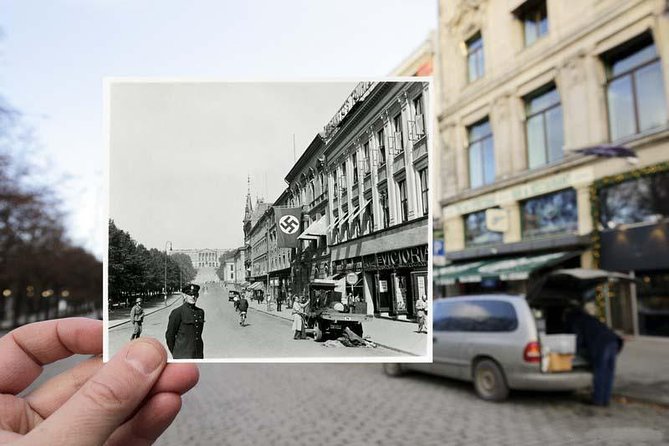
Rami’s approach sticks. Instead of asking you to memorize dates, he points you to locations and shows you historic photos from the same viewpoint. That makes the story easier to hold onto, especially because you’re walking between places instead of sitting still.
Two practical reasons I’d choose this format over a museum-only day:
- You get context fast, because Oslo’s key civic buildings sit close together.
- You walk past surviving wartime-era traces, so the history feels grounded in geography.
Capital bookings past this listing, Oslo graded again
- Oslo: Scenic Fjord Cruise with Audio Guide Commentary★ 4.5 · 5,375 reviews
- Oslo Nature Walks: Island Hopping Tour★ 4.8 · 2,713 reviews
- Oslo: 100% Electric Oslofjord Sightseeing Cruise★ 4.4 · 2,041 reviews
- Oslo: Fjord Evening Cruise with Shrimp Buffet★ 4.5 · 1,956 reviews
Where You Start at Karl Johan and Why It Sets the Tone
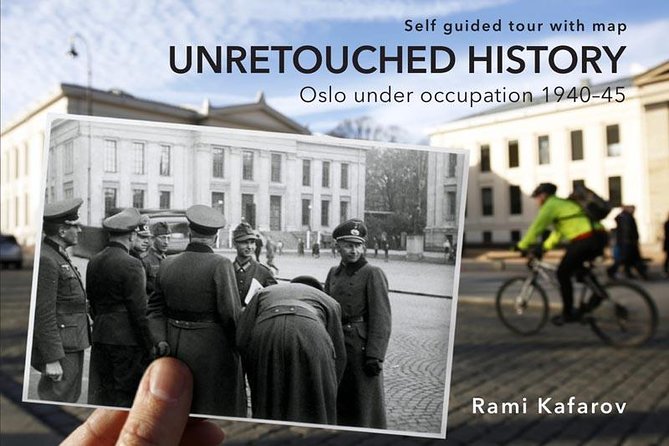
The meeting point is Karl Johan-monumentet in Sentrum, 0010 Oslo. This is a smart start because Karl Johans Gate is one of those central spines of the city where you can quickly understand the scale of Oslo’s public spaces.
From here, the walk is designed to flow through the main “statement buildings” of the Norwegian capital: monarchy, government, culture, and the nearby fortress zone. Even if you’re not a hardcore history person, this is the area where your brain naturally builds a map. That matters on a short tour, because you want to walk away feeling oriented, not just informed.
Also, since the tour is private, you’re not stuck with a crowd tempo. If you’re taking photos, looking longer at a facade, or asking for clarification, you can slow down without feeling like you’re holding up a bus group.
Royal Palace: Power and Symbols You Can Still Read
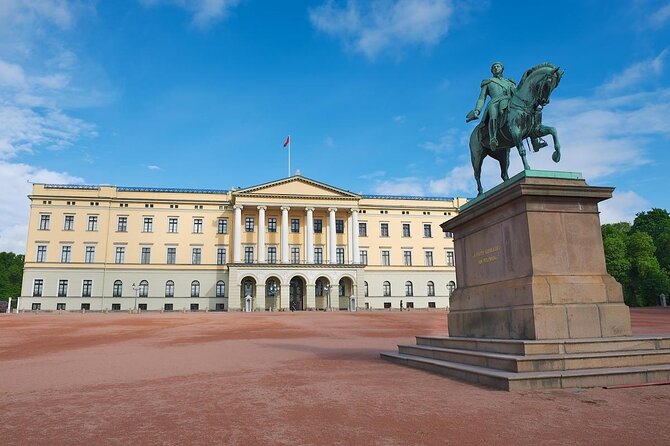
One of the first stops is the Royal Palace, called Royal Place on the tour details. You spend about 10 minutes here, and admission tickets are not included.
This is a good timing choice. The Royal Palace is the kind of place where you can instantly see how power was displayed in Norway’s capital, even if you only have a minute. In WWII history terms, the point is not that you need to tour every interior room. The point is that public authority and the visible architecture of the state mattered, and that’s the kind of context you can carry to the next stops.
What to watch for: Look at the building’s “statement” feel, the approach routes, and how the palace sits in the urban landscape. In a short tour, those visual cues help you understand why occupation and resistance stories aren’t only about events, but about control, messages, and public life.
If you’re hoping to go inside, plan for extra admission, since it’s not included.
Karl Johans Gate WWII Sites: Street-Level History Is the Whole Game
After the palace zone, you move into Karl Johans Gate, where the tour notes point to “many various locations related to WWII history.” This portion is again short (about 10 minutes), but it’s where the tour’s walking style shines.
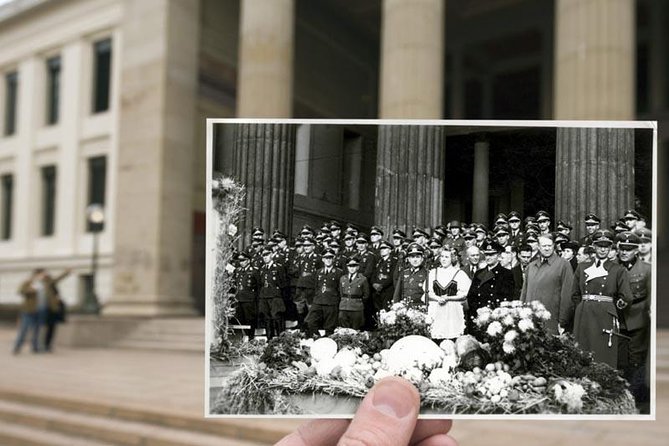
This stretch is perfect for the photo method. A historic snapshot can show you what changed, what stayed, and what you would miss if you only read plaques. When you see a street at the same angle as the historic image, you start noticing the stuff that makes the story feel real: where people stood, the flow of movement, and how the setting framed public life.
A good trick for you: don’t just look at the big buildings. Also glance at the smaller details, like the corners where people would pause, the entrances that become “micro hubs,” and any spot that could have been used for gathering or messaging. Even with limited time, you’ll come away with a sharper sense of how occupation felt in everyday city motion.


Norwegian Parliament: Why Institutions Matter in Occupation Stories
Next up is the Norwegian Parliament (Stortinget). You spend about 10 minutes here, and admission is not included.
This stop is valuable because it anchors the story in governance. Occupation is not only about soldiers. It’s also about institutions, legitimacy, and what happens when the normal machinery of the country is pressured or controlled.
Even if you don’t go inside, you can still grasp the theme. Parliament buildings are designed to project civic purpose. During WWII, that kind of purpose was exactly what outsiders would try to influence, and what Norwegians would work to defend.
If you’re the kind of person who watches for meaning in architecture, you’ll likely enjoy this stop more than you expect. It’s one of those “read the building” moments.
Stortorvet Kebab and University Square: The Everyday Side of WWII
You get a market square stop at Stortorvet Kebab, in the Stortorvet area. This is listed as free (no admission ticket), and the time is about 10 minutes.
This is not a random food break thrown in. It matters because WWII history is not only about leaders and speeches. It’s about daily routines, where people went for food, how markets worked, and how city life continued while everything was under pressure.
You also visit the University of Oslo, Faculty of Law area (about 10 minutes), listed as free. University squares tend to feel “neutral” at first glance, but they’re also places where ideas form and where the legal and civic concepts of a country show up physically.
I like mixing these stops into a WWII walk because it keeps the story from becoming too abstract. You can stand in places that still host students and commerce and connect that normal city function to what occupation disrupted.
If you’re thinking about snacks: this stop is a natural moment to grab something small, especially if you’re doing the walk on an overcast or rainy day.
Nationaltheatret and the Gunnar Sønsteby Monument
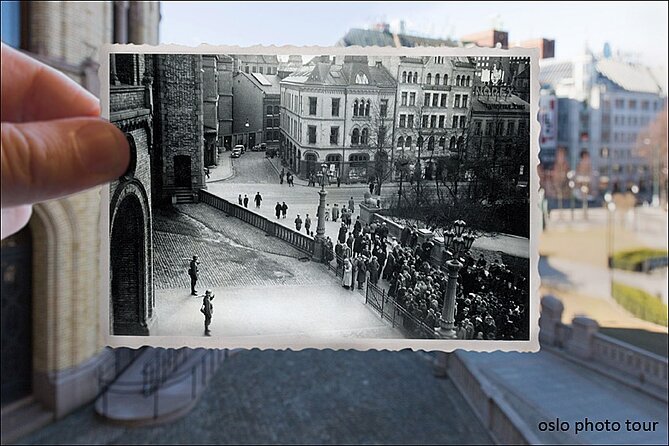
Another major stop is Nationaltheatret (National Theater), again with about 10 minutes on the clock and no admission ticket included. Near this area, you also connect with the Gunnar Sønsteby monument.
This pair works because theater and monuments both represent public culture and public memory. WWII resistance stories often survive through memorials and through the way a city chooses to remember people. Sønsteby’s name gives the walk a human backbone, shifting the focus from occupation structures to Norwegian courage and action.
What I’d do if you want to maximize this part: take a moment, read the space around the monument, then connect it back to what you learned earlier at palace and government sites. The story becomes more complete when you see how the city expresses both authority and resistance.
And yes, the tour remains flexible. If you want to linger here for photos, a private group helps.
Akershus Castle and Fortress: The Closing Point for the Whole Story
The walk ends at Akershus Fortress (Akershus Slott og Festning). Admission is not included for this stop, and the tour ends near Norway’s Resistance Museum.
This ending makes sense. A fortress area naturally pulls your attention to defense, control, and the long view. When you finish here, you’ve already built a mental map of the city’s center, and now you step into the zone that feels built for holding ground.
The timing also matters. The Norway’s Resistance Museum is listed with opening hours, Monday through Thursday from 9:00 AM to 4:00 PM, during the range shown. If your tour ends outside those hours, you might not be able to go in that day, but finishing near the museum gives you an easy next step if you have time.
If you’re a photo lover, this end spot is often a strong one because the fortress area is visually distinct. It’s the kind of place where a modern view can still feel like it’s carrying older layers.
Price, Group Size, and Why $307.50 Can Make Sense
This experience is priced at $307.50 per group, up to 5 people, and lasts about 2 hours 30 minutes. That works out to about $61.50 per person at maximum group size.
Is it a good deal? For me, the value comes from two things:
- You’re getting a private format (only your group participates), which reduces the “rush” factor on a short city walk.
- You’re getting specialized storytelling with a personal photo collection, which you generally do not get on a basic city tour.
Also, it’s booked an average of 77 days in advance, which usually means this tour fills up. If you’re traveling in peak season or during a cruise stop week, you’ll want to lock it in early.
If your group is smaller than 5, the cost per person rises, so you’ll want to decide whether the private guide and photo-focused approach is worth paying extra for. For history fans, it often is. For a casual “see the highlights” crowd, you might prefer something more general.
What the 2.5 Hours Feels Like on the Ground
The route is built around short stops, each around 10 minutes, plus the walking time between them. That style is ideal when you want to cover multiple landmarks without turning your day into a marathon.
You’ll also notice something important: not every stop is an admission stop. Some are free areas, and some places like the Royal Palace, Parliament, National Theater area, and Akershus Fortress are marked as not including admission tickets. That gives you options. You can focus on the exterior, or you can decide to add an entry somewhere else later in your Oslo plan.
One more practical point from what you’ve been told by other guests: rain happens in Oslo. The tour requires good weather, so if it looks iffy, pack something you can layer under. Even if the weather works, you’ll be happier if you dress for wind and damp streets.
How to Prepare So You Get More Out of It
You don’t need to study Norwegian WWII history before you go, but you can level up your experience with a few simple moves.
- Bring comfortable walking shoes. This is a city-center walk with multiple stops.
- Bring your questions. The guide’s value is explaining the “why,” not just naming places.
- If you’re bringing kids or multi-generational group members, tell the guide your pace preference early. Private tours are easier to adjust.
If you already plan to visit Norway’s Resistance Museum later, this walk can work like a prequel. You’ll see the city through the same lens, so the museum can land better.
Who This Tour Is For (and Who Might Prefer Something Else)
This fits best if you:
- Want WWII history tied to real streets and surviving architecture
- Like photo-led storytelling, where then-and-now comparisons sharpen details
- Prefer a private tour with up to 5 people instead of blending into a big group
- Are curious about how occupation affected everyday life and how resistance showed up in the city
It might be less ideal if you:
- Only want free sightseeing with no optional admissions anywhere
- Hate being outside for a full walking session, even in cool weather
- Expect a purely museum-style timeline with lots of indoor time
But even then, if your priority is understanding Oslo during 1940 to 1945 through the urban layout, this approach is still one of the most practical ways to do it.
Book It or Skip It: My Practical Recommendation
I’d book this tour if WWII in Oslo is on your “must understand” list. The reason is simple. You’re not just learning facts. You’re getting a guided route where the history is mapped onto the places you can still stand in today. Rami’s photo method is repeatedly singled out for a reason: it turns the story from abstract to visible.
I’d also book it if you’re short on time. At about 2 hours 30 minutes, this is a smart use of a city day, especially if you’re also doing other Oslo must-sees.
I’d think twice only if the weather forecast is rough and you know you struggle with rainy walking. This experience requires good weather, and you don’t want your day derailed.
If you do book, choose it early in your Oslo schedule if possible. That way, you’ll carry the context with you as you see other parts of the city.
FAQ
How long is the Oslo WWII walking tour?
It runs for about 2 hours 30 minutes.
Is this tour private, and how many people are in a group?
Yes, it’s a private tour. Your group only, up to 5 people.
Is the tour offered in English?
Yes, it’s offered in English.
Where do we start and where does the tour end?
It starts at Karl Johan-monumentet in Sentrum, Oslo, and ends at Akershus Fortress near Norway’s Resistance Museum.
Are admission tickets included for the stops?
Admission tickets are not included for some major sites like the Royal Palace, Norwegian Parliament, National Theater, and Akershus Castle and Fortress. Other stops are listed as free.
Does the tour use a mobile ticket?
Yes, it includes a mobile ticket.
Is good weather required?
Yes, the experience requires good weather. If it’s canceled due to poor weather, you’ll be offered a different date or a full refund.
What is the cancellation window?
Free cancellation is available up to 24 hours in advance for a full refund.
More Tour Reviews in Oslo




The Capital, Kept Going
Newest Oslo write-ups off our Norway desk
- Fjord Houseboat Cruise in Oslo. 100 % electric. BYO
★ 5.0 · 3 reviews - Oslo Christmas walk
★ 4.0 · 3 reviews - Afternoon Tea and Classic Concert on the Fjord
★ 4.5 · 3 reviews - Lake walk and campfire
★ 4.7 · 3 reviews - Oslo: Yoga & Hiking with a dog
★ 5.0 · 3 reviews - Oslo: Skjennungstoppen Wildlife Forest Hiking Tour
★ 5.0 · 3 reviews
More in Oslo Tours.
 ★ 4.5Oslo: Scenic Fjord Cruise with Audio Guide CommentaryFrom $445,375 reviews
 ★ 4.8Oslo Nature Walks: Island Hopping TourFrom $692,713 reviews
 ★ 4.4Oslo: 100% Electric Oslofjord Sightseeing CruiseFrom $402,041 reviews
 ★ 4.5Oslo: Fjord Evening Cruise with Shrimp BuffetFrom $881,956 reviews
 ★ 4.8Oslo: 3-Hour Highlights Bike TourFrom $621,609 reviews
 ★ 4.7Oslo: Guided Sightseeing Fjord Cruise on Premium Silent BoatFrom $641,390 reviews
 ★ 5.0Oslo Highlights Bike TourFrom $62979 reviews
 ★ 4.3Oslo: Paradox Museum Entry TicketFrom $29799 reviews
Lists this one sits in