
REVIEW · OSLO TOURS
Oslofjord Sightseeing
Oslo’s fjord views start right in the city. This electric Oslofjord cruise gives you a tight, 2-hour loop past major landmarks like Akershus Fortress and the Opera House, with narration to explain what you’re seeing. I also like that you get onboard comfort built for real weather, not just postcard conditions, including warm indoor space and big panoramic windows.
Two things that make the trip feel worth it fast: the route packs iconic sites without a lot of hassle, and the onboard audio helps you understand the geography and history as you glide along. One possible drawback to plan around is cold, or sometimes just hard-to-hear narration in windy or choppy moments, so bring warm layers and be ready to step outside for photos in short bursts.
In This Review
- Key moments that make this Oslofjord cruise click
- Oslofjord sightseeing from City Hall, with views that feel close-up
- What you see: Akershus Fortress, Opera House, Munch Museum, and the shoreline story
- Hoveøya, Fram Museum area, and Dyna Lighthouse, the sights that add texture
- Bygdoy landing and choosing your return, how to use the stop well
- Getting comfortable: heated cabin, blankets, restrooms, and where to sit
- Food, WiFi, and the real question of what is actually included
- Audio guidance that actually helps, plus how to avoid missing it
- How smooth and safe it feels, even on snowy or windy days
- Price and time value for a short Oslo visit
- Who should book this Oslofjord cruise, and who might skip it
- Quick checklist before you go
- Should you book Oslofjord Sightseeing?
- FAQ
- How long is the Oslofjord Sightseeing cruise?
- Where does the cruise depart from?
- Is an audio guide included, and is it available in English?
- Are snacks and drinks included?
- Is the boat heated for cold weather?
- What happens if the experience is cancelled due to weather?
- Can I cancel for free?
Key moments that make this Oslofjord cruise click
- City Hall pier 4 departure puts you near the center of Oslo, then you head out to the fjord sights quickly
- Akershus Fortress, Opera House, and Munch Museum come into view along the shoreline
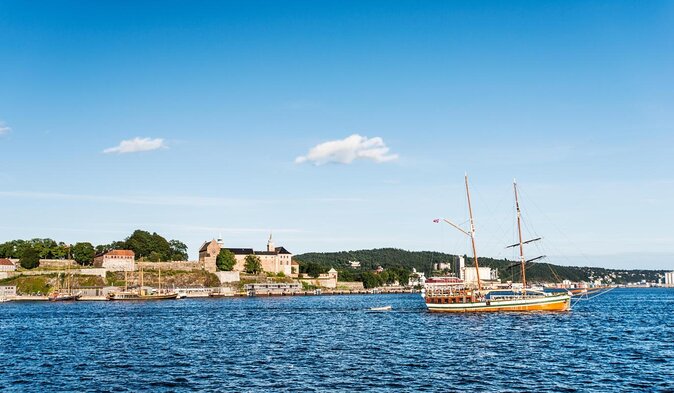
- Hoveøya and canons, plus islands and inlets give you that real fjord feeling beyond the city skyline
- Bygdoy landing lets you choose when and how to return, which is handy if you want to pair museums
- Heated cabin and panoramic windows make a big difference when the wind chill bites
- Audio guide plus onboard staff means you are not just staring at buildings, you are learning as you go
Capital bookings past this listing, Oslo graded again
- Oslo: Scenic Fjord Cruise with Audio Guide Commentary★ 4.5 · 5,375 reviews
- Oslo Nature Walks: Island Hopping Tour★ 4.8 · 2,713 reviews
- Oslo: 100% Electric Oslofjord Sightseeing Cruise★ 4.4 · 2,041 reviews
- Oslo: Fjord Evening Cruise with Shrimp Buffet★ 4.5 · 1,956 reviews
Oslofjord sightseeing from City Hall, with views that feel close-up
You start at Rådhusbrygge 4, City Hall pier 4, and that matters more than you might think. You are not fighting transfers or stepping into a complicated travel puzzle. The location is also convenient for tying this into a broader day of walking around Oslo, especially if you are already near downtown sights.
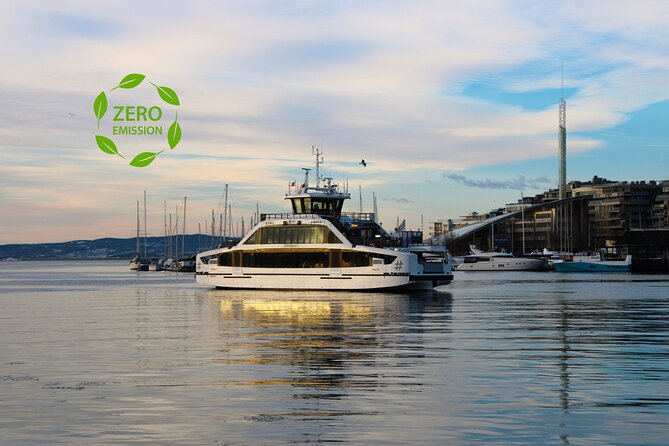
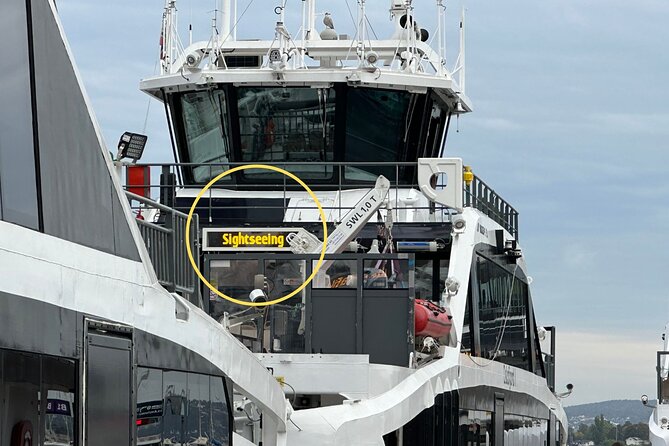
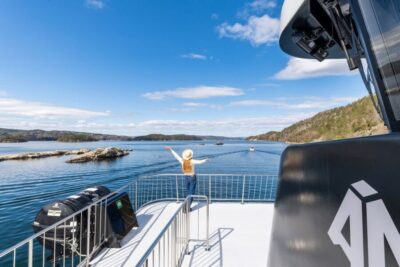
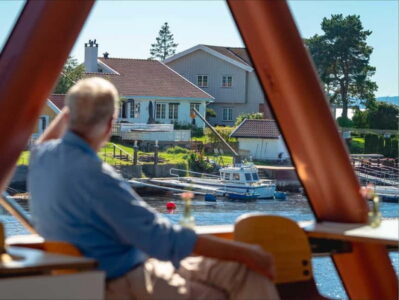
This is a modern electric boat designed for sightseeing. Outside, the decks are spacious and easy to walk, so you can move toward the best angles for photos. Inside, there is a climate system built for comfort, plus large panoramic windows so you do not have to stay fully bundled behind glass the whole time.
The total duration is about 2 hours. That short format is one reason this works so well for visitors who are tight on time, but still want a true change of perspective. You see the city from the water, then you have time to decide what you want next on land.
What you see: Akershus Fortress, Opera House, Munch Museum, and the shoreline story
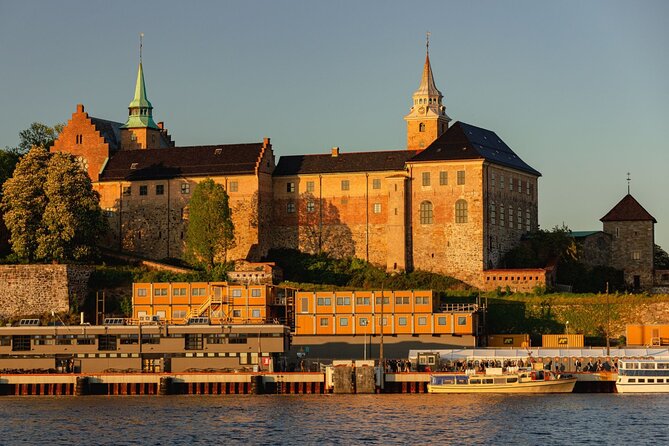
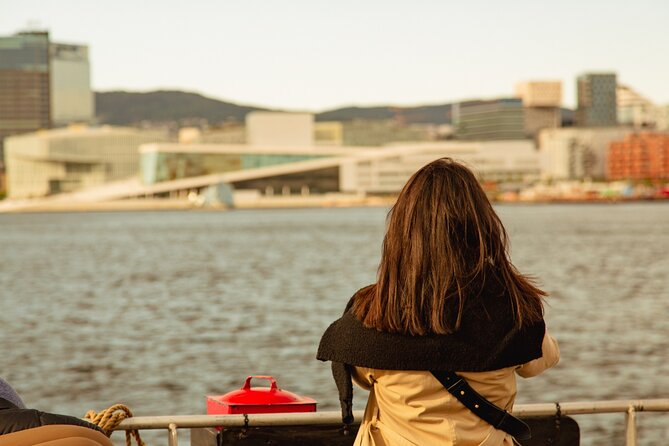
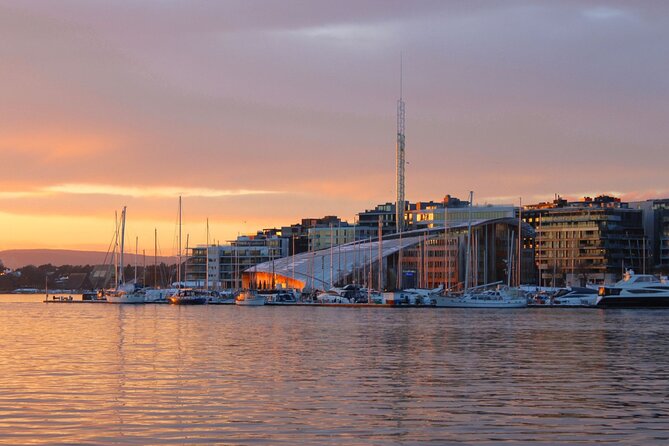
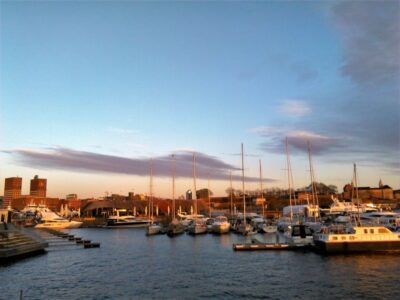
The sightseeing begins right away along Oslo’s shoreline. From the pier area, you get a sweep of landmark views that are hard to appreciate from sidewalks alone. As you glide out, you pass sights that define Oslo’s waterfront identity, including Akershus Fortress, the Opera House, and the Munch Museum.
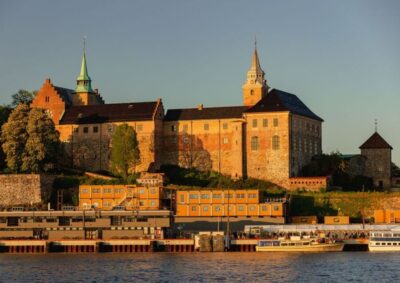
Akershus Fortress is a standout because you get it in context. From the water, the fortress looks less like a single stop and more like part of a defensive waterfront system tied to the harbor and the fjord itself. You also catch views of how Oslo’s neighborhoods stack toward the water, and how the city’s hills shape the whole skyline.
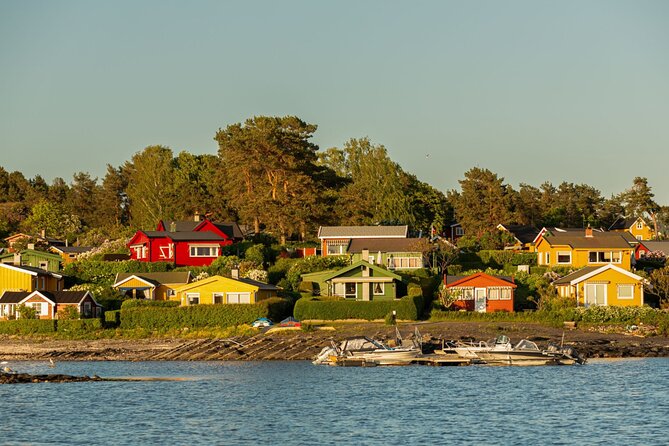
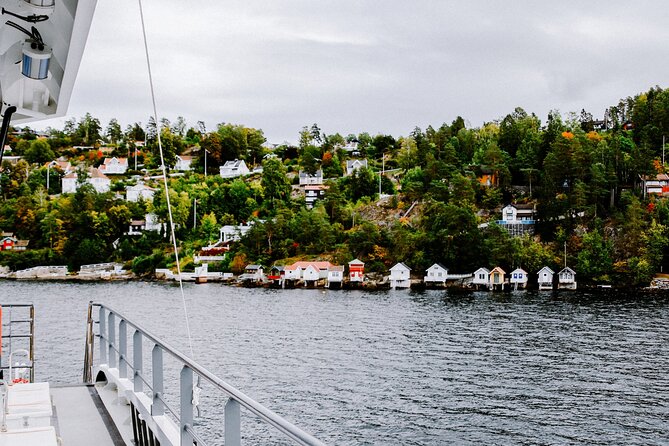
Then the cruise transitions from the “big-name city” feeling to the “fjord country” feeling. You pass islands and islets, plus Hoveøya with canons pointed over the fjord. Even if you are not a military-history person, the canons are a quick visual clue that this landscape has always mattered for navigation, safety, and control of access.
Hoveøya, Fram Museum area, and Dyna Lighthouse, the sights that add texture
After the city landmarks, the route gives you those small-but-memorable details that make a short cruise feel longer. You sail past the kind of islands and inlets that make fjords feel intimate rather than dramatic-and-remote.
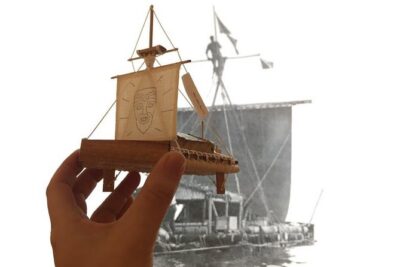
Bygdoy is one of your key visual anchors on the way. This area is tied to maritime and museum culture in a way that fits the cruise theme perfectly. You also get a look toward the Fram Museum area, and that is a big plus if one of your goals is to hit Oslo’s sea and exploration stories without spending a full day bouncing between locations.
The cruise also passes Dyna Lighthouse, and in practice you may catch close passes of other lighthouses too. One helpful tip from what I’ve learned about this route: if lighthouses are your thing, look for photo moments when you are near open water and the boat is steady, since that is when the views feel sharpest.
Bygdoy landing and choosing your return, how to use the stop well
A major practical feature is that you land at Bygdoy, and you get to choose when and how to return. That gives you flexibility. Instead of feeling locked into a fixed “back at the dock at exact time” rhythm, you can plan a mini extension.
Bygdoy is a smart pairing with museums because you end near places you might want to explore on foot. Many people like this arrangement because it helps you avoid backtracking later. It also gives you a chance to switch modes: from water views to walking routes.
One consideration: the cruise does not set you up with a pickup-from-everywhere service. Your meeting point is City Hall pier 4. If you are arriving from somewhere like a cruise ship, do not assume there will be a convenient handoff. Build in extra time to get to the correct pier and be early enough to find the right boarding spot.
Getting comfortable: heated cabin, blankets, restrooms, and where to sit
Oslo weather can change the whole experience, and this tour is designed around that reality. The boat has an indoor heating system, and the interior is set up so you can stay warm while still seeing the sights through panoramic windows.
One of the simplest comfort bonuses is that you get blankets for your ride. People really notice this on windy days, because even when the cabin is warm, the act of stepping outside for photos makes you feel the temperature quickly. If you are traveling in winter, treat warm layers as non-negotiable, especially if you plan to spend time on the outer deck.
Restrooms are onboard, which makes the 2-hour format feel easier to manage. And seating is comfortable and stable, which matters if you are sensitive to motion or just prefer a calmer ride.
Tip for your seating choice: if you want photos, pick a spot near the panoramic windows early, then go outside briefly as landmarks come into view. You will get the best results by alternating, not by trying to do everything outdoors in one continuous stretch.
Food, WiFi, and the real question of what is actually included
Let’s talk food and drink, because this is where expectations can wobble.
The onboard experience includes hot and cold beverages and light snacks as part of what is served. At the same time, there are also snacks and refreshments available for purchase. So if you expect a full café menu, you might be disappointed. If you plan for light options plus the ability to buy more, you will likely be happier.
WiFi on board is included. That is useful for practical stuff like navigation and messaging family while you are on the water, especially if your schedule depends on museum timing after you land at Bygdoy.
The boat is also equipped with family-friendly amenities and safety features like life jackets and safety instructions. That combination is a sign the operator is focused on everyday comfort, not just the “tourist photo moment.”
Audio guidance that actually helps, plus how to avoid missing it
The cruise includes an audio guide, available in English. The narration is designed to explain what you’re seeing, including the city’s history and geography and the nature around Oslo.
The key is volume and environment. On some trips, narration can be hard to hear if it is windy, if there is a lot of movement in the cabin, or if younger passengers are walking around and making noise. Your best strategy is to sit where you can focus on the sound system and use the windows thoughtfully rather than standing and wandering the whole time.
If you like learning, the audio adds value because the route is not random. It connects major city landmarks to the fjord landscape, which makes the shoreline feel like a story instead of a set of photos.
There is also a note from one experience where a downloaded app played when you approached landmarks. If you want that style of guidance, keep an eye out for any instructions about the audio app, since it can change how you experience the cruise.
How smooth and safe it feels, even on snowy or windy days
This type of electric boat ride often sounds a bit fragile to people who picture lapping waves and rough movement. In practice, many people report the ride is smooth and comfortable, with the boat feeling stable.
That matters if you are traveling with someone who gets motion sickness, or if you simply want to enjoy the views instead of bracing for every swell. It also helps on days when the weather is not perfect, like snowy or windy conditions.
Also, the boat is designed for easy deck access. Outside is spacious and walkable, so you can step out for photos without feeling like you are squeezed into a tight corridor. Then return inside when you want shelter.
One reality check: rain can make views less crisp, especially if clouds sit low over the shoreline. If you can choose your day, pick calmer weather when possible.
Price and time value for a short Oslo visit
At about $48.22 per person for roughly 2 hours, this is one of those deals where the value is less about “cheap” and more about “time efficient.” You are paying for a guided water route that would take multiple stops and more effort to recreate by yourself.
You get a lot in a short window: City shoreline landmarks, fjord islands, lighthouse passes, and a drop-off at Bygdoy that can set up your next museum or walking block. If you are only in Oslo for a couple of days, this kind of concentrated sightseeing can be a smart use of time.
It also helps that the boat includes real comfort features: blankets, heated indoor space, restrooms, and panoramic windows. Those are costs that add up fast when you are trying to improvise your own day on cold water.
The bottom line: if you want a quick orientation to Oslo’s waterfront and the surrounding fjord feel, this pricing makes sense.
Who should book this Oslofjord cruise, and who might skip it
This cruise is a great fit for:
- First-timers who want major Oslo landmarks from the water without doing a long day
- People who like learning in real time through English narration
- Travelers who want comfort in cooler months, thanks to heated indoor space and blankets
- Museum fans who like ending near Bygdoy, so they can plan their next stop with less backtracking
It may be less ideal if:
- You are only chasing dramatic “deep fjord” scenery, since this route is more coastal and city-linked than remote wilderness
- You strongly prefer quiet and uninterrupted audio, since families and deck movement can affect how well you hear narration on certain trips
- You need a pickup from a cruise ship or hotel, because the meeting point is specifically at City Hall pier 4
Quick checklist before you go
- Bring a warm jacket and gloves in winter, and layers even in shoulder season
- Arrive early enough to find City Hall pier 4, and do not plan on last-minute guidance
- If you care about audio, choose a seat where you can hear without constantly walking around
- Bring your plans for Bygdoy, so you can use the drop-off time well
Should you book Oslofjord Sightseeing?
I think you should book this if you want a fast, comfortable way to understand Oslo from the fjord. The route is well suited to a short visit, and the comfort details, like blankets and a heated cabin with panoramic windows, make it practical even when the weather is chilly.
Skip it only if your main goal is deep, remote fjord scenery, or if you are expecting a full-on café experience with lots of drink options included. For most people, it lands in the sweet spot of value, sights, and an easy transition to museums afterward.
FAQ
How long is the Oslofjord Sightseeing cruise?
It runs for about 2 hours.
Where does the cruise depart from?
The boat departs from City Hall pier 4, also listed as Rådhusbrygge 4.
Is an audio guide included, and is it available in English?
Yes. Audio guides are included, and the experience is offered in English.
Are snacks and drinks included?
Hot and cold beverages and light snacks are offered onboard, but snacks and drink options are also available for purchase, so it is smart to plan for some items to be paid separately.
Is the boat heated for cold weather?
The boat includes an onboard climate system designed for comfort, and it is set up to help guests stay warm in winter conditions.
What happens if the experience is cancelled due to weather?
If it is cancelled due to poor weather, you will be offered a different date or a full refund.
Can I cancel for free?
Yes. You can cancel up to 24 hours in advance for a full refund.
More Tour Reviews in Oslo



The Capital, Kept Going
Newest Oslo write-ups off our Norway desk
- Fjord Houseboat Cruise in Oslo. 100 % electric. BYO
★ 5.0 · 3 reviews - Oslo Christmas walk
★ 4.0 · 3 reviews - Afternoon Tea and Classic Concert on the Fjord
★ 4.5 · 3 reviews - Lake walk and campfire
★ 4.7 · 3 reviews - Oslo: Yoga & Hiking with a dog
★ 5.0 · 3 reviews - Oslo: Skjennungstoppen Wildlife Forest Hiking Tour
★ 5.0 · 3 reviews
More in Oslo Tours.
 ★ 4.5Oslo: Scenic Fjord Cruise with Audio Guide CommentaryFrom $445,375 reviews
 ★ 4.8Oslo Nature Walks: Island Hopping TourFrom $692,713 reviews
 ★ 4.4Oslo: 100% Electric Oslofjord Sightseeing CruiseFrom $402,041 reviews
 ★ 4.5Oslo: Fjord Evening Cruise with Shrimp BuffetFrom $881,956 reviews
 ★ 4.8Oslo: 3-Hour Highlights Bike TourFrom $621,609 reviews
 ★ 4.7Oslo: Guided Sightseeing Fjord Cruise on Premium Silent BoatFrom $641,390 reviews
 ★ 5.0Oslo Highlights Bike TourFrom $62979 reviews
 ★ 4.3Oslo: Paradox Museum Entry TicketFrom $29799 reviews
Lists this one sits in