
REVIEW · RIB AND SPEEDBOAT SAFARIS
Skjervøy: Whale Watching with RIB Boat and Local Guide
Orcas in winter feel unreal. What makes this Skjervøy outing special is the high-speed RIB boat ride and the way guide Viktor quickly turns whale-hunting into a clear, calm experience. One thing to watch for is cold and choppy water, so warm layers and the provided gear matter.
I also like that you are not stuck far away. You can realistically spend time with both killer whales and humpback whales outside Skjervøy, with the guide sharing what you are seeing while you are seeing it. If you hate rough rides or you run cold easily, plan to bundle up and take the moment as a winter adventure, not a spa.
In This Review
- Key things that make this whale trip work
- Finding your way to Strandveien 96 and the harbor check-in
- Gear and comfort: how they help you handle Arctic water
- The 3-hour RIB ride: speed, sea state, and what to expect
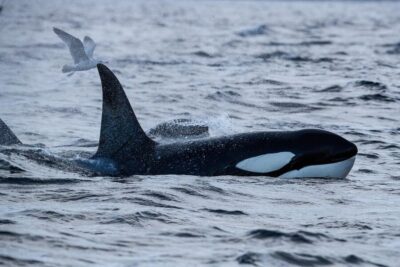
- Killer whales outside Skjervøy: black bodies, white spots, and real behavior
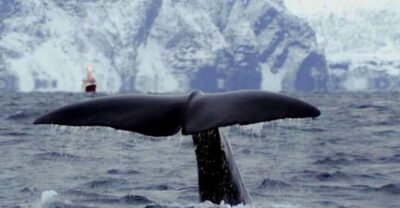
- Humpback whales: jumps, songs, and why the tail fin detail is cool
- Safety and the respectful distance factor
- Seasonality: mid-October to February and how to read the odds
- Value and what you really get for your money
- Who this tour fits best, and who might rethink it
- Should you book the Skjervøy RIB whale-watching with Viktor?
- FAQ
- How long is the whale-watching tour from Skjervøy?
- Where do I meet for the tour?
- What languages does the guide speak?
- What whales can I expect to see?
- What winter gear is provided?
- Is the tour seasonal?
- Is transportation from Tromsø available?
- Is the tour flexible to book and cancel?
Key things that make this whale trip work
- Close-up wildlife from a RIB, not a slow sightseeing boat
- Guide Viktor’s whale spotting and explanations, in English or Norwegian
- Killer whale behavior you can follow, including social groups and coordinated hunting
- Humpbacks with character, jumps, whale songs, and the chance to spot tail fin differences
- Warm gear pack and hot drinks back at base, so you stay in the action
- A winter season that actually pays off, typically from mid-October to February
Throttle-open rivals, rigid inflatables out of Skjervoy
- Skjervøy: Whale and Orca Watching Tour by RIB Boat★ 4.1 · 87 reviews
Finding your way to Strandveien 96 and the harbor check-in
This trip starts at Strandveien 96 in Skjervøy. Your meet-up spot is the backside of the old white building in the harbor, on the downside of Ekstra (the grocery store). If you are arriving by bus from Tromsø, this area is set up for daily connections, so you are not guessing how to get there.
The location matters because this kind of whale watching is all about timing. When you are using a fast boat and searching moving water, the trip lives and dies on getting everyone geared up and leaving promptly for the hunt. Plan for a quick check-in, then focus on getting warm before you board.
If you want the shore-side details, use the provided coordinates as a backup (70.02948760986328, 20.968090057373047). A harbor in winter can look similar from a distance, so having coordinates reduces stress.
Gear and comfort: how they help you handle Arctic water
You will get a full winter setup meant for real cold sea air, not just a light jacket. The provided kit includes warm outerwear, life jackets, hats, termo shoes, and goggles.
That gear is not a small detail. On a RIB, wind and spray cut through clothes fast, and you are sitting still enough to feel the chill if your layers are wrong. The tour also includes warm drinks when you return, which is a nice reset after time on the water.
A practical camera tip shows up in people’s experience: if you bring a camera, use a plastic bag to protect it from heavy spray. It takes one bad splash to ruin a shot, and the RIB can throw plenty of saltwater.
One more comfort note. The suits help, but if you run very cold, consider bringing your own extra warmth where you can, especially at gloves and neck. One guest specifically felt the difference when gloves and a neck cover were not used as suggested.
The 3-hour RIB ride: speed, sea state, and what to expect
This is a 3-hour whale-watching window. The ride itself can be rough in winter. People describe it as fun and thrilling, with waves giving the boat a rock-and-roll feel. That is part of why the experience feels so close and alive.
The upside of the RIB format is simple: faster reach, more chances to reposition, and a better chance of finding active whales. The downside is also simple: if you are prone to seasickness or you hate motion, this is not the gentle option.
Group size is kept small. One account notes the boat can run with 12 people plus the guide Viktor, which is a good balance. You get a lively group without feeling packed like a bus tour, and it is easier for the guide to manage sightlines and safety.
Senja onward beneath the Lyngen wall, more graded
Killer whales outside Skjervøy: black bodies, white spots, and real behavior
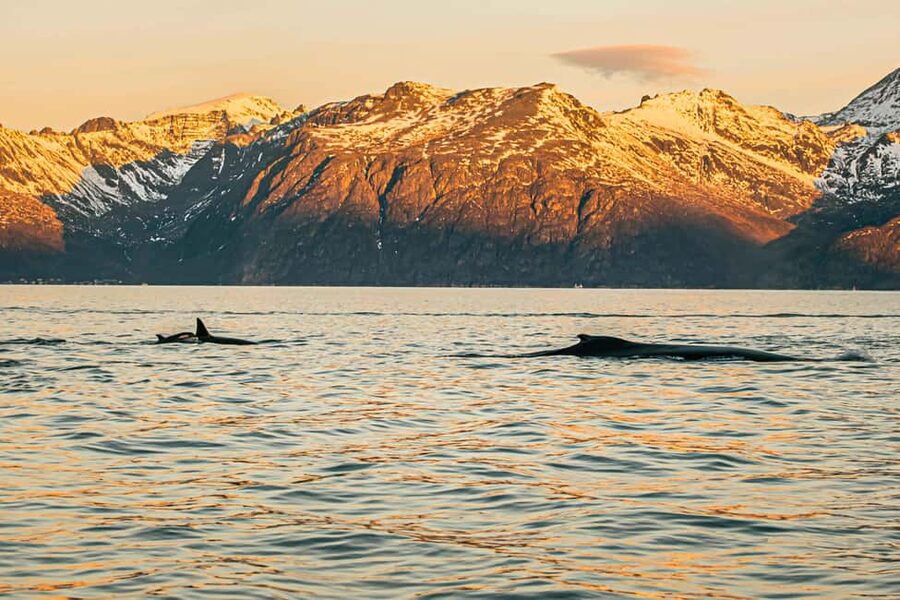
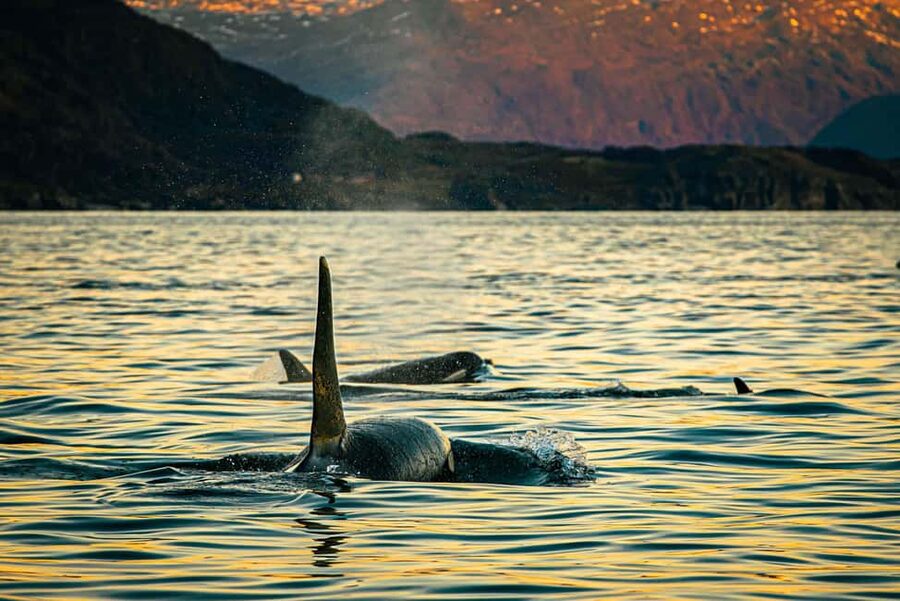
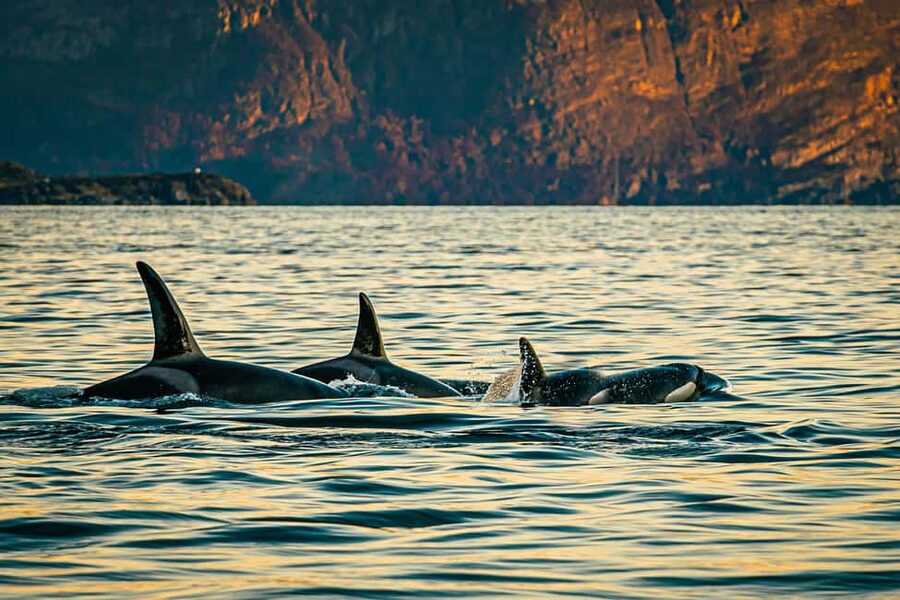
This trip is built around the chance to see killer whales (orcas). The way they are described is not just visual. You are guided to notice how their gatherings work, and how communication plays a role.
You can learn about:
- Their black bodies with iconic white spotting
- The idea that they communicate with whistling and pulse sounds, which you may be able to hear
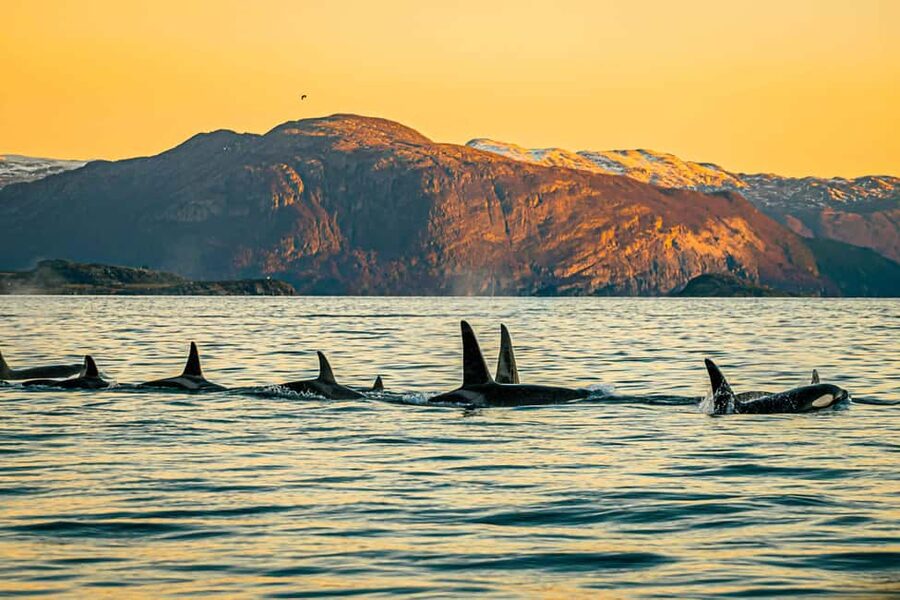
- Their social behavior, including how groups coordinate rather than just drifting
One of the most praised parts is sheer number. Some outings report seeing around 50 orcas, and there are accounts of orcas breaching. When the guide finds a feeding window, it can feel like the ocean turns into a live action scene.
Why this matters for you: orcas can be traveling and unpredictable. The guide’s job is to keep you at a respectful distance while also putting you in the right place long enough for the behavior to make sense. The stronger the encounter, the less the sightings feel random.
Humpback whales: jumps, songs, and why the tail fin detail is cool
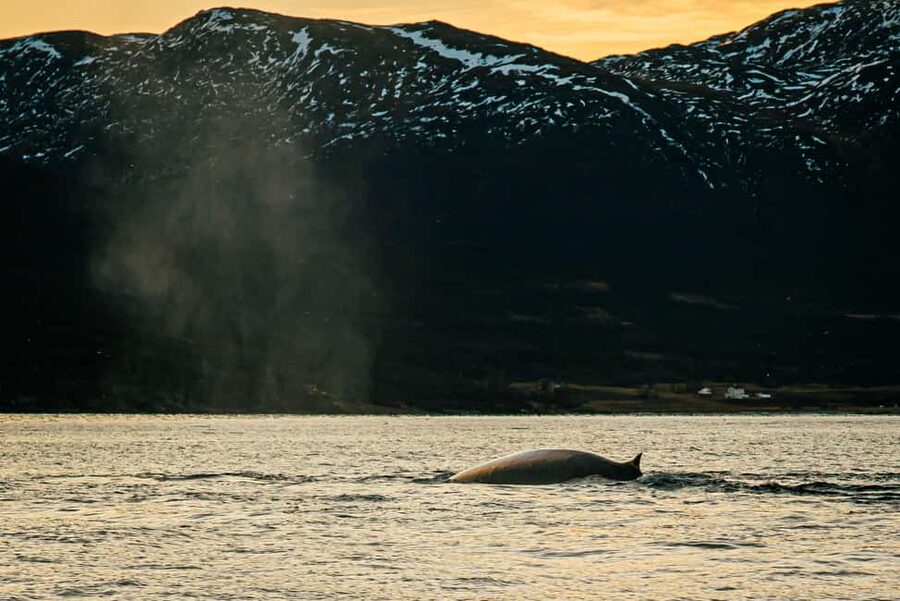
Humpback whales are a major part of the experience. They may show up alone or in small groups, and the goal is to catch that signature behavior: movement with intention.
What to look for:
- Acrobatic jumps (when they surface and then go airborne)
- Their distinctive songs, which the guide will help you connect to what you are seeing
- A neat identification detail: each humpback tail fin is said to be unique, so the guide may point out variations
In some conditions, you might also see orcas and humpbacks at the same time. People describe days with multiple species in the same outing, including orcas and humpbacks together. That is the dream scenario because it makes the whole ecosystem feel connected, not like separate tours.
Also, be ready for quiet moments. Humpbacks can be less constant than orcas. When they are around, listen for the guidance from Viktor and keep your eyes scanning the water. The payoff is real when a song is rolling and a whale decides to show itself.
Safety and the respectful distance factor
RIB whale watching is exciting, but good operators treat safety like part of the product, not a legal checkbox.
What you can take from these experiences is that Viktor aims to keep a safe and considerate distance while still letting you watch behavior clearly. That approach matters. If whales feel pressured, they can move away fast. A respectful distance helps keep the encounter going long enough for you to understand it.
Life jackets are provided for a reason, and you will be briefed before going out. Keep your footwear secure (those termo shoes help a lot on wet deck surfaces), and follow the guide’s instructions when you need to adjust position for better viewing.
If weather is messy, the guide can sometimes still find whales by driving, searching, and repositioning efficiently. One account describes the day starting with terrible weather, but the guide quickly locating killer whales and then shifting to humpbacks. That flexibility is one reason this kind of tour is worth choosing.
Seasonality: mid-October to February and how to read the odds
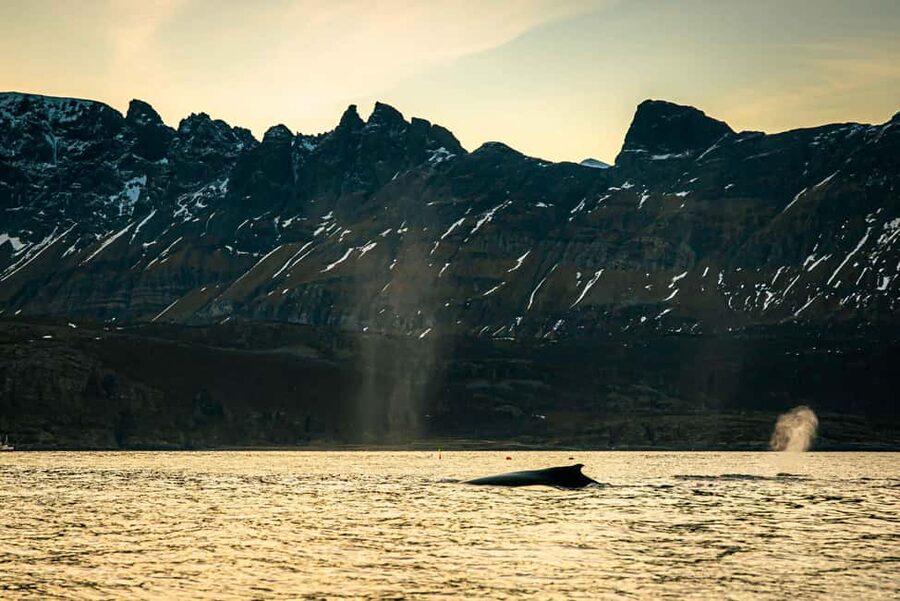
This whale-watching season runs from mid-October to February. That timeframe is built for winter conditions, and the animals are there often enough for operators to plan on sightings.
A helpful way to think about timing is this: the earlier part of the season can require more searching, especially if prey patterns have not fully set in. One early-season account mentions the hunt taking some time before orcas appeared in larger numbers. Once they show up, the encounter can turn intense.
For your planning, bring patience. Even with a strong guide, you are going into the Arctic. Weather can reduce visibility and rough water can affect where you safely travel. The best mindset is to treat this as an active search mission with a fantastic chance of reward.
Value and what you really get for your money
No price is listed here, so I will talk value in a more honest way: you are paying for three things that are hard to replicate on your own.
1) A small, fast platform (RIB)
You are not stuck watching from far away. The speed helps cover water and find whales more efficiently.
2) A local guide who can translate behavior
Viktor’s explanations help you know what you are seeing, not just that you saw something big. People highlight his calm attitude, his ability to spot whales quickly, and his habit of giving lots of information while you watch.
3) Cold-weather execution and comfort details
Warm gear is included, plus warm drinks back at base. That combination keeps you out on the water long enough to actually enjoy it.
If you are comparing options in the region, a key question is always this: how close and how long can you actually watch? On this kind of trip, you get enough time on the water that the whales’ actions feel coherent, not like a quick drive-by.
Who this tour fits best, and who might rethink it
This is a great choice if you want:
- Real winter wildlife and you can handle cold air
- Close viewing and a more adventurous boat ride
- A guide who gives context in English or Norwegian
- The best chance of seeing both killer whales and humpback whales in one outing
You might rethink it if:
- You get seasick easily and do not use motion-sickness measures
- You cannot tolerate rough water rides
- You expect a gentle cruise with lots of comfy still time
The rough ride descriptions are part of the deal. If you go in expecting a calm lake boat, you will be disappointed. If you go in expecting an Arctic adventure, you will probably grin the whole time.
Should you book the Skjervøy RIB whale-watching with Viktor?
I would book this if your priority is close wildlife encounters in a short window, plus a guide who helps you understand what you are seeing. The standout strengths are Viktor’s spotting skill, the high odds of killer whale encounters when conditions align, and the fact that the trip is built for winter comfort with gear and warm drinks.
My main caution is honest: the sea can be rough. Dress for it. Use what they provide. If you have your own extra warmth, add it where you know you need it, especially around hands and neck.
If you are chasing a bucket-list moment, this is one of the better bets in Northern Norway winter, because it combines speed, local expertise, and time on the water with real attention to keeping things respectful for the whales.
FAQ
How long is the whale-watching tour from Skjervøy?
The tour duration is 3 hours.
Where do I meet for the tour?
Meet on the backside of the old white building in the harbor, downside Ekstra (grocery store), at Strandveien 96, Skjervøy.
What languages does the guide speak?
The live tour guide is available in English and Norwegian.
What whales can I expect to see?
The experience focuses on killer whales and humpback whales.
What winter gear is provided?
Warm outerwear, life jackets, hats, termo shoes, and goggles are provided.
Is the tour seasonal?
Yes. Whale watching is offered from mid-October to February.
Is transportation from Tromsø available?
You can book a bus ticket with Arctic Route for daily trips between Tromsø and Skjervøy.
Is the tour flexible to book and cancel?
Free cancellation is offered up to 24 hours in advance for a full refund. You can also reserve and pay later.
More Tour Reviews in Skjervoy
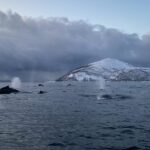
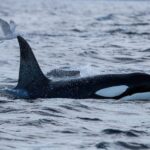

Senja Beneath the Lyngen Wall
Inflatables Leaving Skjervoy
Newest Skjervoy write-ups off our Norway desk
- Skjervøy: Orca and Whale-Watching comfort heated Boat Trip
★ 4.9 · 27 reviews - Skjervøy: Whale and Orca Watching Tour by RIB Boat
★ 4.1 · 87 reviews - Skjervøy: Whale Watching with RIB Boat and Local Guide
★ 4.9 · 109 reviews
More in RIB and Speedboat Safaris.
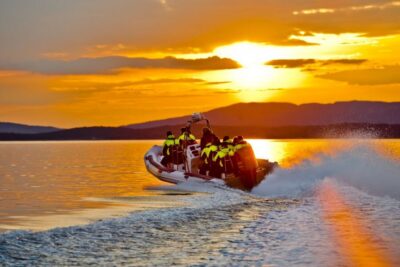 ★ 4.9From Stavanger: RIB Tour to LysefjordFrom $1311,288 reviews
 ★ 4.9From Stavanger: Lysefjord Sightseeing RIB Boat TourFrom $136821 reviews
 ★ 4.8RIB Geiranger – FjordsafariFrom $94807 reviews
 ★ 5.0Lysefjord RIB Safari from StavangerFrom $134665 reviews
 ★ 4.5Geiranger: RIB Fjordsafari GeirangefjordFrom $96651 reviews
 ★ 4.9From Svolvær: Lofoten RIB Sea Eagle Safari Trollfjord CruiseFrom $107591 reviews
 ★ 5.0Lysefjorden & Pulpit Rock RIB-Safari from StavangerFrom $149374 reviews
 ★ 4.8From Svolvaer: Trollfjorden Wildlife RIB CruiseFrom $125355 reviews