
REVIEW · OSLO TOURS
Oslo City Walks – The City of Contrasts
Oslo tells two stories at once. This Oslo City Walks route connects modern Bjørvika change with older streets around Kvadraturen, with a guided focus on how they fit together in real life. Starting at 5:00 pm, it is a practical evening plan for seeing the city without burning a whole day.
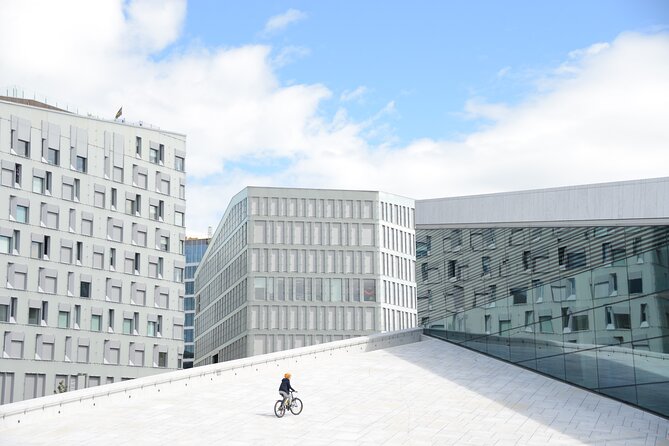
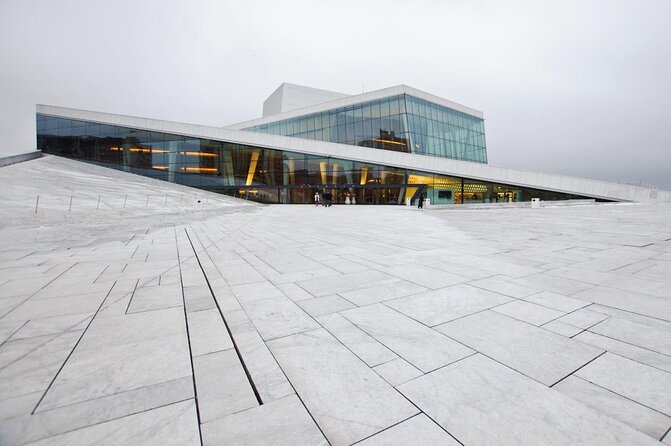
I love the way the walk builds in time at the Norwegian National Opera and Ballet, including a roof stroll if timing allows. I also like that it brings you to the newest Bjørvika draw, Munch, with a dedicated museum slot planned into the route.
One thing to consider: it is a walking tour with moderate physical fitness needed, and it runs in all weather. If rain or wind shows up, you will want real layers, not just a light jacket.
In This Review
- Key points at a glance
- A 2-hour Oslo loop that explains modern vs old
- Price and what the guide adds
- Stop 1, The Norwegian National Opera and Ballet (plus roof time if it fits)
- Stop 2, Munch in the newest Bjørvika pull
- Stop 3, Akrobaten pedestrian bridge and the Grønland link
- Kvadraturen walk: oldest restaurant and the original town hall area
- What the 5:00 pm start means for your timing
- Who should book this city of contrasts walk
- Practical logistics that matter on the day
- Should you book Oslo City Walks, The City of Contrasts?
- FAQ
- How long is the Oslo City Walks tour?
- What is the tour price?
- What time does the tour start?
- Where do I meet the tour?
- Where does the tour end?
- Is the tour in English?
- Is admission included for Munch?
- Is the Opera House roof part of the tour?
- Does the tour run in bad weather?
- What is the cancellation policy?
Key points at a glance
- Opera House focus, including roof time if possible: You get a short, meaningful stop at a standout modern landmark
- Bjørvika transformation explained as you walk: Container port history meets today’s cultural hub
- Munch museum slot built into the schedule: You get set time at the newest Bjørvika attraction opened in October 2021
- Akrobaten bridge connects neighborhoods: A quick stop that links Grønland and Bjørvika
- Kvadraturen detour for old Oslo landmarks: Oslo’s oldest restaurant area plus what was the original town hall
- Small group size: Maximum of 20 travelers helps you stay oriented and ask questions
Capital bookings past this listing, Oslo graded again
- Oslo: Scenic Fjord Cruise with Audio Guide Commentary★ 4.5 · 5,375 reviews
- Oslo Nature Walks: Island Hopping Tour★ 4.8 · 2,713 reviews
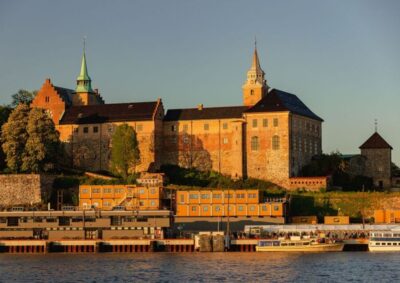
- Oslo: 100% Electric Oslofjord Sightseeing Cruise★ 4.4 · 2,041 reviews
- Oslo: Fjord Evening Cruise with Shrimp Buffet★ 4.5 · 1,956 reviews
A 2-hour Oslo loop that explains modern vs old
This is the kind of tour that helps Oslo click in your head. Instead of treating the city like a list of sights, you get a guided thread: how neighborhoods change, how new buildings get woven into daily life, and how older areas still matter.
The route is built around three ideas. Modern design and public space show up first at the Opera House. Then you move into Bjørvika, where the city’s growth story is visible in real time. Finally, you pivot toward older Oslo character in Kvadraturen, including the area tied to the original town hall and an old-school restaurant tradition.
At about two hours, you can fit this even on a busy day. And because it is an afternoon into early evening start, you are set up to continue exploring after the walk without losing the rest of your day.
Price and what the guide adds
The price is $53.31 per person for a guided walk that lasts about 2 hours. That includes the local guide and the core walking experience. A big part of the value here is how the guide connects the dots between neighborhoods, so you are not just taking pictures and moving on.
Here is the main cost watch-out: Munch admission is not included. The museum stop is part of the plan, but you will pay entry separately. If you care a lot about Munch, this is still a good structure because you get a scheduled slot instead of hunting around on your own. If you are not sure you want the museum ticket, mentally budget for that decision.
Also note what is not included. There is no hotel pickup or drop-off, so you will start and finish at set locations. If you like tours that respect your time and use public transit, that is a plus.
This tour usually gets booked ahead, with an average booking time of about 13 days in advance. If your dates are firm, reserve earlier rather than later.
Stop 1, The Norwegian National Opera and Ballet (plus roof time if it fits)
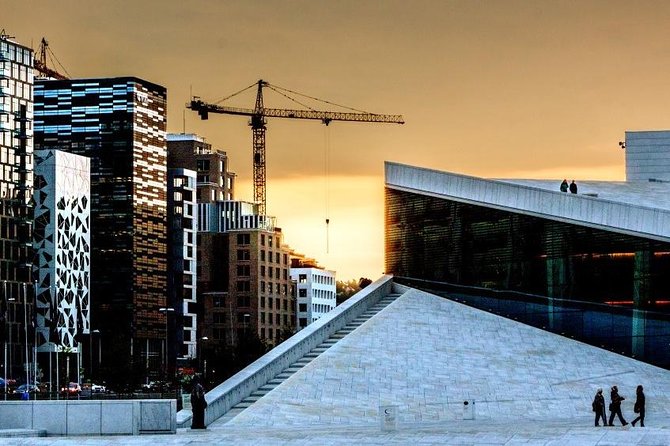
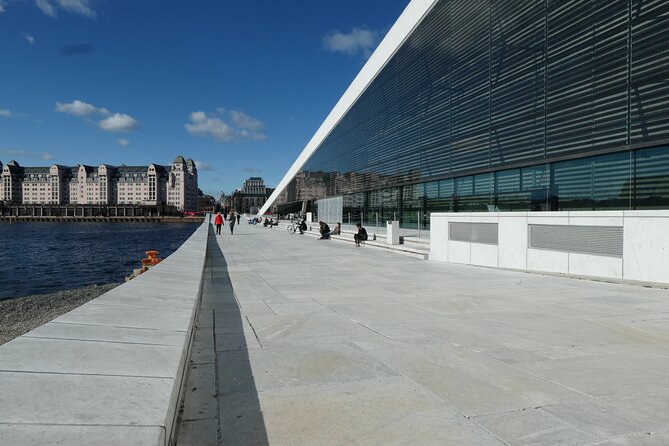
You begin at Oslo Visitor Center on Jernbanetorget 1, near public transportation. Then you head straight for one of the city’s best-known modern anchors, the Norwegian National Opera and Ballet.
The plan here is tight and focused, around 15 minutes. If time allows, you also take a stroll on the roof area. Admission for this portion is listed as free, which matters because it keeps your costs predictable before the museum stop later.
Why this stop is worth it even if you are not a serious architecture person: it sets the tone for the rest of the walk. You see how Oslo is comfortable with bold, modern design in a very public way. And when the guide links this landmark to what comes next in Bjørvika, it stops feeling like random sightseeing.
Practical tip: since the roof stroll depends on timing, treat it as a bonus, not a guarantee. If you are wearing slippery shoes, switch to something with good grip before you start. Oslo in evening weather can be changeable.
Whole-town sweeps rivalling this Oslo booking
Stop 2, Munch in the newest Bjørvika pull
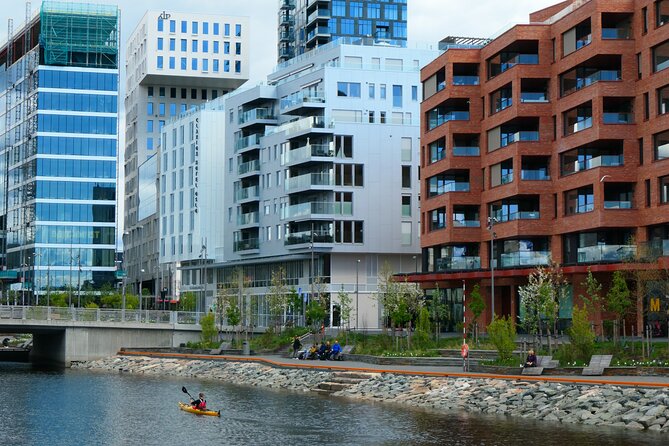
Next you move into Bjørvika, where the story is not just what exists, it is what is being built and reimagined. The tour highlights Bjørvika’s shift from a container port into a cultural hub, and Munch is the centerpiece for that modern chapter.
You get about 20 minutes for the Munch stop, and the museum opening date is important context: it opened in October 2021. That is why this area can feel like a different part of Oslo than the older districts. The museum adds a clear reason to be there now, not just someday.
Admission here is not included, so plan for the extra ticket. Since you have limited time, go in with a simple goal. Pick what you want to focus on rather than trying to see everything. The guided context helps, but your time is still limited.
One more practical consideration: because the museum is indoors, your comfort depends on your layers outside. Bring something you can handle outdoors, then you can adjust once you are inside.
Stop 3, Akrobaten pedestrian bridge and the Grønland link
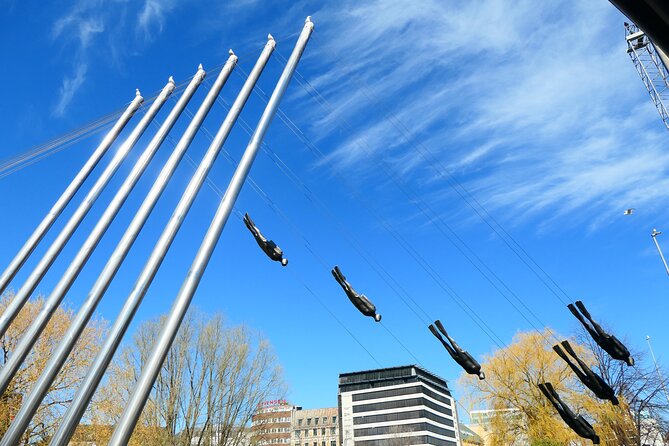
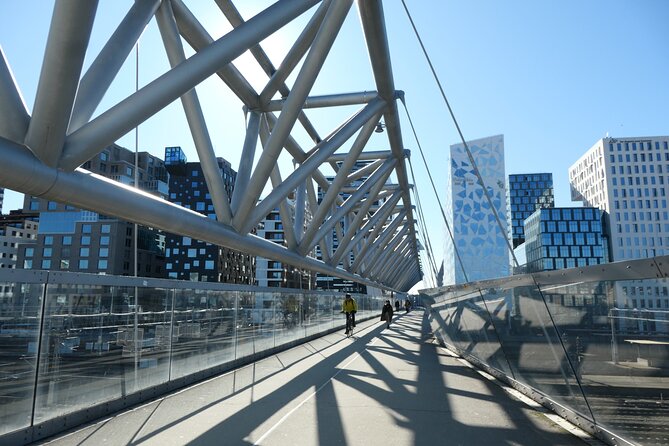
After Munch, you get one of those short stops that feels like a breather, but still matters. The Akrobaten Pedestrian Bridge is listed as a binding point between Grønland and Bjørvika.
You spend about 10 minutes, and admission is free. This is the kind of place where the guide’s explanation can change what you see. Instead of treating it as a photo spot, you start noticing the city design idea behind it: how pedestrians are guided between districts, and how new and old parts of town stay connected.
If you like walking tours because they help you understand the city’s shape, this bridge stop is a good reminder that infrastructure can be part of the experience, not just a tool for getting from A to B.
Quick practical tip: wear shoes that handle wet pavement if weather turns. Bridges can be windy, and you will want stable footing for a relaxed look.
Kvadraturen walk: oldest restaurant and the original town hall area
The tour’s highlight list also promises Kvadraturen, and this is where the contrast becomes real. Kvadraturen is tied to older Oslo landmarks, including what the area was originally connected to as a town hall, plus the neighborhood’s oldest restaurant.
Even without a long stop, this segment does something valuable: it pulls you out of the Bjørvika modern storyline and reminds you that Oslo’s identity did not start with recent redevelopment. You are walking through older patterns and places where daily life has a longer timeline.
For your planning, think of this as the tour’s “slow down” moment. By now you have seen major modern landmarks and a newer cultural district. Kvadraturen helps you balance that with older urban character, which makes the whole tour feel less like a two-part comparison and more like one continuous city.
If you enjoy local food history, the mention of the oldest restaurant gives you a strong thread to follow after the walk. You might want to return later for a meal in that area, because the tour gives you a reason that goes beyond convenience.
What the 5:00 pm start means for your timing
This is scheduled to start at 5:00 pm, and the tour runs for about 2 hours. That timing is useful because it often lines up with the time when you can still move around comfortably before the evening plans take over.
It also affects what you can expect from the Opera House roof stroll. Because the roof time is conditional on timing, the early evening start can help it work. Still, treat the roof as a bonus.
The tour operates in all weather conditions, so your comfort level will depend on how prepared you are. Oslo can be cool, and rain can change the feel of stone and walkways fast. Dress like you expect weather, not like you hope it will be nice.
Who should book this city of contrasts walk
This walk is best for you if you want a guided, time-efficient way to understand Oslo’s change story. It suits travelers who like both modern landmarks and older neighborhood texture, and who prefer a structured route over random wandering.
You will probably enjoy it most if:
- You want context, not just a list of photos
- You are curious about Bjørvika and why it feels like a new cultural center
- You like learning how a city links past and present in real places, like bridges and district streets
- You appreciate small groups, since it caps at 20 travelers
It may be less ideal if you have very limited walking ability. Even though this is not an all-day hike, it does require moderate physical fitness, and the tour is outdoors in all weather.
English is the offered language, so if you want a guide-led explanation in plain English, you are set.
Practical logistics that matter on the day
You meet at Oslo Visitor Center, Jernbanetorget 1, 0154 Oslo, and the walk ends at Deichman Bjørvika, Anne-Cath, Vestlys plass 1, 0150 Oslo.
You get a mobile ticket, and the tour is near public transportation, so it should be easy to plug into your other plans. Hotel pickup and drop-off are not included, so you will arrive on your own and start on time.
There is also a helpful group-size limit of 20, which usually makes it easier to keep up and hear the guide when you stop for photos or explanations.
And yes, the tour allows service animals.
Should you book Oslo City Walks, The City of Contrasts?
Book it if you want a compact overview that actually explains what you are seeing. The combination of the Opera House spotlight, the Bjørvika transformation story, and the older Oslo feel of Kvadraturen gives the tour a clear theme. It is not just moving you around the map.
It is especially worth it if you plan to go to Munch anyway. The schedule gives you set time for the museum, rather than leaving you to plan it from scratch. And since the guide is described as enthusiastic and strong at sharing context, you are buying more than a walking route.
Skip or rethink it if you are not interested in Munch and you do not want to pay extra museum admission. Since Munch ticket cost is not included, your final out-of-pocket total will depend on your choice there.
My bottom line: this is a smart, evening-friendly way to see Oslo’s present and past in one connected walk. If you like contrasts and you are ready for outdoor weather, it is a very good value for your limited time.
FAQ
How long is the Oslo City Walks tour?
The tour runs for about 2 hours.
What is the tour price?
The price is $53.31 per person.
What time does the tour start?
The start time is 5:00 pm.
Where do I meet the tour?
You start at Oslo Visitor Center, Jernbanetorget 1, 0154 Oslo, Norway.
Where does the tour end?
The tour ends at Deichman Bjørvika, Anne-Cath, Vestlys plass 1, 0150 Oslo, Norway.
Is the tour in English?
Yes, the tour is offered in English.
Is admission included for Munch?
No, Munch museum admission is not included.
Is the Opera House roof part of the tour?
If time allows, you will take a stroll on the roof of the Opera House. Admission for this part is listed as free.
Does the tour run in bad weather?
Yes, it operates in all weather conditions, so dress appropriately.
What is the cancellation policy?
Free cancellation is available. You can cancel up to 24 hours in advance for a full refund.
Whole-Town Sweeps of Oslo



More Tour Reviews in Oslo

The Capital, Kept Going
Newest Oslo write-ups off our Norway desk
- Fjord Houseboat Cruise in Oslo. 100 % electric. BYO
★ 5.0 · 3 reviews - Oslo Christmas walk
★ 4.0 · 3 reviews - Afternoon Tea and Classic Concert on the Fjord
★ 4.5 · 3 reviews - Lake walk and campfire
★ 4.7 · 3 reviews - Oslo: Yoga & Hiking with a dog
★ 5.0 · 3 reviews - Oslo: Skjennungstoppen Wildlife Forest Hiking Tour
★ 5.0 · 3 reviews
More in Oslo Tours.
 ★ 4.5Oslo: Scenic Fjord Cruise with Audio Guide CommentaryFrom $445,375 reviews
 ★ 4.8Oslo Nature Walks: Island Hopping TourFrom $692,713 reviews
 ★ 4.4Oslo: 100% Electric Oslofjord Sightseeing CruiseFrom $402,041 reviews
 ★ 4.5Oslo: Fjord Evening Cruise with Shrimp BuffetFrom $881,956 reviews
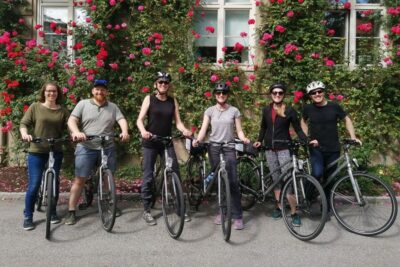 ★ 4.8Oslo: 3-Hour Highlights Bike TourFrom $621,609 reviews
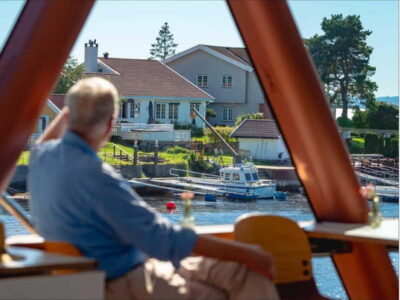 ★ 4.7Oslo: Guided Sightseeing Fjord Cruise on Premium Silent BoatFrom $641,390 reviews
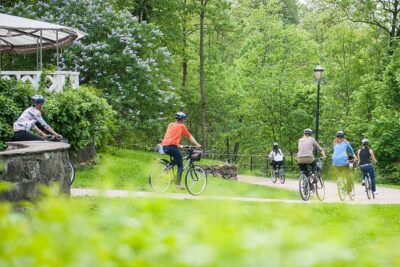 ★ 5.0Oslo Highlights Bike TourFrom $62979 reviews
 ★ 4.3Oslo: Paradox Museum Entry TicketFrom $29799 reviews
Lists this one sits in