
REVIEW · OSLO TOURS
Oslo City Walks: The City of Contrasts
Modern Oslo changes fast, and you can see it on foot.
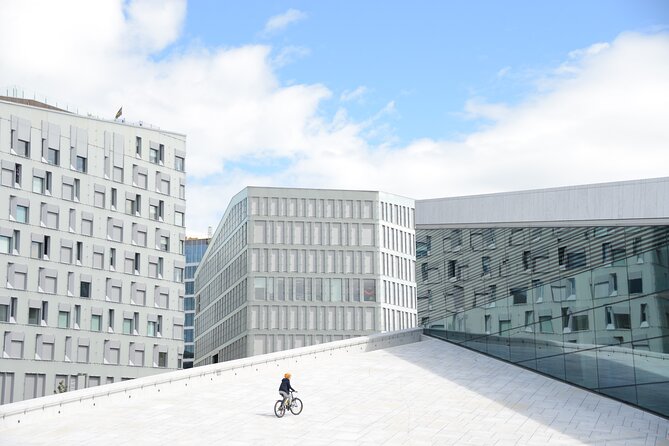
This City of Contrasts walk is a smart way to understand why Oslo feels both familiar and brand-new. You start in central transport country at the Oslo Visitor Centre in Østbanehallen, then move through the city’s modernization story, where new construction sits right beside older urban textures. It is less about ticking off postcards and more about learning how the city grew, physically and economically, into one of Europe’s fastest-growing capitals.
I like that you get an authorized guide and real context, not just a route. I also like the modern architecture moments along the waterfront side, with plenty of chances to stop, look up, and take photos as you hear what you are seeing.
One possible drawback is that it is not a long sightseeing sampler. If you expect nonstop big-name highlights, you may find it more educational than site-heavy, and group dynamics can matter on a walk like this.
In This Review
- Key things I’d focus on
- Why Oslo feels like old meets new, in real space
- Getting started: Østbanehallen and the Oslo Visitor Centre meetup
- The route mindset: a modernization story you can actually walk
- From Oslo Central Station to Bjørvika via the “Acrobat” bridge
- Bispevika, the waterfront corridor, and the Munch Museum area
- Opera House neighborhood energy, and why Deichman Library is a smart finish
- What the guided commentary adds (and what you might not get)
- How the price makes sense for a focused 2-hour walk
- Pace and comfort: what to wear, and how the level walk helps
- Who this Oslo city walk is for
- Should you book Oslo City Walks: The City of Contrasts?
Key things I’d focus on
- Meeting at Østbanehallen makes the walk feel easy to plug into a typical Oslo day
- “Acrobat” pedestrian bridge gives you a clean, scenic crossing right into the waterfront zone
- Bjørvika and Bispevika help you understand why Oslo’s modern expansion is concentrated where you can actually reach it
- Munch Museum area is a strong visual anchor for learning how new cultural landmarks reshape neighborhoods
- Deichman Library near the Opera House is a practical finish point with lots around it to extend your evening
Capital bookings past this listing, Oslo graded again
- Oslo: Scenic Fjord Cruise with Audio Guide Commentary★ 4.5 · 5,375 reviews
- Oslo Nature Walks: Island Hopping Tour★ 4.8 · 2,713 reviews
- Oslo: 100% Electric Oslofjord Sightseeing Cruise★ 4.4 · 2,041 reviews
- Oslo: Fjord Evening Cruise with Shrimp Buffet★ 4.5 · 1,956 reviews
Why Oslo feels like old meets new, in real space
Oslo’s story is not just in museums. It is in the way buildings sit next to each other, in how transport connects districts, and in the fact that industrial expansion never really vanished, it just changed shape. This tour leans hard into that idea.
You are walking in a capital that keeps investing. Modern infrastructure is part of the experience here, not a footnote. And because the route is built around central stations and waterfront redevelopment zones, you do not have to hunt for the best views. You get them as part of the flow.
Even if you are only in town for a short time, this is the kind of walk that helps you read the city. After 2 hours, you should be able to look at new facades and understand the planning logic behind them, and also notice what older districts still offer.
Getting started: Østbanehallen and the Oslo Visitor Centre meetup
The tour begins at the Oslo Visitor Centre inside Østbanehallen, at Jernbanetorget 1 (0154 Oslo). That matters more than it sounds. Oslo’s best sightseeing days often start and end at major transit hubs, and this one is designed for that.
If you want an easy, low-stress start, meet-up location is huge. Østbanehallen is a recognizable landmark, so you can arrive, check your bearings, and start walking without wandering around guessing where the group is.
You also get a practical advantage right away. You are meeting in central Oslo, with simple access to transport. That means you can plan your day around the walk rather than planning your day around getting to the walk.
Plan to arrive about 10 minutes early. The duration is about 2 hours, and you do not want to cut into that time while you are locating the meeting point.
The route mindset: a modernization story you can actually walk
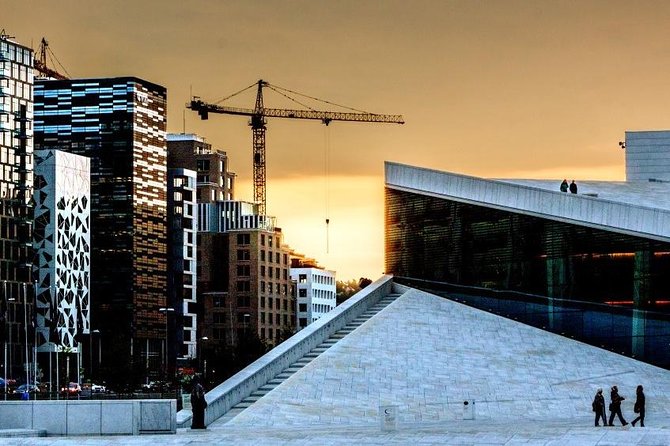
The walk is built around how Oslo expanded and industrialized, and how that transformation is still shaping what you see today. In plain terms: you are not just moving from point A to point B. You are moving through the city’s growth phases.
The experience typically runs on a Monday evening, so you are getting the city in a different tempo than a busy weekday morning. That can be a plus if you like a more relaxed pace and you want to see how districts feel when people are shifting out of work and into evening routines.
The tour includes walking through suburbs and industrial areas, which is a great choice if you want more than the same downtown loop. Industrial districts can feel anonymous if you rush through them, but with a guide, you start seeing why they exist where they do, and how city expansion affects them.
This is also why the walk can feel flatter than you might expect from European walking tours. You are spending time in central, transit-connected zones and waterfront redevelopment areas rather than climbing hills. Even reviewers who love the city’s variety have noted how level it felt compared with other city walks.
Whole-town sweeps rivalling this Oslo booking
From Oslo Central Station to Bjørvika via the “Acrobat” bridge
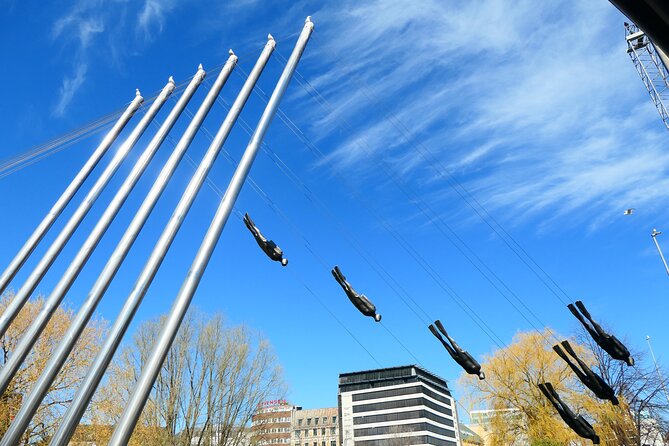
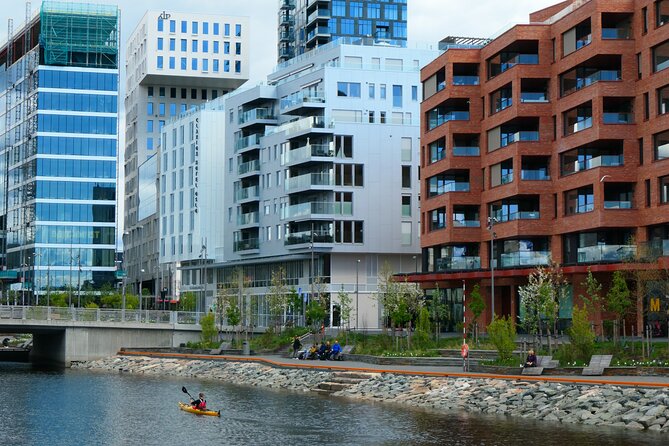
A standout moment is the walk over the “Acrobat” pedestrian bridge at Oslo Central Station into Bjørvika. This is not just a crossing. It is a viewpoint, and the guide uses it as a hinge between the older station area and the waterfront story.
You get a chance to connect two halves of Oslo visually. One side is transport power and city flow. The other side is redevelopment and a modern urban edge. If you like architecture and city planning, this bridge moment is exactly the kind of location that helps things click.
Practically, the bridge also helps keep the tour efficient. You move with purpose and you get an obvious, memorable photo angle without needing to detour. If you are traveling with a camera or just like phone photos, this is one of your best moments to pause and capture the transition.
Bispevika, the waterfront corridor, and the Munch Museum area
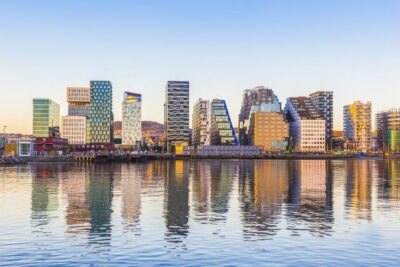
After you enter the Bjørvika side, the walk passes by Bispevika and goes by the new Munch Museum area. Even if you do not plan to go inside a museum, the exterior and surrounding redevelopment context are useful.
New cultural institutions often change a neighborhood’s rhythm. They draw foot traffic, influence nearby development, and can speed up how quickly an area becomes “part of the city” rather than just an empty zone. A guide can point out what those signals look like at street level.
The Munch Museum area is also a strong visual reference point. You can look at the massing and design, then hear how it fits into the bigger Bjørvika plan. That makes the walk feel more purposeful because you are learning to interpret what is in front of you.
One thing to keep in mind: the tour is not positioned as a museum ticketing experience. If your main goal is to go inside major attractions, you will need extra time on your own. Think of this walk as the prequel, a way to understand why the area looks the way it does before you choose whether to add museum time.
Opera House neighborhood energy, and why Deichman Library is a smart finish
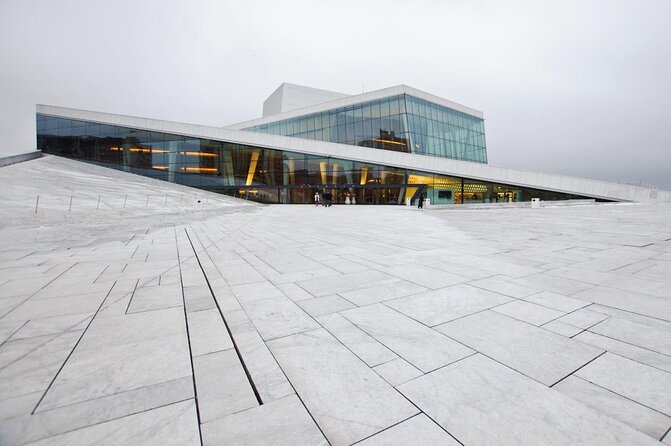
The tour concludes at Deichman Library, next to the Opera House. That is a very practical ending for a couple reasons.
First, it places you in a high-interest area. The Opera House neighborhood is a magnet in Oslo, and you are finishing right where you can naturally keep exploring after the walk ends.
Second, Deichman Library gives you a comfortable, central reference point. When you finish a walk, you want to know where you are. This ending spot is easy to orient around, and it makes it simple to head to dinner, continue sightseeing, or catch transport.
If you like walking tours that end with options, this finish helps. You have the Opera House area nearby, plus the waterfront feel of Bjørvika and connections back toward the center.
What the guided commentary adds (and what you might not get)
The quality of a guided walking tour often comes down to how lively the guide feels and how much time you get for questions. On this specific walk, the guide is authorized, and that helps keep the information grounded and city-relevant.
In the feedback I looked at, guides on this route have been praised for being friendly and responsive, with a pace that feels comfortable. The best moments on a city walk are often the in-between ones, when you ask something and suddenly the building you thought was just a building turns into a clue about city planning and growth.
At the same time, not every experience will hit the same tone. One reviewer pointed out that the tour covered fewer classic sites than some people expect, and that the guide experience felt more straightforward than personality-driven.
So here is my practical takeaway: if you want a lively, story-heavy performance, show up ready to ask questions. If you want an educational walk focused on modernization and architecture context, you are likely to feel more satisfied with what you get.
How the price makes sense for a focused 2-hour walk
At $52 per person for about 2 hours, you are paying for a guided, authorized interpretation of a specific urban story. This is not a budget “wander and hope” walk. It is priced like a structured orientation.
Does that make it worth it? Usually, yes, when you value two things:
- You want someone to point out why new construction and old districts are coexisting the way they are.
- You prefer a route that is efficient, so you spend less time hunting and more time learning.
If you are the type who loves architecture and city planning, a focused guided walk can outperform self-guided wandering in the same time window. You get the connections between places, not just the places.
If you mostly want iconic sights and lots of stops, the price might feel heavy relative to the number of big-name landmarks. The route is designed around neighborhoods and infrastructure, so your value comes from interpretation, not quantity.
Also note the tour rating average is 3.4 out of 5 across 7 reviews. That kind of score is not a deal-breaker, but it does hint at variability in satisfaction, often tied to what you expected and how the group experience felt.
Pace and comfort: what to wear, and how the level walk helps
The tour lasts approximately 2 hours, and good walking shoes are recommended. Dress according to the weather, because you will be outside most of the time.
There are also clear rules that affect comfort. High-heeled shoes are not allowed, and drones are not allowed. If you want photos, bring a phone or camera you can hold comfortably while walking and stopping. If you have a tripod or bulky gear, you might want to reconsider since drones are explicitly banned.
One more comfort note from the experience vibe: the route tends to feel relatively flat compared with some other European city walks. That does not mean it will be effortless, but it helps if you are traveling with limited mobility or you just do not want a heavy leg day.
Who this Oslo city walk is for
This is a great fit if you:
- Love modern architecture and want a framework for reading it
- Prefer learning about urban change, infrastructure, and city growth
- Want a walk that starts in a central transit area and ends near a major landmark
- Enjoy taking photos while you move through redevelopment districts
You might skip it, or at least adjust expectations, if you:
- Want a classic highlight tour with lots of famous stops
- Get impatient with educational emphasis
- Strongly prefer small groups, since group size can affect the feel of any walking tour
Language options are English and Norwegian, so you can choose what works for you. If you want to maximize value, come with a couple of questions about what you see, like how new districts are planned or why waterfront redevelopment matters.
Should you book Oslo City Walks: The City of Contrasts?
Book it if you want a practical way to understand Oslo’s transformation. The route gives you a logical spine through central transport zones, into Bjørvika, and ends at Deichman Library by the Opera House. You will walk away with a clearer sense of how the city blends older spaces with modern infrastructure.
Skip it if your top priority is covering the most famous sights in the shortest time. This walk is not built to be a checklist. It is built to help you interpret the city, especially the modern side.
If you are excited by architecture, waterfront redevelopment, and city planning context, this is one of the better ways to spend 2 hours in Oslo without feeling like you are just walking to look at things.
Whole-Town Sweeps of Oslo




More Tour Reviews in Oslo





The Capital, Kept Going
Newest Oslo write-ups off our Norway desk
- Fjord Houseboat Cruise in Oslo. 100 % electric. BYO
★ 5.0 · 3 reviews - Oslo Christmas walk
★ 4.0 · 3 reviews - Afternoon Tea and Classic Concert on the Fjord
★ 4.5 · 3 reviews - Lake walk and campfire
★ 4.7 · 3 reviews - Oslo: Yoga & Hiking with a dog
★ 5.0 · 3 reviews - Oslo: Skjennungstoppen Wildlife Forest Hiking Tour
★ 5.0 · 3 reviews
More in Oslo Tours.
 ★ 4.5Oslo: Scenic Fjord Cruise with Audio Guide CommentaryFrom $445,375 reviews
 ★ 4.8Oslo Nature Walks: Island Hopping TourFrom $692,713 reviews
 ★ 4.4Oslo: 100% Electric Oslofjord Sightseeing CruiseFrom $402,041 reviews
 ★ 4.5Oslo: Fjord Evening Cruise with Shrimp BuffetFrom $881,956 reviews
 ★ 4.8Oslo: 3-Hour Highlights Bike TourFrom $621,609 reviews
 ★ 4.7Oslo: Guided Sightseeing Fjord Cruise on Premium Silent BoatFrom $641,390 reviews
 ★ 5.0Oslo Highlights Bike TourFrom $62979 reviews
 ★ 4.3Oslo: Paradox Museum Entry TicketFrom $29799 reviews
Lists this one sits in