

REVIEW · OSLO TOURS
Oslo: City Walking Tour
Oslo is best understood on foot. This 3-hour private walk pulls 700 years of city history into one tight route, starting at Akershus Fortress and ending on the Oslo Opera House roof.
Two things I really like: the way the tour connects medieval Oslo to later eras, and the hands-on access you get with entrances at the fortress and City Hall. If you care about how places evolve, you will enjoy this format because it keeps moving, but never feels rushed.
One thing to consider is timing. If a stop is limited that day, the tour schedule is fixed, so you may not get a big detour or a lot of extra time added elsewhere. Keeping expectations flexible makes it smoother.
In This Review
- Key things that make this Oslo tour worth your time
- Starting at Akershus Fortress: where Oslo learned to defend itself
- What to keep in mind here
- Oslo City Hall and the Nobel Peace Prize venue: more than a pretty building
- A possible drawback to factor in
- From founders’ prints to Christiania vibes: walking Oslo’s layered center
- How to get the most out of Sentrum
- Photo stops that teach you architecture, from the National Theatre to the University
- Small advice
- Stortinget and the Parliament area: seeing 18th century Oslo signals
- Walking toward the Opera House: city streets changing into fjord views
- Oslo Opera House roof walk: the view that makes the whole day click
- Timing note
- Price and value: is $503 per group a fair deal?
- Who should book this walking tour
- What to bring for a smooth experience
- Should you book this Oslo walking tour?
- FAQ
- How long is the Oslo City Walking Tour?
- Where does the tour start?
- Where does the tour finish?
- What is included in the price?
- What is not included?
- How many people is the private group limited to?
- What languages are the guides available in?
- Is the tour wheelchair accessible?
- What should I bring?
Key things that make this Oslo tour worth your time
- Akershus Fortress, inside the walls with a guided history walkthrough
- Oslo City Hall access plus the setting for the Nobel Peace Prize ceremony
- Photo stops that actually matter, from the Norwegian National Theatre to the Royal Palace
- A City Center walk through Sentrum where modern Oslo meets historic streets
- The Opera House roof for iconic views over the Oslo fjord
- A private group setup (up to 10), which helps the pace stay comfortable
Starting at Akershus Fortress: where Oslo learned to defend itself
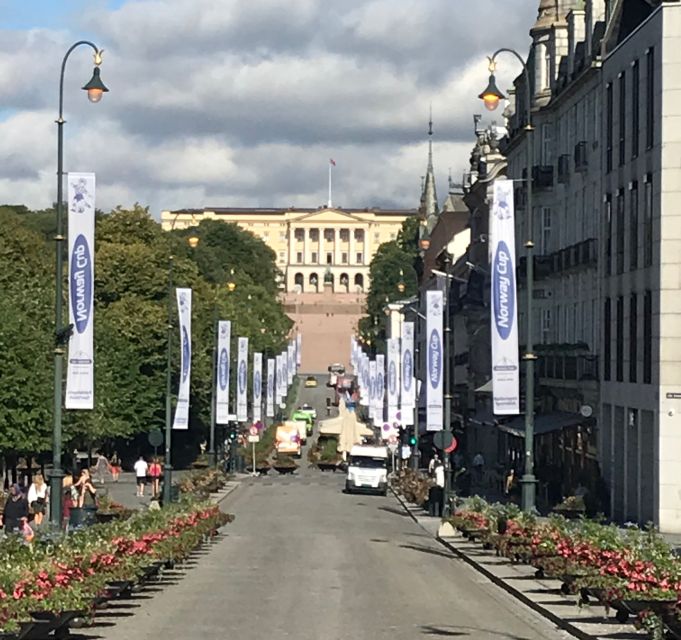
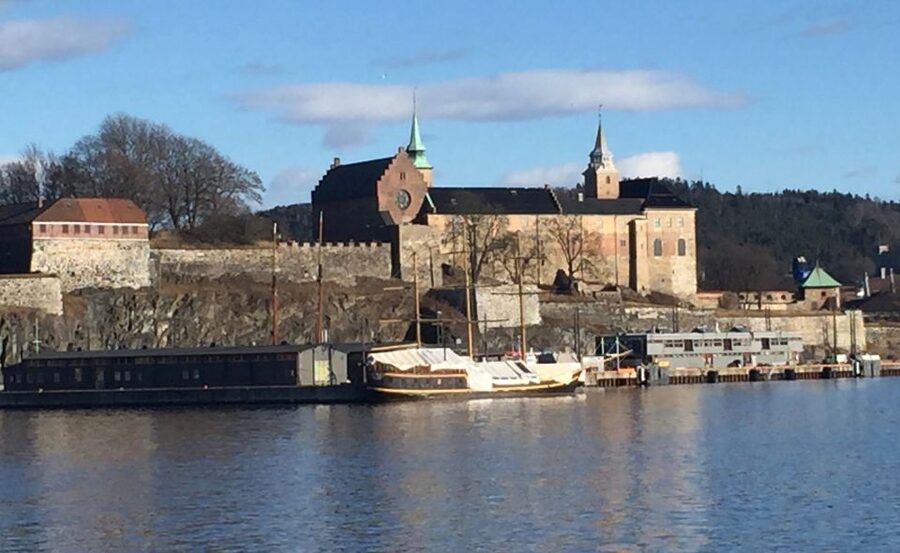
Most Oslo walking tours start with a landmark. This one starts with the landmark that explains the city’s mindset. You meet at Akershus Fortress, a place built for protection, and it still feels like a fortress should feel: sturdy, strategic, and slightly intimidating in a good way.
You’ll get a guided visit inside, with enough time to actually look around instead of just snapping a quick photo and moving on. The fortress story is anchored in the idea that Oslo has been guarded from threats coming by land and by sea. That matters, because it sets the context for everything else you’ll see later.
Akershus is also where the tour’s timeline starts to click. You’ll hear about the medieval footprint of the city’s founders, and you’ll connect that to why Oslo’s early architecture looks the way it does. It’s not just dates on a timeline. It is why the layout and the building style feel the way they do.
If you have ever wondered why Oslo looks orderly and deliberate, this stop gives you the answer, because defenses shape cities. Streets and buildings grow within constraints.
What to keep in mind here
Wear comfortable shoes. Fortress ground can be uneven, and you’ll walk enough that you’ll want support. Also, bring a light layer, because fortress areas can feel cooler than the streets nearby.
Oslo City Hall and the Nobel Peace Prize venue: more than a pretty building
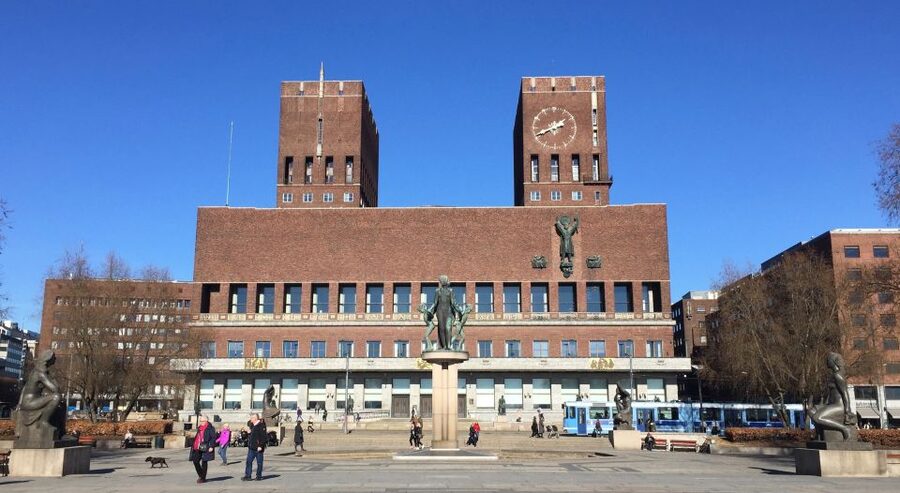
Next up is Oslo City Hall, and this is one of the big reasons to choose this tour instead of doing Oslo’s sights solo. You get entrance here and a guided visit in the main hall area, which is internationally known for hosting the Nobel Peace Prize ceremony each year.
Even if you do not know the Nobel story by heart, the building’s purpose comes through fast. City Hall is not just a municipal office. It is a stage, and it is a symbol of national values presented to the world.
This is also where the tour’s rhythm becomes clear. Akershus gives you the guarded, old-world Oslo. City Hall shifts you into a modern civic identity, where international recognition happens inside Norway’s own formal architecture.
I also like that the tour keeps the explanation grounded. When a guide is strong, you notice the details instead of just standing in awe. Some guides who have led this route, like Anne and Anne Lene, have a way of presenting the story with energy and clarity, so you come away feeling like you learned something you can actually remember.
A possible drawback to factor in
Because the visit is scheduled (and City Hall access can be subject to day-of circumstances), plan for the fact that you may not have long, slow time inside every room. If you want extra museum-style lingering, you might need to add separate time on another day.
From founders’ prints to Christiania vibes: walking Oslo’s layered center
After the fortress and City Hall, you start stepping through the city’s layers. The tour frames it as a shift from medieval Oslo into the town of Christiania, and that jump is one of the more interesting ideas on the route. It helps you see Oslo not as one uniform city, but as sections that developed at different times.
You’ll also spend time around Sentrum, with walking time that lets the city feel real. This is where cafés, terraces, and restaurants take over the vibe, and you get a feel for what today’s Oslo actually smells and sounds like. Shops and pedestrian energy show up here, and it gives you a contrast to the heavy stone setting of the fortress.
I like this “between big landmarks” portion because it keeps you from feeling like you are just checking boxes. A good walking guide helps you connect the urban layout to what you already saw. You start noticing where views open, where streets funnel, and why some areas feel more social.
How to get the most out of Sentrum
If the weather cooperates, take a moment during this part to just stand still for 30 seconds. You’ll get a better sense of the city’s pace, and it makes the later Opera House view feel even more dramatic when you reach it.
Photo stops that teach you architecture, from the National Theatre to the University
The tour includes a set of short, purposeful stops that are mostly for photos and quick context. These are ideal when you want the highlights without turning your day into a long list of museum visits.
You’ll pause at the Norwegian National Theatre for a photo stop, and then pass by the Royal Palace and its gardens. Even when you are not entering buildings, the exterior view is useful because it shows how formal power and cultural identity appear in the streetscape.
Then comes the University of Oslo, noted in the tour as a neo-classical building. This is the kind of detail that changes your understanding of Oslo’s architecture. Instead of seeing everything as simply modern or simply Nordic, you start recognizing styles and how they signal eras.
These stops are quick, so they work best if you listen closely while you are moving. If you are the type who loves stopping every five minutes, you might feel slightly impatient here. But if you like an efficient route, this section is exactly the right pace.
Small advice
Bring your phone, but also keep your eyes up. The best architectural clues often sit above street level, where you would not notice if you were only photographing from your feet.
Stortinget and the Parliament area: seeing 18th century Oslo signals

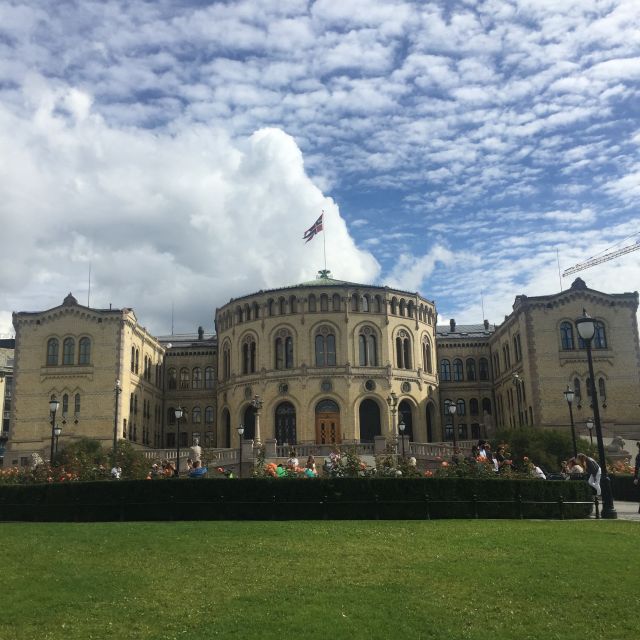
The tour includes a photo stop at the Norwegian Parliament. You’ll learn about it in the context of 18th century architecture, and that framing matters. It helps you connect why the building looks the way it does to the politics and ambitions of its era.
This is not a stop designed for long explanations. It is designed to give you a solid mental picture and a few anchor facts you can carry with you later. When you understand that a building’s style is part of its messaging, even a quick pause turns into something more memorable.
I also like that the tour keeps you moving toward the center again. This helps the route feel like a walk through Oslo’s “story zones,” not a series of disconnected sightseeing points.
Walking toward the Opera House: city streets changing into fjord views
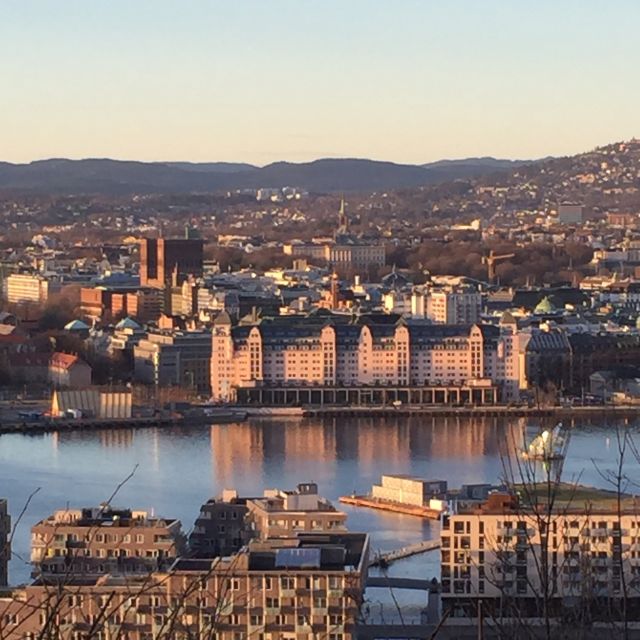
As you move through the center, you get a sense of Oslo’s scale. There’s walking time in Sentrum, and you also get chances to appreciate major transport and central architecture, including the central train station area as part of the route’s early 19th century feel.
This isn’t a station tour. But when the guide points out what to look for, it helps you understand why train stations matter. They are gateways, and they often shape the growth around them. In Oslo, that also means you start getting closer to the waterfront and the shift into open views.
If you enjoy cities that have both heritage and function, you will like the way this tour threads between monumental buildings and everyday movement. It feels like you are walking where people live, not only where tourists photograph.
Oslo Opera House roof walk: the view that makes the whole day click
The finish is at the Oslo Opera House, and the final segment is the most visually rewarding part of the walk.
You’ll get time for photos outside, then a guided visit and sightseeing, with a big highlight: stepping onto the roof of this award-winning building. The payoff is the view of the Oslo fjord.
I love this stop because it turns history and architecture into a single experience. You start with fortress defense and civic ceremony, you pass palaces and academic buildings, and then you end with a modern structure designed for people to move through it and see the water.
The opera house roof is especially good for photos, but do not rush it. Take a slow walk and look around, because your angle changes the entire feel of the fjord and the city coastline.
Timing note
Since this is the final stop, it also works as a nice way to end on your own terms. If you want one last photo, you can usually handle it without derailing the rest of the day.
Price and value: is $503 per group a fair deal?
This tour is $503 per group, up to 10 people, for about 3 hours. That means your cost per person depends entirely on how many people are in your group.
Here is the value equation I use:
- You get a private group setup, not a large shared crowd.
- It includes entrance to Akershus Fortress and entrance to Oslo City Hall.
- You also get an authorized guide, so you are not just reading signage while you walk.
If you are traveling with a small group, it may feel pricey compared to bigger group tours. But if you can fill the private group or you care about having your questions answered in real time, the cost starts to look more reasonable.
This is also the kind of tour where a great guide matters. People have specifically praised guides like Anne and Anne Lene for being engaging and making the information easy to follow. In a route like this, that can be the difference between a nice walk and a walk that actually teaches you Oslo.
Who should book this walking tour
This tour is a strong match if you:
- want a 3-hour hit of Oslo’s main landmarks without committing to a full day
- enjoy walking and want context for what you see
- care about the Nobel Peace Prize connection, not just architecture photos
- prefer a private group pace
It may not be ideal if you:
- need very long, slow time inside buildings
- dislike scheduled photo stops and prefer fewer stops with deeper museum time
- expect the tour to replace a site visit if access becomes limited that day
What to bring for a smooth experience
This is a practical walking route, so your basics matter.
- Comfortable shoes
- Weather-appropriate clothing (Oslo can change moods fast)
If you plan to be on the Opera House roof, dress for the wind as well as the temperature.
Should you book this Oslo walking tour?
I think this is worth booking if you want an efficient, story-driven walk through Oslo’s key civic and architectural spots, with the best view in the city saved for the end. The fortress and City Hall entrances make it more than a “look and point” tour, and the Opera House roof gives you that satisfying final visual payoff.
I would pass or at least consider a backup plan if you are the type who needs extended indoor time, because the visits are timed. But if you like getting oriented fast and leaving with a clear sense of Oslo’s timeline, this one delivers.
FAQ
How long is the Oslo City Walking Tour?
It lasts 3 hours.
Where does the tour start?
The meeting point is Akershus Fortress.
Where does the tour finish?
The tour finishes at the Oslo Opera House.
What is included in the price?
The tour includes a walking tour with an authorised Oslo guide, entrance to Akershus Fortress, and entrance to Oslo City Hall.
What is not included?
Meals and beverages are not included.
How many people is the private group limited to?
The private group is up to 10 people.
What languages are the guides available in?
The live guide speaks English and Norwegian.
Is the tour wheelchair accessible?
Yes, the tour is wheelchair accessible.
What should I bring?
Bring comfortable shoes and weather-appropriate clothing.
More in Oslo Tours.
 ★ 4.5Oslo: Scenic Fjord Cruise with Audio Guide CommentaryFrom $445,375 reviews
 ★ 4.8Oslo Nature Walks: Island Hopping TourFrom $692,713 reviews
 ★ 4.4Oslo: 100% Electric Oslofjord Sightseeing CruiseFrom $402,041 reviews
 ★ 4.5Oslo: Fjord Evening Cruise with Shrimp BuffetFrom $881,956 reviews
 ★ 4.8Oslo: 3-Hour Highlights Bike TourFrom $621,609 reviews
 ★ 4.7Oslo: Guided Sightseeing Fjord Cruise on Premium Silent BoatFrom $641,390 reviews
 ★ 5.0Oslo Highlights Bike TourFrom $62979 reviews
 ★ 4.3Oslo: Paradox Museum Entry TicketFrom $29799 reviews
Lists this one sits in