
REVIEW · BERGEN TOURS
2-Day Round Trip from Bergen: THE GRAND SOGNEFJORD – fjords, waterfalls, glacier
Fjords, waterfalls, and glacier ice in two days. This private, English-guided route links Bergen with UNESCO fjord scenery and ends with real glacier time at Nigardsbreen, plus lots of short photo stops along the way.
I like the pace because you get live guide commentary during driving, ferry crossings, and transfers. I also like the built-in choice of add-ons, like arranging the Nærøyfjord cruise from Gudvangen and the Flåmsbana train up to Myrdal.
One drawback to plan around: several of the big experiences use tickets not included, so you should expect to book things like fjord cruises and the train in advance.
In This Review
- Key highlights to expect
- A private 2-day sweep from Bergen into Grand Sognefjord territory
- Bergen start: the fjords begin at the edge of history
- Dale of Norway and the Voss corridor: waterfalls and sweater-stop energy
- Stalheimskleiva hairpins: the road is the attraction
- Gudvangen: Vikings, lunches, and the start of fjord drama
- Flåm and Flåmsbana: rail tickets that turn scenery into a show
- Stegastein and the Old Aurland Road: viewpoints that reward patience
- Borgund Stave Church and Lærdal: medieval wood and 1700s village charm
- Crossing the Sognefjord to sleep near Sogndal
- Day two: Urnes stave church, then Nigardsbreen glacier blue ice
- Optional glacier museum and Fjærland fjord time
- Vangsnes, Vik, waterfalls, and ending back in Bergen
- Price and value: what you pay for, what you book, what you get
- Should you book this Grand Sognefjord and glacier trip?
- FAQ
- Is this tour private, and is it offered in English?
- Where does pickup happen for this tour from Bergen?
- What’s included in the price besides transportation?
- Are entrance fees, train tickets, and fjord cruise tickets included?
- Is overnight accommodation included?
- What should I know about the Nigardsbreen glacier walk?
Key highlights to expect
- Door-to-door pickup in Bergen, cruise terminals, or the airport, plus an air-conditioned vehicle
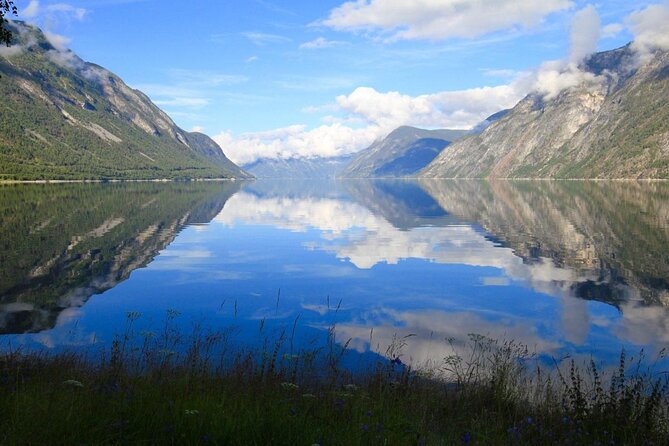
- UNESCO fjord stops with viewpoint time, and options to ride ferries and cruises on your schedule
- Nigardsbreen glacier walking from Nigardsbrevatnet, with a choice to walk or boat near the glacier lake
- Iconic waterfalls in short bursts including Tvindefossen, Sivlefossen, Stalheimsfossen, and Sendefossen
- Stave church history with Urnes and Hopperstad, plus optional Borgund Stave Church detour
- Viking culture time at Njardarheimr in Gudvangen, or just more fjord time if you prefer to slow down
Bergen leftovers, wharf and mountain both
- From Bergen: The Original Fjord Cruise to Mostraumen★ 4.7 · 8,440 reviews
- Bergen: Mostraumen Fjord & Waterfall Cruise★ 4.6 · 2,990 reviews
- Bergen: Past & Present Small Group Guided Walking Tour★ 4.9 · 1,609 reviews
- Walking Tour in Bergen of the Past and Present★ 5.0 · 1,575 reviews
A private 2-day sweep from Bergen into Grand Sognefjord territory
This is a classic “big Norway” trip, done the smart way. You’re not trying to stitch together buses and timetables across fjords and mountains. Instead, a driver-guide handles the driving and the timing, while you get a local-style running commentary in English and comfortable transfers in an air-conditioned vehicle.
The value is in what you cover in two days. You’ll see Bergen as the launching point, then slide through fjord country with waterfall pull-offs, stave churches, and valley roads. The second day switches gears to cold, blue ice at Nigardsbreen. If you have limited time in western Norway, that switch from fjords to glacier is the payoff.
You should go in with one expectation: it’s a long, active itinerary. Even when stops are short, the scenery keeps coming, and you’ll do some walking, including a moderately steep path at Stalheim and a glacier approach walk on day two.
Bergen start: the fjords begin at the edge of history
Your day kicks off with pickup in central Bergen, at a cruise ship terminal, or from Bergen airport. You’re moving by 8:00 to 11:00 AM within the summer operating period (May 18 through September 30), and the idea is to get you out of the city while the day is still fresh.
Bergen itself matters here. The route starts by passing major sights and then, later, returns you to Bergen for the end of the trip. That makes it easy for you to plan your own flights or cruise schedule without needing extra hotel nights just to handle local transport.
If you want a smooth start, this setup helps a lot. You get bottled water and a guide who can explain what you’re seeing while you’re still warming up for the fjord drive.
Dale of Norway and the Voss corridor: waterfalls and sweater-stop energy
After leaving Bergen, you head to Dale, home of the Dale of Norway Factory Outlet and Museum. This is a quick, low-effort stop where you can browse wool and pick up souvenirs. It’s also a good moment to warm up mentally for what comes next, because the day turns into a string of viewpoints and waterfalls.
Next, you pass through Voss, with optional short stops you can use for photos or quick breaks. Voss also connects you to the waterfall corridor that defines this part of the journey.
Then you hit Tvindefossen, a major waterfall stop near Voss (about 12 km north of town center). It’s especially worth timing for the season: the falls are often fullest in autumn and spring, while in winter they can freeze. Even if you only get a short stop, it’s a dramatic interruption in the drive.
From there, the route heads toward Stalheim, where you combine history and scenery. At Stalheim Folk Museum, you’re dealing with old farm buildings from the 1500s, and you get a lookout view after a short walk up a moderately steep path. The view is tied to the UNESCO World Heritage area around the Nærøyfjord and Aurlandsfjord valleys. In other words, you’re not just looking at something pretty, you’re seeing the kind of terrain UNESCO is protecting.
Sognefjord arms and Flamsbana alternatives scored
Stalheimskleiva hairpins: the road is the attraction
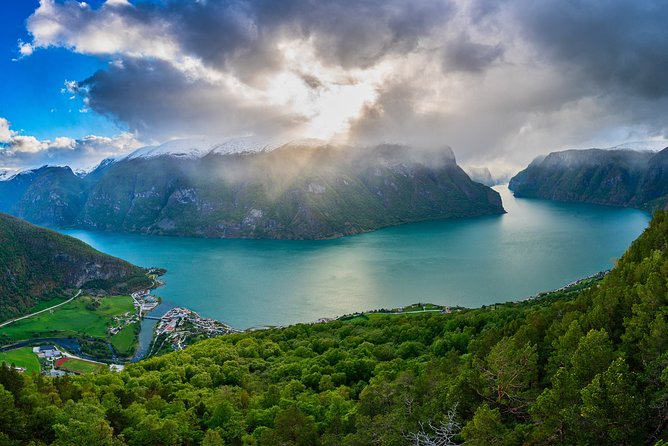
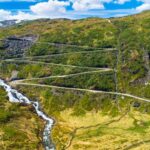
This is where the trip starts to feel like an action movie, in a good way. You continue down Stalheimskleiva, described as one of the steepest roads on the north, with hairpin turns that give thrilling views.
Two waterfalls frame the descent: Sivlefossen (142 m) and Stalheimsfossen (126 m). The idea is you catch them along the road and on short pull-offs rather than planning a long hike. That’s a smart trade on a two-day timeline.
If you’re prone to motion sickness, this part is worth considering. Hairpins plus winding roads can be rough for some people, even if the driving is done professionally. You can make it easier by sitting where the view is forward and keeping your eyes on the horizon.
Gudvangen: Vikings, lunches, and the start of fjord drama
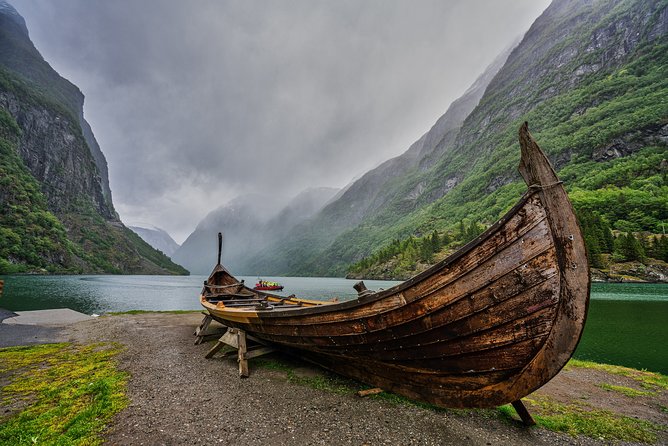
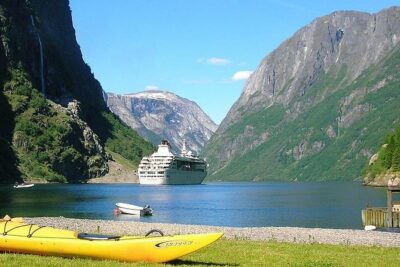
You reach Gudvangen at the end of the Nærøyfjord area, in a small village tucked under the huge Kjelfossen waterfall (840 m). The setting is cozy, but it’s not a quiet stop. It’s a staging point for getting out on the water.
You’re given two main directions:
- Spend time in Gudvangen, including lunch, then visit Viking Village (Njardarheimr), or
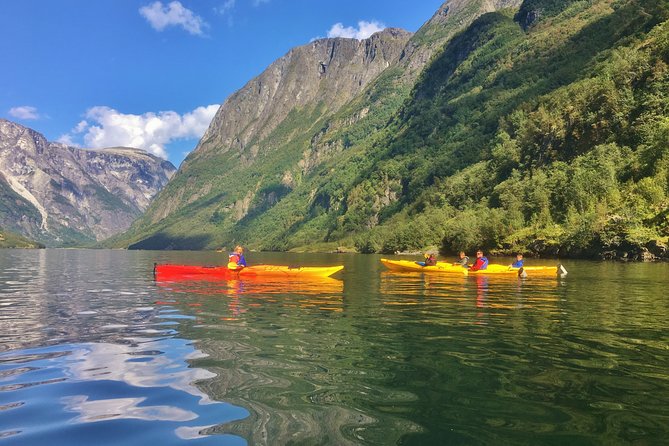
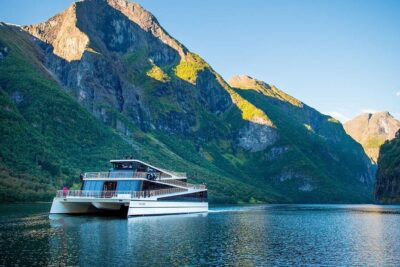
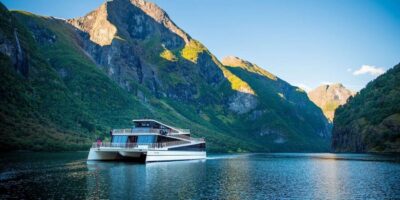
- Take a cruise from Gudvangen to Flåm (2 hours) and roll right into the next day’s fjord rhythm.
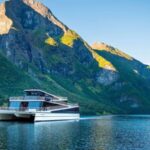
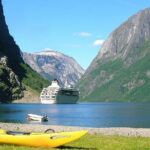
The Nærøyfjord is the real reason this stop works. It’s UNESCO-listed for its pristine, dramatic beauty. The tour notes that the cruise is not included, but you can arrange it on an open schedule. That’s key for value: you can match it to daylight and weather and not feel locked into one sailing time.
Njardarheimr is optional and can be a highlight if you like hands-on storytelling. The Viking Village is where you can learn Viking history, culture, and society, and even take part in activities like archery and axe throwing. The tour also mentions real modern-day Vikings living there and doing crafts, which makes it feel less like a staged museum and more like living culture.
Flåm and Flåmsbana: rail tickets that turn scenery into a show
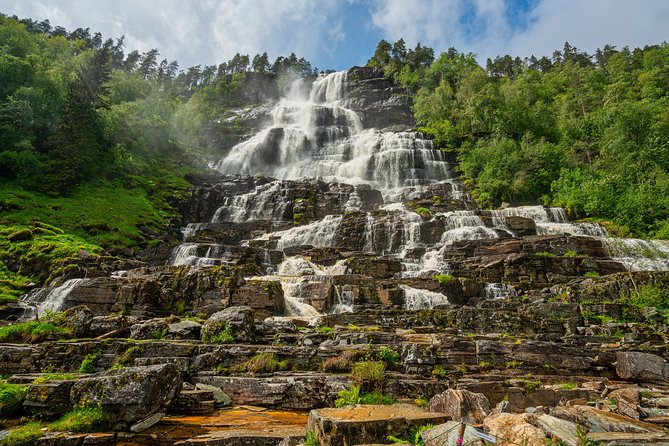
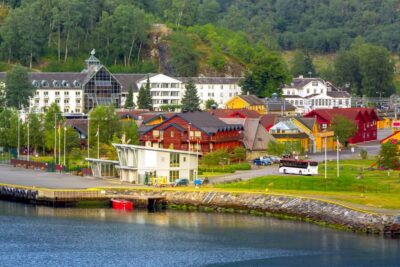
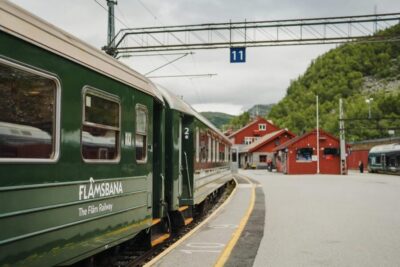
After leaving Gudvangen, you reach Flåm, at the end of the Aurlandsfjord. Flåm is a small base, but it’s a gateway for two big experiences: the Flåmsbana train and the viewpoints like Stegastein.
The Flåmsbana option is about 2 hours. The train climbs from near sea level up to Myrdal at 867 m, moving through valley to canyon to gorge with near-vertical walls. That sounds like a brochure line, but in practice it’s a ride where your brain keeps saying, how is this even built here?
Two important notes for planning:
- Train tickets are not included, so book ahead.
- Your guide does not accompany you on the train ride, but waits for you in Flåm afterward.
If you prefer an active alternative, the tour also mentions you could take the train one way up and bike down with the guide, or choose a zip-line option. Those choices can take longer or shift the vibe, so decide what kind of day you want.
Stegastein and the Old Aurland Road: viewpoints that reward patience
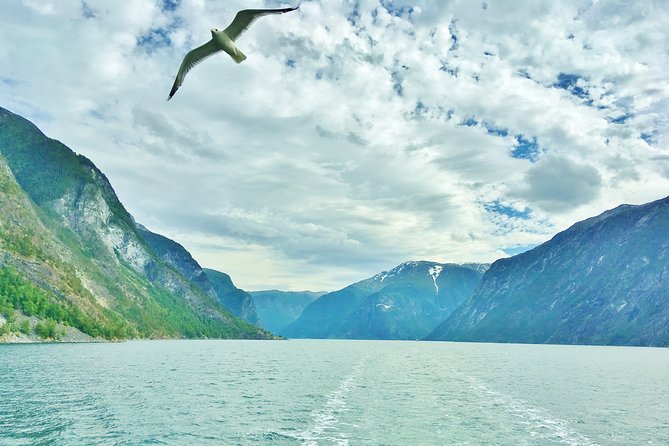
From Flåm, the next stop is Stegastein Viewpoint. You get it at the top of a hairpin road, above the Aurlandsfjord at 640 m. Even with only about 20 minutes, the viewpoint is exactly the sort of place where you stop, breathe, and realize why this region keeps appearing on bucket lists.
After Stegastein, you travel part of Aurlandsvegen, the Old Aurland Road. This road is open only in summer, so if you’re traveling outside that window, you’ll want to trust the timing plan your guide uses. The tour includes a couple of short stops for photos and views.
This section is also a practical reminder: if your camera battery dies, you’re still going to get stunning views, because the timing points are placed at natural “pause moments,” not on endless drive-and-hope stretches.
Borgund Stave Church and Lærdal: medieval wood and 1700s village charm
If you take the optional detour to Borgund Stave Church, it’s around a 20-minute stop. The church is built around the year 1200 and is famous for medieval wooden architecture. It’s the kind of stop that changes how you read the region. Suddenly it’s not only fjords and waterfalls, it’s people shaping life in valleys for centuries.
Next, you pass through Lærdalsøyri and visit Gamle Laerdalsoeyri, an old village center with well-preserved wooden houses from the 1700s to 1800. This stop is free and about 30 minutes. It’s one of those “small and meaningful” breaks where you get to see everyday Norway, not only the postcard moments.
There’s also an optional visit to the Norwegian Wild Salmon Center (Nasjonalt Villakssenter in Lærdal). The tour notes it’s open May through September. If you’re into local food traditions or river life, it’s a good fit. If not, you can skip it and keep your focus on fjord time.
Crossing the Sognefjord to sleep near Sogndal
To move from Lærdal area toward the Sognefjord main part, you cross on a car ferry at Fodnes ferjekai. Car ferry fees are included, which is one of those behind-the-scenes value points people appreciate later. You’re not paying extra just to move across water.
On the north side, you drive to Sogndalsfjora, usually ending the day in or near Sogndal where multiple hotels sit. Accommodation is not included, but the provider says they’ll help book your overnight stay or recommend options. That matters because it’s not only about beds, it’s about choosing one that puts you close to the next morning’s glacier drive.
Day two: Urnes stave church, then Nigardsbreen glacier blue ice
The second day starts with a drive north from Sogndal toward Nigardsbreen. On the way, you can visit Urnes Stavkyrkje, a wooden stave church from around 1140, noted as the oldest stave church in Norway. It’s a powerful pairing with the fjord region, because the heritage looks built for the same terrain and climate that shaped the valleys.
You also take a small car ferry across the Lustrafjord, between Solvorn and Ornes, while keeping the day moving. The road includes Jostedalen, described as fairy-tale-like with vistas, rivers, waterfalls, and small villages.
Then you reach Nigardsbrevatnet lake. This is where you switch from “watching” to “walking.” You can walk all the way or take a boat that takes you close to the end of the lake. The boat saves about 30 minutes walking each way, and tickets are sold on the boat.
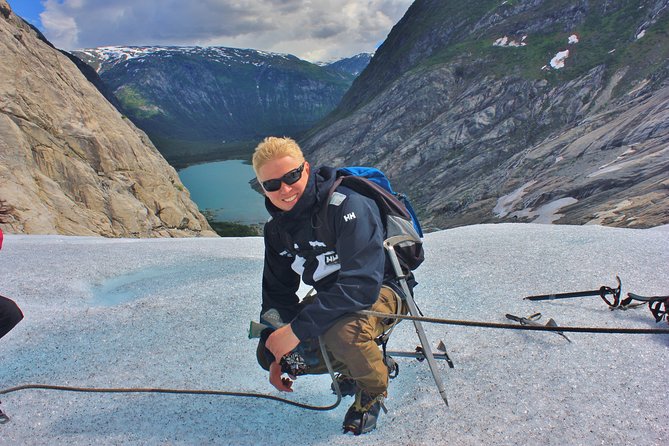
The glacier walk at Nigardsbreen takes about 30 minutes one way. Good hiking shoes are strongly recommended. The tour also gives real safety guidance: the glacier is always in movement like a frozen river, so you should not come too close to huge chunks of ice since parts can detach and fall.
The glacier itself is part of Jostedalsbreen, described as the largest glacier on the European continental land. You’ll spend time at the bottom area for photos. If you want more than a view-walk, the tour mentions a glacier hike option, either scheduled group or private, which would extend your time at the glacier.
Optional glacier museum and Fjærland fjord time
After the glacier, you head back toward the Sognefjord. Depending on time and season, you may continue toward Fjærland.
There are a few optional adds here:
- Breheimsenteret glacier visitor center, with an exhibition and lunch
- Norsk Bremuseum and Ulltveit-moe Senter For Klimaviten in Fjærland, with an exhibition, panoramic movie, and a rooftop viewpoint of Supphellebreen glacier
- Bøyabreen glacier stop, shorter and for a quick viewpoint moment
- Norwegian Book Town in Mundal, which the tour says is open May through mid-September, with outlets in old farmhouses and a book café (Kaffistova)
The Fjærland area also gets you a fjord cruise option: from June until mid-September, there’s a small passenger ferry leaving at 3:30 PM daily for a 1 hour 40 minute cruise through the Fjærlandsfjord. You arrive in Hella on the Sognefjord, and the driver-guide is waiting there for your next transfer. The tour then includes a car ferry connection to the south side, arriving in Vangsnes.
Key practical note: passenger ferry and fjord cruise tickets are listed as not included, even when the stop itself is described as an option. So yes, it’s worth asking your guide to help you time it, but you should still plan for the extra ticket cost.
If the schedule doesn’t allow Fjærland, the backup plan is simpler: drive from Sogndal to Hella along the fjord, then take the car ferry to Vangsnes.
Vangsnes, Vik, waterfalls, and ending back in Bergen
From Vangsnes, you get a short culture-and-view sequence on the return day.
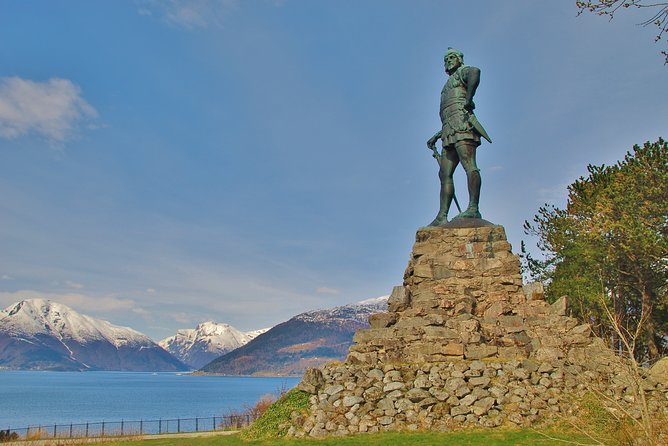
You visit the Statue of Fridtjov the Bold, a 10.5 m statue. Then you pass through Vikøyri for a possible coffee break. After that, the tour offers Hopperstad Stave Church as an optional stop (about 25 minutes). It’s described as around 1130 and, together with Urnes, among the oldest stave churches still in existence.
Next is a very practical stop at Storesvingen Fjellstove, where you can grab coffee to go and enjoy views over the bay of Vik and the Sognefjord.
Then you hit Sendefossen waterfall for about 10 minutes, and you may also pass or briefly stop in Voss again depending on timing. You finish back in Bergen, with about a 15-minute wrap-up stop.
This last stretch is useful if you don’t want your day to end on pure driving. You get one more waterfall hit and a chance to take photos with the Sognefjord in the background before rolling back into the city.
Price and value: what you pay for, what you book, what you get
At $1,524.76 per person, this is not a cheap “bus tour.” The upside is that it’s a private format with hotel or port pickup, private transportation, and driver-guide live commentary, plus bottled water and car ferry fees.
Included basics:
- Private transportation in an air-conditioned vehicle
- Live commentary from an experienced local guide
- Bottled water
- Car ferry fees
- Hotel or port pickup
Not included basics:
- Entrance fees to museums and churches
- Train and passenger ferry or fjord cruise tickets
- Meals and accommodation
- Gratuity
So the real value question is: do you want someone else to handle the driving and sequencing, while you focus on the views and experiences? If yes, the price starts to make sense fast, especially given the number of geographic areas you cover in only two days.
Also, the guide name that pops up in past customer feedback is Vlad. He’s described as easy to communicate with and the kind of guide who can help pre-book excursions and add extra days if you want more time.
Should you book this Grand Sognefjord and glacier trip?
Book it if:
- You want a private, guided route from Bergen that hits both fjords and a real glacier.
- You like mix-and-match travel, with options for cruises, trains, and Viking or book stops.
- You have limited time and want one organized plan rather than juggling bookings across multiple operators.
Consider skipping or adjusting if:
- You hate ticket planning. Several big add-ons like the Flåmsbana train and fjord cruises are not included, so you need to book in advance.
- You want a relaxed pace. This route is scenery-heavy with short stops, and day two involves glacier walking plus a boat or walk on the lake.
If you’re the kind of traveler who likes your time efficient but still wants authentic places like stave churches, old village centers, and glacier ice, this is a strong choice.
FAQ
Is this tour private, and is it offered in English?
Yes. It’s a private tour/activity, meaning only your group participates, and it’s offered in English.
Where does pickup happen for this tour from Bergen?
Your private driver-guide meets you at the lobby of your hotel in Bergen centre, at the gate of your cruise ship terminal, or in the arrival hall of Bergen airport.
What’s included in the price besides transportation?
The price includes private transportation in an air-conditioned vehicle, driver-guide live commentary, bottled water, car ferry fees, and hotel or port pickup.
Are entrance fees, train tickets, and fjord cruise tickets included?
No. Entrance fees to museums and similar sites are not included, and train and passenger ferry or fjord cruise tickets are also not included.
Is overnight accommodation included?
No. Accommodation is not included. You’ll typically stay in the Sogndal area, and the provider says they can help you book or recommend hotels.
What should I know about the Nigardsbreen glacier walk?
You’ll start from Nigardsbrevatnet Lake and either walk or take a boat that saves about 30 minutes. The walk up the glacier usually takes about 30 minutes one way, good hiking shoes are recommended, and you should not come too close to large chunks of ice.
Crampons On Bergen Ice
Sognefjord Arms and Flamsbana
Bergen After Bryggen
Newest Bergen write-ups off our Norway desk
- Three-summit hike in Bergen
★ 5.0 · 3 reviews - PRIVATE GUIDED TOUR: King of the Fjords – round trip to the Sognefjord, 11 hours
★ 5.0 · 3 reviews - PRIVATE GUIDED TOUR: Norway’s Highlights – Viking Special, 11-12 hours – WINTER
★ 5.0 · 3 reviews - PRIVATE GUIDED TOUR: Secrets of the Fjords – the Osterfjord and Mo, 6-7 hours
★ 5.0 · 3 reviews - PRIVATE GUIDED TOUR: Folgefonna Glacier & Bondhus Valley from Bergen, 10 hours
★ 5.0 · 3 reviews - Bergen to Hardangerfjord VIP car + private yacht Fjord cruise
★ 5.0 · 3 reviews
More in Bergen Tours.
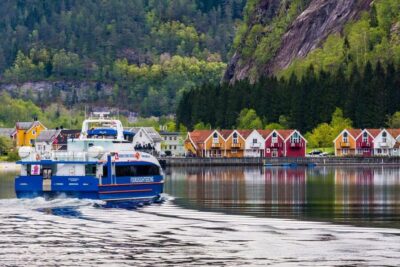 ★ 4.7From Bergen: The Original Fjord Cruise to MostraumenFrom $938,440 reviews
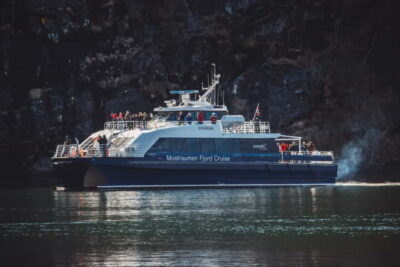 ★ 4.6Bergen: Mostraumen Fjord & Waterfall CruiseFrom $812,990 reviews
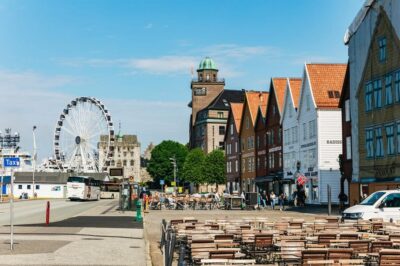 ★ 4.9Bergen: Past & Present Small Group Guided Walking TourFrom $261,609 reviews
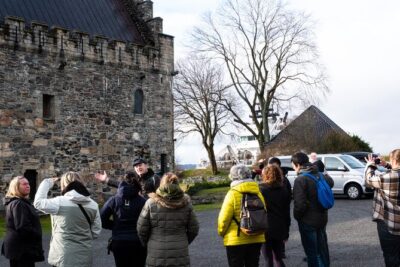 ★ 5.0Walking Tour in Bergen of the Past and PresentFrom $331,575 reviews
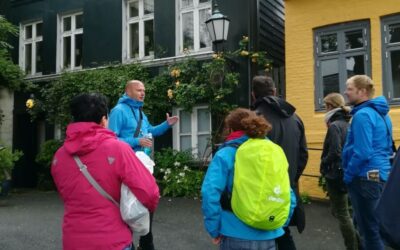 ★ 4.9Bergen: City Tour on FootFrom $301,327 reviews
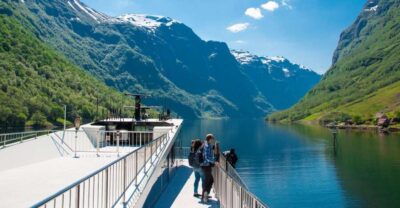 ★ 4.8Bergen: Viking Village, Nærøyfjord Cruise & Flåm RailwayFrom $4181,047 reviews
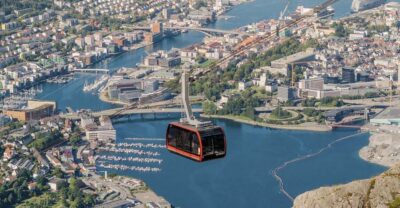 ★ 4.6Bergen: Round-Trip Ulriken Cable Car TicketFrom $51925 reviews
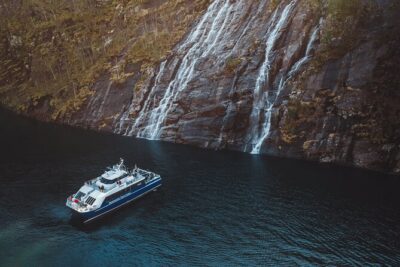 ★ 4.5Mostraumen Fjord Cruise – the local operatorFrom $80742 reviews
Lists this one sits in