
REVIEW · NORWEGIAN SCENIC RAILWAYS
Romsdalen: Rauma Railway Golden Train with Guide
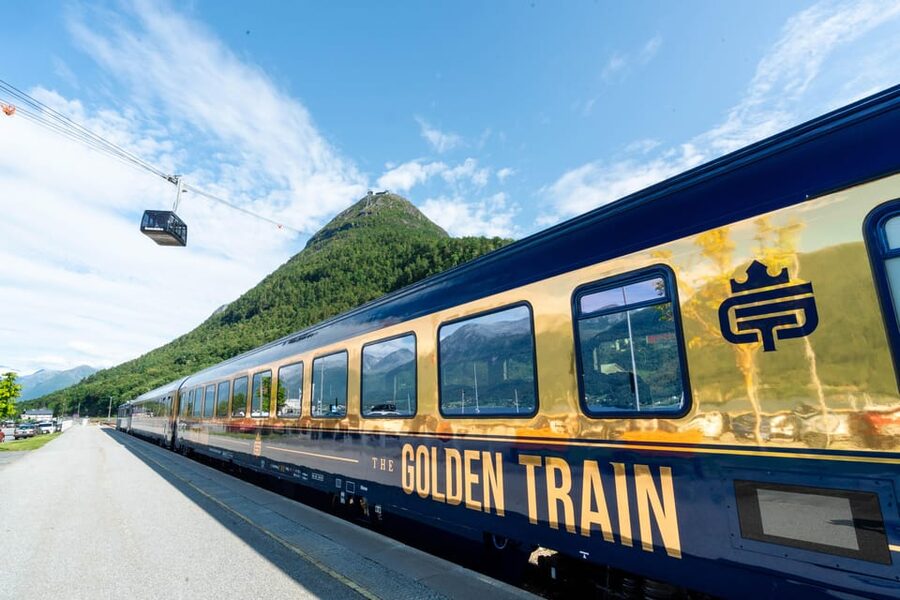
Troll Wall views from your seat, no hiking required. This is a short, scenic Norway train ride built for big windows and easy photo time, with a Golden Train theme tied to World War II history. You get dramatic cliffs like Trollveggen, the Kylling Bridge photo moment, and emerald-green river views that you can take in slowly from your chair. One catch: if weather is poor, the scenery still hits, but you may have fewer crisp lookout moments and more “hurry up and shoot between clouds.”
What I like most is the rhythm of the trip. The train moves at a slow pace, so you are not fighting the clock, and the onboard commentary adds story to the views so it feels more than just pretty scenery. The other plus is that it is compact: about 2.5 hours round trip, including a short break at Bjorli, then you are back at Åndalsnes.
In This Review
- Key takeaways before you board
- Entering the Rauma Railway: Åndalsnes to Bjorli, Then Back
- What Makes This Rail Ride Special: 32 Bridges and a Slow Pace
- Onboard Setup: Audio on Your Phone Plus an English Guide
- The First Hour on Rails: Settling In, Then Spotting the Icons
- Kylling Bridge: The Norway Photo Moment You Should Prepare For
- Trollveggen: When Vertical Cliffs Become the Background
- Verma Waterfall and the River Theme: Nature With Real Motion
- Bjorli Break: Photo Time, Short Station Interlude, and a Golden Train Museum
- Return to Åndalsnes: Seat Choice and Getting Views on Both Sides
- Comfort and Small Practicalities That Make the Ride Easier
- Price and Value: Is $64 Worth It Versus Other Shore Excursions?
- Timing, Weather, and What to Plan for on This Route
- Who This Rauma Railway Golden Train Trip Fits Best
- Should You Book the Rauma Railway Golden Train?
- FAQ
- How long is the Rauma Railway Golden Train ride?
- Where does the Golden Train start and end?
- Is there a bathroom on the train?
- Do I need headphones or a smartphone?
- Is the guide available in English?
- Can I cancel if my plans change?
Key takeaways before you board
- Slow-motion scenery: the ride is designed for photography from comfortable window seating.
- 32 bridges, major viewpoints: you cross bridge after bridge where the valleys and cliffs keep changing.
- Trollveggen plus Verma Waterfall: two big nature highlights show up on the same run.
- Kylling Bridge is the star photo stop: plan your phone grip and camera angle for this one.
- WWII Golden Train stories onboard: the history theme turns the ride into a guided experience.
- Your stop at Bjorli depends on train flow: it is listed as a photo break, but delays can shorten time ashore.
Entering the Rauma Railway: Åndalsnes to Bjorli, Then Back
This is a round trip on the Rauma Railway, starting and ending at Åndalsnes station. You travel to Bjorli and then return the same way, which matters because it keeps the whole experience simple. No connections, no bus replacements, no mystery logistics. Just train time and scenery time.
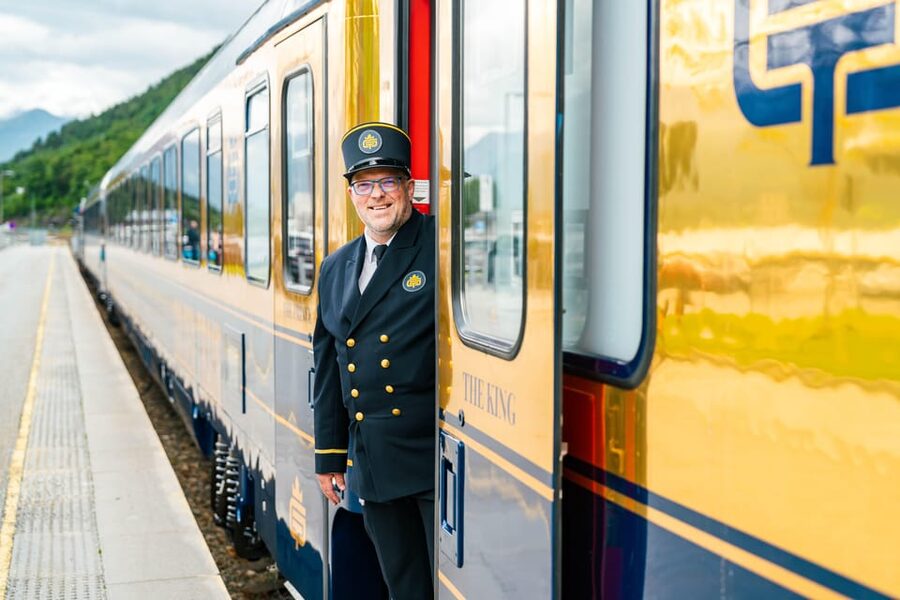
From the moment you board, the vibe is calm. You are welcomed onboard by train hosts, then you settle in for the first leg, which takes about 1 hour before the stops and the big scenic moments start stacking up.
The overall tour length is listed as 2.5 hours, so you are getting a full scenic hit without losing half a day. That makes it a strong option for cruise stop days, and also for land travelers who want a big scenic payoff with minimal planning.
What Makes This Rail Ride Special: 32 Bridges and a Slow Pace
The big selling point is how the scenery is presented. This is often described as the most scenic rail journey in Europe, and the details match the hype. You cross 32 bridges, and that repeated crossing changes your perspective over and over again. You are not just watching one valley. You are constantly getting new angles on cliffs, water, and the river corridor.
Equally important is speed. The train’s slow pace is not incidental, it is part of the experience. You can actually look out, then look again, then frame the shot. That is a big deal on a windy, cliff-heavy route where fast-moving trains can blur what you want to photograph.
It also helps that the carriage tends to be quiet. The best moments happen when you stop rushing your brain. You get time to watch the scenery unfold, and the guide’s commentary fills the gaps so it does not feel like you are stuck with only background noise.
Onboard Setup: Audio on Your Phone Plus an English Guide
You get two layers of interpretation. First, there is a live tour guide in English on board. Second, there is an audio guide on your own phone, which means you can listen through headphones you bring yourself.
Bring headphones and a charged smartphone. Even if you mostly listen to the live guide, the audio option is there if you want to rewind, or if you miss a detail while you are busy taking a photo. In the end, it is a nice choice to have narration you can control.
The toilet is onboard, so you are not making extra stops for bathroom breaks. You can plan your comfort first and then enjoy the ride without constant interruptions.
The First Hour on Rails: Settling In, Then Spotting the Icons
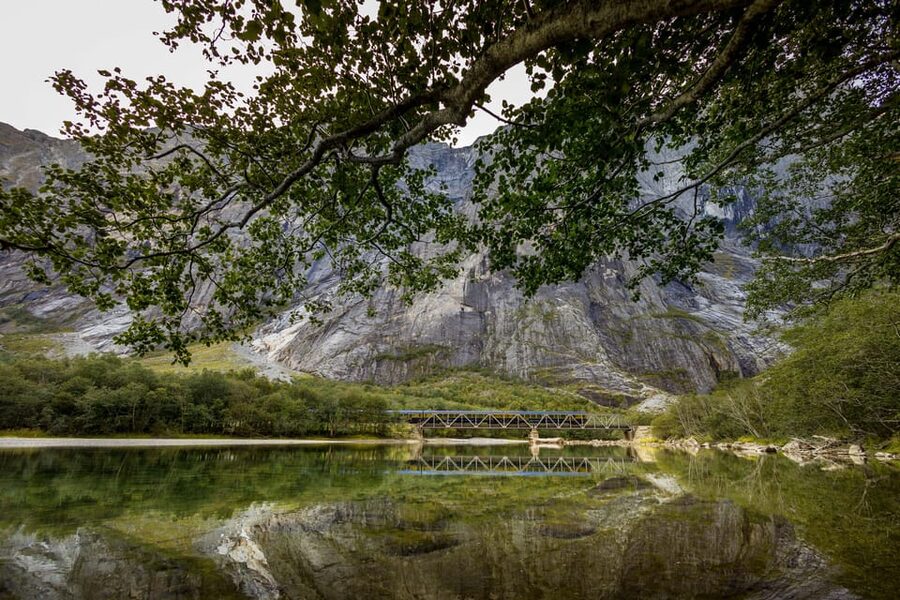
After boarding at Åndalsnes, the train covers about 1 hour on the way toward the main highlights. This early stretch is where you learn the rhythm of the trip.
You will notice how often you are treated to clear sightlines. The route follows steep rock faces and watercourses, so even without the headline landmarks, the scenery keeps changing. It is the kind of ride where you start by taking general shots, then later you realize you should have aimed higher, or turned your phone slightly before the curve.
This is also where the storytelling kicks in. The narration connects what you see to human history, including stories about people who lived around sharp peaks, fed on the river, and worked their way across difficult terrain. Then the guide brings in the World War II context, which explains the roots of the Golden Train idea.
Kylling Bridge: The Norway Photo Moment You Should Prepare For
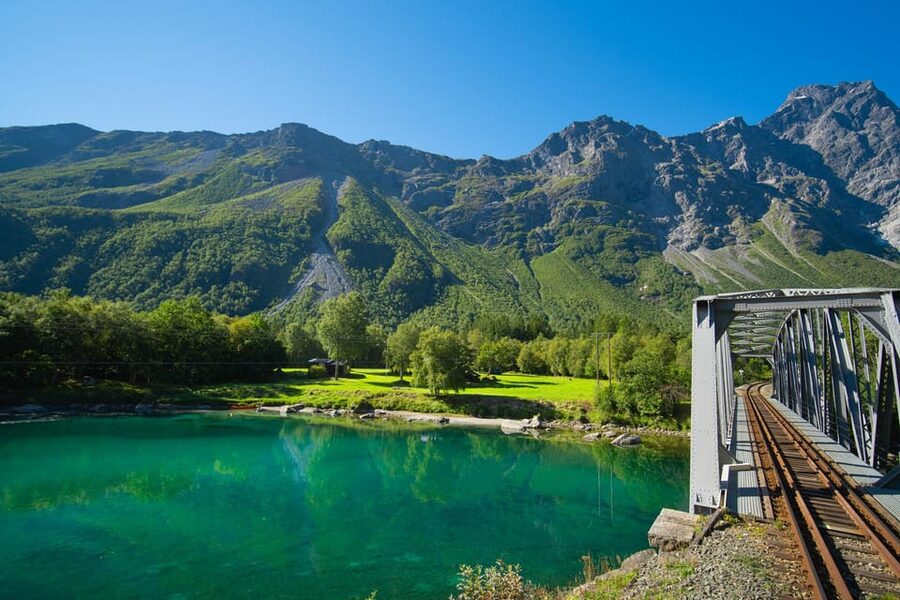
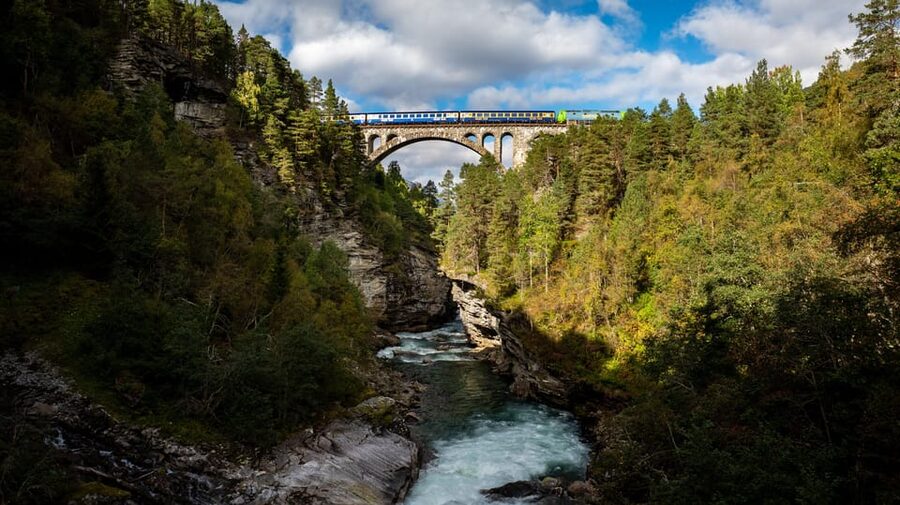
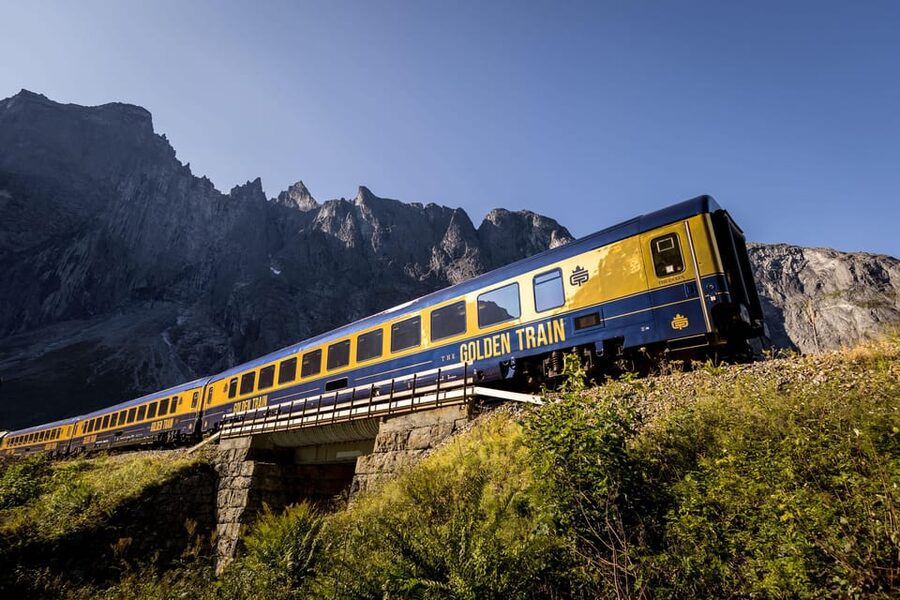
If you like photography, this is your target. The route includes Kylling Bridge, and it is widely known as the most photographed railway bridge in Norway. That label is not just marketing. The bridge is a natural “camera magnet” because of how it frames the valley and cliff lines as the train crosses.
What you should do beforehand is simple:
- Get ready when you are nearing it, not after you spot it.
- If you have to choose, prioritize a stable phone grip over speed.
- Clean your phone lens first. Mud and salt spray happen on trains.
The train’s pace helps you here. You have time to react, and because the narration is running too, you do not feel like you are performing your own solo tour while everyone else is staring out the window.
Trollveggen: When Vertical Cliffs Become the Background
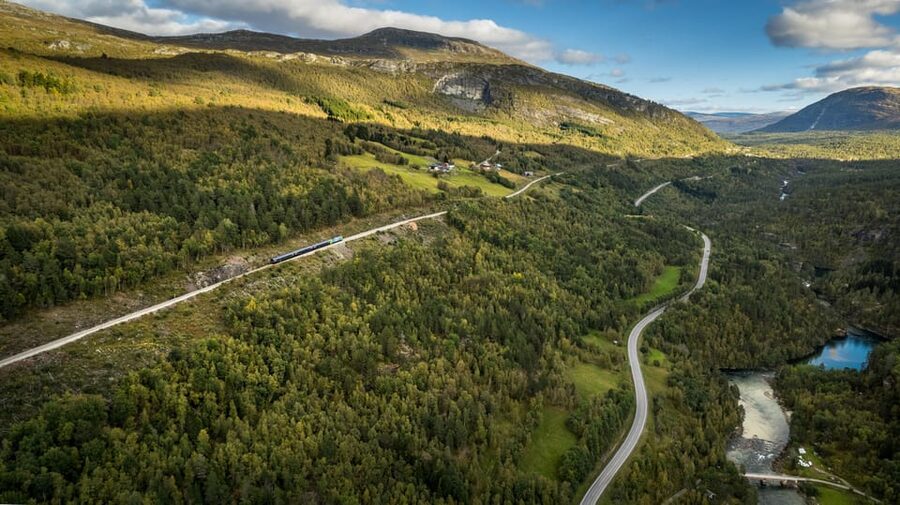
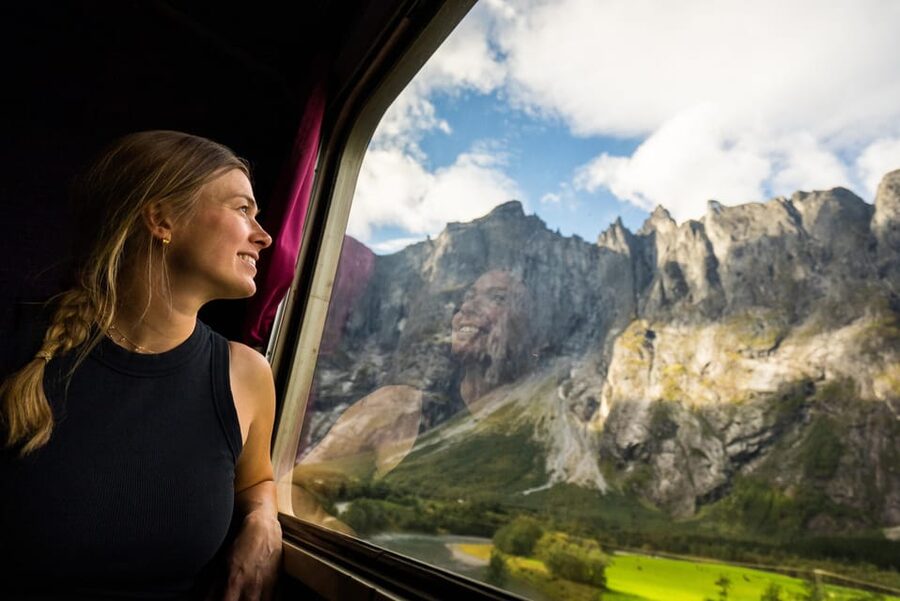
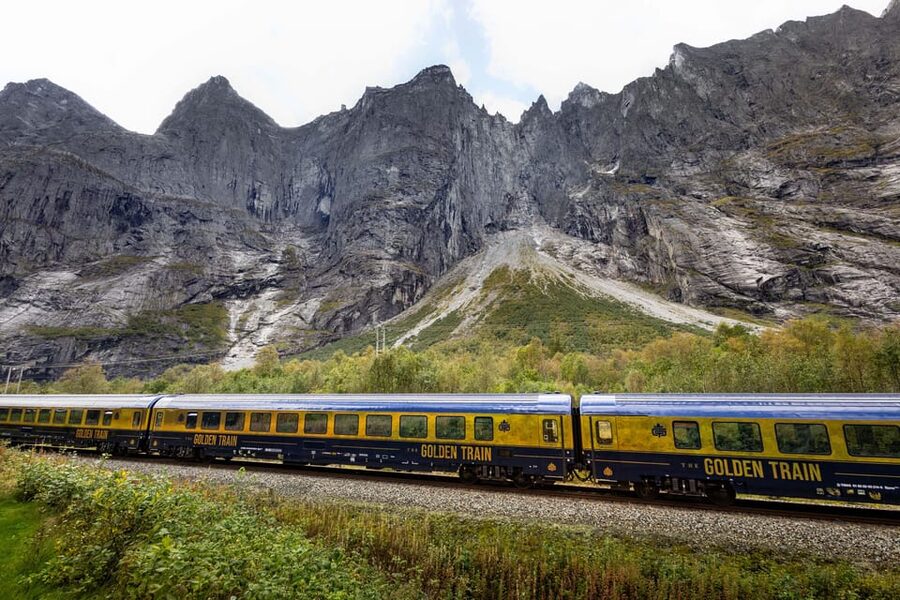
Then comes Trollveggen, the dramatic vertical cliff that often stops people mid-sentence. This is the part of the ride where the scenery stops feeling like scenery and starts feeling like a wall you can almost touch, even though you are safely inside a train carriage.
You get a panoramic view as the train moves through the area. The slow speed matters again, because you can actually track how the cliff shape and light shift as you pass. It is also why window choice is worth thinking about, especially on longer scenic minutes.
If you are traveling with kids or anyone who gets restless, this is a strong “instant wow” moment. No hiking. No stairs. Just open air visuals through glass.
Verma Waterfall and the River Theme: Nature With Real Motion
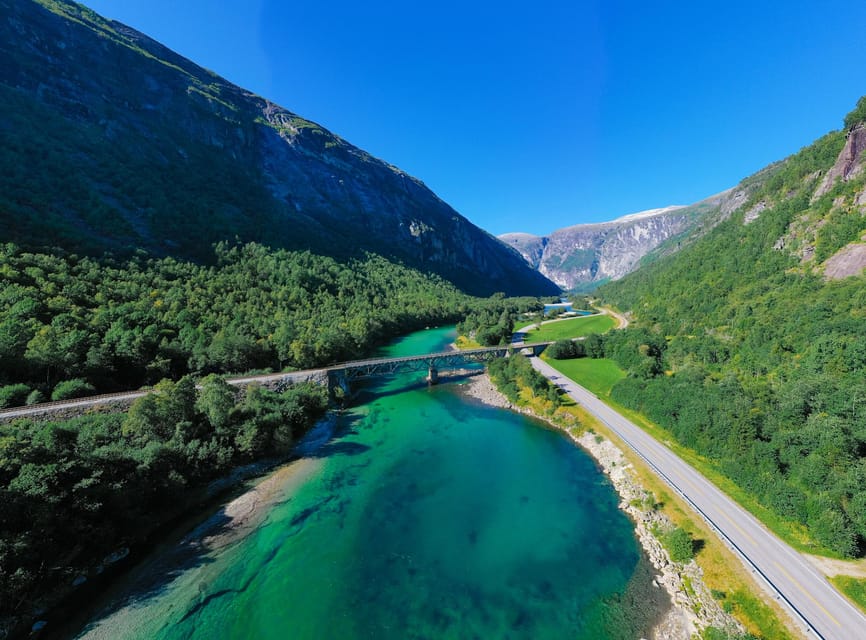
The route also features the Verma Waterfalls. Water changes everything on a train ride. Even when the cliffs are dramatic, waterfalls add movement and sound, and the whole experience feels alive.
The commentary ties into the river and the people who depended on it. That makes the waterfall feel more than just a pretty stop. It becomes part of a working landscape shaped by nature and survival, not only a postcard.
In practical terms, this is where you will want to be alert. Waterfalls are often near bends and changing sightlines, so keep your camera out and your mind ready for quick framing.
Bjorli Break: Photo Time, Short Station Interlude, and a Golden Train Museum
At Bjorli station, you get a break with a listed photo stop of about 30 minutes. This is the “stretch your legs” part, and it is also where you can do quick souvenir browsing if the opportunity is there.
A key reality check: the time at Bjorli can be shorter if the train is waiting for other rail traffic, especially freight trains. The route is busy enough that you should treat the stop time as a best-case scenario. If you really need time to explore beyond photos, keep that flexibility in your plan.
One bonus detail that can surprise you in a good way is the small station-area museum stop at the end. There is memorabilia tied to the Norwegian gold run during World War II. It is compact and quick, but it gives you something tangible to connect the history talk to. After a scenery-heavy ride, that extra context makes the whole Golden Train theme land.
Return to Åndalsnes: Seat Choice and Getting Views on Both Sides
The return leg takes about 1 hour and brings you back to Åndalsnes. This is where your seat choice can matter more than you expect.
A few practical tips help:
- If you can, try to arrive early to grab a seat by a window with minimal pillar obstruction.
- Some seating can offer a better view on one side of the train, and while both sides are worth it, the right side is often favored for certain viewpoints.
- There are compartments near the ends where you can potentially see both sides more effectively, which helps if you care about photos of both the river and the cliff wall.
If you are traveling with a group, think about side swaps for the return. It sounds simple, but it can multiply your photo variety without doing anything harder than changing seats. If nobody wants to swap, do not stress. The ride still delivers a lot of scenery even from one side.
Comfort and Small Practicalities That Make the Ride Easier
This trip is designed to be comfortable for a short time window. The train is described as clean, with clear windows that make it easier to shoot without fighting grime streaks. There are also reported photo-friendly viewing setups, including extra windows you can stand at for pictures.
Food and drink also show up as a helpful convenience. The train can offer hot and cold drinks and snacks, plus the onboard toilet, so you are not rushing to find a café mid-ride. For many people, that means you stay in a relaxed headspace for the whole run.
One more small comfort tip: expect the best views when you are ready to step your attention outward. Bring your charged devices, but also keep a light mental list of what to watch for, Trollveggen, Kylling Bridge, and Verma Waterfall, so you do not miss them while fiddling with settings.
Price and Value: Is $64 Worth It Versus Other Shore Excursions?
At about $64 per person, this is priced for value, especially when you compare it to the cost of many cruise ship shore excursions for similar routes. The big reason it feels worth it is that you are paying for a focused experience, not a half-day bus shuffle.
You get roundtrip train transport, a live English guide, and an audio guide option on your phone. For a 2.5-hour outing, that combination is efficient. You are also paying for a route that is heavily centered on iconic sights, not a generic sightseeing drive.
If you are choosing between a train day and a bus excursion, ask yourself what you want most. If you want big windows, steady scenic time, and built-in guidance, this train format is hard to beat for the money. If you are chasing long stops, walking tours, or deep museum time, you might feel it is a bit short. But for scenic impact per hour, it is a strong deal.
Timing, Weather, and What to Plan for on This Route
Weather plays a real role here. People tend to call it stunning when conditions are clear, and you can feel why. Views are best when the cliffs and water have good visibility.
But do not cancel the idea just because clouds are possible. Even in less-than-ideal conditions, the ride still gives you dramatic terrain and a structured way to see it. The main thing is to adjust expectations. If the sky is gray, plan more for the experience and narration, and a bit less for postcard clarity.
Timing is the other variable. You pick a departure time, and the ride is about 2.5 hours total. Still, train waiting can slightly affect your on-the-ground minutes at Bjorli. Build your day with a small buffer so you are not sprinting to catch another timed activity right after the train.
Who This Rauma Railway Golden Train Trip Fits Best
This is a great fit if you like scenic rail travel, photography from a seat, and short guided experiences. It is also perfect when you want a Norway highlight without dealing with a car rental or long drives.
It works especially well for:
- Cruise shore days where you need something time-efficient.
- People who want iconic nature moments like Trollveggen and waterfalls without hiking.
- Photo-minded travelers who appreciate slow-moving “ready your shot” pacing.
- Anyone interested in the Golden Train story thread tied to World War II.
If you want hours of hiking, long bus transfers, or lots of free time in a town, this may feel too structured. You get a photo break, then you are back on the train.
Should You Book the Rauma Railway Golden Train?
Book it if your idea of a great day is simple: sit back, watch dramatic Norwegian terrain roll past, and get guided context that turns the scenery into a story. The combo of slow pace, 32 bridge views, and Trollveggen plus Verma Waterfall highlights makes it a strong scenic-value choice for a half-day plan.
Skip it only if you know you need long stops and walking time, or if you are traveling when you cannot afford even a short delay. Otherwise, this is one of those rare trips where the format does half the work for you. You show up, you get your seat, and the mountains do the rest.
FAQ
How long is the Rauma Railway Golden Train ride?
The total duration is listed as 2.5 hours, and you will see it on the schedule for the time you select.
Where does the Golden Train start and end?
It starts at Åndalsnes station and returns back to Åndalsnes after the trip to Bjorli.
Is there a bathroom on the train?
Yes, the train has a toilet onboard.
Do I need headphones or a smartphone?
Bring headphones and a charged smartphone. The experience includes an audio guide on your phone.
Is the guide available in English?
Yes, the live tour guide is in English.
Can I cancel if my plans change?
Free cancellation is available up to 24 hours in advance for a full refund.
More in Norwegian Scenic Railways.
 ★ 4.8Bergen: Viking Village, Nærøyfjord Cruise & Flåm RailwayFrom $4181,047 reviews
 ★ 4.4From Narvik: Roundtrip Arctic Train Ride on Ofoten RailwayFrom $69407 reviews
 ★ 4.5Guided tour – Viking Village, Nærøyfjord Cruise and Flåm RailwayFrom $429371 reviews
 ★ 4.6Bergen: Viking Village, Nærøyfjorden Cruise and Flåm RailwayFrom $435155 reviews
 ★ 4.5Oslo To Sognefjord Private Full Day Roundtrip Including Flam RailwayFrom $1,08370 reviews
 ★ 4.0Oslo To Bergen Self-Guided Full Day Trip with Flåm Railway And Fjord CruiseFrom $45469 reviews
 ★ 4.5Private Full-Day Round Trip from Oslo to Sognefjord via Flåm RailwayFrom $1,17762 reviews
 ★ 3.9From Narvik: The Northern Lights Arctic Train Guided TourFrom $14258 reviews
Lists this one sits in