
REVIEW · LOFOTEN ISLANDS TOURS
Lofoten (Stamsund and Leknes): Aimees Farm Experience
Farm dinner in Lofoten beats restaurant food. You visit a working farm between Stamsund and Leknes, then settle in for a five-course local meal with stories led by Aimee Cathrin Larsen.
I like two big things right away: the hands-on animal time, including grassfed Scottish Highland cattle, and the focus on real local products like Lofotlam lamb from Lofoten. The menu is built around what the farm grows and raises, plus other small producers tied into the dishes.
One thing to consider, it is not suitable for children under 8, and part of the experience happens outdoors around active animals. Also, if you want a drink pairing, that is an additional cost.
In This Review
- Key highlights
- Why this farm dinner centers Stamsund and Leknes
- Getting to Valbergsveien 48, and what 3 hours feels like
- The 1-hour traditional village tour that sets the stage
- Farm tour time: Highland cattle and free-range pigs
- The five-course meal built around Lofotlam and mangalitsa pork
- Why the producer stories make the meal feel worth it
- Price and value: is $173 a fair deal for 3 hours?
- Who should book this farm experience in Lofoten, and who should skip it
- Final call: should you book Aimees Farm Experience?
- FAQ
- Where is the meeting point for the Aimees Farm Experience?
- How long is the experience?
- How many courses are included in the dinner?
- What is included in the price?
- Is a drink package included?
- What animals will I see and interact with?
- What languages are used during the tour?
- Is this a small group experience?
- Is it suitable for children?
- Can I cancel for a full refund?
- Is there a reserve now, pay later option?
Key highlights
- Small-group farm visit (up to 10 people), so you get more than a quick stop and a smile.
- Five-course farm dinner made from local ingredients, with plenty of producer storytelling.
- Grassfed Scottish Highland cattle and free-range pigs, including time to pet and feed.
- Lofotlam lamb plus the farm’s mangalitsa pork, both central to the meal.
- Farm-to-table guided tour in English or Norwegian, with a clear sense of how the place works.
Why this farm dinner centers Stamsund and Leknes
Lofoten has no shortage of dramatic scenery. But Aimees Farm Experience puts the spotlight where food starts, a working farm in the middle of daily life, close to both Stamsund and Leknes. You get the sense that this is not a staged tourism product. It is dinner plus a real look at how animals are raised and how local producers connect.
What I really like is the balance. You get hands-on farm time, then a fine dining style meal that still respects the ingredients. And because the dinner is tied to a network of small producers, you hear why specific products show up on your plate, not just what they are.
The vibe is friendly and personal, with Aimee Cathrin Larsen acting as the guide and storyteller. You also get a chance to talk through how the farm works, including what it means to raise cattle and pigs in a way that fits Lofoten’s conditions.
If you are the type who likes your travel experiences to have a clear reason and a direct connection to place, this works. You leave with food memories, not just photos.
Getting to Valbergsveien 48, and what 3 hours feels like
The meeting point is straightforward, Valbergsveien 48. Once you arrive, you are essentially joining a short evening rhythm on the farm, not racing between multiple attractions. The total duration is 3 hours, so it fits well into a travel day without turning dinner into a late-night marathon.
You should plan on a mix of walking and standing. Even though the details are farm-based rather than sightseeing-based, you will be moving between the guided part and the farm time with animals, then sitting for the five-course dinner. Comfortable shoes help, especially if the ground is damp or uneven, which can happen in coastal Norway.
Group size is capped at 10 participants, and that matters. It means questions do not get lost in a crowd, and your experience stays more conversational. It also makes the animal feeding moments feel calmer, since it is easier to manage around free-range animals.
On the host side, the experience runs in English and Norwegian. So if you want to understand the stories and producer links, you should have no problem following along.
One more practical note: dinner is served as a five-course meal, so plan to arrive hungry. If you snack too heavily beforehand, you may miss the point of having a full tasting-style evening.
The 1-hour traditional village tour that sets the stage
Before the farm dinner part takes over, you get a guided tour connected to a traditional village setting. It lasts about 1 hour. This is not just background fluff. The value is that it frames what comes next, why local food systems make sense in Lofoten, and how small producers fit together.
Think of it like tightening the focus. Instead of treating dinner as an isolated event, you learn the cultural and everyday context that makes farm food meaningful here. You also get a slower start, which helps if you are arriving from town and want a gentler transition into a farm evening.
A good sign here is how the dinner is described as farm-to-table and producer-connected. That narrative would feel random if you were dropped straight into plates and animals. The village tour helps connect the dots in a way that makes your meal feel intentional.
Potential downside: it is still a guided walk, so if you are only interested in the animals and the food and would rather skip explanations, you might find the tour part a little more time than you expected. But even then, it tends to pay off because the dinner stories are clearer after you understand the setting.
Farm tour time: Highland cattle and free-range pigs
This is where the experience turns from informative to memorable. You get a guided farm tour where you can meet and interact with animals, including grassfed Scottish Highland cattle and free-range pigs.
The cattle part matters more than you might think. Scottish Highland cattle are known for their hardiness, and in a farm setting they represent a practical way to raise livestock suited to local conditions. You are not just looking at animals as ornaments. You learn that they are part of a system, grass-based feeding, and the daily work of keeping the farm running.
Then come the pigs. The experience explicitly includes time to pet and feed free-range pigs. You should expect the pigs to be curious and active. That can be fun, but it also means you will want to pay attention to how the host guides you. When animals roam in a farm environment, safety and calm behavior matter.
Some guests also note moments like feeding piglets and bottle feeding lambs during the farm time. Even if those specific feeding activities are not the same in every visit, the main idea is consistent: you are there for direct animal interaction, not just viewing them from a distance.
If you are traveling with kids who meet the minimum age, this is often the best part of the night because it is real farm contact. If you are sensitive to animal smells or close-up barn life, you might want to mentally prepare. This is a farm, not a museum.
Also, because the animals are part of live work, timing is important. If you arrive late, you can miss portions of the farm interaction and the dinner pacing will feel compressed.
The five-course meal built around Lofotlam and mangalitsa pork
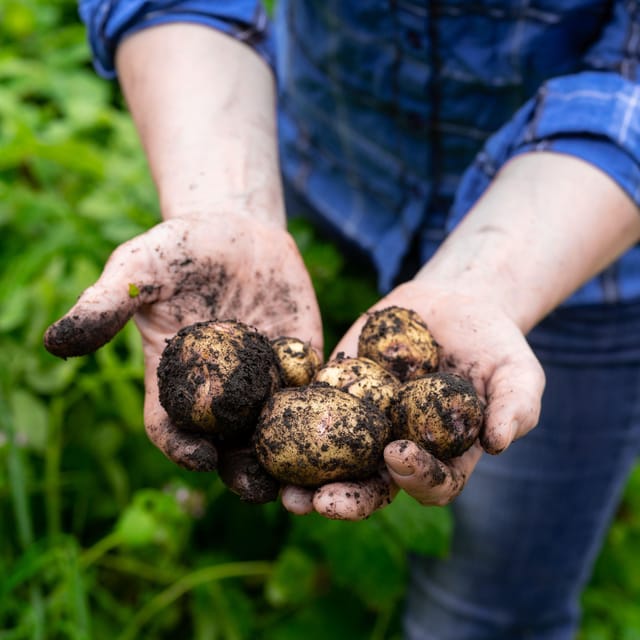
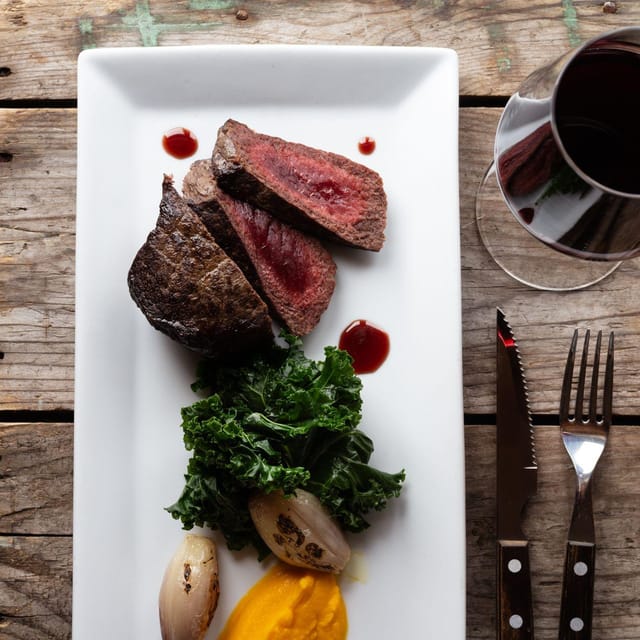
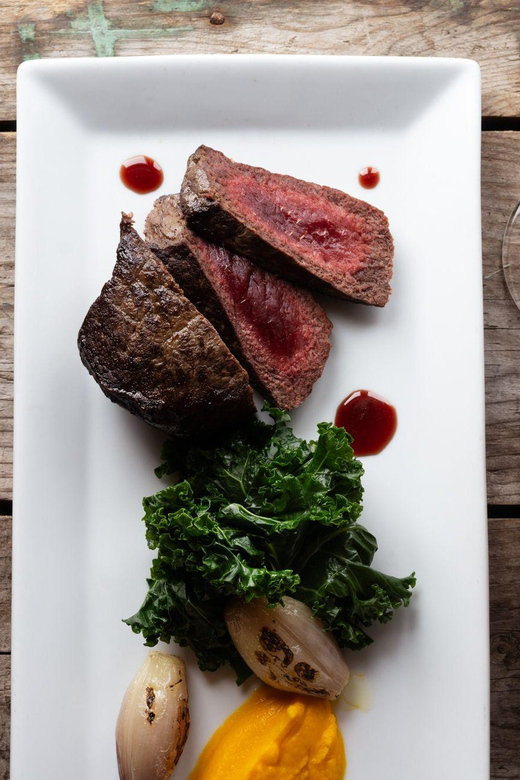
Now for the main event: a farm dinner served as five courses. The big selling point is that it is local food, made from ingredients sourced through the farm and a network of nearby small producers. You do not just eat what is convenient for a restaurant kitchen. You eat what the farm system can offer and what the region produces.
From the farm itself, the meal includes:
- Grassfed Scottish Highland cattle
- Free-range pork, described as fatty but very tasty and nutritious mangalitsa pork
- Lofotlam, the lamb from Lofoten with geographic protected indication
That last one is worth a moment. Lofotlam is not a generic lamb dish name. It is tied to place and standards, which helps you understand why it is meaningful in Lofoten food culture. When a tour includes a protected designation, it usually means the ingredients are being treated as part of an identity, not just supply.
The meat focus makes sense for a farm dinner. But it is not only about steak and chops. The dinner is described as a lovely five-course format, which typically means you get variety across courses, not one repeated style of preparation.
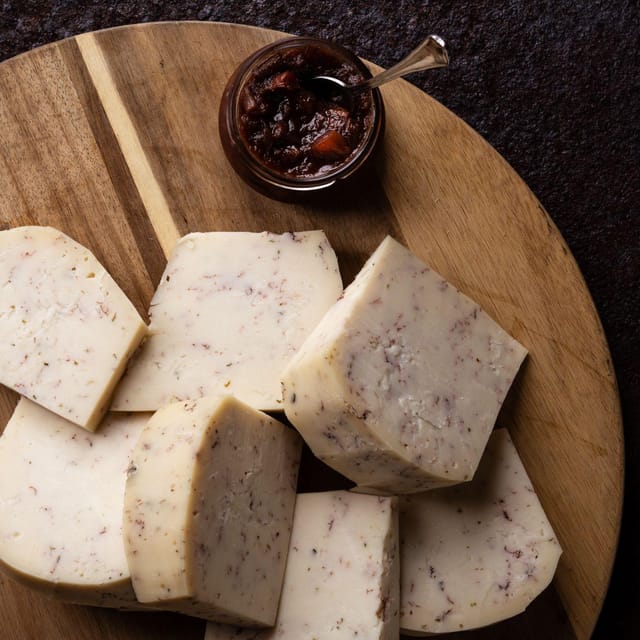
If you like food storytelling, you are in the right place. During the dinner, you hear the story of small producers connected to the menu. That can include why certain products are used, how they are made, and how different farms support each other across the region.
One practical note: drink pairing is available, but it is not included. If you want a pairing, you should budget extra and ask what is offered. If you prefer water or a simple drink, you can still have a complete meal without spending more.
Dietary needs are not specified in the info you provided. So if you have strict allergies or a complex diet, I would message the provider before booking and ask what can be done.
Why the producer stories make the meal feel worth it
A lot of farm-to-table experiences stop at farm photos and a quick explanation. This one keeps going. During dinner, you learn the story of the small producers connected to the dishes. The idea is that you taste local ingredients you might not get in one place anywhere else, because the menu pulls from multiple producer types, including the smallest local producers.
That is where the experience becomes more valuable than a standard dinner. You leave with the food context, which makes the tastes feel anchored to people and place. Instead of thinking, that was good, you think, this came from a specific kind of animal raised in a specific way, and this ingredient belongs to a regional network.
From what you are told, the farm acts as a hub. It is not a solo operation producing everything end to end. It is connected, building dinner through relationships with other producers. That is also how local food systems survive, by sharing knowledge and supply.
You also get a clear narrative around the farm itself, including Aimee Cathrin Larsen’s story and how the animals fit into the farm life. It helps that the host and the group are small. It is easier to ask follow-up questions, and the conversation stays human.
If you are a foodie who likes seeing how ingredients connect to decisions, you will enjoy this part. If you are only interested in eating and do not care about the why, this can still be a pleasant evening because the meal is the main act. But the stories are the glue.
Price and value: is $173 a fair deal for 3 hours?
At $173 per person for a 3-hour experience, you are paying for more than a meal. You are paying for:
- A five-course fine dining style dinner
- Local ingredients from the farm and other local producers
- A guided farm tour
- Animal interaction including petting and feeding pigs, plus time with cattle
- The dinner storytelling around producers and the farm system
So the value is not only in the food, it is in the combined package. In many places, you can buy a great dinner without ever seeing where the ingredients come from. Here, the farm visit is built into the timing, so your ticket becomes a complete evening, not just a reservation.
Drink pairing is extra, and that is worth keeping in mind. Still, even without pairings, you are getting a full multi-course meal and a structured tour.
Where the price might feel heavy is if you only want one piece of the experience, like the animals but not the dinner format, or the dinner but not the guided tour. Because it is bundled, you are essentially committing to the full flow.
But if you like local food, enjoy farm life, and want your evening to feel personal rather than anonymous, this is the kind of meal price that can feel fair. You are paying for time, access, and the connections behind the plates.
Who should book this farm experience in Lofoten, and who should skip it
This is a strong choice if you want an authentic Lofoten evening that is built around real local production. You’ll likely be happiest if you:
- Like farm-to-table meals with producer context
- Enjoy meeting animals and learning how they fit into farm life
- Want a small-group setting with room for conversation
- Are traveling near Stamsund or Leknes and want a meaningful last-night or mid-trip plan
It may not be the best fit if:
- You have little interest in guided storytelling and would rather do a self-paced activity
- You need strict accommodations for dietary needs that are not covered in the provided info
- You are traveling with children under 8, since the visit is not suitable for that age group
Comfort and readiness matter. Wear shoes that handle outdoor conditions. Plan to stay present during farm time, because animals and people share the same space.
For couples, this can feel like a special night with conversation and a shared meal. For solo travelers, the small group size helps you avoid feeling lost. For families with kids old enough, the animal part can be a highlight because it is interactive.
Final call: should you book Aimees Farm Experience?
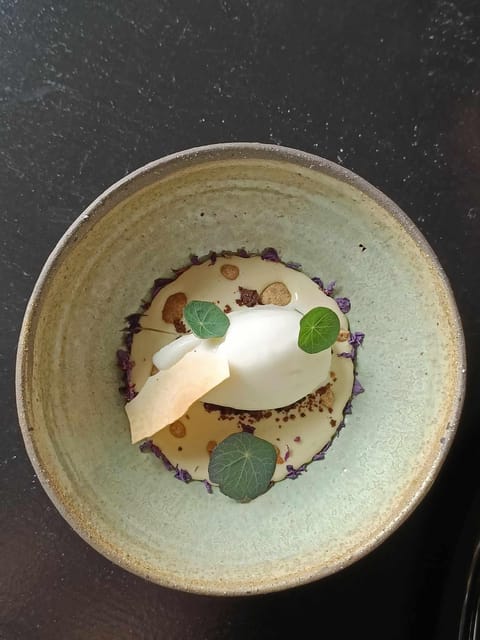
If you want a Lofoten dinner that actually connects to the land, I think this is an easy yes. The biggest advantages are the small-group farm access, the chance to meet grassfed Highland cattle and free-range pigs, and a five-course meal anchored in Lofotlam lamb and mangalitsa pork. Add in the producer storytelling during dinner, and you get an evening that feels grounded in how Lofoten food really happens.
Book it if you can handle a farm setting and you are hungry for a full multi-course dinner plus guided time outdoors. Skip it if your priority is only a quick meal, or if you are not comfortable around active animals.
In short, this is not just a place to eat. It is a place to understand what you’re eating, and that is where the value comes from.
FAQ
Where is the meeting point for the Aimees Farm Experience?
The meeting point is at Valbergsveien 48, welcome to the farm.
How long is the experience?
The experience lasts 3 hours.
How many courses are included in the dinner?
The dinner is a five-course meal.
What is included in the price?
Included are local food, grassfed Scottish Highland cattle, free-range pork, lamb from the farm with geographic protected indication (Lofotlam), a fine dining experience, the five courses, a farm-to-table experience, and a guided farm tour.
Is a drink package included?
No. A drink pairing is available, but it costs extra.
What animals will I see and interact with?
You can meet the grassfed Scottish Highland cattle and pet and feed the free-range pigs. A farm tour is also part of the experience.
What languages are used during the tour?
The hosts offer English and Norwegian.
Is this a small group experience?
Yes. The group is limited to 10 participants.
Is it suitable for children?
It is not suitable for children under 8 years.
Can I cancel for a full refund?
Yes. You can cancel up to 24 hours in advance for a full refund.
Is there a reserve now, pay later option?
Yes. You can reserve now and pay later, with no payment due today.
More in Lofoten Islands Tours.
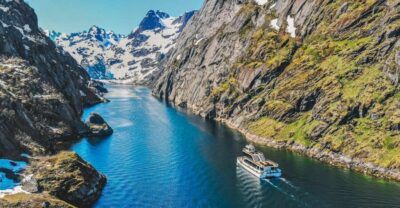 ★ 4.8From Svolvær: Lofoten Islands Silent Trollfjord CruiseFrom $1402,979 reviews
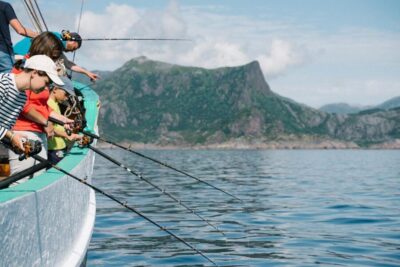 ★ 4.7From Svolvaer: Lofoten Fishing Boat CruiseFrom $135621 reviews
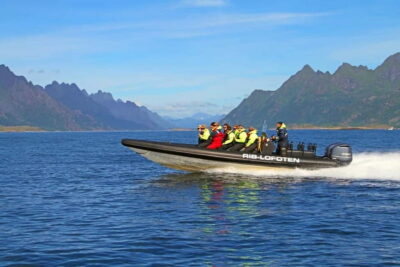 ★ 4.9From Svolvær: Lofoten RIB Sea Eagle Safari Trollfjord CruiseFrom $107591 reviews
 ★ 5.0Lofoten Island: Silent Trollfjord Cruise from SvolværFrom $144389 reviews
 ★ 4.8From Svolvaer: Trollfjorden Wildlife RIB CruiseFrom $125355 reviews
 ★ 4.7Bleik: Whale Watching by Speedboat with Puffins and MuffinsFrom $199326 reviews
 ★ 4.9Eggum: Lofoten Islands Midnight Sun Kayak TourFrom $99322 reviews
 ★ 4.9Lofoten: Trollfjord Sea Eagle Safari by RIB BoatFrom $97308 reviews
Lists this one sits in