
REVIEW · LOFOTEN ISLANDS TOURS
From Svolvaer: 2- Day Lofoten Highlights Photo Tour
Some places hit you right away. This Lofoten photo tour strings together the best scenery in two focused days, starting from Svolvaer and using a local guide to help you frame shots. I like that the group stays small, so you are not just watching from the back of a crowd.
I also love the mix of famous postcard stops and useful photographic help. You get a professional photographer guide in English, plus a tripod option if you ask, which matters when you want sharp results on boats, fishing villages, and viewpoints.
One drawback to consider is that this trip is not built for everyone. It is not suitable for people with mobility impairments or visually impaired people, and it also is not designed for travelers who are dealing with a cold.
In This Review
- Key things to notice before you go
- Why a Svolvaer-based, 2-day photo tour makes Lofoten feel doable
- Small group, hotel pickup, and the value of a driver who knows the route
- Day 1: Ramberg’s Arctic Copacabana, classic churches, and the red-hut icons of Hamnøy
- Ramberg Beach, aka Arctic Copacabana
- Flakstad Church, Russian-style details in Lofoten
- Hamnøy, the red fishing huts viewpoint
- Sakrisøy, yellow rorbuer and wooden racks
- Reine, the famous Lofoten village finale
- Day 2: Haukland’s white sand, Henningsvær’s football field, fjord viewpoints, and Gimsøystraumen eddies
- Haukland Beach, white sand and steep mountain drama
- Henningsvær, colorful fishing village plus the famous football field
- Kabelvåg, a fjord-overlook viewpoint with classic village textures
- Rørvik beach, low tides and the calm bay look
- Tordvalshalsen, panoramic valley views with farms
- Gimsøystraumen, the narrow point where currents create eddies
- How the photographer guide helps you get better frames, faster
- What you need to plan for, since not everything is included
- Price and value: why $269 can make sense for a two-day photo route
- Who should book this Lofoten Highlights Photo Tour
- Should you book the Svolvaer 2-Day Lofoten Highlights Photo Tour
- FAQ
- What is the duration of the Svolvaer 2-Day Lofoten Highlights Photo Tour?
- Where do you get picked up and dropped off?
- How big is the group?
- Is the tour guide available in English?
- Do I get a tripod?
- What’s included in the price, and what’s not?
- Can the itinerary order change?
- Is there a cancellation policy?
Key things to notice before you go
- Max small group energy with enough time at viewpoints, not constant rushing
- Hotel pickup and drop-off in Svolvaer, so you can focus on shooting
- A photo-first guide who helps with lining up images, not just sightseeing facts
- Signature Lofoten villages and beaches like Reine, Hamnøy, Sakrisøy, and Haukland Beach
- Tight routes with big variety, from arctic beaches to red fishing huts and fjord views
- Trip order may change, depending on weather and conditions on the day
Lofoten archipelago rivals, drying racks and all
- From Svolvær: Lofoten Islands Silent Trollfjord Cruise★ 4.8 · 2,979 reviews
- From Svolvaer: Lofoten Fishing Boat Cruise★ 4.7 · 621 reviews
- From Svolvær: Lofoten RIB Sea Eagle Safari Trollfjord Cruise★ 4.9 · 591 reviews
- Lofoten Island: Silent Trollfjord Cruise from Svolvær★ 5.0 · 389 reviews
Why a Svolvaer-based, 2-day photo tour makes Lofoten feel doable
Lofoten is the kind of place you can overshoot. You drive too far, stop too briefly, and end up with lots of photos that look like you drove past scenery. This tour avoids that by building a two-day route around the archipelago’s most photogenic stretches, while still keeping the pace realistic.
Starting from Svolvaer is also smart. You begin close to where most travelers land, and the trip is designed to move you through the islands in an organized way. Instead of spending your time planning roads and stops, you spend it looking at compositions. That is the whole point of a photography highlights tour, and it is why it works so well for first-time visitors.
The other quiet win is how the tour adapts. The order of the stops is not fixed. Lofoten Lights decides based on weather, availability, and the guide’s judgment. If you have ever watched light change and wished you were in the right place, you will understand why this flexibility helps.
Small group, hotel pickup, and the value of a driver who knows the route
You get pickup and drop-off at your hotel in Svolvaer, with a clear instruction to wait in the lobby about 10 minutes before the scheduled pickup. That sounds basic, but in Norway it is the difference between starting relaxed and starting stressed.
You are also not doing this as a bus tour. The group is limited to a small size, and multiple past guests have described the feel as nearly private on some days. That matters for photography. When you need a few extra seconds to set up, check a frame, or redo a shot, a small group gives you that room.
Finally, you are not just paired with a photographer who gives tips. The tour includes a licensed driver, and your guide and driver are there to keep things moving while you focus on stops. Past participants have specifically praised the way the drivers blended driving skill with local history and culture.
Day 1: Ramberg’s Arctic Copacabana, classic churches, and the red-hut icons of Hamnøy
Day one gives you a strong early hit of Lofoten variety. You start with beach light and sand textures, then move into historic architecture, and finish with some of the archipelago’s most recognizable fishing village views.
Shutter-time rivals booked around Svolvaer

Ramberg Beach, aka Arctic Copacabana
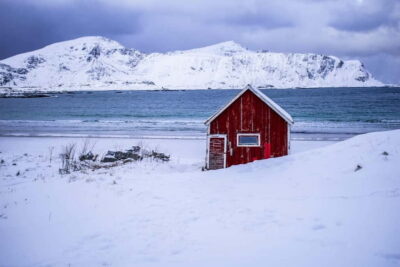
Ramberg Beach is known for white sand and crystal-clear water. In photos, that usually means you get clean reflections and a bright foreground. If you want pictures that look crisp and high-contrast, this is a natural place to practice. It is also an easy way to learn how the guide thinks about composition, because beaches reward you for framing the shoreline shape and the surrounding rock edges.
A practical note: beach time can be short or long depending on conditions. If you are serious about getting a good sequence, this is where being quick with your setup helps.
Flakstad Church, Russian-style details in Lofoten
Next up is Flakstad Church, built in the 1700s and noted for Russian architectural style. Churches are often a trap for first-time photo tourists, because people try to shoot from too far away. This stop is a good reminder to shoot the relationship between the building and the setting, not just the building itself.
If you care about detail shots, this is where you can focus on shapes, symmetry, and how the structure sits within the island terrain.
Hamnøy, the red fishing huts viewpoint
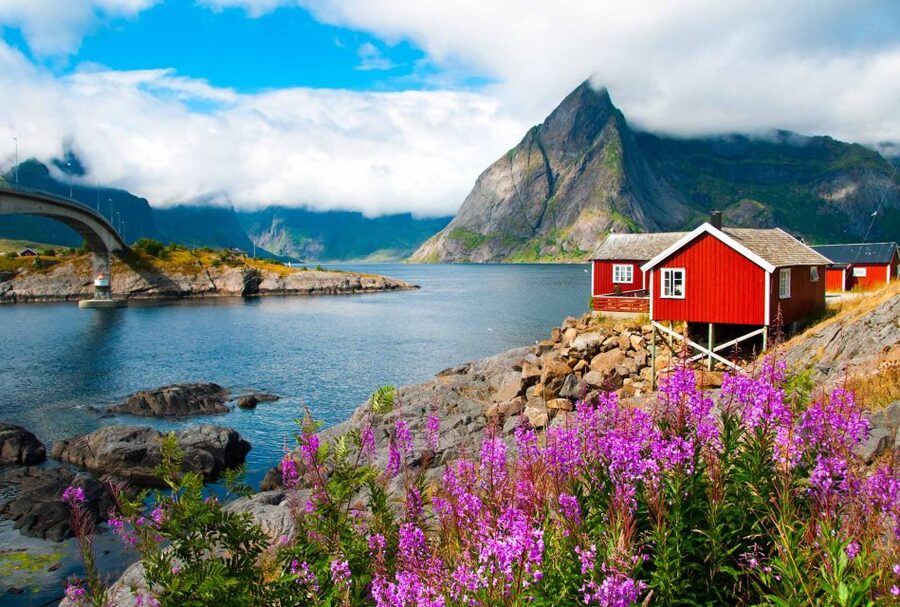
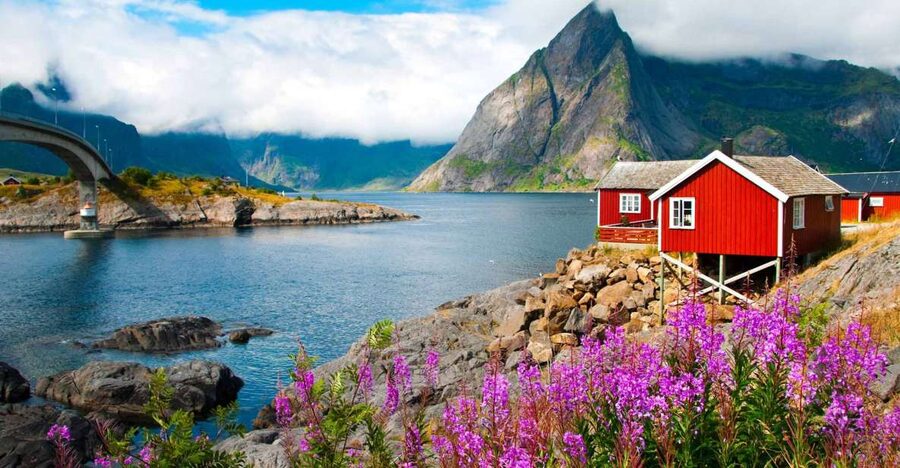
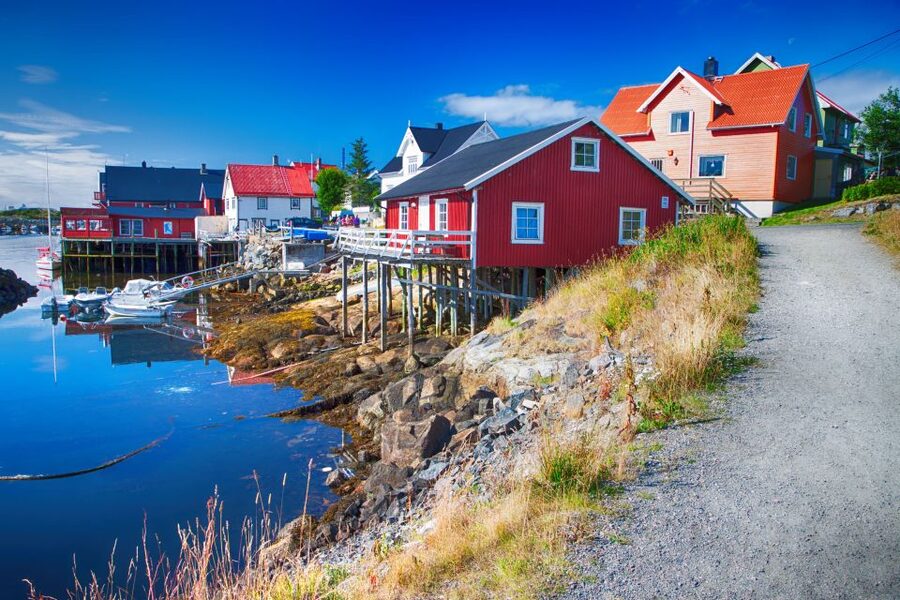
Then you reach Hamnøy, famous for its distinctive red fishing huts at an iconic viewpoint. This is one of those stops where your photo can look instantly more Lofoten-authentic. The guide’s job here is useful, because it is not just pointing at the best angle, it is helping you line up shots so the huts and shoreline sit in a balanced way.
One consideration: this is a popular view. When you arrive, use the time wisely. If you want a clean frame without distractions, you will appreciate having guidance on where to stand.
Sakrisøy, yellow rorbuer and wooden racks
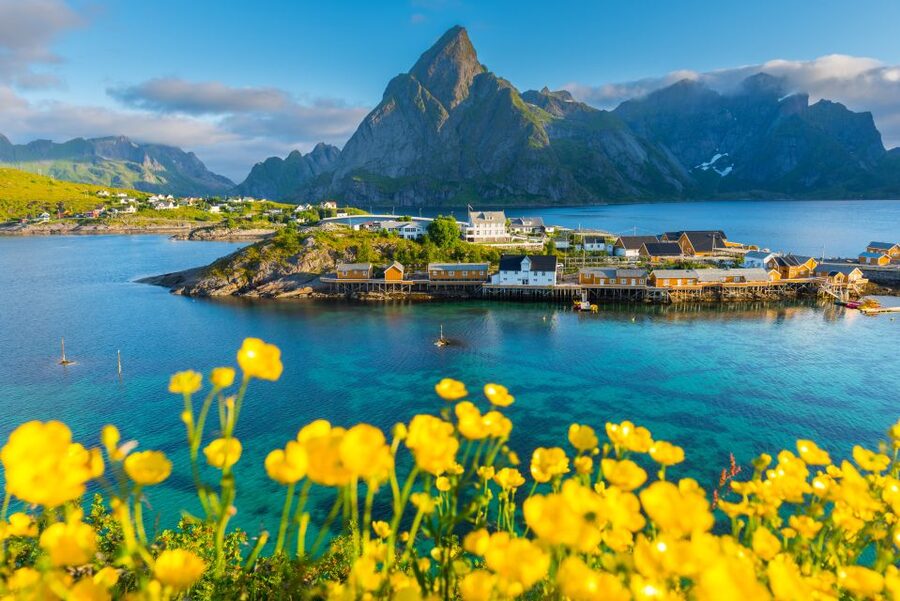
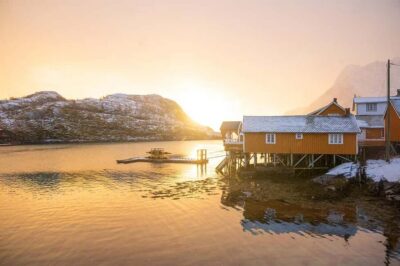
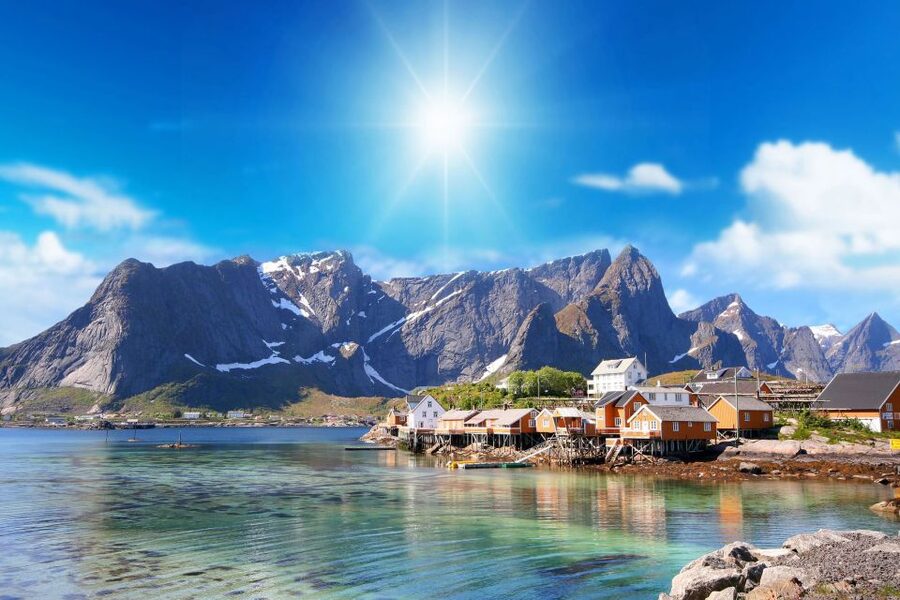
At Sakrisøy, the standout is the yellow rorbuer and the distinctive wooden fishing racks. This is where your photos start to look less like generic travel shots and more like documentary images. Color and texture do the heavy lifting here. You will likely find yourself photographing corners, not just wide scenes.
If you want variety, try to capture at least one wide view and one closer detail shot of the racks. That mix usually gives you a more satisfying set.
Reine, the famous Lofoten village finale
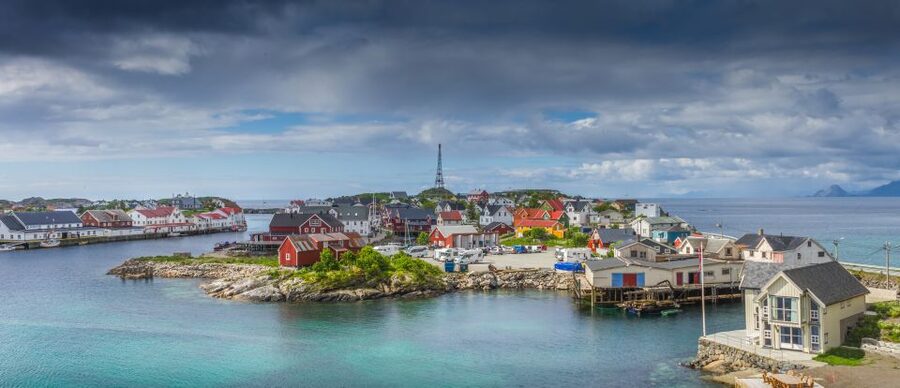
You finish day one in Reine, one of the best-known villages in the Lofoten Islands. Reine photos can be tricky because you can easily end up with a view that looks busy. The guide helps you simplify. Instead of trying to capture everything at once, you learn how to pick a focal point and let the background support it.
If you only have one evening to shoot, Reine is a strong choice. You get a village, water, and surrounding slopes, all in one place.
Day 2: Haukland’s white sand, Henningsvær’s football field, fjord viewpoints, and Gimsøystraumen eddies
Day two leans into dramatic beaches, traditional fishing villages, and a couple of viewpoints that reward patience. This is where the tour’s structure starts paying off, because you are not just visiting places, you are seeing different Lofoten moods in sequence.
Haukland Beach, white sand and steep mountain drama
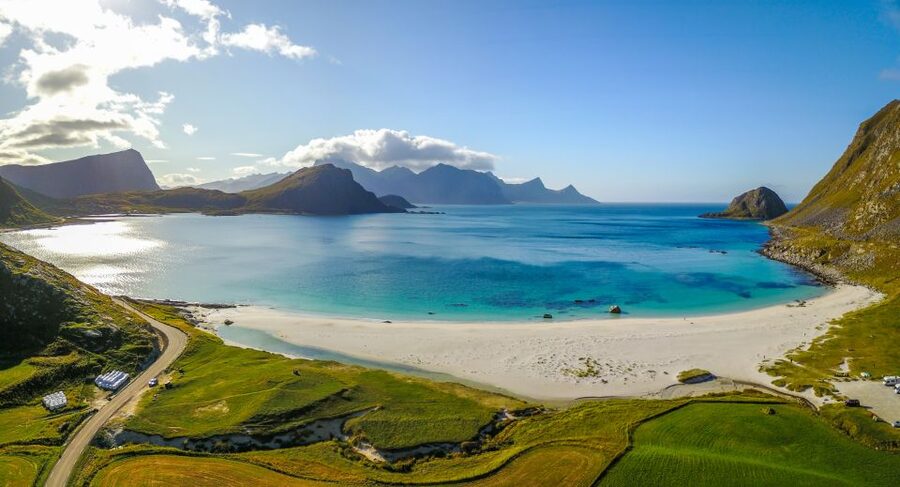
Haukland Beach is famous for white sand and crystal-clear water, with steep, dramatic mountains around it. The visual payoff is immediate. This stop is great for practicing how to include scale, because those mountains give you natural size reference points.
As with most beaches, you will likely want a few different angles. Even a small change in where you position yourself can shift the entire look of the photo.
Henningsvær, colorful fishing village plus the famous football field
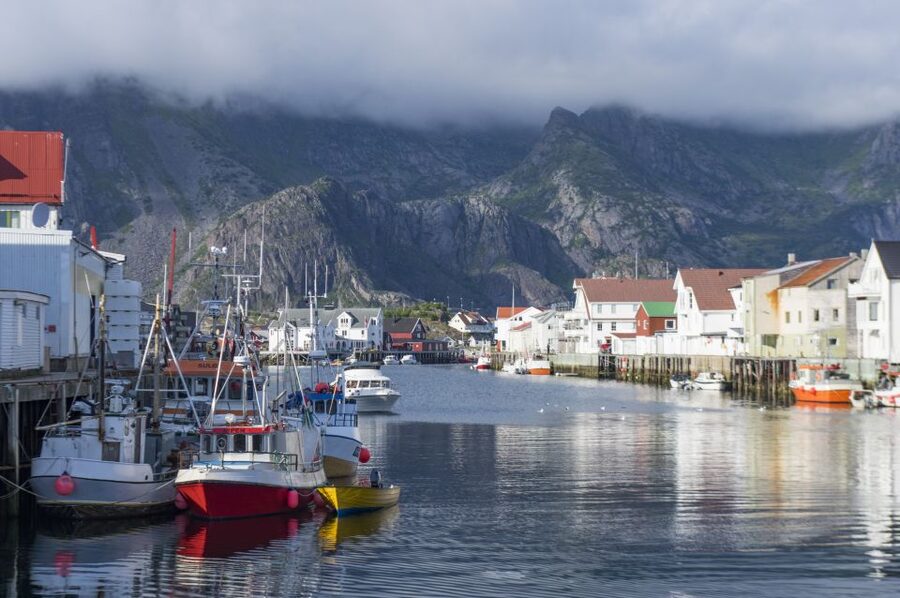
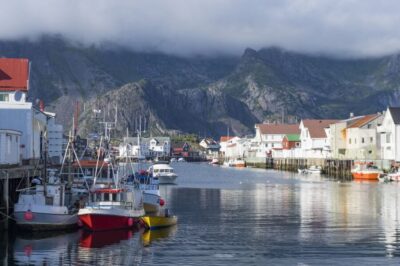
Then you reach Henningsvær, a traditional and historic fishing village with colorful wooden houses and the most famous football field. That football field detail is useful for photography because it gives you a strong geometric element. It is not only about the views, it is about finding a human-scale subject inside a dramatic setting.
If you enjoy lifestyle shots, this is a good place to look for lines between houses, paths, and water.
Kabelvåg, a fjord-overlook viewpoint with classic village textures
Next is Kabelvåg, a traditional fishing village and a route stop that includes a panoramic viewpoint overlooking the fjord. Fjords can be photographically tricky if you aim too wide and the view becomes a blur. A viewpoint stop is your chance to frame the fjord shape, often by placing the curve or direction of the water in your composition.
This also gives you variety after Henningsvær, so your second day does not feel repetitive.
Rørvik beach, low tides and the calm bay look
You get Rørvik beach, known for low tides, on a scenic road. Low tide scenes can look very different from typical coastal views. In photos, the exposed areas near the waterline can create leading lines and extra texture.
If you are collecting variety for your final gallery, Rørvik is a good contrast to the larger beach look of Haukland.
Tordvalshalsen, panoramic valley views with farms
At Tordvalshalsen, you pause for a panoramic viewpoint overlooking a valley dotted with numerous farms. This is a useful stop if you want photos that show how people live in the environment, not only the environment itself. Farms in the valley help your images feel grounded.
It also helps you practice wider compositions after beach-focused stops.
Gimsøystraumen, the narrow point where currents create eddies
Your final photo stop is Gimsøystraumen, at the narrowest point where the currents of the Atlantic Ocean and the Vestfjord create mesmerizing eddies. This is a different kind of shooting challenge. Instead of focusing on buildings or beach shoreline, you focus on movement and pattern.
If you enjoy water textures, this is one of the more memorable stops because the water itself becomes the subject. The guide’s input can help you decide how to frame the water flow so the patterns read clearly.
How the photographer guide helps you get better frames, faster
This tour is built around the idea that a pro guide can save you time and frustration. A professional photographer guide is not just an interpreter, they help you line up beautiful shots and avoid common mistakes like picking an angle that cuts off the main subject.
You also get the guide in English, which matters in a place where local details can be subtle. It is much easier to learn photo choices when you understand the why behind them, like where the best perspective is and what visual elements you should prioritize.
One more detail I appreciate from real-world feedback is how much the guide and drivers lean into context. People have praised that they knew history and culture of the places you visit. That is not fluff. When you understand what you are seeing, you tend to shoot with more intention.
And yes, the tripod option helps. If you bring one, or request one with the tour, you can aim for steadier results at viewpoints where the shot benefits from stability.
What you need to plan for, since not everything is included
The tour includes pickup and drop-off, a licensed driver, a professional guide, and a tripod if requested. What is not included is food and drinks, and any entrance fees.
That means you should plan your day like a real photo day. You will want snacks and water so you are not stuck negotiating hunger while you are waiting for the next stop. Entrance fees, if any apply at specific stops, are your responsibility, so budget a little extra.
Also keep in mind the trip is designed for walking and viewing from outdoor spots. The tour is not suitable for people with mobility impairments, and it is not made for visually impaired people. If you fall into either category, you may want to look for a different tour format that matches your needs.
Price and value: why $269 can make sense for a two-day photo route
At $269 per person for two days, the price can look high if you compare it to a self-drive plan. But that comparison misses what you are buying.
You are paying for:
- Two days of guided shooting help with a professional photographer guide
- Hotel pickup and drop-off in Svolvaer, plus a licensed driver handling the route
- Small group access, which is where photography value shows up fast
- A tripod option if you request it
If you were doing this on your own, you would still need to research stops, find parking, and figure out timing. A guided route compresses all that thinking into one plan. You spend your energy on your camera and your composition, not logistics.
Based on the high overall rating, the strongest signal is consistency. People specifically praised the guides on both days, and singled out the stops that matter most for photos, like Heningsvær, Hamnøy, Reine, and Sakrisøy.
Who should book this Lofoten Highlights Photo Tour
I think this tour is a great match if you want:
- A photo-focused route that covers multiple iconic villages and beaches
- More instruction than a casual sightseeing bus ride
- A small group setup where you can pause and shoot without feeling rushed
- A guide who blends photography guidance with local context and culture
It is less ideal if:
- You need accessibility support not provided here, because it is not suitable for mobility impairments
- You rely on accommodations not covered by the tour, since it also is not suitable for visually impaired or hearing-impaired people
- You are traveling with a cold, since it is listed as not suitable for people with a cold
- You are traveling with young kids, since it is not suitable for children under 10 years
Weight limits are also listed, so if that applies, double-check before you book.
Should you book the Svolvaer 2-Day Lofoten Highlights Photo Tour
If your goal is to leave Lofoten with a strong set of photos and not a pile of half-finished shots, I would book this. The biggest reason is the structure: you get two full days of stops that naturally fit photography, plus a professional guide who helps you line things up instead of hoping you guessed right.
Also, the small group feel is not just marketing. Past guests described situations where the experience felt close to private, and that usually translates into better shooting time and better attention.
If you need a tour that is customized for accessibility needs or you want a fully independent self-drive experience, then this may not be the right fit. But for most visitors who want Lofoten highlights with real photography help, this is a practical choice that saves time and improves your chances of getting pictures you are proud of.
FAQ
What is the duration of the Svolvaer 2-Day Lofoten Highlights Photo Tour?
The tour lasts 2 days.
Where do you get picked up and dropped off?
You get pickup and drop-off at your hotel in Svolvaer. You should wait in the hotel lobby about 10 minutes before the scheduled pickup time.
How big is the group?
The tour is a small group with limited participation. The info provided lists a maximum of 12 participants.
Is the tour guide available in English?
Yes, the live tour guide works in English.
Do I get a tripod?
A tripod is included if requested.
What’s included in the price, and what’s not?
Included are pickup and drop-off, a licensed driver, a professional guide, and a tripod (if requested). Not included are food and drinks and entrance fees.
Can the itinerary order change?
Yes. The order of the stops is not fixed and may be decided based on weather, availability, and the guide’s decision.
Is there a cancellation policy?
Yes. There is free cancellation up to 24 hours in advance for a full refund.
One Shortlist, Svolvaer

More Tour Reviews in Svolvaer
Lofoten Has Plenty Left
Newest Svolvaer write-ups off our Norway desk
- From Svolvær: Midnight sun tour with a photographer
★ 4.1 · 3 reviews - Brewery Tour
★ 5.0 · 5 reviews - North Lofoten Highlights Photo Tour (Summer)
★ 5.0 · 6 reviews - Private Midnight Tour To Gimsøya
★ 5.0 · 6 reviews - South Lofoten Highlights Photo Tour (Summer)
★ 5.0 · 8 reviews - 2-Day Lofoten Highlights Photo Tour (Summer)
★ 5.0 · 8 reviews
More in Lofoten Islands Tours.
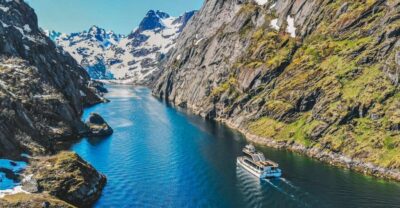 ★ 4.8From Svolvær: Lofoten Islands Silent Trollfjord CruiseFrom $1402,979 reviews
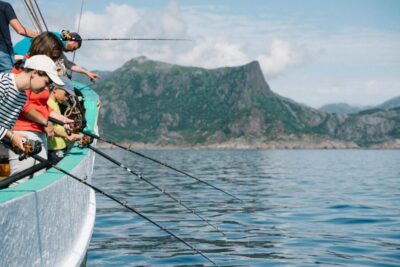 ★ 4.7From Svolvaer: Lofoten Fishing Boat CruiseFrom $135621 reviews
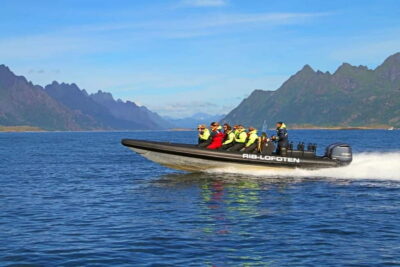 ★ 4.9From Svolvær: Lofoten RIB Sea Eagle Safari Trollfjord CruiseFrom $107591 reviews
 ★ 5.0Lofoten Island: Silent Trollfjord Cruise from SvolværFrom $144389 reviews
 ★ 4.8From Svolvaer: Trollfjorden Wildlife RIB CruiseFrom $125355 reviews
 ★ 4.7Bleik: Whale Watching by Speedboat with Puffins and MuffinsFrom $199326 reviews
 ★ 4.9Eggum: Lofoten Islands Midnight Sun Kayak TourFrom $99322 reviews
 ★ 4.9Lofoten: Trollfjord Sea Eagle Safari by RIB BoatFrom $97308 reviews
Lists this one sits in